Off-Grid Atlas: Top 10 Off-Grid Showers & Water-Heating Options for Cabins (2026 Edition)
The Luxury That Defines Civilization (and Sanity)
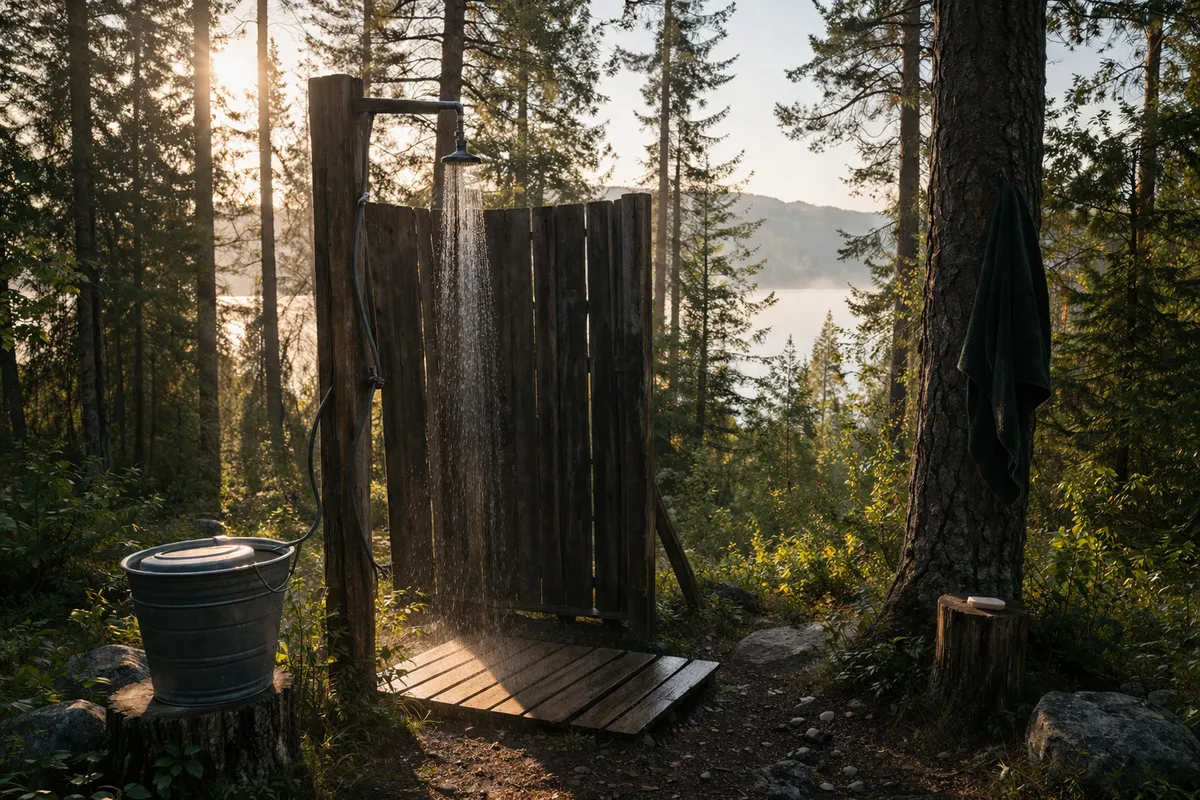
A dependable hot shower changes daily life off-grid. It supports hygiene after physical work, makes cold weather more manageable, and keeps a cabin from feeling like a temporary camp. It also places several continuous demands on the system at once: water supply, flow pressure, fuel or solar collection, safe drainage, and a place for the used water to go.
The right solution depends on the household, climate, water source, and season. A portable propane unit can give immediate hot water from a small tank, while a solar system stores heat gathered through the day. Wood-fired systems suit properties with an established fuel routine and carefully designed safety hardware. Every option works best when the shower uses low flow, short plumbing runs, stable pressure, and a drying area that stays warm enough for people to use the system consistently.
The following Top 10 focuses on current, verifiable products and practical build approaches. Product specifications should be confirmed against the current manual before purchase. Fuel-burning heaters belong outdoors or in a purpose-built, correctly vented installation; water-heating systems must follow local code and include the pressure-relief, drainage, and freeze protection appropriate to their design.
1. Joolca HOTTAP V2 Nomad Kit — Best Complete Portable Shower System
Joolca’s HOTTAP V2 Nomad Kit is the most complete portable propane shower package in this category. Current Joolca specifications list a 37,500 BTU heater, a flow range of 2.5 to 6 litres per minute, a maximum water temperature of 50°C, and a minimum operating water pressure of 70 kPa. The Nomad kit combines the heater with a pump, shower hardware, hoses, and carry/storage components, making it especially useful for a seasonal cabin, overland rig, hunt camp, or a property that needs a shower system which can be put away before winter.
It earns the top position because the system is purpose-built around the whole shower experience. Owners still need a safe outdoor operating location, a propane supply, a clean water source, a charged pump power source, and a planned drain area. Its modest flow rate is an advantage for off-grid use because it encourages a controlled shower without wasting stored water. The HOTTAP is best for households that value portability, easy deployment, and a well-matched system of components.
2. Eccotemp L10 — Best High-Flow Portable Propane Heater
The Eccotemp L10 is a current outdoor portable tankless propane water heater rated at up to 3.0 gallons per minute, with a published operating range of roughly 20 to 80 PSI and a temperature range of 50°F to 120°F. It uses battery ignition, which keeps the heater independent from a cabin inverter, and its higher flow capacity gives a more conventional shower experience when the water source and pump can support it.
The L10 fits a permanent or semi-permanent outdoor shower station, a larger seasonal cabin, or a multi-user setup where one small portable shower would feel restrictive. The higher output also makes water management more important. Use a low-flow shower head, a mixing valve where appropriate, and a water source that can maintain steady pressure. Drain the heater completely before freezing weather, follow its outdoor-use and ventilation requirements, and treat the propane installation as a safety system rather than a camping accessory.
3. Camplux 5L Portable Tankless Heater — Best Budget Propane Option
Camplux’s 5L portable tankless model is a compact, widely available entry point for an outdoor off-grid shower. The current 1.32 GPM version is designed for camping and light portable use, with a compact body and battery ignition. Its lower flow fits a single low-flow shower, dishwashing station, or simple rinse setup far better than a busy family cabin.
This is a good choice when the goal is an affordable, field-serviceable propane shower system with realistic expectations. Use it outdoors according to the manufacturer instructions, protect it from rain and freezing, and avoid treating it as a permanently installed indoor water heater. A small pump and filtered water source improve reliability, while a shutoff at the shower head prevents unnecessary fuel and water use during soaping.
4. Zodi Hot Tap — Best Rugged Field Shower
Zodi continues to sell portable instant hot showers, including the Hot Tap with case and water container. Its current portable shower line is built around field deployment, with durable storage and a self-contained approach that suits remote camps, hunting trips, vehicle travel, and a cabin backup system. Zodi’s Hot Tap X-40 offers a higher-output version with a 12-volt pump, while the standard Hot Tap remains a practical field-oriented choice.
The advantage is rugged portability. The limitation is that the system still needs a stable water source, propane, pump power where applicable, and a safe outdoor space for combustion. It is a strong secondary shower for an off-grid property because it can operate independently when the main plumbing is winterized, under repair, or inaccessible. Store hoses dry, keep spare batteries or a compatible 12-volt power source, and confirm the exact current model before buying accessories.
5. Advanced Elements Summer Shower — Best Large Solar Shower Bag
Advanced Elements’ Summer Shower remains a credible passive solar option for warm weather. The ten-gallon format provides enough stored water for multiple brief showers or a family wash-up session when the bag has several hours of strong sun. Its appeal is complete independence from propane, pumps, and wiring: fill it, place it in a sunny protected location, then hang or elevate it for gravity-fed use.
Solar shower bags work best when the household treats them as daytime heat collectors and evening water stores. They need a safe hanging point, a dark sunny surface, and protection from abrasion and wind. Their gravity flow is gentle, so a low-flow shower head and an efficient wet-soap-rinse routine make the difference. This is an excellent seasonal system and an excellent backup, while cool cloudy weather calls for another heat source.
6. Sunbank Solar Water Heater — Best Permanent Passive Solar System
Sunbank Solar sells integrated passive solar water-heating systems for permanent installations. A thermosiphon system uses solar collection and a storage tank to heat domestic water with no circulation pump in the basic design, offering a powerful fit for sunny climates where the cabin is occupied regularly. A forty-gallon class system provides meaningful buffer capacity for repeated showers and household use.
This approach rewards proper siting and professional-grade installation. Collector orientation, structural mounting, freeze exposure, supply pressure, plumbing protection, and local permits all influence the result. A passive solar heater can provide most warm-weather hot water at very low operating cost, while a propane or wood-fired backup gives the household resilience during cloudy periods and shoulder seasons. Buyers in freezing climates should select a system designed for that climate and use qualified installation support.
7. DIY Overhead Tank and 12V Pump Shower — Best Custom Rainwater System
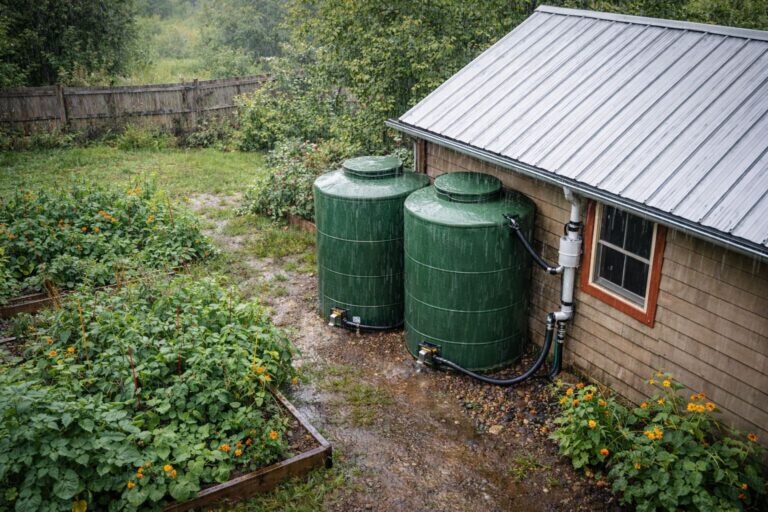
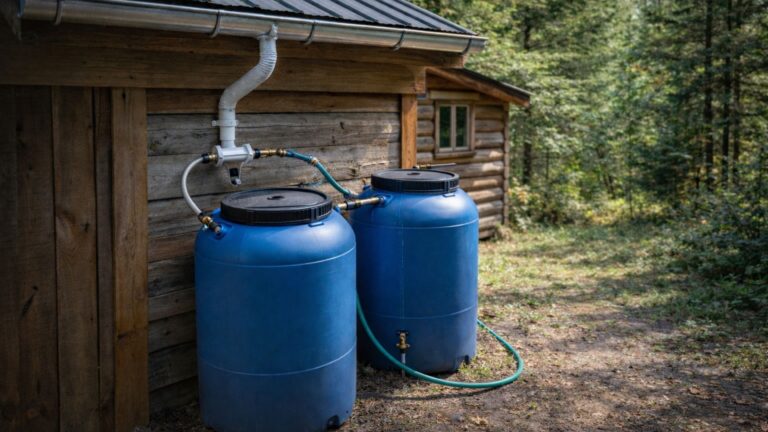
A properly designed overhead tank and 12-volt diaphragm pump system is one of the most adaptable off-grid shower formats. It can draw from rainwater storage, a filtered cistern, or a dedicated shower tank, then deliver stable pressure through short insulated plumbing runs. The tank can be warmed by solar collection, a separate approved water heater, or preheated water added in controlled batches.
The strength is integration. A builder can size the storage, select a low-flow fixture, add filtration, place a mixing valve, and route greywater to the property’s approved disposal system. The work must be planned carefully: pumps need strainers and appropriate wiring, tanks need secure support and cleaning access, and all components need complete drainage in freezing weather. This is a strong long-term solution for a cabin owner who wants the shower to become part of the water system rather than remain a portable appliance.
8. Lehman’s System Two Wood-Fired Water Heater — Best Dedicated Wood-Fired Option
Lehman’s currently sells the System Two wood-fired water heater, a fifteen-gallon, Amish-made unit designed to heat water with wood. A dedicated wood-fired heater offers a genuine fuel-flexible path for a remote cabin with an established wood supply, especially where solar production is weak in winter and propane delivery is inconvenient. The stored water volume also smooths the experience more effectively than heating a small bucket for each shower.
Wood-fired water heating requires serious installation discipline. Use an approved open or correctly relieved system, follow all manufacturer clearances and local code, provide suitable venting, and never leave the heater unattended while firing. Water expands dramatically as it heats, so any pressurized arrangement needs correctly specified safety components installed by a qualified professional. This option belongs in a permanent cabin system with a responsible owner, not in an improvised camp shower.
9. Solar Batch Heater — Best Low-Cost DIY Summer Build
A solar batch heater uses a dark, insulated water container or purpose-built collector box to absorb sunlight and store warmed water for a later shower. It can be as simple as a black food-safe container placed in a protected glazed enclosure, or it can be a more refined insulated collector tied to a separate shower tank. The system has no flame, no pump requirement in its simplest form, and no moving parts beyond a valve and shower hose.
The design has limits that deserve respect. Water temperature can climb beyond a comfortable shower temperature in strong sun, so a thermometer and mixing method are important. Use potable-water-rated components where the water contacts skin, secure the tank against movement, and protect it from freezing. For a warm-season cabin, a batch heater is an inexpensive way to make a gravity shower far more comfortable without adding fuel consumption.
10. Insulated Solar Bag and Kettle-Mix Shower — Best Zero-Complexity Backup
Every off-grid cabin benefits from a no-failure fallback: an insulated solar shower bag or bucket combined with a carefully controlled amount of separately heated water. The method is simple, portable, and useful during a plumbing repair, power outage, or temporary camp. A thermometer prevents scalding, and mixing warm water into a larger volume of cool water gives a predictable shower temperature.
This is not a shortcut for building unsafe stove coils or heating water in a sealed container. Heat water in equipment designed for that purpose, mix it in an open vessel, and use a hand shower, scoop, or gravity bag for delivery. The approach has little glamour, yet it guarantees a workable hygiene option when the primary shower system is unavailable.
Comparison Table
| System | Heat source | Water delivery | Best use | |:–|:–|:–|:–| | Joolca HOTTAP V2 Nomad | Propane | Pumped portable shower | Complete mobile cabin kit | | Eccotemp L10 | Propane | Pumped plumbing | Higher-flow outdoor station | | Camplux 5L | Propane | Pumped portable shower | Budget single-user setup | | Zodi Hot Tap | Propane | Portable pump system | Rugged field backup | | Advanced Elements Summer Shower | Solar | Gravity | Warm-season portable use | | Sunbank Solar Water Heater | Solar | Permanent plumbing | Sunny permanent cabin | | DIY overhead tank and pump | Variable | 12V pump | Integrated rainwater system | | Lehman’s System Two | Wood | Stored hot water | Permanent wood-heated cabin | | Solar batch heater | Solar | Gravity or pump | Low-cost summer build | | Solar bag and kettle mix | Solar and separately heated water | Gravity or hand shower | Emergency fallback |
Pressure Systems: Why Weak Flow Ruins Otherwise Good Setups
Shower comfort depends on stable flow, and stable flow begins with the water source. Gravity provides about 0.43 PSI for each vertical foot of water height, so a small tank raised only a few feet will feel weak at a conventional shower head. A correctly sized 12-volt diaphragm pump changes the experience by providing consistent pressure, yet it also introduces power draw, noise, filters, wiring, and a component that must be protected from freezing.
Keep plumbing runs short, use hose or pipe sized for the expected flow, avoid unnecessary sharp bends, and clean inlet strainers regularly. Tankless propane heaters also need a stable minimum flow and pressure to ignite and maintain temperature. A low-flow shower head often improves the whole system because it keeps demand within the pump and heater’s comfortable operating range while still producing a useful spray pattern.
Pressure cycling can be improved with a small accumulator tank where the pump manufacturer supports one. The accumulator stores a little pressurized water, softens rapid pump starts, and makes a brief hand rinse or shower-head adjustment less abrupt. It does not compensate for an undersized pump, clogged filter, weak battery, or empty cistern, so diagnose those fundamentals first. A pressure gauge and a simple flow test at the shower head provide useful baseline readings for future maintenance.
Water Storage Strategy: How Much Hot Water You Actually Need
Plan from real use. A low-flow shower head at 1.5 gallons per minute used for four minutes consumes six gallons, while a longer high-flow shower can consume several times that amount. Multiply the expected per-person use by the number of users, then include water for handwashing, dishes, cleaning, and the reserve needed for a dry period. A cabin that intends to support two daily showers needs far more than a heater; it needs stored raw water, a refill plan, and a place to manage the resulting greywater.
A buffer tank smooths a system that otherwise cycles between hot and cold. Small tanks heat quickly and are easy to protect from freezing. Larger insulated tanks support several users and allow solar collection or a wood-fired heater to work in useful heating windows. Match tank volume to the collection method, recharge rate, and daily use pattern. Insulate any stored hot water and keep hot-water lines short, because heat lost in a long uninsulated run is fuel and solar gain wasted before the shower begins.
Estimate recovery time as carefully as storage volume. A ten-gallon tank may cover one or two careful showers, yet the household needs to know how long the chosen heat source takes to restore that water to a usable temperature. Solar recovery depends on the next available sun window. Propane recovery depends on fuel and heater output. Wood-fired recovery depends on starting and managing a fire. The right tank size gives enough buffer for normal use without encouraging a level of demand the water source and heating system cannot replenish.
Design Logic: Heat First, Flow Second
Choose the heat source according to site reality. Solar works best where collector exposure is strong and the cabin is used during warm, bright months. Propane offers immediate, controllable heat with a storage and refill obligation. Wood-fired water heating fits a property that already has a carefully managed wood-heating routine. A hybrid system often gives the best balance: passive solar for normal warm-weather use and propane or wood for poor weather and high-demand periods.
Then design flow. Select the source tank, pump, filter, lines, shower head, mixing valve, and drain path as one system. A mixing valve helps keep delivered water at a stable safe temperature, particularly where solar or wood can produce water hotter than expected. Build in shutoffs, accessible drains, and service points so the system can be emptied before a freeze or repaired without dismantling the whole shower.
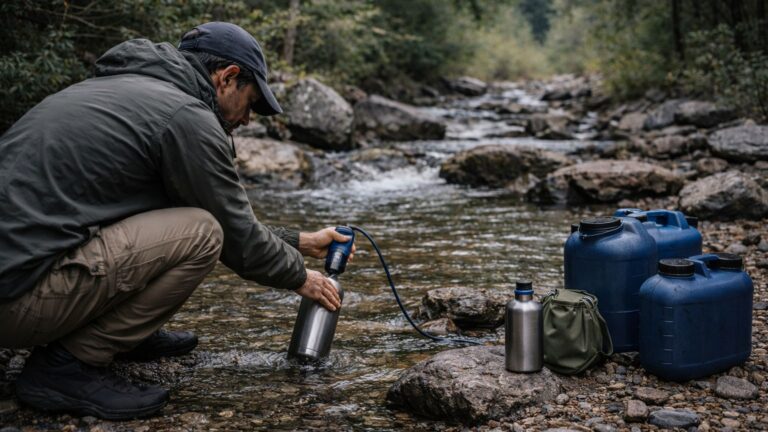
Water quality belongs in the design as well. Rainwater and surface water may contain sediment that quickly blocks a pump screen or damages a heater’s water passages. Use appropriate filtration before the pump and follow the heater manual on water quality, flushing, and storage. Any water intended for skin contact should be drawn from a clean source and kept in food-safe tanks and hoses. A well-maintained filter protects flow and helps the shower remain pleasant over an entire season.
Service access is a quiet design advantage. Mount filters where their bowls can be opened, leave enough slack in hoses to inspect connections, and position drain valves where they can actually be reached during a cold rain or winter shutdown. A hidden fitting may look tidy on installation day, then become the point that leaks for months because inspection is difficult. The best small shower systems keep their critical valves, screens, and fittings visible, labelled, and easy to isolate.
Shower Space Design: Why Layout Affects Everything
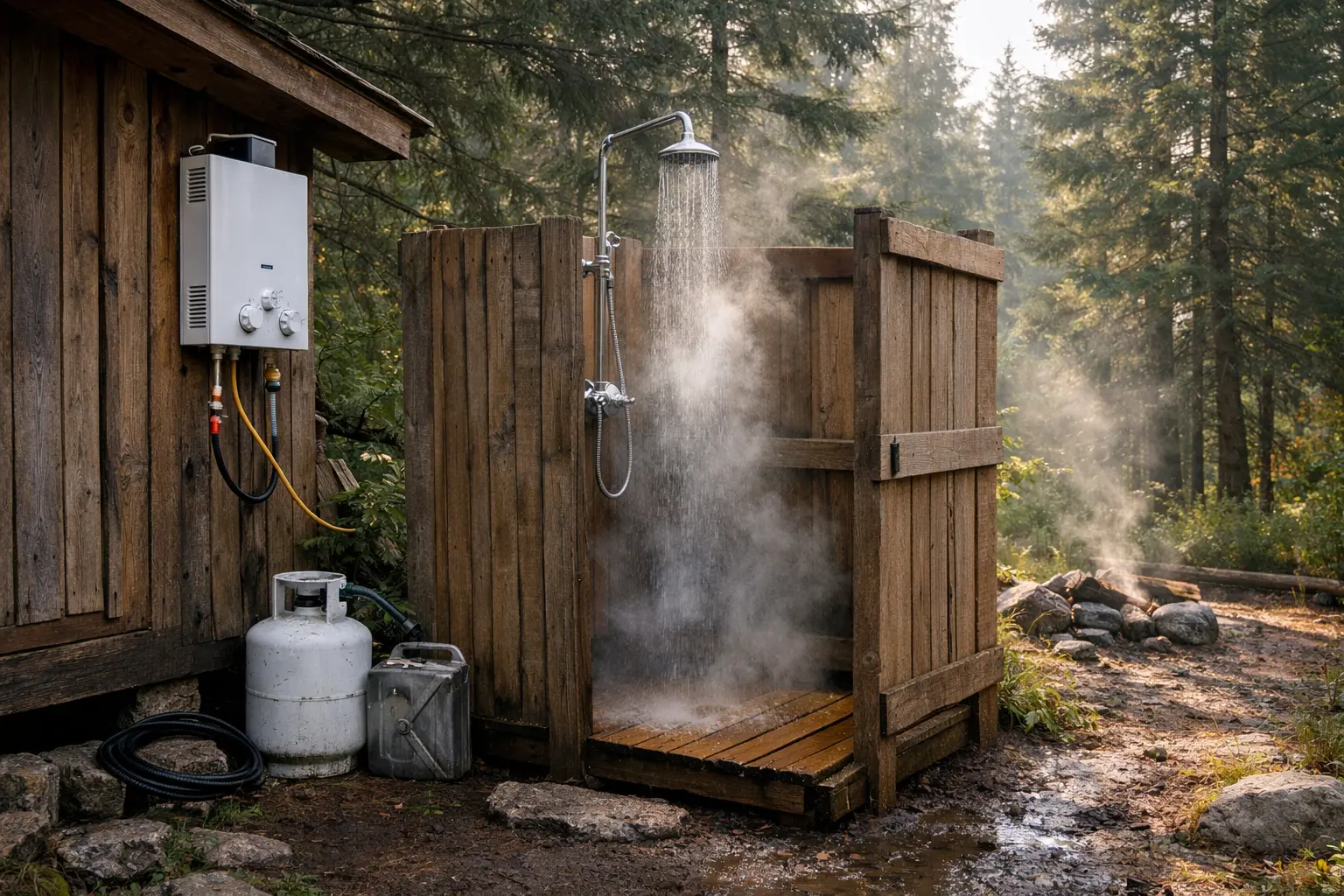
An enclosure can conserve more usable heat than a larger heater. A simple outdoor stall with wind-blocking walls, a raised sloped floor, and a roof or cover keeps the shower user comfortable while directing water away from the structure. Provide controlled ventilation so moisture can leave without allowing every gust of wind through the stall. Store soap, towel hooks, dry clothing, and light within reach so water does not run while the user searches for equipment.
Drainage needs the same attention as heat. Water pooling beside a cabin creates mud in summer, ice in winter, and moisture problems near foundations. Use a designed greywater approach that complies with local rules, keep discharge away from wells and surface water, and avoid sending soapy water directly into a food garden. A good layout shortens shower time, reduces heat loss, and makes maintenance easier.
Installation Reality: What Takes the Most Time (and Why)
The heater is usually the fastest part of the project. Time is spent choosing a safe mounting location, routing water lines, supplying a pump, protecting fuel connections, building the enclosure, and creating drainage. Test the system before treating it as complete: check every fitting under pressure, verify the heater ignition and stable temperature, inspect drain paths, and make sure the shower can be completely drained for winter.
Fuel-burning equipment requires particular care. Follow the manufacturer manual exactly, maintain required clearances, use approved gas hoses and regulators, and install carbon-monoxide alarms in occupied areas where applicable. Portable outdoor heaters remain outdoors during operation. A qualified installer is the right choice for any permanent propane or wood-fired system, especially where a pressure vessel, building penetration, or code-compliant venting is involved.
Commission the system in stages. First test the cold-water supply and drainage with the heater disconnected. Then test pump pressure, check every joint for leaks, and confirm the shower-head shutoff does not create an operating condition the heater cannot handle. Finally, run the heater outdoors with a thermometer at the shower outlet and adjust the flow and mixing controls until temperature remains stable. This deliberate approach catches small errors before a user is standing in the shower.
Multi-User Systems: Scaling Without Losing Performance
Multiple users increase the need for storage, scheduling, and flow control. A two-person cabin can often avoid a costly upgrade by spacing showers, using low-flow fixtures, and heating water once for a predictable evening routine. A family may need a larger buffer tank, a higher-output heater, more solar collection, or a hybrid backup. The source water must also keep up; a pump cannot create water that the cistern or well cannot supply.
Build redundancy where it removes a real failure point. A passive solar heater with a portable propane backup can maintain hygiene through a cloudy spell. A main shower with a solar bag backup can cover a pump failure. Scaling successfully means delivering consistent flow and temperature during ordinary use, then having a simple option when weather or equipment interrupts the main plan.
For larger households, measure peak demand before buying a larger heater. Two people taking long showers back to back may exceed the water supply, drain the battery through pump operation, and fill the greywater capacity even if the heater itself has ample BTUs. Low-flow fixtures, staggered shower times, an insulated buffer tank, and a second drying or drainage area often improve performance more effectively than simply increasing burner size. The system should feel predictable to every user, including the last person in the evening rotation.
Real-World Setup Blueprints
A summer cabin can use a ten-gallon solar shower bag, a covered gravity stall, and a kettle-mix backup for cloudy days. A three-season cabin can pair an Eccotemp L10 or Joolca system with a filtered cistern, 12-volt pump, low-flow head, and a designated greywater drain. A year-round wood-heated cabin can integrate a code-compliant wood-fired water heater with insulated storage and a propane backup, supported by professional installation and a winter drainage routine.
Each blueprint starts with the same essentials: measured water supply, safe heat source, stable delivery pressure, a low-flow fixture, drainage, and freeze protection. The appliances change, but the system logic remains stable.
Record the operating details after the first month: gallons used per shower, propane consumed per week, solar tank temperature on clear and cloudy days, pump run time, and any signs of pressure loss. These records reveal whether the limiting factor is heat, water, flow, drainage, or household habits. They also make future expansion rational. A cabin owner can add storage, insulation, a second collector, or a backup heater based on a real bottleneck rather than a vague sense that the shower feels weak.
Cold Weather Failure Modes: What Actually Breaks First
Water trapped in hoses, pumps, heater passages, and fittings is the first winter problem. One hard freeze can crack plastic fittings, rupture a pump head, or damage a tankless heater. Drain every component after use when the system is seasonal, use manufacturer-approved winterizing steps, and keep portable units indoors once they are dry. Insulate exposed pipe where a line must remain in service, then protect it from wind as well as cold air.
Cold intake water also reduces heater performance. Tankless units have to raise the water temperature farther, which can reduce practical flow or require a lower-flow shower setting. Battery capacity and pump output fall in low temperatures, so provide a warm protected location for batteries and critical components. Winter comfort comes from prevention and simple routines, not from forcing a summer system to operate after it has frozen.
Create a written winterizing checklist and keep it with the shower equipment. Turn off the water supply, drain the heater and hoses, empty pumps as the manual directs, remove portable batteries, and store small fittings where they will be found next season. Reconnect the system only after inspecting seals, strainers, and propane connections. The few minutes spent on this routine can prevent an expensive heater or pump replacement after the first hard freeze.
Safety & Efficiency Checklist
- Operate portable propane heaters outdoors and follow the exact manufacturer instructions.
- Use approved regulators, hoses, fittings, and leak-testing procedures for every propane connection.
- Install required pressure-relief, expansion, temperature-control, and drain components on permanent water-heating systems.
- Drain portable equipment and exposed plumbing before freezing weather.
- Use low-flow fixtures, short insulated hot-water runs, and a shower-head shutoff to reduce fuel and water use.
- Route greywater through a legal, site-appropriate system that protects wells, surface water, and foundations.
Shower Habits That Cut Fuel Use in Half
A pause-and-rinse routine is the simplest efficiency tool. Wet down, close the shower-head valve, soap up, then rinse with the temperature already set. This reduces the volume the heater must raise and keeps the pressure system from running while no one is using the water. A low-flow head and a familiar temperature setting make the routine feel normal after only a few showers.
Heat only the amount of water that the household can use soon, especially with wood or batch-solar systems. Share a heating window between users, keep towels and clothing ready before starting, and use a timer during the first weeks to learn actual shower length. The savings come from planning and stable equipment, not from turning a shower into an unpleasant endurance test.
Shower scheduling also protects the source water. If a cistern refill depends on rainwater collection or a slow well, set a normal shower frequency that leaves a reserve for cooking, sanitation, and emergencies. A quick wash-up basin can handle many days when a full shower would strain the system. This preserves the option of a comfortable hot shower when it genuinely matters, while preventing routine use from draining the household’s resilience.
Teach every regular user the operating sequence. They should know how to check water level, start the pump, set the heater, use the shower-head shutoff, and drain the system afterward. Clear routines prevent accidental propane waste, empty-tank pump runs, and frozen hoses. They also make the shower practical for guests, who may otherwise assume it behaves like a city-bathroom fixture.
Simple posted instructions reduce avoidable system mistakes.
Water Conservation Hacks
- Fit a low-flow shower head and confirm it still allows reliable heater ignition.
- Capture only appropriate rinse water through a planned greywater system.
- Insulate hot-water storage and lines close to the source.
- Keep a small wash basin in the shower for feet, gear, and quick cleanups.
- Repair dripping valves and worn shower-head shutoffs immediately.
Final Thoughts
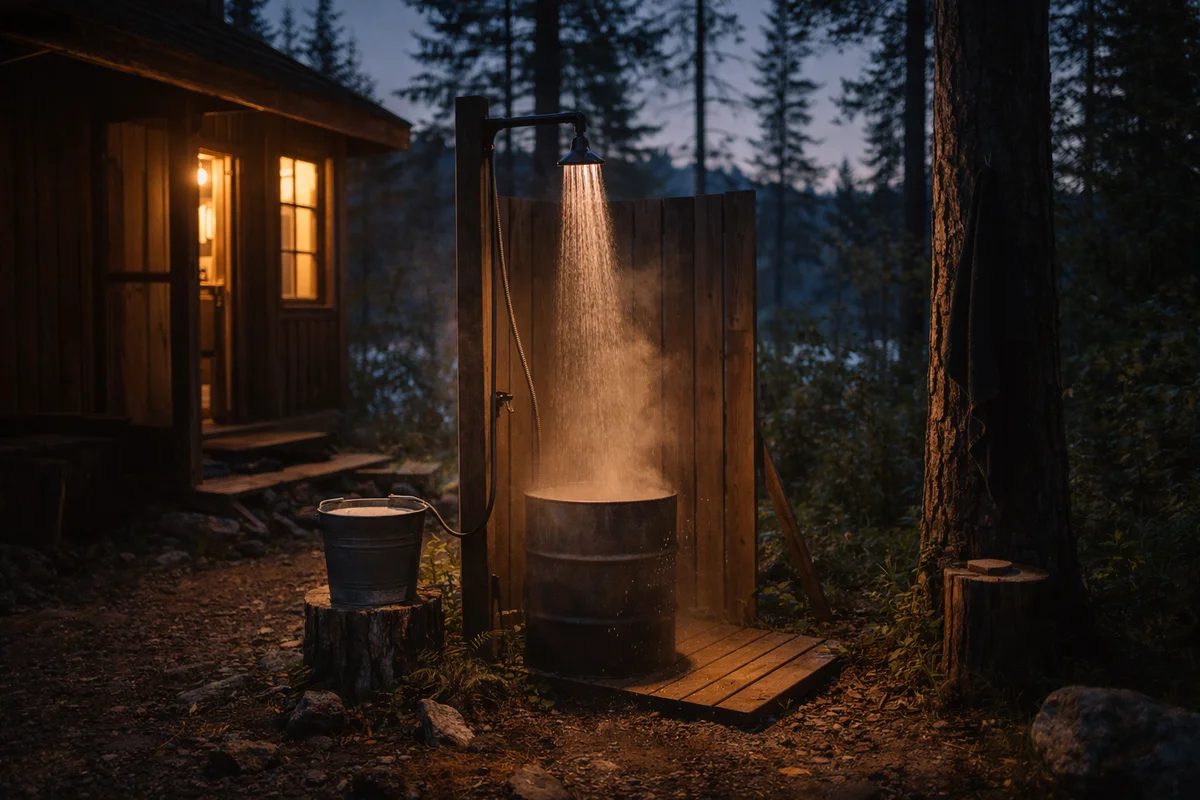
Hot water can be a reliable off-grid comfort when the system is designed around real water use, stable flow, safe heat, and a manageable winter routine. Portable propane units give fast flexibility. Passive solar systems reduce fuel use. Dedicated wood-fired systems suit the right permanent cabin when they are installed with the safety hardware they require.
Start with a measured water plan and low-flow fixture, then choose the heat source that matches the site. A simple backup method keeps the household comfortable when weather or equipment interrupts the main system.