Off-Grid Atlas: Top 10 Portable Power Stations Over 2kWh (2026 Benchmark)
Portable Power, Permanent Freedom
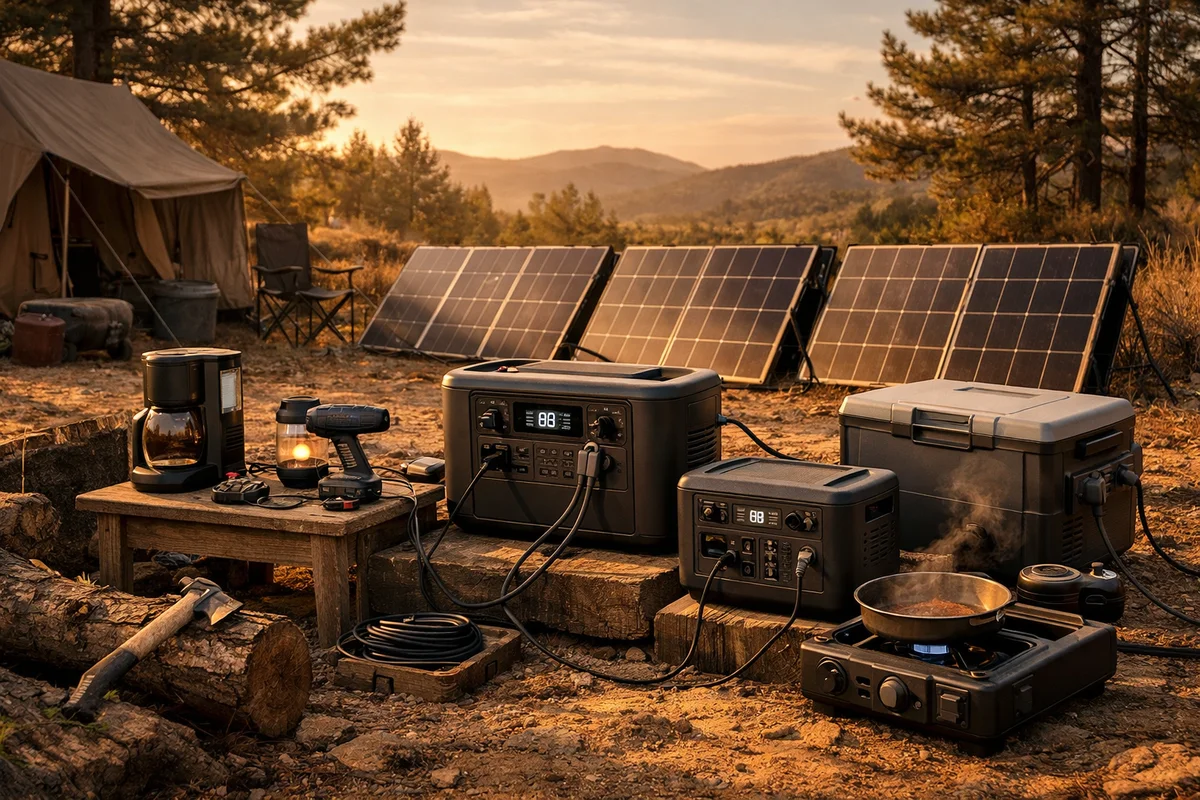
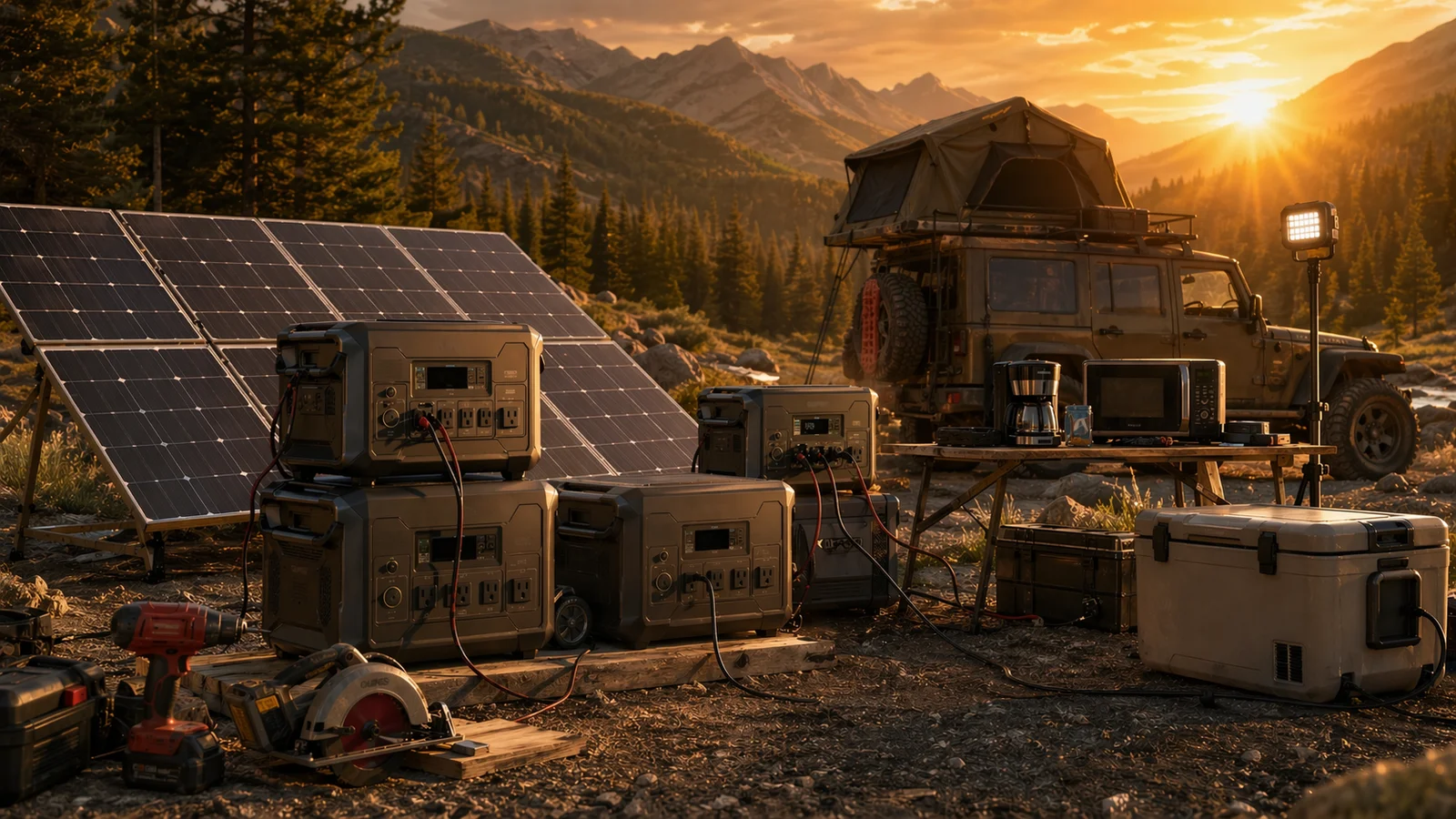
Portable power stations above 2kWh occupy a useful middle ground between a small camping battery and a fixed solar-electric installation. They can carry a refrigerator through an outage, support a remote office, run a compact workshop in intervals, or form the first battery module in a cabin system. Their value comes from the whole package: battery capacity, inverter capability, solar recovery, charging options, expansion path, physical handling, and the support available after purchase.
Capacity alone gives an incomplete picture. A 3kWh station with a 1,000W solar limit may serve a modest camp well, while a similarly sized unit with a high-voltage solar input, an expansion battery connection, and a 3,000W inverter can support a far broader set of jobs. The station also has to suit the place where it will live. A 100-pound wheeled unit makes sense in a cabin or trailer; a 45-pound unit is far easier to move between a vehicle, a tent, and a work area.
This benchmark focuses on currently offered, self-contained power stations with a base capacity of at least 2kWh. Specifications vary by region and product revision, so confirm the manual for the exact model sold in your market before buying panels, cables, batteries, or home-backup accessories. The rankings emphasize useful off-grid capability over novelty: dependable AC output, realistic solar charging, sound battery chemistry, and a setup a person can actually maintain.
1. EcoFlow DELTA Pro 3: Best Overall for High-Demand Backup
Base capacity: 4,096Wh | Continuous AC output: 4,000W | Maximum solar input: 2,600W | Expansion: 4–12kWh with current compatible extra batteries
EcoFlow’s DELTA Pro 3 earns the top place because its base unit already covers a large share of real cabin and outage loads. Four kilowatt-hours provides meaningful reserve for refrigeration, lighting, communications, water-pump duty cycles, and a carefully managed workbench. Its 4,000W inverter offers more room for motor starts and heating loads than the typical 2kWh class station, while the dual 120V/240V output expands the kinds of equipment it can support when the installation and connector arrangement are appropriate.
Best for: High-demand backup, cabin power, larger mobile workspaces, and users who want substantial solar input in a single base unit.
Watch before buying: The main unit is intended for sheltered use. Plan its location, ventilation, and moving route before delivery, especially if it will live in a basement, trailer, or small outbuilding.
2. BLUETTI Apex 300: Best Modular Home-and-RV Platform
Base capacity: 2,764.8Wh | Continuous AC output: 3,840W | Solar input: Up to 2,400W through two DC/PV ports | Expansion: Modular system up to 58kWh in supported configurations
The BLUETTI Apex 300 is built around modularity. Its base capacity clears the 2kWh threshold comfortably, and its 3,840W inverter puts it in a class suited to more than device charging and lights. The system is aimed at users who may begin with one portable station, then add storage and supported home or RV accessories as their needs become clearer. That makes it compelling for a property in transition: a new cabin, a trailer that spends part of the year on site, or a home owner building a resilient essentials circuit.
Best for: RV owners, cabin builders, and home-backup buyers who want a base unit with a serious expansion path.
Watch before buying: Price the full configuration you intend to reach, including its installation requirements, before committing to the base unit.
3. Zendure SuperBase V6400: Best Large-Capacity Single Unit
Base capacity: 6,438Wh | Continuous AC output: 3,800W | Solar input: Check the region-specific manual and configuration | Expansion: Satellite batteries and paired-unit options
The Zendure SuperBase V6400 belongs in a different physical category from most portable stations. Its 6.4kWh semi-solid-state battery gives it a large energy reserve before any expansion battery enters the picture, and its 3,800W rated output is useful for a broad mix of household and work loads. A station this size can take pressure off daily energy management, particularly where a fridge, pump, communications gear, lighting, and intermittent tools share the system.
Best for: Semi-fixed cabin power, outage preparedness, construction support, and users who value a very large base battery.
Watch before buying: The size and weight call for a permanent-feeling home. Measure doors, vehicle access, storage space, and the route from charging location to load location.
4. PECRON E3800LFP: Best Value in the 3.8kWh Class
Base capacity: 3,840Wh | Continuous AC output: 4,200W | Solar input: Confirm the exact current specification with PECRON | Expansion: Compatible 48V expansion batteries in supported configurations
The PECRON E3800LFP puts a large LFP battery and high-output inverter into a package that often prices below flagship ecosystem systems. Its 3,840Wh capacity offers more usable daily reserve than a 2kWh station, while its 4,200W continuous output gives it a credible role around workshop tools, kitchen appliances, pumps, and compressor-based loads. It rewards an owner who reads the manual closely and operates within published limits.
Best for: Larger-capacity buyers seeking a capable cabin or workshop battery without paying for a full premium ecosystem.
Watch before buying: Check the current manual for PV voltage, current, and power limits before buying rigid panels or configuring series strings.
5. Anker SOLIX F2600: Best Everyday 2.5kWh Workhorse
Base capacity: 2,560Wh | Continuous AC output: 2,400W | Maximum solar input: 1,000W | Expansion: Compatible expansion battery available
The Anker SOLIX F2600 is a sensible choice for people who need a substantial station that still feels manageable around an RV, garage, truck bed, or small cabin. Its 2,560Wh LFP battery and 2,400W pure-sine AC output support the everyday load list well: refrigeration, lights, electronics, chargers, a small pump, many corded tools, and a carefully selected kitchen appliance. It also supports a compatible expansion battery, which gives owners a way to add reserve without abandoning the original unit.
Anker specifies up to 1,000W of solar input and 1,440W of AC input. That makes it easy to integrate into a practical routine. A 600W to 1,000W solar array, placed in good sun and sized within the voltage window, can make the F2600 productive as a daily-use station. Owners using portable panels should expect their actual harvest to move with angle, temperature, cloud, and shade. Rigid panels on an adjustable ground rack or roof mount usually provide more consistent recovery for a station used every day.
Best for: RV use, compact cabins, garage backup, mobile work, and owners who want a balanced 2.5kWh platform.
Watch before buying: A 2,400W inverter provides real capability, yet motors and heating appliances can still create fast battery draw. Check both running watts and startup behavior.
6. Jackery Explorer 2000 Plus: Best Straightforward Expandable System
Base capacity: 2,042.8Wh | Continuous AC output: 3,000W | Solar input: Up to 1,400W in supported dual-input setups | Expansion: Up to 12kWh with five add-on battery packs
The Jackery Explorer 2000 Plus remains one of the easiest large portable stations to understand and deploy. It begins with a touch above 2kWh and has a 3,000W inverter, a useful combination for a refrigerator, communications, lighting, laptop work, and intermittent appliance or tool loads. Its defining feature is an uncomplicated modular path: owners can add battery packs as their required runtime becomes clear, up to a published 12kWh total in the supported configuration.
Best for: Buyers who want a clear, modular route from emergency backup to an expanded RV or cabin system.
Watch before buying: Price the expansion batteries alongside the base unit, especially if your desired runtime exceeds one day without reliable sun.
7. DJI Power 2000: Best Compact High-Output Station
Base capacity: 2,048Wh | Continuous AC output: 3,000W | Solar input: Up to 1,800W with DJI’s compatible fast charger | Expansion: Up to 22,528Wh with supported expansion batteries
DJI’s Power 2000 stands out because it puts a 2,048Wh LFP battery and 3,000W AC output into a compact, orderly chassis. At about 22kg, it remains a substantial lift, although its footprint is easier to fit in a vehicle, production case, RV cabinet, or home storage area than many larger stations. The front-facing port layout also suits a workbench or mobile production environment where cables need to stay visible and organized.
Best for: Mobile professionals, compact RV builds, field production, and users who value high output in a relatively compact package.
Watch before buying: Solar performance at the headline 1,800W level depends on the compatible DJI charger and a suitable PV array.
8. BLUETTI AC200L: Best Practical 2kWh RV and Cabin Option
Base capacity: 2,048Wh | Continuous AC output: 2,400W | Maximum solar input: 1,200W | Expansion: Up to 7.6kWh in supported configurations
The BLUETTI AC200L is a direct, practical entry in this category. It combines a 2,048Wh LFP battery with a 2,400W inverter and an expansion path that reaches 7.6kWh with compatible batteries. Its port selection, including RV-oriented DC connectivity in some regional versions, makes it especially useful where a van, travel trailer, camp kitchen, or small cabin needs a central source for everyday electricity.
Its 1,200W solar input gives the AC200L a reasonable recharge path for a station of this size. An 800W to 1,200W array is a sound target where sun access is good, with the final layout determined by the unit’s PV operating window. A fixed array adds reliability for cabin use; folding panels keep the system mobile and work well for trips where setup time remains acceptable. The optimal choice follows how often the station moves, how much wind it sees, and whether panels can remain secure and unshaded.
Best for: RV owners, weekend cabins, efficient essentials loads, and buyers who expect to add reserve later.
Watch before buying: Confirm the exact expansion batteries and RV connectors available for your market before selecting the system around them.
9. OUKITEL P5000 Pro: Best Budget Large-Capacity Alternative
Base capacity: 5,120Wh | Continuous AC output: 3,600W | Maximum solar input: 1,000W | Expansion: Base unit focused; verify current accessory availability
The OUKITEL P5000 Pro places a 5,120Wh LFP battery and 3,600W pure-sine inverter into a wheeled format at a price that can undercut major-brand high-capacity stations. For a user with a sheltered cabin, shed, or preparedness room, that large base reserve may be more valuable than a small station with a long list of optional accessories. The 5kWh class can cover several days of light, disciplined use or one demanding day with a mix of refrigerator, communications, lighting, water pumping, and intermittent tools.
Best for: Budget-conscious buyers who need a very large base battery for a sheltered, mostly stationary setup.
Watch before buying: The 1,000W PV limit slows solar recovery relative to the battery size; budget for an alternative charging plan during extended poor weather.
10. PECRON E2400LFP: Best Flexible 2kWh Value Choice
Base capacity: 2,048Wh | Continuous AC output: 2,400W | Solar input: Confirm current manual and regional model details | Expansion: Compatible expansion batteries in supported configurations
The PECRON E2400LFP finishes the list as a capable 2kWh-class station with a 2,400W inverter and the option to expand its storage. Its base capacity is enough for readers who have completed a real load estimate and found that they need a central battery for essentials, electronics, refrigeration support, and modest intermittent AC work. The power-to-capacity balance also makes sense for someone who wants a stronger inverter without immediately buying a 4kWh-plus machine.
This station rewards energy discipline. A few LED lights, a router or satellite terminal, laptop charging, and an efficient compressor refrigerator create a very different daily demand from a kettle, microwave, induction plate, or space heater. The former load set can be sustained with a properly sized solar array; the latter can consume the usable battery reserve in a short window. Keep high-wattage comfort loads visible in the energy budget and reserve battery capacity for the mission.
Best for: Practical buyers who want a 2kWh LFP station with substantial inverter output and a potential growth path.
Watch before buying: Match the solar array to the manufacturer’s current voltage and current limits, since specifications can differ by generation and region.
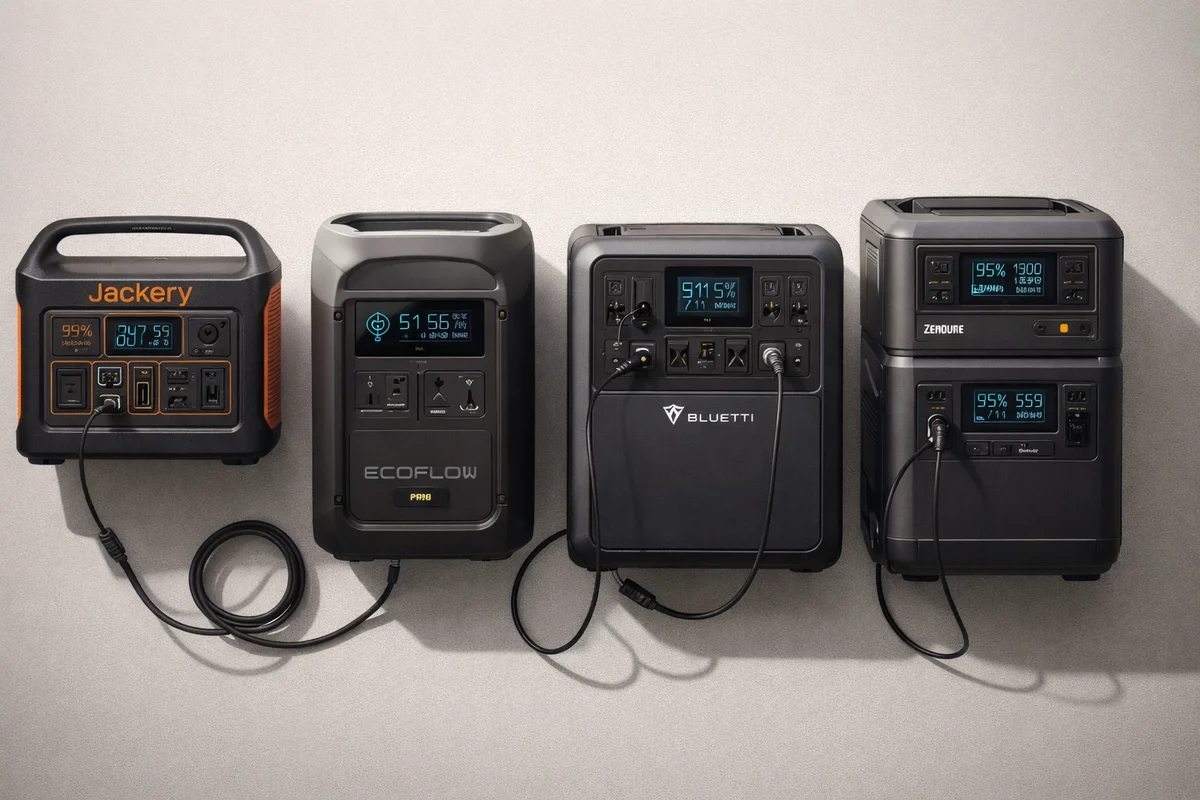
Comparison Table
| Model | Base capacity | Continuous output | Solar input | Expansion | Best use |
| EcoFlow DELTA Pro 3 | 4,096Wh | 4,000W | 2,600W | 4–12kWh | High-demand cabin and backup power |
| BLUETTI Apex 300 | 2,764.8Wh | 3,840W | 2,400W | Up to 58kWh | Modular home and RV platform |
| Zendure SuperBase V6400 | 6,438Wh | 3,800W | Verify by configuration | Satellite and paired options | Large semi-fixed battery reserve |
| PECRON E3800LFP | 3,840Wh | 4,200W | Verify current manual | Supported expansion batteries | Value-focused cabin and workshop use |
| Anker SOLIX F2600 | 2,560Wh | 2,400W | 1,000W | Compatible expansion battery | Everyday mobile or compact-cabin work |
| Jackery Explorer 2000 Plus | 2,042.8Wh | 3,000W | Up to 1,400W | Up to 12kWh | Straightforward expandable backup |
| DJI Power 2000 | 2,048Wh | 3,000W | Up to 1,800W with accessory | Up to 22,528Wh | Compact mobile professional use |
| BLUETTI AC200L | 2,048Wh | 2,400W | 1,200W | Up to 7.6kWh | RV and efficient essentials loads |
| OUKITEL P5000 Pro | 5,120Wh | 3,600W | 1,000W | Verify current availability | Budget large-capacity reserve |
| PECRON E2400LFP | 2,048Wh | 2,400W | Verify current manual | Supported expansion batteries | Flexible 2kWh value system |
Use the comparison table alongside the manual. Manufacturer specifications describe maximum capability under defined conditions. Daily field performance follows solar exposure, temperature, battery age, connector losses, device duty cycle, and the way the system is operated.
Solar Pairing That Actually Works
Every portable power station needs a recharge plan. A battery can bridge a night, an outage, or a work shift; solar determines whether it can repeat that performance tomorrow. The most successful setups begin by matching the array to the station’s published input ceiling and the owner’s expected daily consumption. A 2kWh station used for 1.2kWh per day needs an array capable of returning at least that energy in ordinary weather, with extra margin for clouds, seasonal sun angle, and conversion losses.
For a 2kWh to 3kWh station, 600W to 1,200W of panel nameplate is often a useful working range when the station accepts that input. A 3kWh to 5kWh station can benefit from 1,000W to 2,000W or more, provided the product’s voltage, current, and wattage limits allow it. Large units with limited solar input need a different strategy: manage daily loads tightly, use AC or generator charging during long poor-weather periods, or accept a multi-day recharge cycle. The station’s PV controller defines the ceiling, even when the roof could hold more panels.
Rigid panels produce the most dependable results on cabins, sheds, trailers, and ground racks because they can be aimed, secured, and left in service. Folding panels are useful for travel and temporary camps where the user can reposition them through the day. Flexible panels suit weight-sensitive surfaces, although they usually need more careful mounting and thermal management. Every array needs strain relief, weather-rated cable routing, compatible connectors, and a way to avoid foot traffic and vehicle damage.
Panel orientation has a measurable effect on recovery. A flat panel often produces adequately in summer and leaves useful energy on the table in winter. A tilt-adjustable rack improves seasonal performance and makes snow clearing easier. Shade has an outsized impact, especially when a small branch, antenna, or roof vent shadows a portion of a series string. Survey the site over the actual hours of use, then place the array where it can see the sun without creating a cable hazard.
Keep PV cable runs short where practical and use a conductor size appropriate for the voltage, current, run length, and installation method. Higher-voltage arrays can reduce current and voltage drop, yet every station publishes a maximum PV voltage that must be respected under the coldest expected conditions. The open-circuit voltage of panels rises in cold weather. A string that appears acceptable on a warm afternoon can exceed the input limit on a bright winter morning, so use the panel temperature coefficient and design margin before connecting panels in series.
Why Inverter Quality Matters More Than You Think
The inverter determines how the battery’s DC energy reaches ordinary AC equipment. Its continuous watt rating matters, although it is only one part of the picture. The inverter must also handle startup demand, maintain acceptable voltage and frequency under load, provide a true sine-wave output, and distribute its available power sensibly across the outlets. A station with a large battery and a modest inverter can run low-draw equipment for a long time; a station with a high-output inverter can start more demanding loads, assuming the battery reserve and operating conditions support the job.
Compressor appliances and motors create the most common surprise. A refrigerator may average modest energy across a day, while its compressor asks for a higher burst at startup. Some circular saws, pumps, shop vacuums, and air compressors behave similarly. Read the equipment nameplate, allow margin above expected running watts, and test important loads during a non-critical day. The test should include the actual extension cord, temperature, and other simultaneous loads that will exist in the field.
Pure sine-wave output is the standard to look for in this category. It supports modern electronics, battery chargers, motors, and appliances with a waveform close to utility power. Inverter quality still varies beyond that label, particularly in overload behavior, idle consumption, fan noise, and how the system responds when a motor starts. The published surge rating provides context, although a real test with your intended load gives the most useful answer.
Outlet layout deserves attention as well. A station may have a high total inverter rating while a specific outlet, DC port, or USB-C port has its own limitation. A 30A RV outlet, a 12V Anderson port, and a row of ordinary receptacles serve different jobs. Keep high-current DC loads on approved cables, avoid daisy-chaining power strips, and let the station’s overcurrent protection do its job. Clean power is valuable when it arrives through a connection that is rated for the load.
What Makes a Power Station “Off-Grid Ready”
An off-grid-ready station combines several characteristics that support repeated use away from an outlet.
- LFP battery chemistry: Lithium iron phosphate cells generally offer long cycle life, good thermal stability, and a useful service life for frequent cycling.
- Solar input matched to capacity: A station can recover daily only when its controller and panel array work together. Look at voltage range, current limit, and maximum wattage.
- Pure sine-wave inverter: This is appropriate for sensitive electronics, battery chargers, appliances, and many motor loads.
- Useful expansion route: Expansion batteries can turn a capable base station into a longer-runtime system when the accessories remain available and supported.
- Accessible service and warranty: A battery system is a long-term purchase. Clear manuals, reachable support, parts availability, and transparent warranty terms carry real value.
- Environmental fit: The system needs a dry, ventilated, temperature-appropriate home. Outdoor-rated components and indoor electronics have different duties.
- Practical ports and charging options: AC, solar, vehicle, generator, and alternator charging each solve different operational problems. Choose the mix that fits the way you travel or live.
These traits work together. A huge battery with slow recovery can serve as reserve. A smaller battery with strong solar recovery can serve a steady efficient load. A high-output inverter can run demanding equipment in intervals. The right station is the one whose strengths match the site and the daily work.
How to Size a Power Station for Your Actual Load
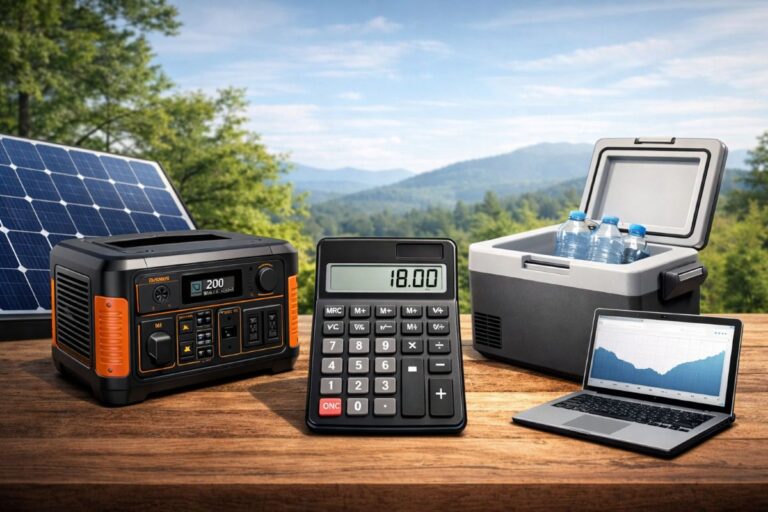
Begin with energy, expressed in watt-hours. List each device, its running watts, and the hours it operates in a typical day. Multiply watts by hours for every load, then add the results. A 60W laptop used for six hours consumes roughly 360Wh. A 10W light used for five hours consumes 50Wh. A refrigerator is more complex because the compressor cycles; use a plug-in energy meter over at least a day or consult a realistic measured estimate for the exact appliance.
Next, separate daily energy from instantaneous power. Daily watt-hours tell you how much battery reserve and solar harvest the system needs. Running watts and startup surge tell you how strong the inverter needs to be. A station may have enough stored energy to run a tool for an hour and still refuse to start it if the surge exceeds the inverter’s capability. Conversely, a high-output station can start a tool successfully and drain its battery faster than the user expects if the job lasts for hours.
Account for conversion loss. AC power passes through an inverter, charging a station has losses, and cables add small losses under load. A 2,048Wh battery does not deliver the entire nameplate capacity as usable AC energy. The usable amount depends on load level, temperature, inverter operation, and the product’s own idle draw. A planning buffer of 15 to 25 percent is sensible for ordinary AC use, with greater margin for cold conditions and high-demand appliances.
Then set the autonomy target. A weekend cabin with a generator backup may only need one day of reserve. A home emergency system intended to bridge a multi-day outage needs enough battery and recharge capacity for its essential loads across poor weather. A field workstation may need eight dependable hours at a defined consumption level. Each goal leads to a different answer, even when the starting battery capacity is the same.
Solar closes the loop. Estimate local peak-sun-hours conservatively for the season that matters most, then multiply panel nameplate by that sunlight estimate and a realistic system-efficiency factor. A 1,000W array in four peak-sun-hours has 4,000Wh of theoretical production. Dust, temperature, angle, clouds, shading, and conversion losses reduce the energy that reaches the battery. Build margin into the array, schedule heavy work during strong sun, and treat the weakest season as the planning case for year-round systems.
Transport, Weight, and Real Mobility
Manufacturers use “portable” to mean the system can move. That description covers a wide range of real experiences. A 40- to 50-pound unit can move between a vehicle and a campsite with some care. A 70- to 90-pound station may need two people for a truck lift. A 100-pound-plus wheeled unit rolls well on concrete and becomes a serious handling task on gravel, snow, stairs, or uneven ground.
Plan mobility around the full system, including panels, extension cables, expansion batteries, and protective cases. A station that weighs 70 pounds can be manageable until a 60-pound expansion battery and four folding panels travel with it. Modular systems can help because each part moves separately, although they add connections, setup time, and storage requirements. One large battery works well for a stable location; two smaller stations can serve two work areas and provide redundancy.
Handles, wheel placement, and center of gravity matter more than product photos suggest. Test the route before the equipment arrives. Measure doors and hatch openings, check whether a truck tailgate creates a safe loading height, and keep the station secured in transit. Lithium battery equipment deserves protection from hard impacts, loose cargo, standing water, and direct heat. A dedicated position with tiedown points and air space is a better solution than a pile of gear shifting around it.
Setup time affects use. A system that deploys in five minutes will see more solar days than one that requires a long cable hunt, moving furniture, and a difficult panel layout. Store connectors together, label the correct cables, and give the panels a simple method for aiming and securing them. Good field systems feel ordinary because the routine has already been designed.
Real-World Use Cases
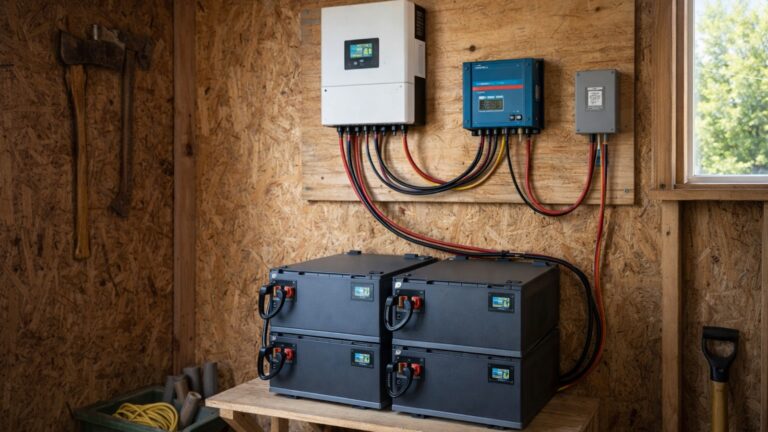
Cabin essentials base: A 3kWh to 4kWh station with 1,000W to 2,000W of rigid solar can support an efficient refrigerator, LED lighting, internet or satellite communications, device charging, and a small pressure pump when loads are managed. Keep cooking, space heating, and water heating on fuels or dedicated systems that suit the property. This arrangement prioritizes daily recovery and maintains a workable energy budget through variable weather.
Mobile workshop: A 2.5kWh to 4kWh station with a 2,400W-plus inverter can support battery chargers, lighting, laptop work, small corded tools, and short duty-cycle equipment. Run the largest tool when solar input is strong, avoid combining high-start loads, and keep a generator or grid recharge option for heavy production days. A workshop load changes with the project, so record actual energy use during the first jobs and adjust the battery plan from data.
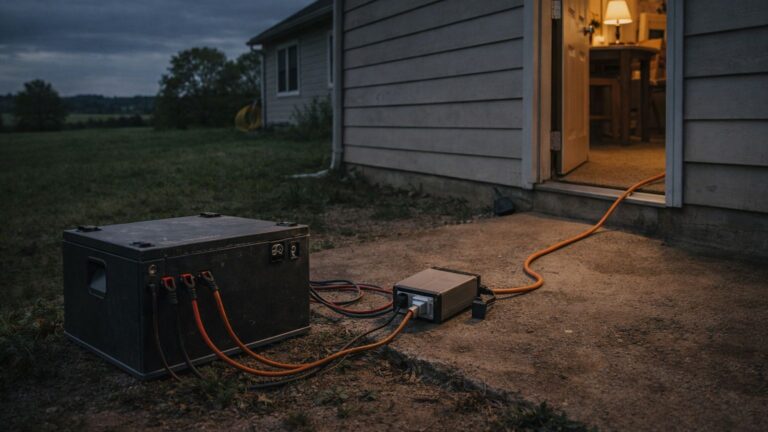
Emergency backup: A 2kWh to 3kWh station is effective when assigned a short essentials list: refrigerator, a few lights, phone charging, modem or router, medical devices within the station’s capability, and communications. Plug the priority loads into a clearly labeled power strip or extension setup, then leave discretionary loads off. An emergency system works best when it is tested several times a year and when every household member knows which circuits or devices belong on it.
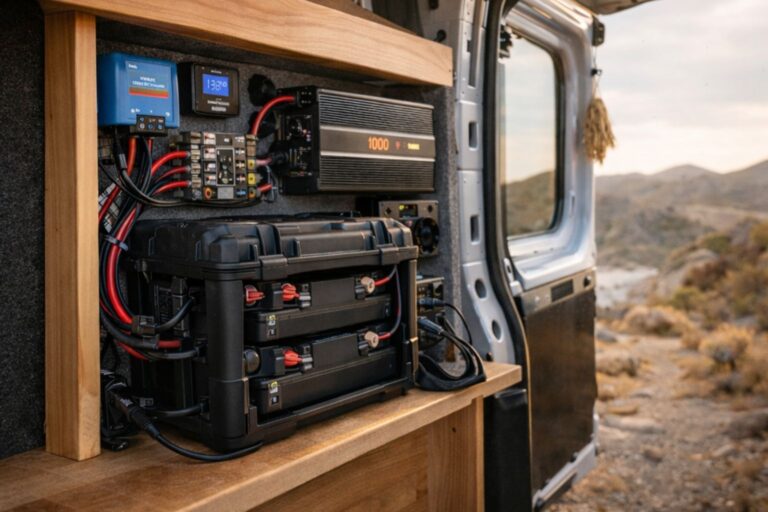
Remote production or field office: A compact 2kWh unit with strong inverter output can keep cameras, computers, lighting, networking equipment, and charging stations organized. Solar recovery can extend the day when panel placement is possible, while vehicle or alternator charging may matter more for a constantly moving crew. The winning system is usually the one with fewer loose adapters and a clear cable layout.
Cold Weather and Heat: What Actually Happens to Your Battery
LFP batteries provide long service life, yet temperature directly affects their operation. Cold weather reduces available discharge power and can prevent charging below the manufacturer’s permitted temperature. This protection is valuable: charging lithium cells at very low temperatures can damage them. A station left in an unheated shed may still power a small load, while refusing incoming solar until the battery warms into its safe charging range.
For four-season use, place the station in a conditioned or insulated space whenever possible. Some systems offer heating features or accessories; confirm exactly what the feature protects and under which conditions it operates. A warm enclosure still needs ventilation, clearance around the station, and a design that keeps moisture away from electronics. Avoid sealing a high-output power station inside a tight box where inverter heat has nowhere to go.
Heat shortens battery life over time and can trigger thermal throttling during high output or rapid charging. A vehicle in direct summer sun, a metal trailer, or a poorly ventilated utility closet can reach temperatures far above the surrounding air. Park the station out of sun, maintain clearance around cooling vents, and reduce sustained high loads when the display indicates elevated temperature. Treat thermal warnings as operational information, then adjust the site or load before the next heavy use.
Moisture creates a separate risk. Most portable stations are designed for sheltered operation, even when a battery module or accessory has some water-resistance rating. Keep the main unit dry, protect ports from rain and condensation, use outdoor-rated cables for outdoor runs, and allow wet equipment to dry fully before connection. The system serves best when its environment is as carefully planned as its wattage.
Failure Points Most People Don’t See Coming
The most common failures develop at the edges of the system. A loose MC4 connection, damaged extension cord, undersized DC cable, worn receptacle, or poorly secured portable panel can end a workday long before the battery reaches its limit. Inspect cables for cuts, crushed insulation, discoloration, heat damage, and loose fittings. Replace suspect equipment with components rated for the voltage and current involved.
Solar strings can also fail through poor configuration. Exceeding a station’s maximum PV voltage can damage the input stage, and an array that is under-voltage in real conditions may charge weakly or intermittently. Read the panel label, calculate series and parallel values, and check the station manual before every major array change. Use fusing, disconnects, and mounting practices appropriate to the installation. A portable station benefits from the same care given to any DC power system.
Firmware and app-connected features add another operational layer. Updates can improve stability and safety, yet they should happen when the station is at home and available for testing. Verify AC output, solar input, settings, and app connection after an update. Keep the station usable from its physical controls in case a phone, account, Wi-Fi connection, or cloud service is unavailable during an outage.
Storage habits also matter. Long storage at full charge or completely empty can place unnecessary stress on the battery. Follow the manufacturer’s storage guidance, keep the unit in a dry temperature-appropriate area, and check state of charge periodically. Run a planned charge-and-discharge test several times a year so the system remains familiar, cables stay accounted for, and any weakness appears well before a storm or remote job.
Maintenance Checklist
| Task | Frequency | What to check |
| Inspect station exterior and vents | Monthly during active use | Dust, damage, clear airflow, dry ports |
| Inspect solar cables and connectors | Before each deployment; quarterly for fixed runs | Tight connections, intact insulation, strain relief, no heat damage |
| Clean solar panels | As conditions require | Dust, pollen, bird droppings, snow, shade growth |
| Test priority loads | Quarterly | Refrigerator start, communications gear, chargers, required medical or work equipment |
| Review firmware | Twice yearly or before a planned update | Release notes, charge level, full post-update function test |
| Check storage state | Every 2–3 months | Manufacturer-recommended state of charge and storage temperature |
| Review load plan | Seasonally | New appliances, changing sunlight, winter energy budget, cable needs |
Maintenance is short when it is routine. Keep a simple log with the station model, serial number, purchase date, firmware version, panel configuration, cable sizes, and the measured energy use of critical loads. That record turns troubleshooting into a practical process and helps any future owner or service technician understand the setup.
Expert Tip: Build a Balanced System
Build around the daily energy cycle. Start with an efficient essentials load, then choose a battery large enough to carry the night and a solar array able to restore that energy during ordinary weather. Expansion batteries are valuable when they add autonomy; additional panels are valuable when they improve recovery. A balanced 3kWh system with dependable 1,500W solar can serve many off-grid routines better than a large battery that waits days for a small portable panel to refill it.
Record the first month of real use. Note the battery percentage at sunrise, solar input at midday, the energy used by refrigeration and pumping, and the impact of tool or cooking loads. Those notes reveal whether the system needs more capacity, more panel area, a different appliance, or a changed daily routine. Good sizing becomes much easier once it is based on measured behavior.
Final Verdicts
| Category | Winner | Why |
| Best overall | EcoFlow DELTA Pro 3 | Strong base capacity, 4,000W output, high solar input, and a mature expansion ecosystem. |
| Best modular platform | BLUETTI Apex 300 | A serious base unit with a broad path toward RV, cabin, and home-backup configurations. |
| Best large single unit | Zendure SuperBase V6400 | 6.4kWh base storage and 3,800W output for a semi-fixed high-reserve setup. |
| Best everyday workhorse | Anker SOLIX F2600 | Well-balanced capacity, output, solar input, and handling for compact systems. |
| Best simple expansion path | Jackery Explorer 2000 Plus | Clear operation and modular storage growth up to 12kWh. |
| Best compact high output | DJI Power 2000 | 3,000W output and extensive expansion potential in an unusually compact chassis. |
| Best budget large-capacity alternative | OUKITEL P5000 Pro | A large LFP reserve and 3,600W output for a sheltered mostly stationary setup. |
The best purchase follows the role. A 2kWh station is often ideal for a defined essentials load. A 4kWh station provides more headroom for a cabin base or demanding project. A 5kWh-plus wheeled unit can function as a semi-fixed power source. Choose the model whose inverter, solar input, support path, and physical scale fit your actual site.
Final Thoughts

Large portable power stations have become genuinely useful off-grid tools. They provide quiet power, straightforward solar charging, and modular reserve without requiring an owner to build a full battery room on day one. Their strongest role is clear: they make a defined load reliable in a place where grid power is unavailable, unreliable, expensive to extend, or simply inconvenient.
Build the system around measured consumption, conservative solar expectations, safe wiring, and a realistic weather plan. Keep the station dry and ventilated, test critical loads before an emergency, and give the panels enough capacity to restore the energy you use. That approach turns a portable battery into a dependable part of an off-grid power plan.