Imagining the Future of Off-Grid Living
Part 1 – Power Sovereignty
Introduction: Beyond Backup Power
For decades, off-grid power was treated as a backup plan.
A small generator, a few solar panels, maybe a battery for emergencies. The system existed mainly for the moments when the grid failed.
That mindset is changing quickly.
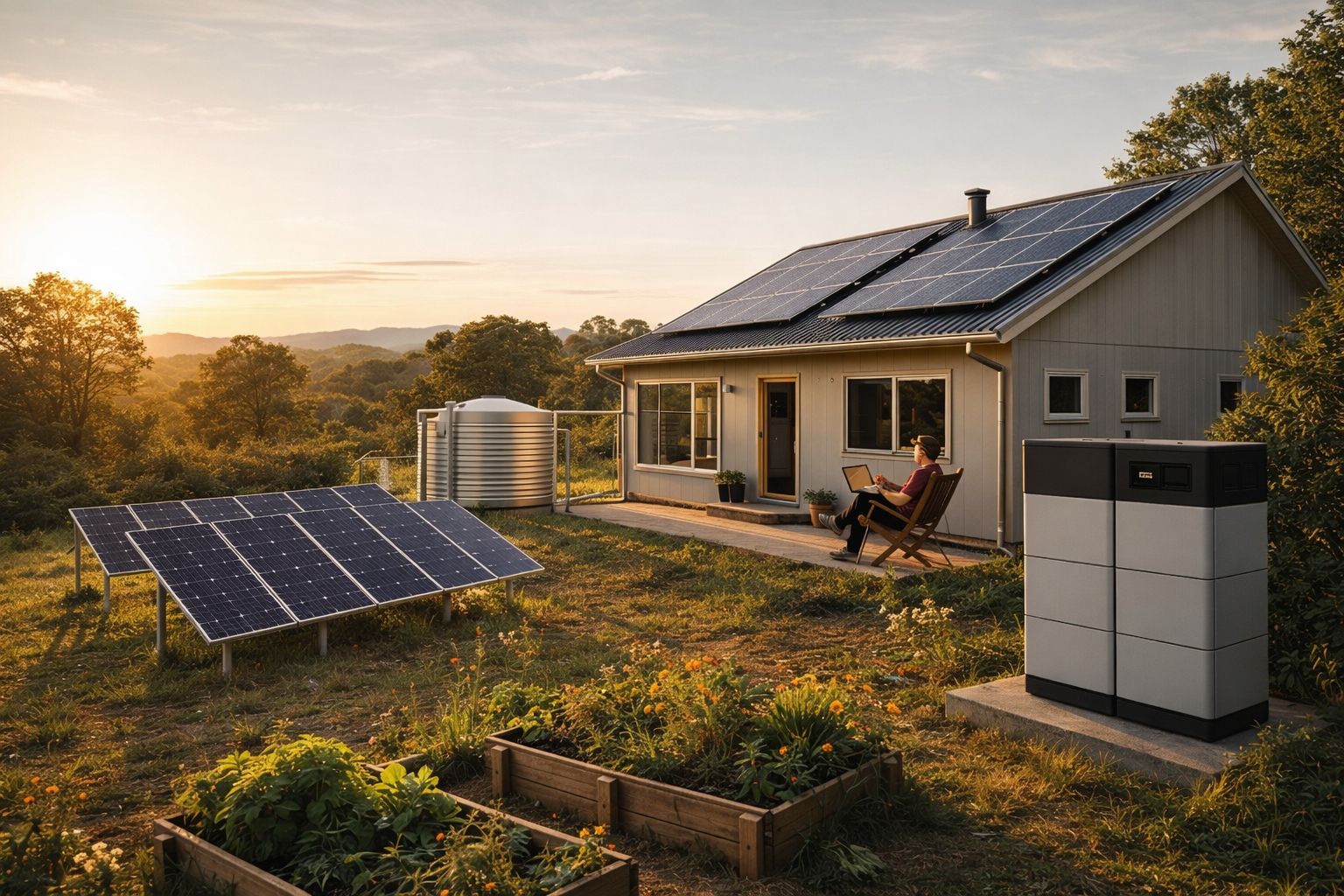
Across rural properties, cabins, homesteads, and even suburban homes, people are building power systems designed not for emergencies but for everyday life. Instead of relying entirely on centralized infrastructure, homeowners are building resilient systems that they can understand, maintain, and expand themselves.
This shift represents a new phase of off-grid living. Power is no longer just something delivered from afar. Increasingly, it is something generated locally, stored locally, and managed locally.
The result is greater independence while remaining connected when needed.
From Backup to Baseline
Modern off-grid systems are no longer built around rare outages. They are designed around normal daily living.
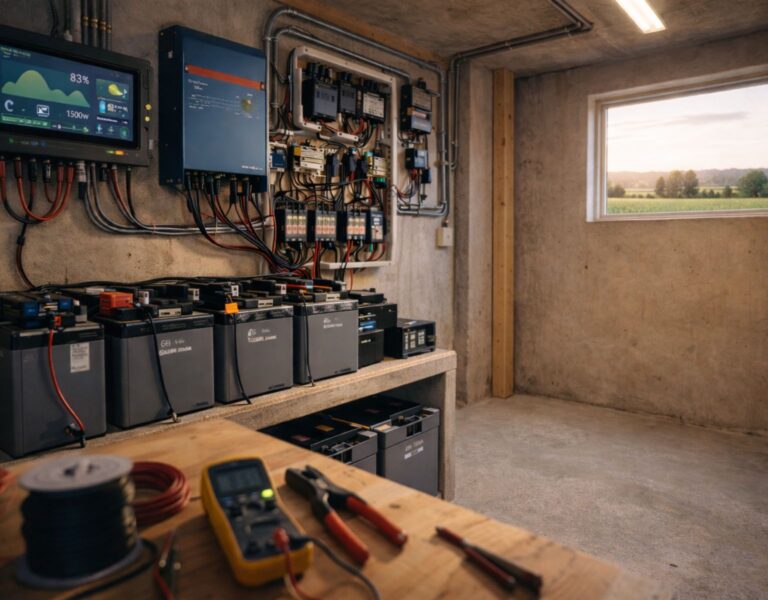
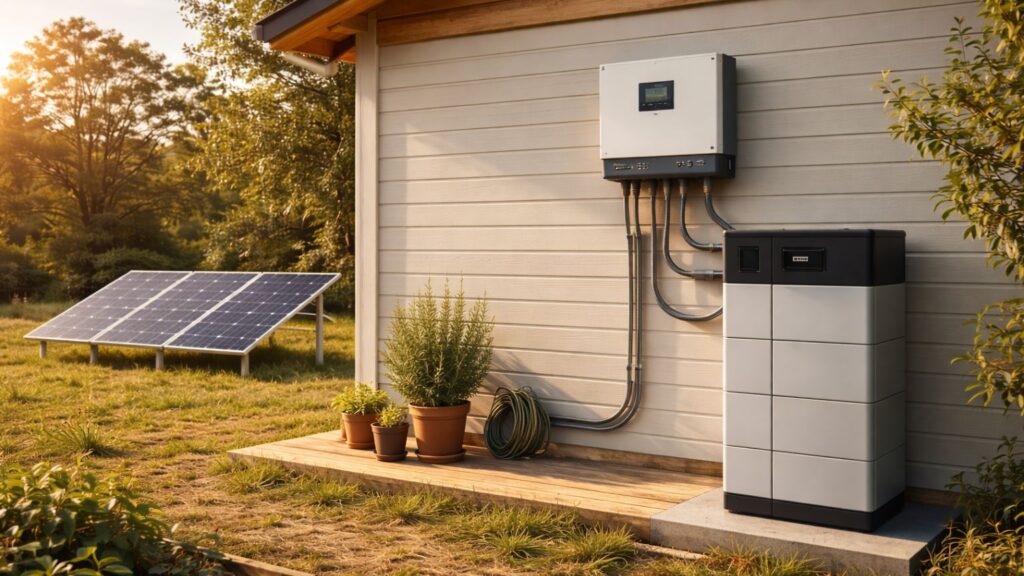
Solar panels generate energy during the day. Batteries store excess power for nighttime use. Inverters convert stored DC power into the AC electricity that appliances need.
Instead of temporary backup equipment, these systems become the foundation of the home’s electrical infrastructure.
Typical modern systems often look like this:
- A solar array sized between 800 W and 3 kW
- A lithium battery bank between 5 kWh and 20 kWh
- A 48 V inverter system capable of running normal household loads
With the right design, these systems quietly power lighting, refrigeration, internet equipment, pumps, and other essential devices every day.
Emergencies become easier to manage not because the system was designed for crisis, but because it was designed to work reliably all the time.
A system that performs smoothly during normal life is naturally resilient during disruptions.
The Rise of Personal Microgrids
Another trend shaping the future of off-grid living is the emergence of small-scale microgrids.
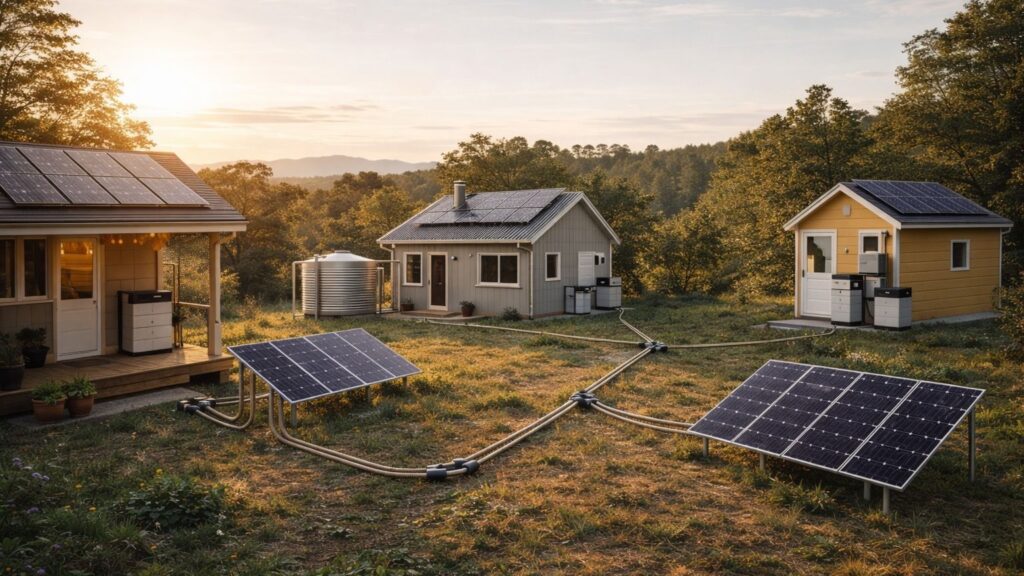
Instead of a single large power source serving thousands of homes, a microgrid distributes generation across smaller clusters of buildings. Each location may have its own solar panels and batteries, with the ability to share or redistribute energy when necessary.
At a basic level, a microgrid combines three core elements:
- Local power generation
- Energy storage
- Optional energy sharing between nearby systems
These networks offer several advantages.
Repairs are simpler because the systems are local. If an inverter fails, the homeowner or a nearby technician can replace it without waiting for distant infrastructure crews.
Systems are also modular. Additional panels, batteries, or inverters can be added over time without rebuilding the entire installation.
Finally, microgrids encourage community resilience. Neighboring homes can support each other during outages or periods of high demand.
Rather than relying entirely on a distant centralized grid, power becomes something communities can partially manage themselves. :contentReference[oaicite:0]{index=0}
Smart Solar and Adaptive Systems
Modern solar equipment is far more capable than early off-grid hardware.
Charge controllers now monitor battery health, track production patterns, and adjust charging behavior based on environmental conditions. Many systems can prioritize critical loads automatically.
For example:
- Refrigeration and lighting may receive priority power
- High-demand devices may be delayed until solar production is strong
- Weather forecasts can influence charging behavior before storms arrive
These features are not about convenience alone. They help prevent system overloads and extend battery lifespan.
For homeowners building systems today, one practical recommendation is to prioritize equipment that uses open communication protocols such as CAN, RS485, or Modbus. Open standards make it easier to monitor systems, replace components, and avoid being locked into proprietary ecosystems.
A well-designed system should remain understandable and maintainable years after installation.
The Economic Reality of Power Sovereignty
One of the biggest misconceptions about off-grid systems is that they are either extremely expensive or only practical for remote locations.
In reality, the economics are shifting.
Battery prices have fallen significantly over the past decade, while solar panel efficiency has improved. At the same time, grid electricity costs continue to rise in many regions.
For many homeowners, especially those in rural areas, a hybrid approach now makes financial sense:
- Use solar and batteries for daily baseline loads
- Use the grid only when needed
- Reduce peak demand and long-term energy costs
Over time, this approach can reduce dependency without requiring a full off-grid commitment from day one.
Power sovereignty does not have to be immediate. It can be built gradually.
[See Related: The Future Grid: How AI, Batteries, and Smart Micro-Systems Are Redefining Independence]
Modular Everything: Designing for Change
One of the most important design principles for modern off-grid systems is modularity.
Older systems often required major redesigns when components failed or capacity needed to increase. Today’s equipment is increasingly designed to scale.
Solar panels can be added to existing arrays. Battery banks can expand with additional modules. Inverters can operate in parallel to increase available wattage.
This modular approach offers two key benefits.
First, systems can grow gradually as budgets allow. Homeowners do not need to build the final system on day one.
Second, repairs become simpler. If one component fails, it can often be replaced without dismantling the rest of the installation.
When designing an off-grid system, it is wise to think in terms of replaceable modules rather than permanent structures.
Independence is easier to maintain when systems are built for change.
The Limits of Off-Grid Systems (What People Get Wrong)
Power sovereignty is powerful. But it is not magic.
Many first-time builders underestimate real-world constraints.
Solar production varies with seasons. Winter output can drop significantly in northern climates. Battery storage is finite. High-demand appliances can quickly overwhelm undersized systems.
Common misconceptions include:
- “Solar will run everything without limits”
- “Batteries replace the grid entirely”
- “Once installed, the system is set-and-forget”
In reality, successful off-grid living requires awareness.
Energy becomes something you manage, not something you ignore.
This is not a downside. It is part of the shift toward independence.
The Next Frontier: Water and Energy Integration
Power is only one piece of a resilient home.
Water systems are becoming increasingly integrated with off-grid energy infrastructure. Solar-powered pumps, gravity-fed storage tanks, and efficient filtration systems allow homes to operate with minimal external inputs.
Many modern off-grid properties combine:
- Rainwater collection systems
- Solar-powered DC pumps
- Gravity-fed storage tanks
- UV or ceramic filtration systems
These designs reduce dependence on centralized water infrastructure while maintaining safe and reliable supply.
In the next article in this series, we will explore how off-grid water systems are evolving and how simple design choices can dramatically improve resilience.
[See Related: Beyond Solar: How to Build a True Energy-Sovereign Life]
Communication and Community Resilience
Electricity alone does not create resilience. Communication systems are equally important.
When grid outages occur, internet and cellular networks often fail shortly afterward. Maintaining communication during disruptions requires independent tools.
Many off-grid households maintain at least one of the following systems:
- Satellite messengers for emergency communication
- GMRS or amateur radio equipment for local contact
- Low-power networking equipment for local data sharing
These systems draw very little power and can operate easily on small battery reserves.
The goal is simple: maintain the ability to communicate even when larger infrastructure fails.
Transitioning to Power Sovereignty (A Practical Path)
For most people, the move toward off-grid capability happens in stages.
A practical path might look like this:
Stage 1: Backup
A small portable power station and a few panels
Stage 2: Essential Loads
Battery system supporting lights, internet, and refrigeration
Stage 3: Partial Independence
Expanded solar array covering most daily consumption
Stage 4: Full System
Whole-home integration with storage, inverter, and optional grid tie
This step-by-step approach reduces cost, complexity, and risk.
It also allows homeowners to learn their energy patterns before committing to larger systems.
Materials That Last
One lesson learned by many long-term off-grid builders is that cheap materials rarely remain cheap.
Components exposed to weather, heat cycles, and vibration must be chosen carefully.
A few upgrades dramatically improve system longevity:
- ETFE-coated solar panels resist yellowing and degradation
- Tinned copper wiring reduces corrosion
- Stainless steel mounting hardware prevents structural failure
These details determine how well a system performs years later.
Principles for the Next Era of Off-Grid Design
As systems evolve, several practical design principles continue to prove themselves.
- Short wire runs improve efficiency and reduce failure points
- Solar panels must avoid shading throughout the day
- Redundancy is valuable for critical components
- Simplicity often outperforms complex automation
Field Verdict: Power Sovereignty in Practice
Off-grid living is not about withdrawing from the world.
It is about taking responsibility for the systems that support daily life.
A well-designed power system provides reliability, independence, and a deeper understanding of energy itself. When homeowners build systems they can maintain, repair, and expand, they gain something that centralized infrastructure cannot easily provide: true operational control.
The future of off-grid living will likely combine local generation, modular storage, and thoughtful design. Homes will still interact with the grid, but they will no longer depend on it completely.
Power will become something people participate in rather than something they simply receive.
Series Roadmap
This article is the first installment in a series exploring the evolving infrastructure of off-grid living.
Upcoming articles include:
Part 2 – Water Freedom
Gravity systems, solar pumps, and resilient storage
Part 3 – Off-Grid Intelligence
Automation and monitoring tools that support independence
Part 4 – The Human Element
The rhythms, communities, and habits that sustain long-