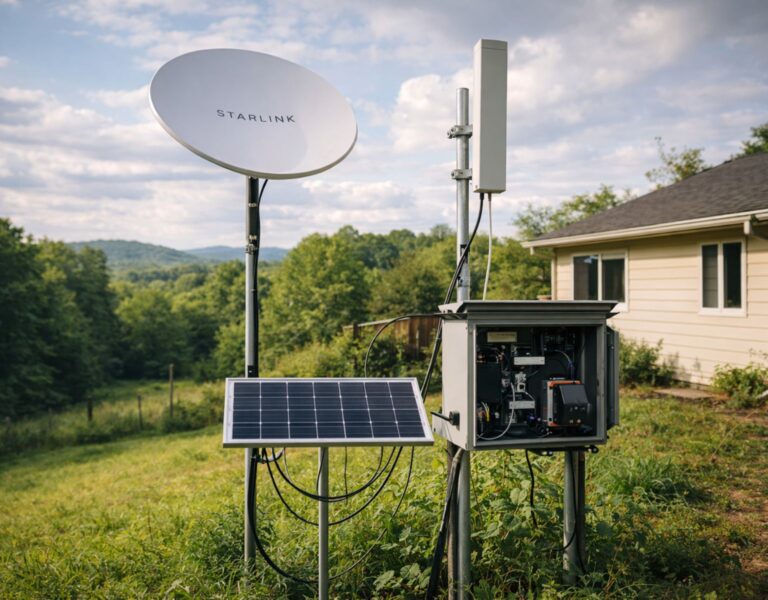
The 10 Best Off-Grid Radios and Satellite Communicators
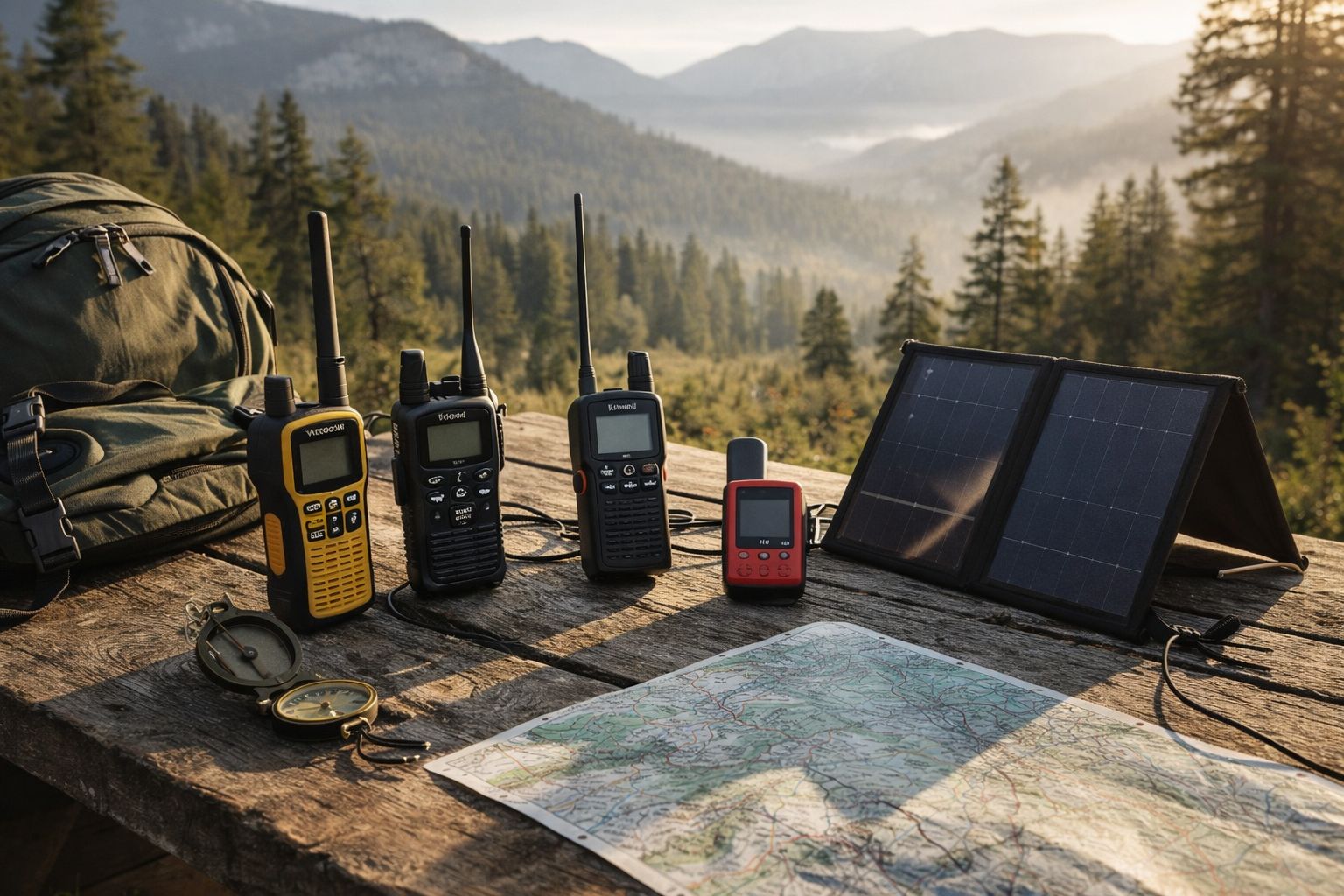
Introduction: When the Signal Dies Communication Becomes Survival
Power keeps the lights on. Communication keeps you found.
From mountain cabins to hurricane zones, reliable communication equipment is not a luxury. It is safety infrastructure. When cellular networks fail, your ability to send a message may depend entirely on the tools you brought with you.
Radios, satellite communicators, and mesh devices allow off-grid homes, expeditions, and rural communities to stay connected when traditional infrastructure disappears.
We analyzed field reports, user data, and real-world expedition feedback to identify the devices that consistently perform when conditions become difficult.
What becomes clear very quickly is that communication failures rarely happen in isolation. They tend to cascade alongside power outages, severe weather, or remote travel conditions. When that happens, having even a single reliable communication method can completely change the outcome of a situation.
Why Off-Grid Communication Matters
When storms hit or remote terrain blocks cell signals, communication keeps people coordinated and safe.
Reliable off-grid communication enables:
- Emergency contact when cellular networks fail
- Coordination between crews, families, or remote teams
- Information flow during disasters or infrastructure outages
- Peace of mind through simple status updates
Redundancy supports resilience.
In real-world situations, communication failures often happen before power systems are fully restored. Cell towers may be down, overloaded, or out of range entirely. Even in semi-rural areas, a single point of failure can leave entire regions disconnected.
This is where independent communication systems become critical. They remove reliance on centralized infrastructure and give you direct control over your ability to send and receive information.
[See Related: Always Connected: Building a Reliable Off-Grid Internet and Communications Stack]
Types of Off-Grid Communication Systems
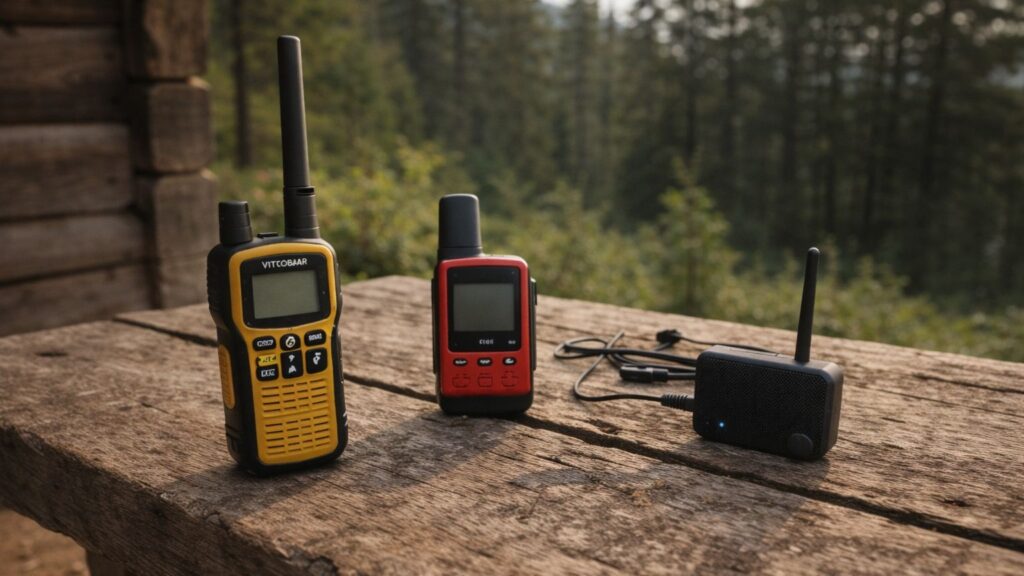
Handheld Radios (GMRS FRS and Ham)
Handheld radios provide fast voice communication across local distances.
They are ideal for families, small communities, work crews, and expeditions.
Common types include:
- GMRS: simple license in North America with strong range
- FRS: license-free but lower power
- Ham (VHF UHF): high flexibility and long range with licensing
Radios are your first line of communication. They require no infrastructure, work instantly, and are extremely reliable when properly configured.
In practice, radios are often the most-used communication tool in an off-grid setup. Whether coordinating tasks across a property or staying in touch during outdoor work, their simplicity makes them indispensable.
However, real-world range is almost always lower than advertised. Terrain, trees, buildings, and elevation all affect performance. Testing your specific environment is far more important than relying on manufacturer claims.
Satellite Communicators
Satellite messengers use global satellite networks such as Iridium or Globalstar to send messages anywhere on Earth.
These devices provide:
- Two-way texting
- GPS tracking
- Emergency SOS alerts
They require subscription plans but offer true global communication.
Satellite communicators serve as your final layer of safety, ensuring you can reach help no matter how remote your location.
In real-world use, these devices are often reserved for critical communication rather than daily use due to subscription costs. However, when needed, they are unmatched in reliability.
One important consideration is line-of-sight to the sky. Dense forest canopy, steep canyon walls, or heavy storms can affect signal acquisition times. While messages will usually go through eventually, delays can occur.
Mesh Networks
Mesh communication systems create peer-to-peer message networks.
Each device relays messages through nearby nodes, allowing the network to expand organically.
These systems are ideal for:
- Homestead clusters
- Rural neighborhoods
- Community preparedness networks
Mesh systems enable communication without relying on any centralized infrastructure.
They become especially powerful when multiple households participate. A single device has limited range, but a network of devices can extend coverage significantly across a region.
Long Range Wi-Fi and Remote Internet Systems
Directional Wi-Fi links and satellite internet systems can support remote work and data transfer.
While these systems require more power, they allow remote locations to maintain full connectivity when properly designed.
These setups are typically part of a broader system and are best used alongside radios and satellite devices, not as a replacement.
[See Related: The 5 Best Off Grid Internet Options for Remote Living]
What to Look for in an Off-Grid Communicator
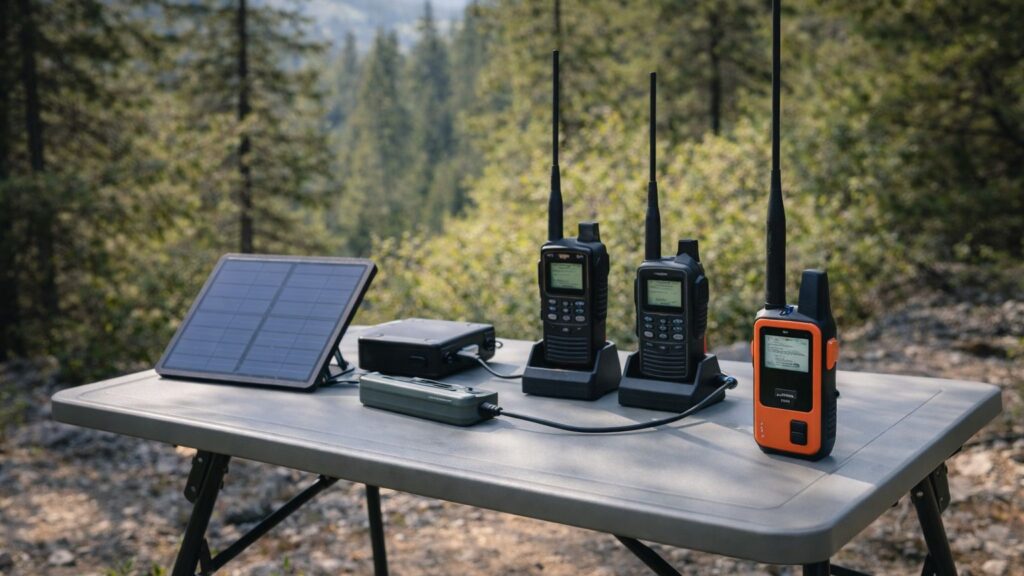
Range and Frequency
Different radio frequencies behave differently depending on terrain.
- VHF (136–174 MHz) performs best in open terrain
- UHF (400–520 MHz) performs better in forests and built environments
- GMRS provides strong general-purpose communication
Choosing the correct frequency for your environment is critical for performance.
In many cases, elevation plays a larger role than raw transmission power. A lower-powered radio positioned at a higher elevation can outperform a more powerful unit at ground level.
Power Options
Reliable communication equipment should support multiple power sources.
Look for devices that support:
- USB-C charging
- Replaceable batteries
- Direct 12V charging
Power flexibility ensures your system remains operational in all conditions.
Devices that rely solely on proprietary charging systems introduce unnecessary risk. Standardized charging options are always preferable in off-grid environments.
Durability and Water Resistance
Outdoor equipment must withstand harsh conditions.
Look for:
- IPX5–IPX7 ratings
- Reinforced housings
- Weather-sealed controls
Durability directly impacts long-term reliability.
Equipment that fails under moisture, dust, or minor impact is not suitable for off-grid use, regardless of features.
Ease of Use
Communication tools must be simple under stress.
The best devices offer:
- Physical buttons
- Clear displays
- Dedicated emergency functions
Complex interfaces can fail when needed most.
If a device requires multiple steps to send a message, it is already too complicated for emergency use.
Subscription and Cost
Satellite devices often require monthly plans.
Always review:
- Subscription tiers
- Activation costs
- Emergency coverage
And test your system before relying on it.
A common mistake is purchasing a satellite device but not maintaining an active plan. In that state, it becomes little more than a paperweight.
The 10 Best Off-Grid Communication Devices
| Rank | Device | Type | Coverage | Ease | Durability | Value | Overall |
|---|---|---|---|---|---|---|---|
| 1 | Garmin inReach Mini 2 | Satellite Messenger | Global | 9.6 | 9.4 | 8.8 | 9.3 / 10 |
| 2 | ZOLEO Satellite Communicator | Satellite Messenger | Global | 9.2 | 9.1 | 9.4 | 9.2 / 10 |
| 3 | Motorola T600 H2O Talkabout | GMRS / FRS | Local | 9.1 | 9.5 | 9.0 | 9.1 / 10 |
| 4 | Midland GXT1000VP4 | GMRS | Regional | 9.0 | 8.9 | 9.2 | 9.0 / 10 |
| 5 | Baofeng UV-5R Pro | Ham Radio | Local / Regional | 8.6 | 8.5 | 9.6 | 8.9 / 10 |
| 6 | Garmin inReach Messenger | Satellite | Global | 9.3 | 9.0 | 8.7 | 9.0 / 10 |
| 7 | Bivy Stick Blue | Satellite | Global | 8.9 | 8.8 | 8.9 | 8.9 / 10 |
| 8 | MeshTastic Node | LoRa Mesh | Neighborhood | 8.4 | 8.0 | 9.8 | 8.7 / 10 |
| 9 | GoTenna Mesh | LoRa Mesh | Local | 8.8 | 8.7 | 8.5 | 8.7 / 10 |
| 10 | Yaesu FT-65R | Ham Radio | Local / Regional | 8.5 | 9.7 | 8.0 | 8.7 / 10 |
Best Communication Setup by Use Case
Choosing the right system depends on how you live or travel.
Homestead
- GMRS radios for property-wide communication
- Satellite communicator for emergencies
- Mesh network for nearby neighbors
This creates layered redundancy.
Vanlife or Mobile
- Satellite communicator (primary)
- Compact radio
- USB charging setup
Mobility increases the importance of satellite coverage.
Backcountry Travel
- Satellite communicator
- Backup radio
- Spare batteries
Reliability outweighs convenience.
Emergency Kits
- Pair of radios
- Satellite communicator
- Printed instructions
Ease of use becomes critical.
How to Test Your Communication System
Testing is often overlooked but essential.
Signal Testing
- Test full range
- Identify dead zones
- Adjust placement
Device Testing
- Send test messages
- Confirm GPS accuracy
- Verify functionality
Battery Testing
- Check charge cycles
- Rotate backups
- Replace aging batteries
User Training
Everyone using the system should know:
- How to send messages
- How to switch channels
- What to do in emergencies
Powering Communication Devices Off-Grid
Communication devices are low-power but still require planning.
Solar Charging
- Small panels can sustain devices indefinitely
- Ideal for long-term setups
Battery Banks
- Provide backup during low solar periods
- Improve reliability
12V Integration
- Most efficient for permanent systems
- Reduces energy loss
Redundancy
Always maintain multiple charging options.
[See Related: The 10 Best Portable Solar Generators of 2026: Reliable Power for Off-Grid Living]
Communication Range Reference

| System | Typical Range | Notes |
|---|---|---|
| FRS / GMRS | 0.5 to 10 miles | Terrain dependent |
| Ham VHF/UHF | 1 to 25 miles | Repeaters extend range |
| LoRa Mesh | 1 to 5 miles per node | Expands with network |
| Satellite | Global | Subscription required |
| Wi-Fi Bridge | Site specific | High power use |
Common Mistakes
- Assuming compatibility between devices
- Skipping licensing
- Not testing equipment
- Relying only on phone-based systems
- Ignoring battery health
Safety and Communication Protocols
- Use clear call signs
- Establish status codes
- Avoid unnecessary transmissions
- Train all users
Field Verdict
Radios connect local teams.
Satellites connect distant regions.
Mesh networks connect communities.
Together, they create a communication system that operates independently of centralized infrastructure.
When communication remains intact, everything else becomes easier to manage.
Real-World Failure Scenarios (And What Actually Works)
Most communication systems are usually tested hardest when everything else is already going wrong.
Understanding how different tools perform under stress is what separates a theoretical setup from a reliable one.
Scenario 1 – Power Outage + Cell Network Overload
In widespread outages, cell towers often become overloaded or lose power entirely.
What works:
- GMRS or ham radios for local coordination
- Mesh networks if neighbors are prepared
- Satellite communicators for external contact
What fails:
- Mobile apps that rely on internet connectivity
- Wi-Fi calling or messaging services
In these situations, simple radio communication is often the fastest and most reliable option.
Scenario 2 – Remote Travel With No Signal
When traveling through remote regions, you may have zero cellular coverage for extended periods.
What works:
- Satellite communicators with clear sky access
- Pre-planned check-in schedules
What fails:
- Any system that depends on nearby infrastructure
A key insight here is that communication becomes intentional, not constant. You check in at intervals rather than staying continuously connected.
Scenario 3 – Severe Weather Conditions
Heavy rain, snow, and storms can affect both power and signal quality.
What works:
- Rugged radios with physical controls
- Devices with long battery life
What struggles:
- Touchscreen-heavy devices
- Systems requiring precise positioning
Cold weather in particular reduces battery performance significantly. Keeping devices warm and stored properly can extend usable runtime.
Scenario 4 – Multi-Person Coordination
Coordinating multiple people across a property or worksite introduces complexity.
What works:
- Dedicated radio channels
- Clear communication protocols
- Simple devices that everyone understands
What fails:
- Overly complex systems
- Devices that require apps or pairing
In group scenarios, simplicity consistently outperforms feature-rich systems.
Choosing the Right Device (Without Overthinking It)
One of the most common mistakes is trying to find a single device that does everything.
That approach usually leads to compromise.
Instead, think in layers:
- Local layer → radios
- Regional layer → mesh or repeaters
- Global layer → satellite communicator
If you build across these layers, your system becomes far more resilient.
For most users, a simple combination of:
- one reliable radio system
- one satellite communicator
will cover the majority of real-world situations.
Maintenance and Long-Term Reliability
Communication gear is often stored and forgotten until it’s needed.
That’s where problems start.
Battery Maintenance
- Recharge devices every 1–3 months
- Replace aging batteries before failure
- Store batteries in moderate temperatures
Dead batteries are one of the most common points of failure.
Firmware and Updates
Some modern devices rely on software updates.
- Keep firmware current
- Test functionality after updates
- Avoid updating right before critical trips
Stability is more important than having the latest features.
Physical Inspection
- Check antenna connections
- Inspect for water or dust ingress
- Verify buttons and controls function properly
Small issues tend to go unnoticed until the moment you need the device.
Final Thought – Communication Is a System Not a Device
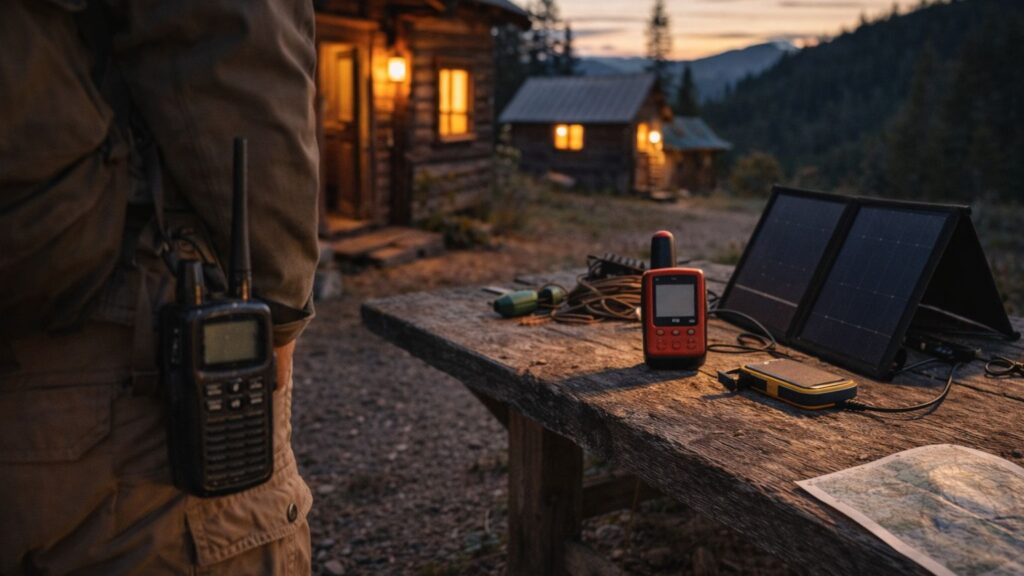
The biggest shift in mindset is this:
You are building a communication system, with each device serving a specific role.
That system should:
- work without external infrastructure
- function across multiple distances
- remain powered in all conditions
When built properly, communication becomes something you don’t have to think about. It just works.
And when everything else goes down, that reliability becomes one of the most valuable assets you have.