Power in the Storm: How to Keep Solar Systems Running Through Extreme Weather
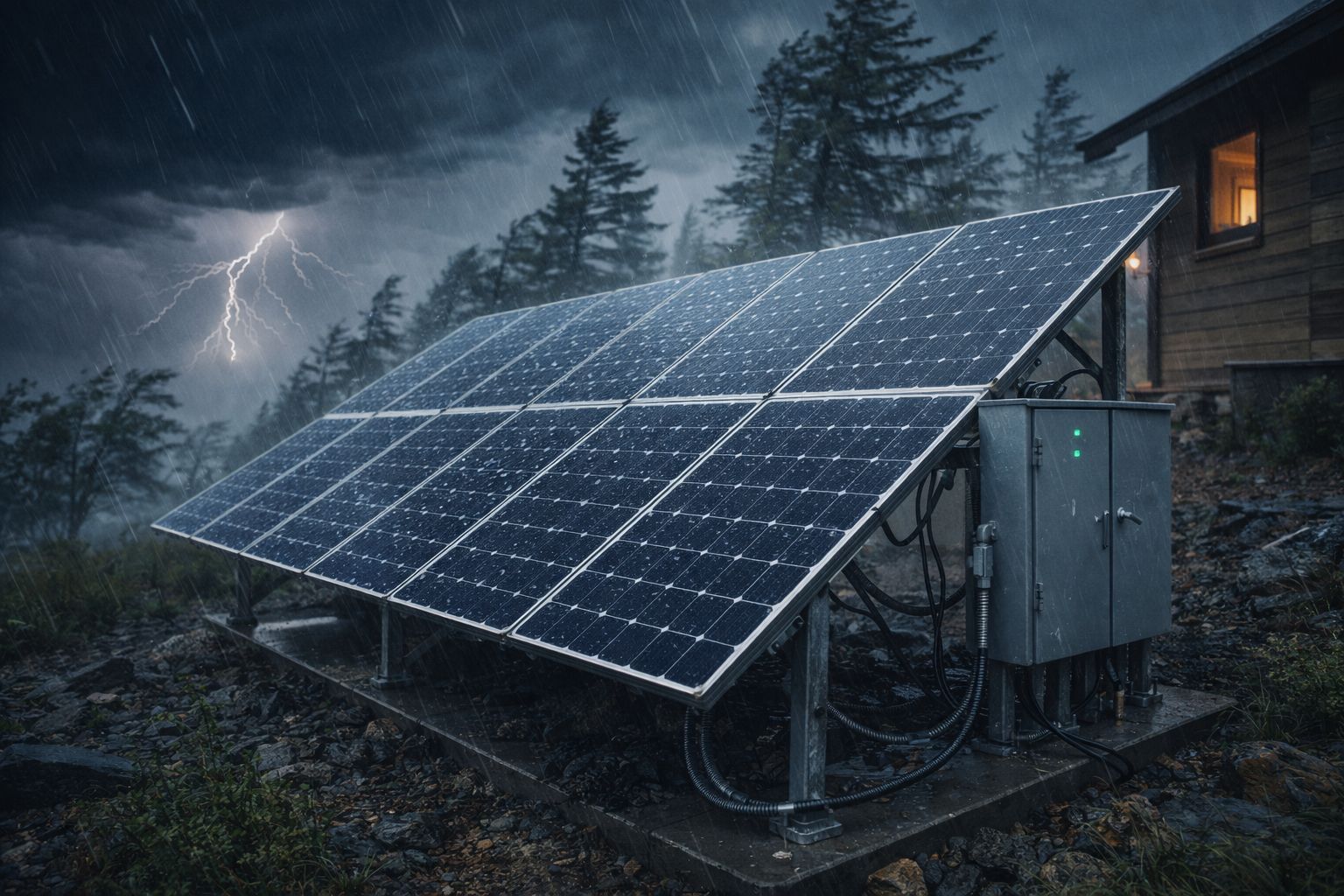
Solar power is freedom. Until the sky turns black and the wind starts howling. Storms, lightning, snow, and extreme heat can expose the weak points in any off-grid system. If your solar setup isn’t designed for harsh conditions, a single weather event can knock your power offline when you need it most.
This guide shows how to harden an off-grid solar system against extreme weather. From grounding and surge protection to battery redundancy and field repairs, we’ll cover proven strategies that keep solar power running through storms, snow, heat waves, and high winds.
Whether you’re running a remote homestead, a forest cabin, or a mobile van setup, understanding how solar systems fail, and how to protect them, can make the difference between temporary inconvenience and a complete blackout.
Why Solar Systems Fail During Storms
Solar systems are surprisingly resilient when designed correctly. Most failures during storms come from planning oversights rather than defective equipment.
Common causes of system failure include:
- Improper grounding that allows lightning surges to travel through wiring
- Batteries exposed to extreme temperatures
- Water intrusion into electrical components
- Weak panel mounts that fail under wind load
- Snow accumulation blocking panels or damaging frames
- Power loss from partial shading during storms
Human error also plays a role. Skipping inspections, failing to secure connections, or ignoring surge protection can leave even well-designed systems vulnerable.
In real-world off-grid setups, failures rarely happen in isolation. A loose mount combined with high wind, followed by water intrusion, can cascade into a full system shutdown. That’s why resilient systems reinforce every weak point.
(See Related: Top 10 Fail Points in Off-Grid Systems)
Critical Threats: Wind, Snow, Lightning and Heat
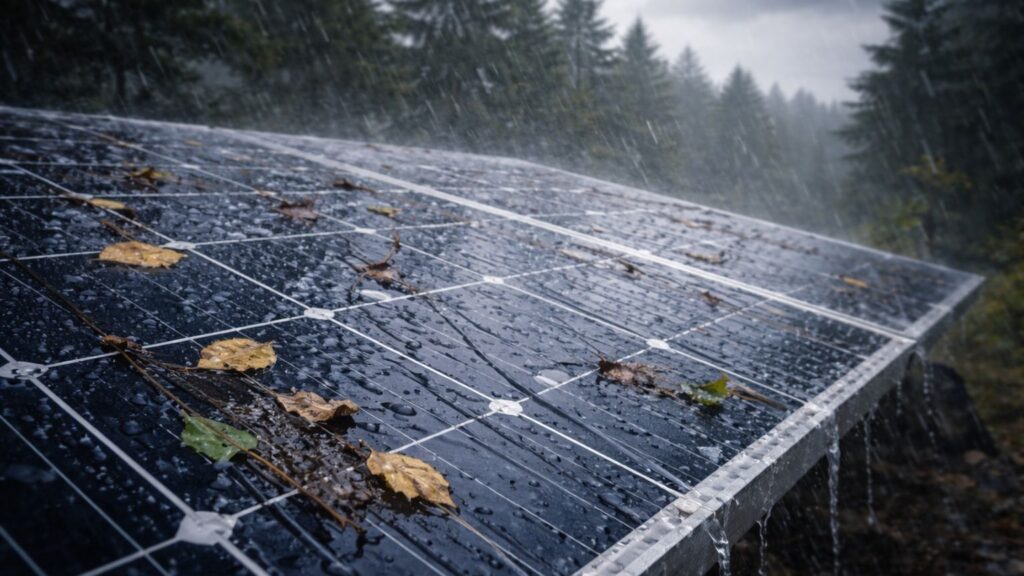
Extreme weather stresses solar systems in several different ways.
Lightning
Lightning does not need to directly strike your system to cause damage. Nearby strikes can induce voltage surges that travel through grounding paths or wiring.
Sensitive electronics such as charge controllers and inverters are especially vulnerable to these sudden spikes. In many cases, the panels survive, but the system becomes unusable due to fried electronics.
Wind
Strong winds generate uplift forces on solar panels. If mounts are poorly installed or bolts loosen over time, panels can flex, crack, or tear free entirely.
High winds can also whip exposed cables and damage junction boxes. In forested areas, falling branches become an additional risk factor.
Snow
Snow accumulation blocks sunlight and can place heavy loads on panels and racking systems. Ice buildup around mounting hardware can also stress brackets unevenly.
In extreme cases, snow loads can exceed the structural limits of panel frames, especially if panels are mounted too flat.
Heat
Solar panels lose efficiency as temperatures rise. For every degree above 25°C (77°F), output drops slightly.
Heat also accelerates battery degradation and can trigger inverter thermal shutdowns if airflow is insufficient. In enclosed off-grid setups, this is one of the most overlooked failure points.
Bulletproof Your System: Five Key Defenses
Whether you are designing a new solar setup or reinforcing an existing one, these strategies significantly improve durability.
1. Overbuild Mounting Hardware
Use stainless steel or hot-dip galvanized hardware with wind-rated racking systems. Reinforce mounts with diagonal bracing where possible.
Panels mounted at steeper angles shed snow more easily and reduce wind resistance. A slightly overbuilt mounting system is almost always worth the extra cost.
2. Elevate and Protect Critical Gear
Keep batteries, charge controllers, and other electronics off the ground in weather-rated enclosures. Use sealed boxes with ventilation to prevent moisture buildup.
Avoid improvised plastic containers. Proper electrical enclosures are designed to withstand prolonged exposure to rain and temperature swings.
3. Use Flexible Wiring and Strain Relief
Solar wiring should allow for slight movement. Use UV-rated cables with protective conduit where needed.
Install waterproof cable glands and strain relief at every enclosure entry point to prevent water intrusion. This is one of the simplest upgrades that dramatically improves reliability.
4. Plan for Snow and Drainage
Avoid installing panels too close together. Allow space for snow to slide through and airflow to cool the panels.
Mount systems high enough that winter snowpack cannot bury the lower edge of the array. In heavy snow regions, clearance matters more than aesthetics.
5. Design for Redundancy
Redundancy is essential for off-grid resilience.
Consider:
- Multiple charge controllers
- Split battery banks
- Backup inverters
- Secondary solar strings
When one component fails, a redundant system allows the rest of the infrastructure to continue operating.
Grounding and Surge Protection
Grounding is the most important defense against lightning damage.
Every metal component in the system should be bonded to a common grounding network.
Key grounding practices include:
- Grounding solar panel frames and mounting racks
- Installing copper grounding rods at least 8 feet into the soil
- Bonding rods to a central grounding bus
- Installing surge arrestors at critical points
Recommended surge protection locations include:
- Solar array junction box
- Charge controller input
- Inverter input and output
Multiple grounding rods spaced several feet apart improve protection, especially in rocky or dry soil conditions.
[Related: Choosing the Right Solar Generator Size]
Smart Battery Redundancy
Battery storage keeps systems running when solar input drops. However, a single battery bank can become a single point of failure.
Reliable off-grid systems often include multiple battery layers.
Parallel Battery Banks
Splitting batteries into independent strings allows one bank to operate if another fails.
Secondary Charging Systems
A smaller secondary solar array can maintain a backup battery dedicated to essential loads such as lighting, communications, and refrigeration.
Temperature Control
Extreme temperatures reduce battery lifespan.
Cold climates may require battery heaters or insulated enclosures, while hot climates benefit from ventilation and reflective shielding.
Battery Management Systems
A modern battery management system monitors temperature, voltage, and individual cell performance.
Alerts allow system owners to catch problems before they escalate, often before a failure becomes visible.
What Actually Fails First in Real Storm Conditions
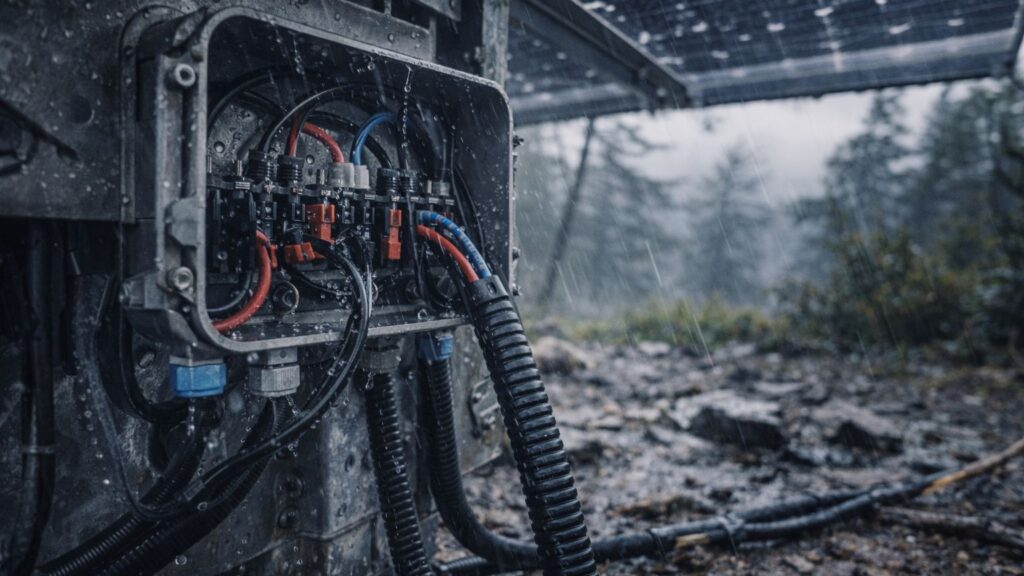
Most people assume solar systems fail all at once.
They don’t.
Failures happen in stages, and understanding that sequence is one of the most valuable things you can know when designing or troubleshooting a system.
Stage 1: Performance Drop (The Early Warning)
Before anything breaks, systems usually start underperforming.
You might notice:
- slower battery charging during daylight
- lower than expected system voltage
- intermittent inverter warnings
This is often caused by:
- partial shading from storm clouds or debris
- moisture affecting connections
- small voltage drops from stressed wiring
At this stage, everything is still technically “working”, but the system is no longer operating efficiently.
Most people ignore this phase.
That’s a mistake.
Stage 2: Intermittent Faults
As conditions worsen, small issues become visible.
Common symptoms:
- inverter resets or temporary shutdowns
- charge controller cycling on and off
- inconsistent battery charging
This is often where:
- loose connections start to arc
- moisture reaches vulnerable components
- voltage instability affects electronics
This stage is critical.
If addressed early, damage can often be avoided entirely.
Stage 3: Component Failure
If stress continues, the weakest component fails first.
In real-world systems, this is rarely the solar panel.
It’s usually:
- charge controllers
- inverters
- exposed wiring
- connectors or junction points
These components handle voltage conversion and current flow — making them more sensitive to spikes and instability.
Panels are passive and surprisingly durable.
Sensitive electronics are far more vulnerable to surges and instability.
Stage 4: System Collapse (Worst Case)
In severe scenarios, multiple failures cascade:
- surge damages controller
- batteries stop charging
- inverter shuts down
- system goes offline completely
At this point, recovery requires manual repair or replacement.
This is what most people picture when they think of “system failure” but by the time you reach this stage, several earlier warning signs were already present.
Why Understanding Failure Order Matters
Once you understand how systems fail, you can design against it.
Instead of asking:
“How do I prevent failure entirely?”
You ask:
“How do I keep the system operating when something fails?”
That shift changes everything.
Designing for Stage 1 and 2
The goal is long-term resilience.
If your system can tolerate early-stage issues, it rarely progresses to full failure.
This is where:
- proper wiring
- strain relief
- weatherproofing
- regular inspection
…make the biggest difference.
Designing for Stage 3
This is where redundancy matters.
If a charge controller fails:
- a second controller keeps charging alive
If one battery bank drops:
- another continues supplying power
If one solar string is damaged:
- others continue producing
This prevents a single failure from becoming a full outage.
Designing for Stage 4 (Worst Case)
Even if everything goes wrong, you should still have:
- basic lighting
- communication capability
- access to stored water
- a way to recharge essential devices
This is where backup systems, even small ones, become critical.
A 500Wh backup battery can be the difference between inconvenience and complete shutdown.
The Hidden Pattern in System Failures
Across real off-grid systems, a pattern shows up repeatedly:
- simple systems fail less often
- overcomplicated systems fail in unpredictable ways
Complex systems introduce:
- more connection points
- more failure paths
- more maintenance requirements
That doesn’t mean you should avoid advanced setups.
It means every added layer should be intentional and understood.
The Real Goal
Build a system that:
- fails slowly
- fails predictably
- and continues operating through partial failure
That’s what resilience actually looks like.
A storm doesn’t need to take your system offline.
It just needs to expose its weakest point.
If you understand where that point is, and reinforce it, your system won’t just survive storms.
It will operate through them.
Emergency Rewiring and Field Repairs
Storm damage often requires quick repairs.
Design your system so that it can be serviced in the field.
Essential design features include:
- Disconnect switches for every major component
- Clearly labeled wiring
- Accessible junction boxes
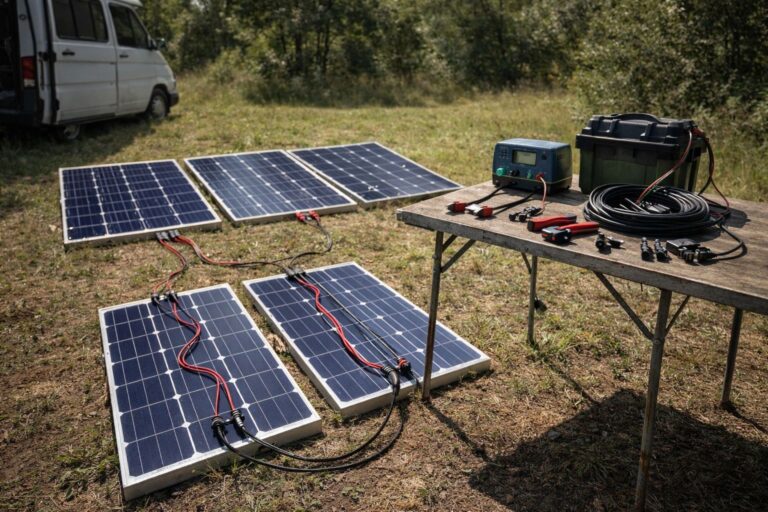
A basic repair kit should include:
- Spare fuses
- MC4 connectors
- Crimp tools
- Heat shrink tubing
- Multimeter or clamp meter
- Electrical tape
- Printed wiring diagram
Practicing basic repair procedures before emergencies can dramatically reduce downtime.
Real-World Setup Example
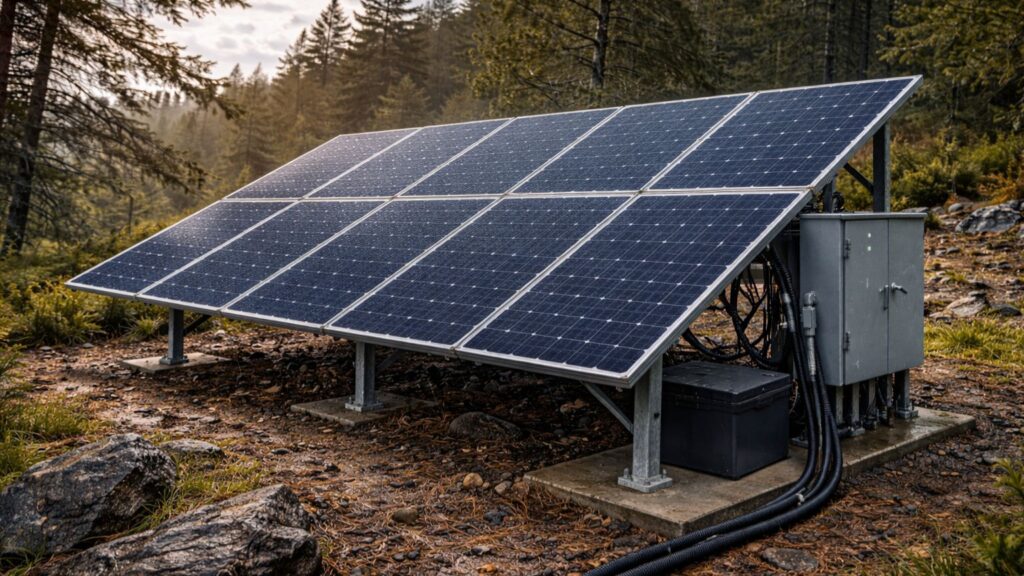
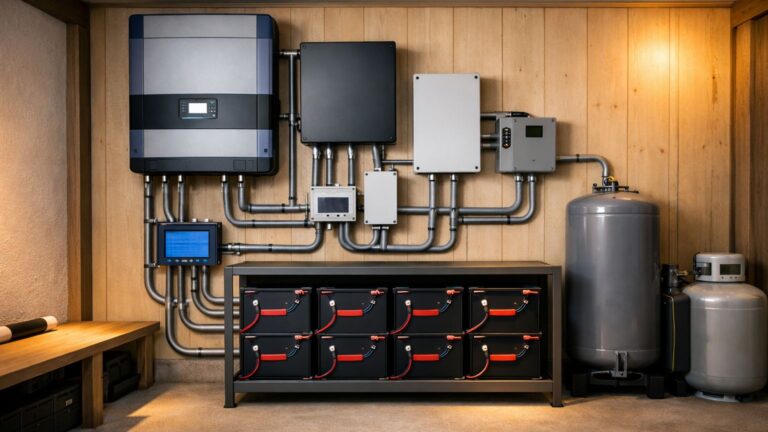
A small off-grid home in a storm-prone region should install a ground-mounted solar array with reinforced steel racking.
The system includes:
- Elevated battery enclosure with ventilation and insulation
- Dual charge controllers for redundancy
- Surge protection at array and inverter points
- Grounding rods spaced for improved discharge
Panels are mounted at a steeper angle to shed snow and reduce wind uplift.
During a severe storm:
- Power continues uninterrupted
- No water intrusion occurs
- System remains stable despite heavy wind and rain
This type of setup demonstrates the core principle of off-grid design: build for failure before it happens.
Common Mistakes to Avoid
- Underestimating wind load on panel mounts
- Skipping proper grounding systems
- Using indoor-rated components outdoors
- Installing batteries without temperature protection
- Failing to secure wiring against movement
- Relying on a single point of failure in critical systems
Most failures are preventable with proper planning.
Field-Tested Upgrades That Make a Difference
Some of the most effective improvements are simple but often overlooked.
- Add drip loops to all external wiring to prevent water entry
- Use anti-corrosion coatings on exposed hardware
- Install lightning arrestors at multiple system points
- Keep spare connectors and fuses on-site at all times
- Regularly inspect mounts after seasonal weather shifts
These small upgrades compound into long-term reliability.
Recommended Gear for Storm Protection
Several components dramatically improve solar system durability.
Surge Protection
- MidNite Solar SPD300 DC surge protector
- Eaton CHSPT2ULTRA whole-home surge protector
Grounding Equipment
- Copper grounding rod kits
- Ground continuity testers
Batteries and Monitoring
- LiFePO4 battery systems with integrated BMS
- Smart monitoring systems for remote diagnostics
- Battery heating pads for cold climates
Tools and Connectors
- MC4 crimp tool kits
- Battery isolation switches
- Clamp meters for diagnostics
Weatherproof Enclosures
- NEMA-rated electrical enclosures
- Thermostat-controlled heater plugs for battery compartments
Seasonal Maintenance Checklist (Before and After Extreme Weather)
Even a well-built system needs regular inspection.
Most solar failures during storms don’t come from design flaws. They come from small issues that went unnoticed over time.
A simple seasonal checklist can prevent the majority of real-world failures.
Pre-Storm Preparation (Spring / Fall)
Before storm season begins, take time to inspect and reinforce your system.
Mounting and Structure
- Check all bolts, brackets, and mounting hardware for looseness or corrosion
- Inspect panel frames for micro-cracks or stress points
- Verify racking alignment and structural stability
Electrical Connections
- Tighten terminals at charge controllers, inverters, and battery connections
- Inspect MC4 connectors for wear or moisture intrusion
- Confirm strain relief and conduit integrity
Grounding System
- Inspect grounding rods and bonding connections
- Ensure clamps are tight and corrosion-free
- Test continuity if possible
Waterproofing and Enclosures
- Check all enclosures for seal integrity
- Look for signs of condensation or water ingress
- Verify cable glands are tight and properly seated
Battery Systems
- Confirm battery temperatures are within safe operating range
- Test battery management system alerts and monitoring
- Inspect for swelling, corrosion, or unusual voltage behavior
During Storm Conditions
When extreme weather is active, avoid unnecessary interaction with the system.
However, a few precautions can reduce risk:
- Avoid touching system components during lightning events
- Monitor system performance remotely if possible
- Shut down non-essential loads if battery reserves drop
- Keep backup lighting and communication devices ready
Post-Storm Inspection
After the storm passes, perform a full system check before resuming normal operation.
Visual Inspection
- Check panels for debris, cracks, or displacement
- Inspect mounts for shifting or stress damage
- Look for fallen branches or impact damage
Electrical System Check
- Verify inverter and charge controller status
- Check for error codes or unusual readings
- Test system output under sunlight
Wiring and Connections
- Inspect exposed wiring for abrasion or loosened connections
- Confirm no water has entered junction boxes
Battery Health
- Check voltage balance across battery banks
- Review system logs for irregular discharge or charging patterns
Why This Matters
Most off-grid system failures develop gradually over time.
A loose bolt, a slightly degraded seal, or a minor grounding issue may not fail immediately.
But under storm conditions, these small weaknesses are exactly where systems break.
Routine inspection turns unpredictable failures into manageable maintenance.
And in off-grid living, that difference matters.
Final Thoughts: Redundancy Is Freedom
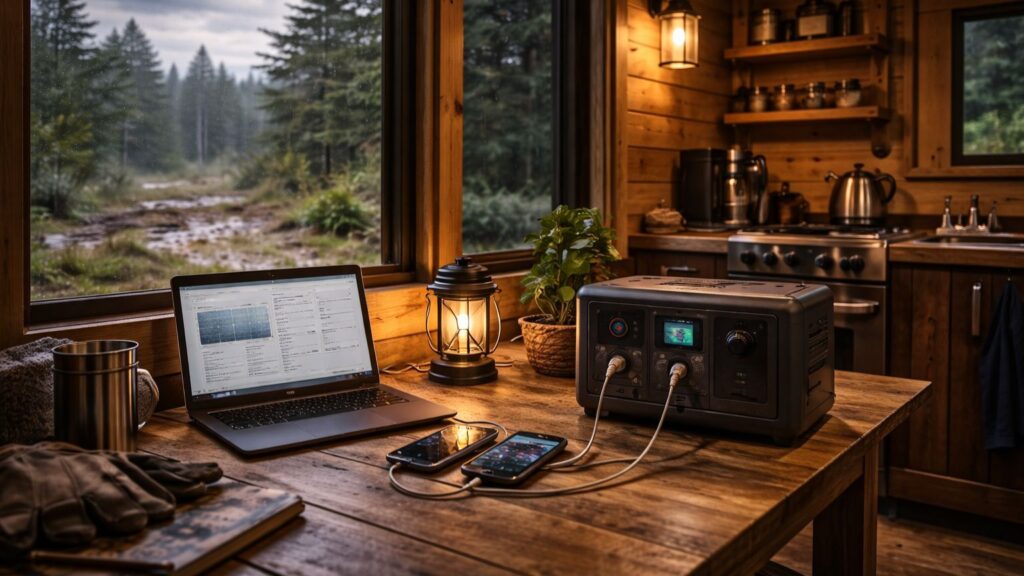
Off-grid living demands resilience. Weather will always test the weakest part of a system.
A solar installation designed for extreme conditions generates power, survives storms, protects critical infrastructure, and continues working when conventional systems fail.
By reinforcing mounts, grounding electrical components, protecting batteries, and planning for redundancy, an off-grid solar system can remain reliable through nearly any weather event.
Storms are inevitable. System failure doesn’t have to be.
(See Related: The 10 Best Solar Panels for Cabins and RVs)