Cooking Off-Grid: Solar Ovens, Propane, and Rocket Stoves Compared
When the grid’s gone, food doesn’t cook itself.
You need fire. Heat. A system that works in all weather, not just a picture-perfect summer day.
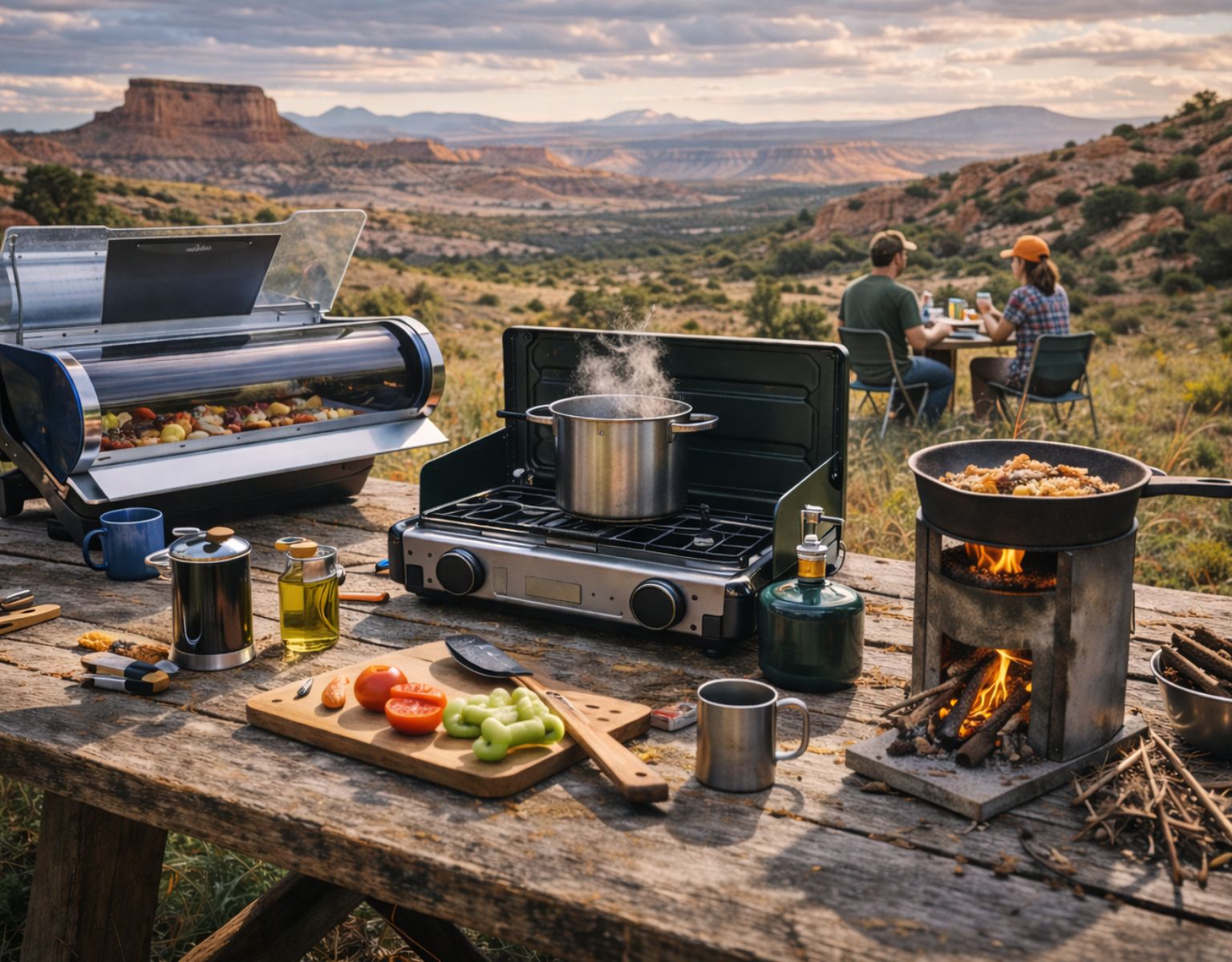
In this guide we compare the three most reliable off-grid cooking methods:
- Solar ovens (no fuel, full sun)
- Propane burners (fast, portable, clean)
- Rocket stoves (biomass fueled, rugged, and extremely efficient)
We break down the pros, cons, and real-world performance of each so you can choose the right setup or combination for your cabin, bug-out kit, or off-grid homestead.
Why Off-Grid Cooking Needs Layers
No single cooking method works everywhere, all the time.
Experienced off-gridders rely on layered systems that allow them to cook regardless of weather or fuel availability.
A resilient cooking setup typically includes:
- One system that works in sunlight
- One system that delivers fast reliable heat
- One system that burns natural fuel
Your system should be:
- Fuel flexible
- Low power or no power
- Safe indoors or outdoors
- Efficient in both fuel and time
Layered cooking systems are one of the most reliable survival strategies for long-term off-grid living.
Cooking With the Sun: Solar Oven Benefits and Limits
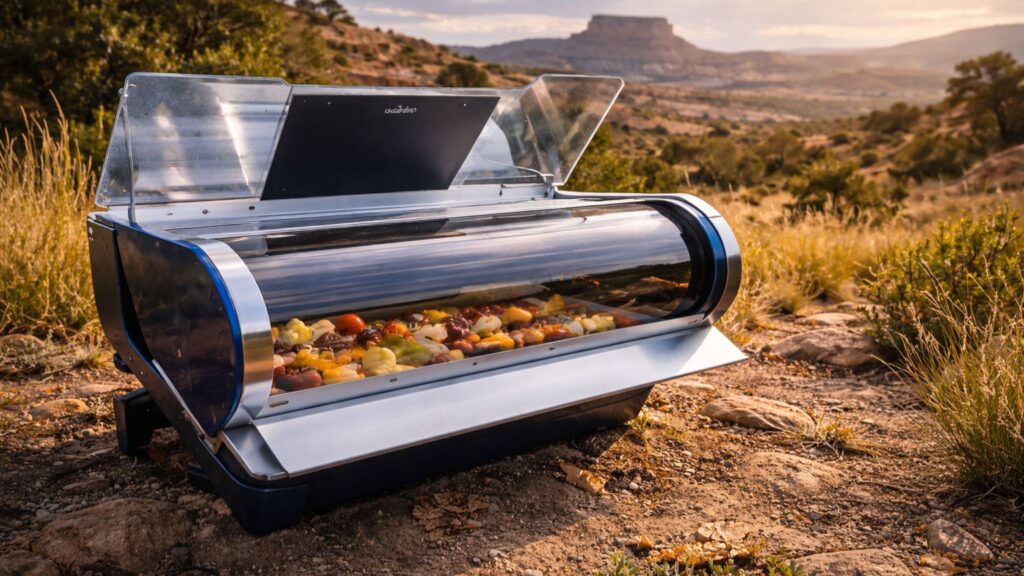
Solar ovens harness sunlight and convert it into heat using reflective panels and insulated cooking chambers.
How Solar Ovens Work
- Reflective panels concentrate sunlight
- Heat builds inside a sealed chamber
- Temperatures typically reach 200°F to 400°F
Some advanced designs can exceed 500°F in full sunlight.
Pros
- No fuel required
- Completely silent operation
- No smoke or open flame
- Ideal for baking and slow cooking
- Excellent in fire-restricted zones
Cons
- Requires strong direct sunlight
- Cooking times are slower
- Ineffective during heavy clouds or rain
- Not ideal for fast frying or boiling
Solar ovens work best as a primary daytime cooking method during clear weather.
Propane Burners: Reliable, Fast, and Portable
Propane stoves remain the most widely used off-grid cooking solution due to their reliability and control.
How Propane Cooking Works
Propane stored in pressurized tanks feeds burners that produce adjustable high-output flames.
Typical tank sizes include:
- 1 lb portable camping cylinders
- 20 lb BBQ style tanks
- Larger bulk tanks for permanent off-grid homes
Pros
- Extremely fast heat output
- Precise flame control
- Works in any weather
- Portable and easy to operate
Cons
- Requires stored fuel
- Tanks can be bulky
- Fuel costs accumulate over time
- Open flame risk in dry environments
For many off-grid homes, propane serves as the primary daily cooking system.
Indoor Safety Note
Propane stoves can be used indoors for cooking, but only with proper ventilation and a working carbon monoxide detector.
Never use propane burners for heating inside enclosed spaces. This is one of the most common and dangerous off-grid mistakes.
Rocket Stoves: Fuel From the Forest Floor
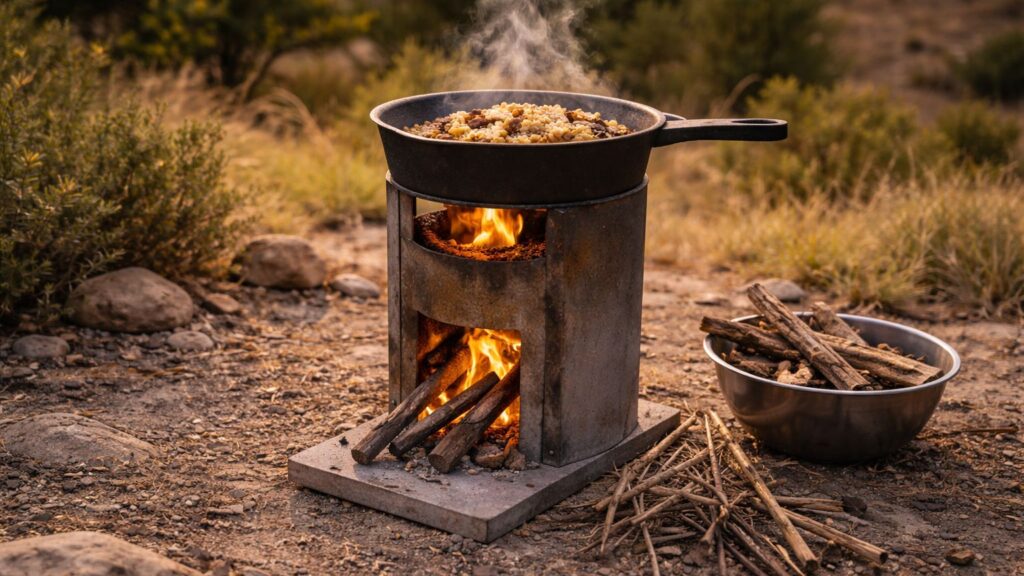
Rocket stoves burn small sticks and biomass using a highly efficient combustion chamber.
How Rocket Stoves Work
- Twigs and small wood pieces feed a vertical burn chamber
- The chimney effect intensifies combustion
- Heat concentrates directly under cookware
Pros
- Uses natural fuel found almost anywhere
- Extremely efficient combustion
- Produces high heat quickly
- Durable and mechanically simple
Cons
- Requires manual fuel feeding
- Needs dry wood
- Outdoor use recommended
- Less precise temperature control
Rocket stoves are ideal as a backup cooking method when fuel supplies run low.
Side-by-Side Comparison: Output, Efficiency, and Fuel
| Feature | Solar Oven | Propane Stove | Rocket Stove |
|---|---|---|---|
| Fuel | Sunlight | Propane | Twigs and wood |
| Boil Time | 30–60 minutes | 5 minutes | 10–12 minutes |
| Best Use | Baking and slow cooking | Fast cooking | High heat outdoor cooking |
| Fuel Cost | Free | Medium | Free |
| Indoor Use | Yes | Sometimes | No |
| Bad Weather Use | No | Yes | Possible with dry fuel |
[See Related: Top 10 Off-Grid Cooking Systems (No Electricity Needed)]
Fuel Storage and Safety Off the Grid
Cooking systems are only as reliable as the fuel that supports them.
Each off-grid cooking method has different storage considerations that affect long-term resilience.
Propane Storage
Propane is efficient but must be stored safely.
Best practices include:
- Store tanks outside the living space
- Keep tanks upright and protected
- Rotate tanks to use older fuel first
- Maintain at least two backup tanks
A single 20 lb propane tank can provide 15–20 hours of cooking time depending on burner output.
Wood and Biomass Fuel
Rocket stoves rely on dry biomass such as:
- twigs
- small branches
- pinecones
- wood scraps
Keeping a dry fuel bin or covered wood rack nearby ensures reliable ignition even after rain.
Real-World Cooking Efficiency: Fuel, Time, and Output
Off-grid cooking also requires careful resource management.
Every meal has a cost:
- Fuel consumed
- Time required
- Effort involved
- Environmental conditions
Understanding how each cooking method performs in real-world conditions is what separates a functional setup from an optimized one.
The Three Efficiency Variables
Every off-grid cooking system can be evaluated across three key variables:
1. Fuel Efficiency
How much fuel is required to produce usable heat?
- Solar ovens: Maximum efficiency (no fuel required)
- Propane: High efficiency, but dependent on stored supply
- Rocket stoves: Extremely efficient use of biomass
2. Time Efficiency
How quickly can you cook a meal?
- Propane: Fastest, near-instant heat
- Rocket stoves: Moderate, requires setup and feeding
- Solar ovens: Slow, dependent on sunlight
3. Effort Efficiency
How much work is required to cook?
- Solar ovens: Minimal once positioned
- Propane: Very low effort
- Rocket stoves: Highest effort (fuel collection and feeding)
Each system trades one variable for another.
The goal is a balanced system.
Why Propane Dominates Daily Use
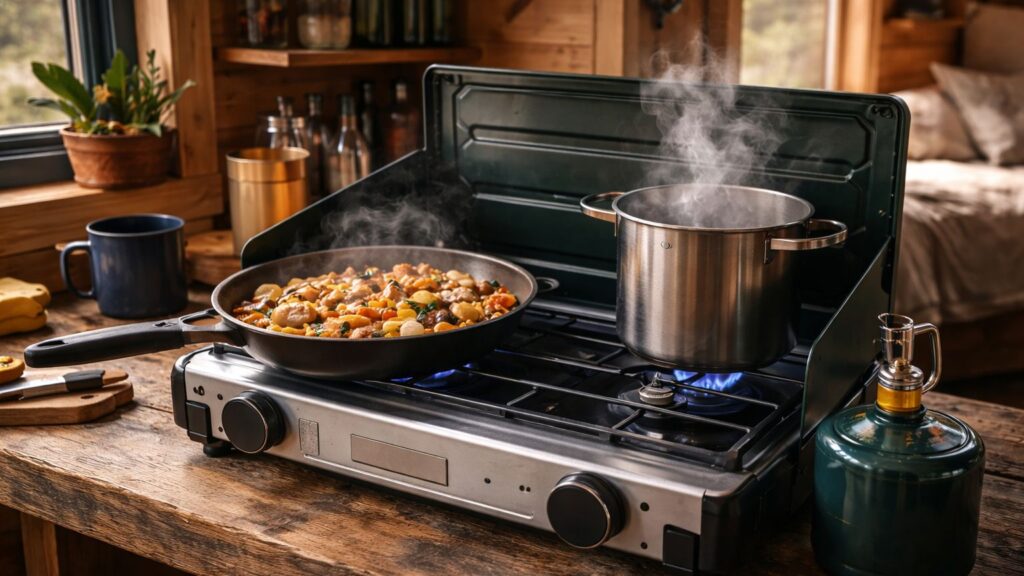
Even in well-designed off-grid systems, propane often becomes the primary cooking method.
Why?
Because it offers:
- Immediate heat
- Precise control
- Predictable cooking times
In daily life, this matters more than theoretical efficiency.
Cooking also depends on routines and daily schedules.
People cook before work, after long days, in bad weather, and under time pressure.
Propane fits those realities better than any other system.
Where Solar Cooking Actually Shines
Solar ovens are often misunderstood.
They work best as complementary tools that reduce overall fuel consumption.
Best use cases:
- Midday cooking during clear weather
- Slow cooking meals that don’t require constant attention
- Reducing fuel consumption over time
In real off-grid setups, solar ovens quietly reduce propane usage by:
- Handling secondary meals
- Pre-cooking ingredients
- Running in parallel with other systems
Over weeks and months, this adds up significantly.
The Hidden Strength of Rocket Stoves
Rocket stoves are often treated as backup tools, but they provide something critical:
Fuel independence.
They allow you to cook using materials found on-site, which means:
- No reliance on stored fuel
- No dependency on deliveries or supply chains
- Long-term sustainability in remote environments
Their biggest limitation is consistency.
They require:
- Dry fuel
- Manual feeding
- Active attention during cooking
But when properly used, they provide powerful, efficient heat with minimal resources.
Combining Systems for Maximum Efficiency
The most effective off-grid kitchens use multiple systems and apply each one where it performs best.
A typical optimized workflow might look like:
Morning:
- Propane for fast breakfast and coffee
Midday:
- Solar oven for slow cooking or baking
Evening:
- Propane or rocket stove depending on fuel availability
This approach:
- Reduces fuel consumption
- Spreads workload across systems
- Increases overall resilience
Fuel Conservation Strategies That Actually Work
Reducing fuel use comes from using heat more efficiently.
Practical methods include:
- Cooking multiple meals at once
- Using lids to retain heat
- Preheating water when possible
- Cutting food into smaller pieces for faster cooking
For solar cooking:
- Align the oven properly throughout the day
- Use dark cookware for better heat absorption
For rocket stoves:
- Use small, dry, consistent fuel pieces
- Maintain proper airflow
For propane:
- Avoid running burners at full output unnecessarily
- Match pot size to burner size
Small optimizations compound over time.
Real-World Constraint: Weather and Energy
In off-grid living, you don’t cook in ideal conditions. You cook in real ones.
Cold weather:
- Increases fuel consumption
- Slows cooking times
- Makes outdoor cooking less comfortable
Wind:
- Disrupts flame stability
- Reduces efficiency
Cloud cover:
- Eliminates solar cooking entirely
This is why redundancy matters.
Your system must adapt to conditions, not depend on them.
Efficiency vs Convenience
There is always a tradeoff between efficiency and convenience.
- Solar cooking is efficient but slow
- Rocket stoves are independent but labor intensive
- Propane is convenient but requires stored fuel
The best system is the one that remains practical and easy to use.
Because a system that isn’t used might as well not exist.
Field Insight
Most off-grid users eventually settle into a pattern:
- Propane handles daily reliability
- Solar reduces long-term fuel consumption
- Rocket stoves provide backup security
This balance creates a system that is:
- Flexible
- Resilient
- Sustainable over time
That’s what off-grid cooking is really about.
Maintaining independence without unnecessary complexity is a core part of off-grid cooking.
Solar Cooking
Solar ovens require no stored fuel, but planning still matters.
Best results come from:
- orienting the cooker toward midday sun
- repositioning the oven during the day
- cooking earlier in the afternoon when sunlight is strongest
Meal Planning and Prep Strategy Off the Grid
Cooking off-grid also involves planning meals around available cooking systems.
Preparation often has a greater impact than equipment.
Cooking Becomes a Scheduling Problem
In a grid-connected kitchen, you cook whenever you want.
Off-grid, you cook when conditions allow.
That means aligning meals with:
- available sunlight
- fuel levels
- time of day
- weather patterns
Instead of reacting to hunger, you start planning around energy availability.
Batch Cooking Changes Everything
One of the most effective strategies is cooking multiple meals at once.
This works especially well with:
- solar ovens (long cook times)
- propane (fast, high-output bursts)
- rocket stoves (once fire is established)
Examples:
- cooking a full pot of stew instead of a single meal
- boiling extra water for later use
- preparing grains or proteins in bulk
Batch cooking reduces:
- total fuel consumption
- daily workload
- repeated setup time
Prepping Ingredients Ahead of Time
Prep work is often overlooked, but it has a major impact on efficiency.
Simple steps like:
- chopping ingredients in advance
- pre-measuring dry goods
- organizing cooking kits
can cut cooking time significantly.
This is especially important when:
- using propane (to reduce burn time)
- cooking outdoors in cold weather
- working with limited daylight
Matching Meals to Cooking Systems
Not every meal fits every system equally well.
Understanding what works best where is key.
Solar ovens excel at:
- stews
- rice and grains
- baked goods
Propane is ideal for:
- frying
- boiling
- quick meals
Rocket stoves are best for:
- high heat cooking
- large pots
- outdoor batch cooking
Trying to force the wrong system into the wrong task wastes time and energy.
Preheating and Heat Retention
Off-grid cooking rewards small efficiency habits.
Examples:
- preheating solar ovens before adding food
- keeping lids on pots to retain heat
- using insulated containers to finish cooking
These small adjustments reduce fuel use and improve consistency.
The Role of Leftovers
Leftovers become an important part of the overall system.
Instead of cooking every meal from scratch:
- reuse cooked ingredients
- reheat efficiently
- combine meals across days
This reduces:
- fuel consumption
- prep time
- overall effort
Real-World Insight
Most off-grid kitchens evolve toward simplicity because efficient systems reward it.
Meals become:
- easier to prepare
- more predictable
- less resource-intensive
The Hidden Advantage
When you plan meals around your energy systems:
- cooking becomes easier
- fuel lasts longer
- stress drops significantly
Cooking frequency and timing matter just as much as cooking methods.
Weather Strategy for Off-Grid Cooking
Weather determines which cooking system performs best on any given day.
Sunny Conditions
Solar ovens perform best during clear skies and long daylight hours.
They are ideal for:
- slow cooked stews
- baking bread
- dehydrating fruits or vegetables
Cold or Stormy Conditions
Propane burners become the most reliable option during bad weather.
They offer:
- instant heat
- predictable cooking times
- reliable flame control
Many off-grid homes rely on propane heavily during winter months.
Wet Environments
Rocket stoves require dry fuel.
In rainy climates it helps to:
- keep a small stash of dry twigs
- split kindling ahead of time
- store fuel under a covered rack
Best Off-Grid Cooking Combos
Cabin or Homestead Setup
- Solar oven for sunny daytime cooking
- Two burner propane stove for reliability
- Rocket stove for backup fuel independence
Vanlife Cooking Setup
- Hybrid solar oven
- Compact propane burner
- Collapsible cookware and prep gear
Emergency Prep Kit
- Small rocket stove
- Backup alcohol burner
- Lightweight pot and cookware
Building a Complete Off-Grid Kitchen
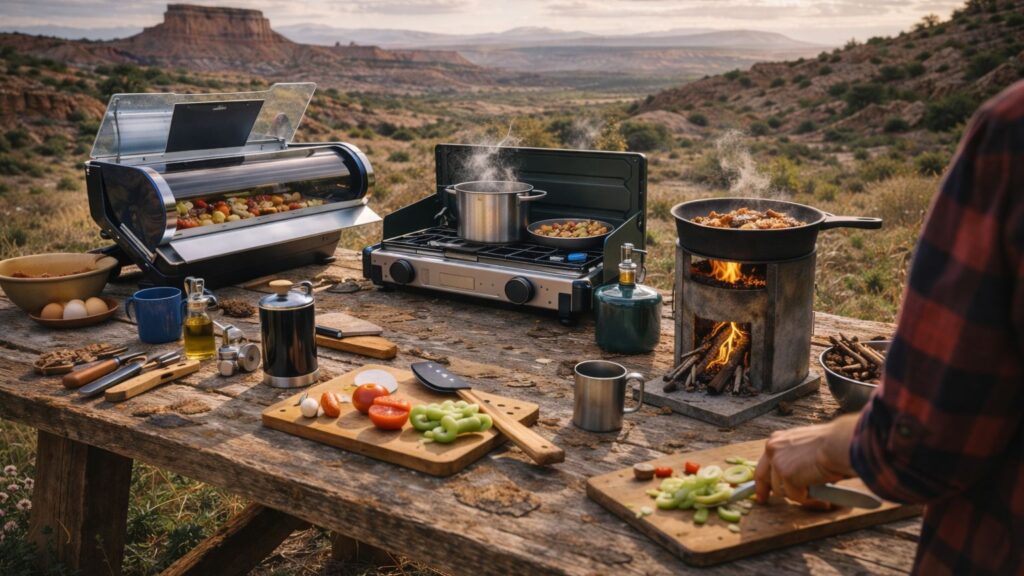
Most long-term off-grid homes combine multiple cooking systems into one flexible kitchen.
Primary Cooking System
A propane two burner stove handles daily cooking tasks like boiling water, frying food, or preparing quick meals.
Fuel-Free Daytime Cooking
Solar ovens handle baking, stews, and slow cooked meals during sunny afternoons.
This can dramatically reduce propane consumption over time.
Emergency Cooking Backup
Rocket stoves provide a fully independent heat source using natural materials found on the land.
This gives them a high degree of resilience and long-term fuel independence.
A layered kitchen ensures meals remain possible even when fuel runs out, clouds roll in, or equipment fails.
Off-Grid Proven Cooking Gear We Recommend
| Item | Type |
|---|---|
| GoSun Sport Solar Oven | Solar |
| All American Sun Oven | Solar |
| Camp Chef Everest 2X | Propane |
| Solo Stove Campfire | Rocket |
| EcoZoom Versa Stove | Rocket |
| GoSun Fusion Hybrid Oven | Solar + Electric |
Final Thoughts: Heat Is Power. Food Is Security.
Cooking off-grid requires a system that continues working across a wide range of conditions.
When the sun is shining, cook with solar.
When storms roll in, propane delivers reliable heat.
When fuel runs out, rocket stoves burn natural biomass.
A flexible cooking system ensures that food and morale remain steady no matter what conditions arrive.