Top 10 Fail Points in Off-Grid Systems (and How to Prevent Them)
Living off the grid is an ongoing engineering project.
Every wire, fuse, and connection has to perform flawlessly in heat, cold, and storm. When something breaks, you can’t call the power company. You are the power company.
That’s why understanding where systems fail, and how to prevent those failures, separates those who thrive off-grid from those who end up back on the grid within a year.
Below are the ten most common off-grid system fail points and the field-proven ways to prevent them.
[See Related: Top 10 Essential Off-Grid Tools Every Toolkit Should Include]
Why Off-Grid Systems Fail More Often Than You Think
Off-grid living means creating your own miniature utility company, with all the same complexity, but none of the backup crew.
Failures usually come down to three root causes:
- System design flaws, mismatched voltages, undersized wiring, or poor airflow.
- Neglected maintenance, corrosion, vibration, and slow component drift.
- User overconfidence, assuming “it’s fine” until it isn’t.
The good news? 90% of these are predictable and preventable if you build with margin, inspect regularly, and keep one guiding principle: your system should be smarter than your optimism.
How to Size Your System Properly (Before Failures Start)
Most off-grid failures don’t begin with a broken component. They begin with a miscalculation. Systems that “almost” meet demand tend to degrade quickly because they are constantly operating near their limits. That stress compounds over time, and what starts as minor inefficiency turns into premature failure.
Start with a full load audit. This means listing every device you plan to run, not just the obvious ones like fridges and lights, but intermittent loads like pumps, power tools, routers, and charging stations. Many systems fail because users underestimate how often these “occasional” devices actually run.
Once you have your device list, calculate two separate metrics:
- Daily consumption (watt-hours)), which is how much energy you use over 24 hours
- Peak load (watts), which is the maximum draw at any given moment
These are not interchangeable. A system can have enough daily energy but still fail under peak load, which is where inverter and wiring failures often begin.
After calculating your baseline, build in margin. This is where most DIY systems go wrong. Designing for exact usage assumes perfect conditions. But real-world systems deal with:
- Dirty panels reducing output
- Cold weather reducing battery efficiency
- Component aging over time
- Unexpected load growth
A reliable rule of thumb:
- Add 25–30% buffer to daily energy needs
- Add 2–3× buffer for surge loads
Battery sizing should focus on autonomy, not just capacity. A system that only lasts one cloudy day is fragile. Aim for:
- 2–3 days of usable storage minimum
- More in northern climates or winter-heavy regions
In colder environments, lithium batteries lose performance and charging efficiency. Without proper margin, systems that work in summer begin failing in winter. A common and costly mistake.
Panel sizing should also account for seasonal variation. A system designed for peak summer sun may produce only 30–50% of that output in winter depending on location. Without adjusting for this, users often blame batteries or inverters when the real issue is underproduction.
Finally, always design for expansion. Off-grid systems rarely stay static. People add appliances, tools, or even full workshops over time. If your initial design doesn’t account for growth, you will eventually overload something, usually wiring or the inverter.
Proper sizing focuses on minimizing failure risk. A slightly oversized system runs cooler, lasts longer, and gives you room to adapt without breaking your foundation.
—
#1 – The Charge Controller Overload
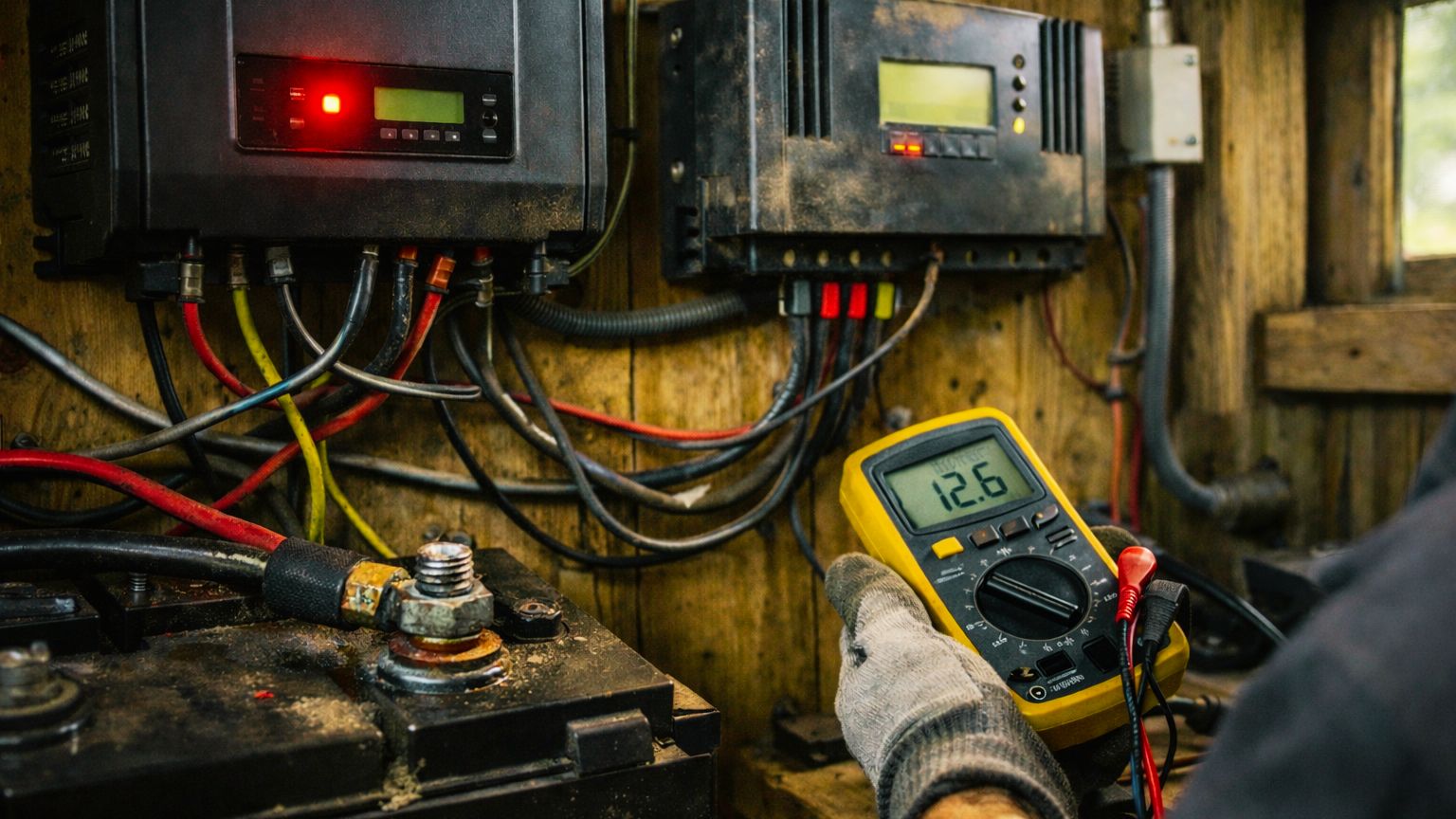
Your charge controller is the gatekeeper between your panels and your batteries. When it fails, your entire energy flow stalls.
Common causes:
- Oversized solar arrays pushing more amps than the controller is rated for.
- Inadequate ventilation causing heat throttling.
- Misconfigured voltage inputs from mixed panel types.
Early warning signs:
- Random resets or flickering display.
- Hot casing or sudden power throttling at midday.
- “PV Overcurrent” or “Overheat” errors on your app.
How to prevent it:
- Choose a controller rated for at least 25–30% more amperage than your array’s peak output.
- Include DC breakers between array and controller.
- Keep wiring short and heavy. 10 AWG or thicker for most setups.
- Stick with proven hardware: Victron SmartSolar, EPEVER Tracer, Renogy Rover.
Pro tip: In hot climates, mount controllers on shaded aluminum backplates. Every 10°C drop adds years of life.
#2 – The Inverter Surge That Takes It All Down
Inverters die more often from momentary surge than from constant load. The spike when a fridge compressor or well pump starts can double your expected draw.
What it looks like:
- AC lights flicker or blink when large appliances start.
- Inverter clicks or restarts randomly.
- Burnt plastic smell or “error 02” surge codes.
How to prevent it:
- Size your inverter surge capacity to 3× your largest appliance startup wattage.
- Add soft-start modules on compressors, fridges, or A/Cs.
- Use inline surge arrestors and isolation breakers.
- Stick with tough brands: Growatt, AIMS Power, Victron Multiplus II.
Surge failures are sneaky. They often kill one MOSFET at a time until the next surge finishes the job. Don’t cheap out here.
#3 – Battery Imbalances and Cell Drift
LiFePO₄ batteries revolutionized off-grid life, but they can fail early if cells drift out of balance.
Symptoms:
- One cell hitting high voltage cutoff early.
- BMS disconnects at random.
- Capacity slowly shrinking over time.
Causes:
- Weak or nonexistent balancing circuitry.
- Inconsistent charge voltage from cheap charge controllers.
- Paralleling batteries of different ages or brands.
Prevention:
- Use smart BMS units like JK, Overkill Solar, or Daly with active balancing.
- Perform a top balance every few months.
- Monitor with tools like Victron SmartShunt or Overkill Bluetooth BMS app.
- Store batteries between 50–60% charge when idle for weeks.
A balanced battery bank performs best when all cells remain healthy and evenly matched.
#4 – Corroded or Undersized Wiring
Voltage drop is a silent killer. Undersized wires overheat, waste power, and stress your components.
The problem:
Copper loss increases resistance. Every 1V drop can cost you 8–10% efficiency. Corrosion adds even more resistance, creating hot spots.
How to prevent it:
- Oversize wires by 20–30% beyond calculated draw.
- Use tinned copper marine wire where possible.
- Apply dielectric grease and heat-shrink terminals.
- Keep wiring runs short and labeled.
- Never mix aluminum and copper. Galvanic corrosion will eat your system alive.
When in doubt, size for amps, not watts. It’s the amps that melt things.
#5 – Weak Battery-to-Inverter Connections
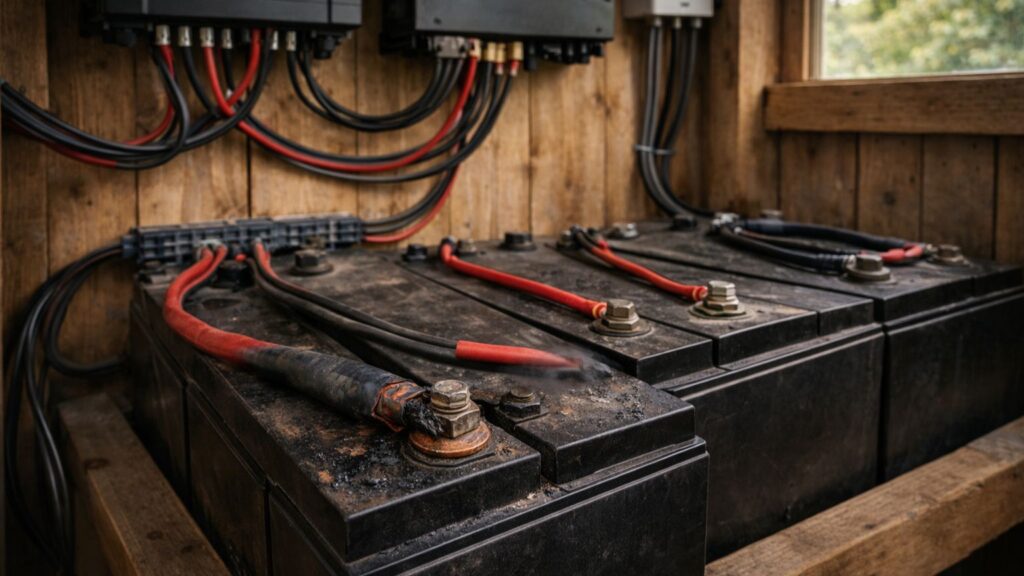
Even if everything else is sized correctly, a loose lug or corroded terminal can cause catastrophic voltage sag or even fire.
Fix:
- Always torque battery lugs to manufacturer spec (often 10–12 ft-lbs).
- Use busbars to distribute load instead of stacking ring terminals.
- Clean and re-tighten connections quarterly.
- Consider copper compression lugs over cheap crimp connectors.
Every flicker of a light might be a loose lug screaming for attention.
#6 – Moisture and Condensation Damage
Moisture ruins electronics faster than overvoltage. Even in sealed enclosures, condensation forms with daily temperature swings.
Prevention checklist:
- Create drip loops on all incoming cables.
- Add desiccant packs and small vents for airflow.
- Use IP65+ enclosures for outdoor components.
- Elevate components above floor level. Ground moisture travels upward.
Keeping components dry dramatically reduces corrosion and moisture-related failures.
#7 – Grounding and Bonding Mistakes
Grounding isn’t glamorous, but it’s life-saving. A single floating ground can create shock hazards or destroy electronics in a lightning strike.
Do it right:
- Bond DC negative and AC ground at one point only.
- Use 8-foot copper rods driven into moist soil.
- Tie in lightning arrestors at panel and inverter junctions.
- Check continuity with a multimeter – don’t assume ground = connected.
Good grounding is invisible when it works – and unforgettable when it doesn’t.
#8 – Overconfidence in “Smart” Monitoring Systems
Apps and Bluetooth dashboards can lull you into complacency.
They fail, glitch, or show filtered data. Nothing beats physical verification.
Better habits:
- Verify voltage manually with a Fluke multimeter.
- Cross-check inverter readings with BMS data.
- Keep a thermal camera handy. It spots hot connectors before they burn.
- Log monthly readings; trends reveal issues before breakdowns.
Data should always be verified with physical measurements.
#9 – Panel Shading and Dirty Array Syndrome
A single shadow across a panel can choke the entire string. Dust, pollen, and bird droppings cost more kilowatt-hours than people realize.
Fix:
- Clean panels monthly in dry climates; quarterly elsewhere.
- Use bypass diodes or wire in parallel to limit string loss.
- Adjust tilt 10–15° between summer and winter for max yield.
- Watch out for seasonal shading. Trees grow fast.
If your panels look clean from the ground, they’re probably already losing 5–10% output.
#10 – System Growth Without Recalculation
The classic off-grid trap: adding panels, batteries, or loads without redesigning the system.
The risk:
Each “small upgrade” adds stress. Suddenly your wires are undersized, your inverter’s at 90% load, and your breaker box is warm to the touch.
The solution:
- After any system change, rerun your load and ampacity calculations.
- Update fuses, breakers, and busbars.
- Use modeling tools like VictronConnect, SolarCalc, or the DIY Solar Forum spreadsheet.
- Keep your system schematic updated. It’s your map when troubleshooting later.
System growth should always be accompanied by updated calculations.
Real-World Failure Scenarios (What Actually Goes Wrong in the Field)
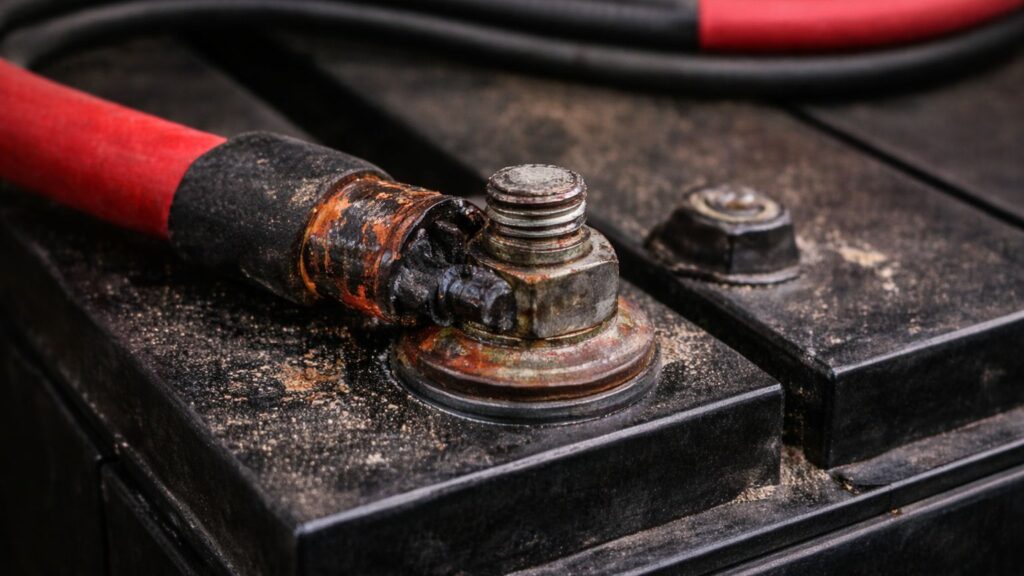
On paper, most off-grid systems look solid. The math checks out, the components are rated correctly, and everything appears balanced. But real-world conditions introduce variables that rarely show up in calculations.
One of the most common scenarios is the “stacked failure.” This happens when multiple small issues combine into a major problem. For example:
- Slightly undersized wiring
- A partially loose terminal
- A hot day reducing inverter efficiency
Individually, none of these would cause a failure. Together, they can lead to overheating, voltage drop, and eventual shutdown or damage.
Another common situation is seasonal mismatch. A system designed and tested in summer performs perfectly. Until winter arrives. Reduced solar input, colder batteries, and increased indoor usage create a gap between production and demand. Users often respond by pushing their system harder, which accelerates wear and leads to cascading failures.
Mobile and cabin systems also face vibration-related issues. Over time, movement loosens connections, especially on battery terminals and busbars. What starts as a stable connection becomes intermittent, causing flickering lights, inverter resets, or unexplained voltage drops.
Environmental exposure is another major factor. Dust, humidity, and temperature swings slowly degrade components. Even well-built systems can fail if installed in poorly ventilated enclosures or areas prone to condensation.
[See Related: Power in the Storm: How to Keep Solar Systems Running Through Extreme Weather]
There is also the “upgrade trap.” A user adds more panels or batteries without adjusting wiring, breakers, or charge controllers. Everything works initially, but hidden stress builds. Weeks or months later, a component fails under load, often without obvious warning.
Finally, there is human behavior. Over time, users become comfortable and stop checking their system. Small warning signs like a slightly warm cable, a faint smell, a minor voltage fluctuation – go unnoticed until they become major issues.
Understanding these real-world scenarios changes how you build and maintain your system. It shifts the mindset from “it works” to “it keeps working under stress.” That difference is what separates resilient systems from fragile ones.
Preventative Maintenance Schedule (The 10-Minute Habit)
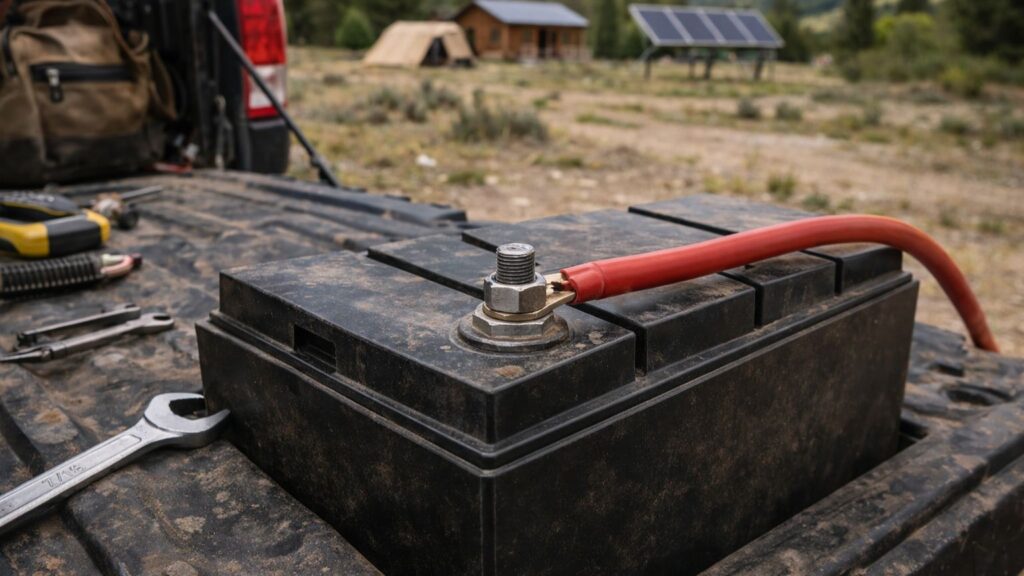
Even the best systems fail if ignored. Adopt a 10-minute inspection habit:
- Weekly: Quick walkaround. Look for corrosion, leaks, heat discoloration.
- Monthly: Torque checks on terminals, inverter dusting, cable wiggle test.
- Quarterly: Log voltages, inspect grounding continuity.
- Annually: Full top-balance, insulation resistance test, and firmware updates.
[See Related: Field Maintenance Manual: The Essential Off-Grid Toolkit]
Critical Tools Every Off-Grid System Owner Should Have
A well-built system is only as reliable as your ability to inspect and maintain it. Having the right tools turns guesswork into certainty and allows you to catch problems before they escalate.
The most essential tool is a reliable multimeter. This is your baseline for verifying voltage, continuity, and system health. Even if you have smart monitoring systems, a physical measurement confirms what’s actually happening at the terminals.
A clamp meter is equally valuable. It allows you to measure current without disconnecting wires, which is critical for diagnosing load issues and identifying unexpected power draw.
Thermal imaging tools have become increasingly accessible and are one of the most powerful diagnostic upgrades you can make. A thermal camera can instantly reveal:
- Overheating connections
- Uneven load distribution
- Hidden resistance in wiring
These issues are often invisible until they become dangerous, making thermal inspection one of the highest-value maintenance practices.
A torque wrench is another overlooked but critical tool. Many failures stem from improperly tightened connections. Too loose, and resistance increases. Too tight, and you risk damaging terminals. Consistent torque ensures stable electrical contact.
You should also keep a set of spare components:
- Fuses and breakers
- MC4 connectors
- Cable lugs
- Short lengths of appropriately sized wire
When something fails off-grid, waiting for parts can mean days without power. Having spares on hand turns a major disruption into a quick fix.
For more advanced setups, consider:
- A battery monitor/shunt for precise tracking
- A data logger for long-term trend analysis
- Insulation resistance testers for deeper diagnostics
The goal is to eliminate uncertainty and simplify diagnostics. The more accurately you can measure your system, the faster you can diagnose and fix issues.
In off-grid living, tools become part of the overall system.
When to Call for Backup
Some failures go beyond DIY. Call a professional if you find:
- Melted insulation or burnt smell.
- Random inverter restarts even after reset.
- Voltage spikes above 15V on a 12V system.
- Battery bank dropping voltage abnormally fast.
A skilled off-grid electrician can prevent costly failures and major downtime.
The Takeaway: Build It Like Your Life Depends on It (Because It Might)
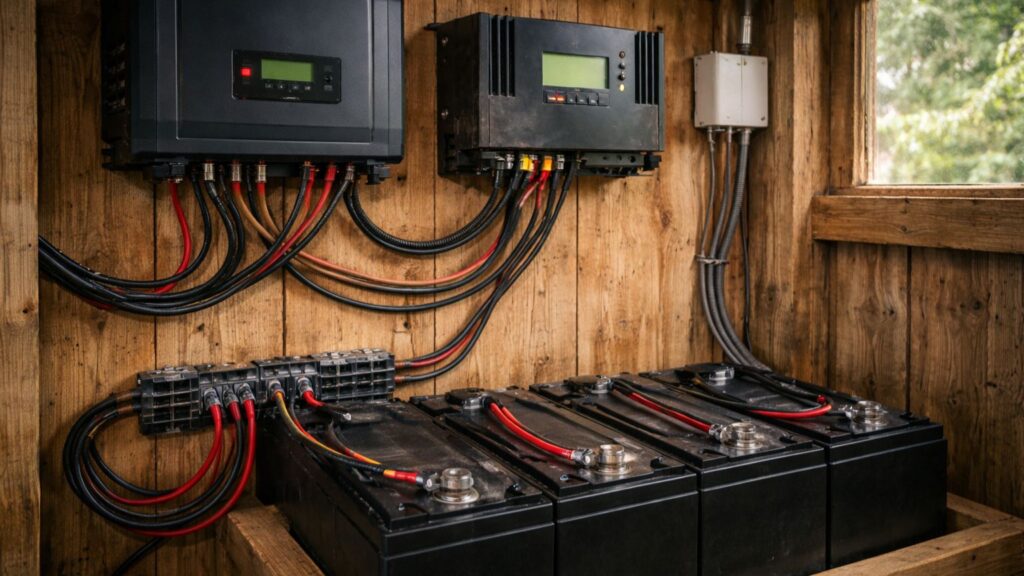
Every failure is a teacher.
Every inspection is a shield.
And every properly crimped connection is one less reason your lights go out when the storm hits.
Sensible off-grid living prioritizes resilience.
When built right, your system becomes invisible. Quietly humming in the background, keeping your fridge cold, your lights bright, and your sovereignty intact.
Build it strong. Maintain it smarter. And let failure never find a home in your system.