The Myth of “Going Back to the Land” – What Off-Grid Living Really Looks Like
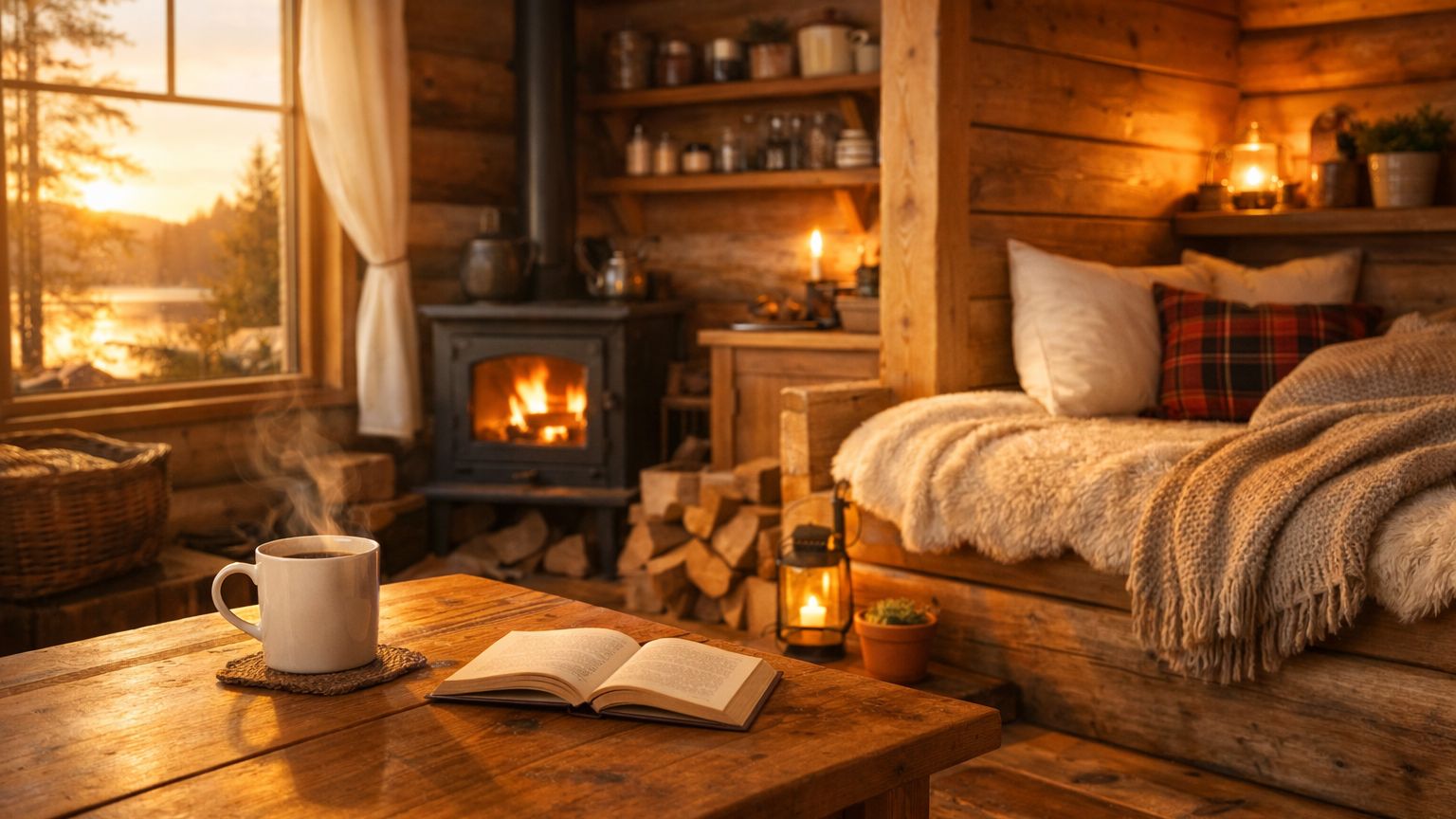
There’s a fantasy floating around the internet. A golden-hour cabin, smoke curling from the chimney, a steaming mug of coffee on a handmade table.
The caption reads something like: “Living simply.”
But what the photo doesn’t show are the frozen pipes, the aching back, the generator that won’t start, and the kind of silence that tests your sanity.
Off-grid life is beautiful, but it’s earned beauty.
Let’s strip away the filters and talk about what it really looks like to “go back to the land.”
The Fantasy vs. The Field
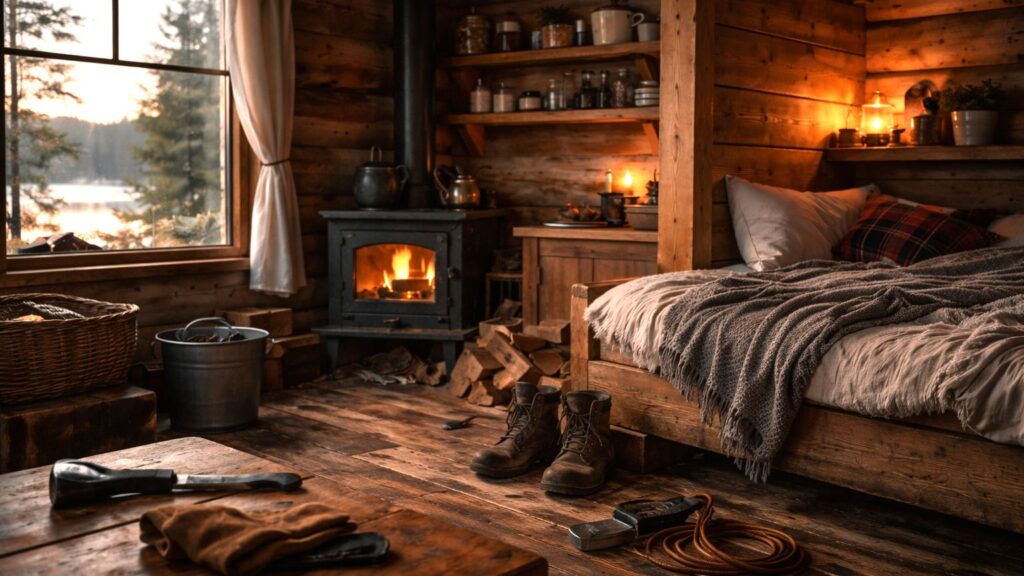
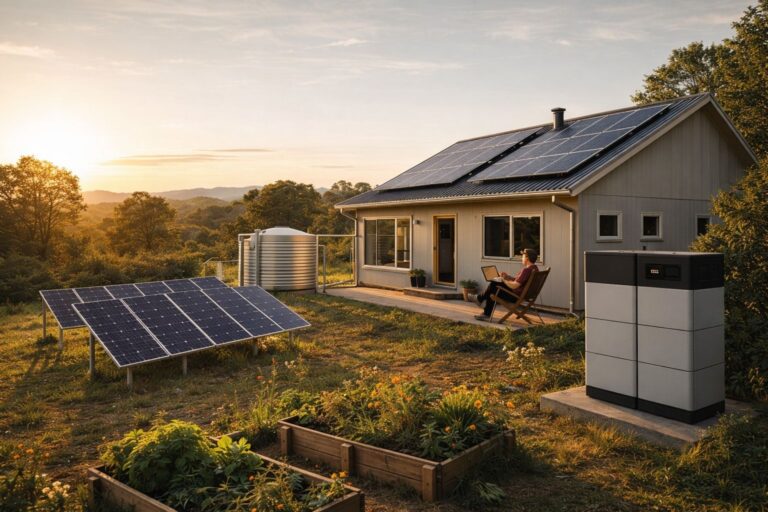
The modern off-grid dream has become a brand.
Instagram sells an aesthetic: reclaimed wood, wool sweaters, tidy gardens, but not the years of troubleshooting behind them.
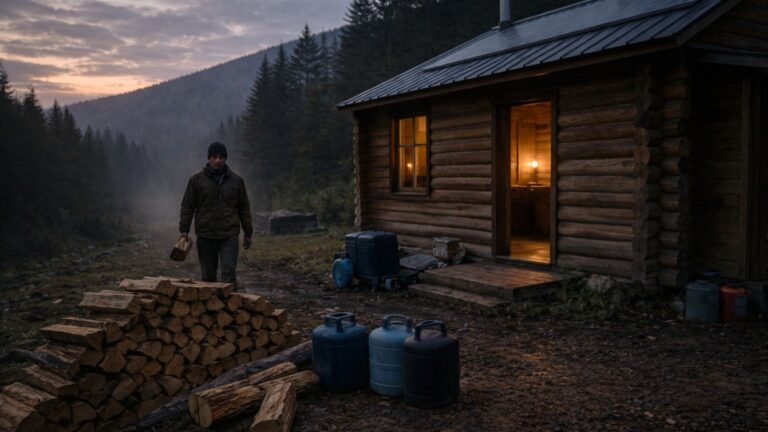
Real off-grid living is gritty. It’s unwashed dishes, mud floors, diesel fumes, and frost on the inside of your windows. It’s cutting wood at dusk with a headlamp because tomorrow’s forecast says snow.
The real version includes the work and the person you become because of it.
“You don’t go back to the land. The land pulls you forward into reality.”
The Hidden Costs of Self-Reliance
People imagine off-grid living saves money.
In truth, it changes what you spend it on.
You trade monthly bills for a constant stream of repairs.
A $200 inverter here. A $40 fitting there. Endless “small things” that eat time and cash.
The real cost is mental bandwidth. Every system demands attention. Every leak, wire, and creak whispers for maintenance. You become the CEO, janitor, and 24/7 emergency crew of your own micro-utility.
Hidden costs include:
- Time: Constant upkeep: pumps, filters, woodpiles, batteries.
- Energy: Physical labor replaces convenience.
- Morale: Weeks of bad weather test your motivation.
Self-reliance bills you in different currencies.
[See Related: Mental Toughness for Off-Grid Life: Skills No Gear Can Replace]
Building a Daily Routine That Doesn’t Burn You Out
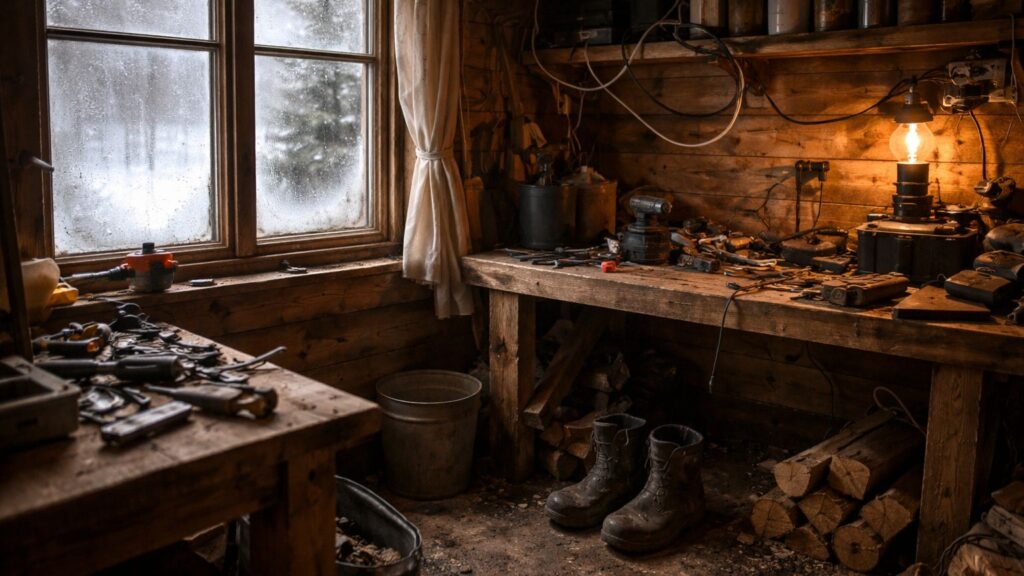
unfinished work, and adapting to the conditions.
One of the fastest ways people fail off-grid is through unsustainable routines.
At the start, motivation carries you. You push hard, take on everything, and try to optimize every system at once.
But off-grid life isn’t a sprint.
It’s repetition.
And repetition without structure leads to exhaustion.
The Problem With Reactive Living
Most new homesteaders operate reactively:
- Fix what breaks
- Do what’s urgent
- Delay what feels optional
This creates a constant state of pressure. You’re always behind, always catching up, and never fully in control.
Over time, this erodes both efficiency and morale.
The Shift to Structured Rhythm
A sustainable routine isn’t rigid. It’s consistent and predictable.
You don’t eliminate work. You organize it.
A balanced off-grid routine typically includes:
Daily essentials (non-negotiable):
- Power checks
- Water system checks
- Heating or fuel management
Rotational tasks (scheduled):
- Maintenance cycles
- Equipment inspections
- Resource management (wood, water, food)
Recovery time (protected):
- One day per week with no major tasks
- Evenings without system work unless necessary
Why This Matters More Than Skill
You can have perfect systems and still burn out if your routine is broken.
A good routine:
- Reduces mental load
- Prevents small issues from becoming large ones
- Keeps systems stable without constant effort
It also creates space for something most people forget to plan for:
Enjoyment.
The Real Goal
The goal is to make the work sustainable.
Because the people who last off-grid aren’t the ones who can work the hardest.
They’re the ones who can keep going without breaking themselves in the process.
The Daily Grind – What Living Off the Grid Really Means
Off-grid living has a rhythm. One that slowly rewires your nervous system.
You stop living by the clock and start living by the light.
A typical day might look like this:
- Morning: Stoke the stove, check voltage, top up water tank.
- Midday: Repair a leak, maintain generator, rotate compost.
- Evening: Cook from scratch, seal firewood, journal the day’s power levels.
Every task has a consequence. Skip one and nature reminds you.
But here’s the strange beauty: the work becomes its own meditation.
When you repair what you use, eat what you grow, and power what you own, and you rediscover meaning in motion.
“Maintenance becomes mindfulness.”
The Mud, the Mess, and the Magic
Clean minimalism doesn’t exist in real homesteads. There’s dirt on everything, from boots to light switches.
And yet, there’s a different kind of cleanliness here: honesty.
No pretense, no performance. Just functional chaos and raw beauty.
You start to see art in the imperfections: the patched tarp, the burnished wood, the calloused hands.
Life out here looks rough but feels real.
“The mud teaches you more about beauty than any clean floor ever could.”
Weather as Your New Boss
When you live off-grid, you stop commanding your schedule. The sky does.
Rain decides when you build. Sun decides when you wash clothes. Winter decides whether you survive comfortably or barely scrape by.
The weather isn’t your enemy; it’s your mentor.
You learn humility by watching your best plans collapse under wind or ice, and resilience by rebuilding them better.
A cloudy week isn’t an inconvenience. It’s an education.
“The forecast is your calendar now.”
The Isolation Paradox
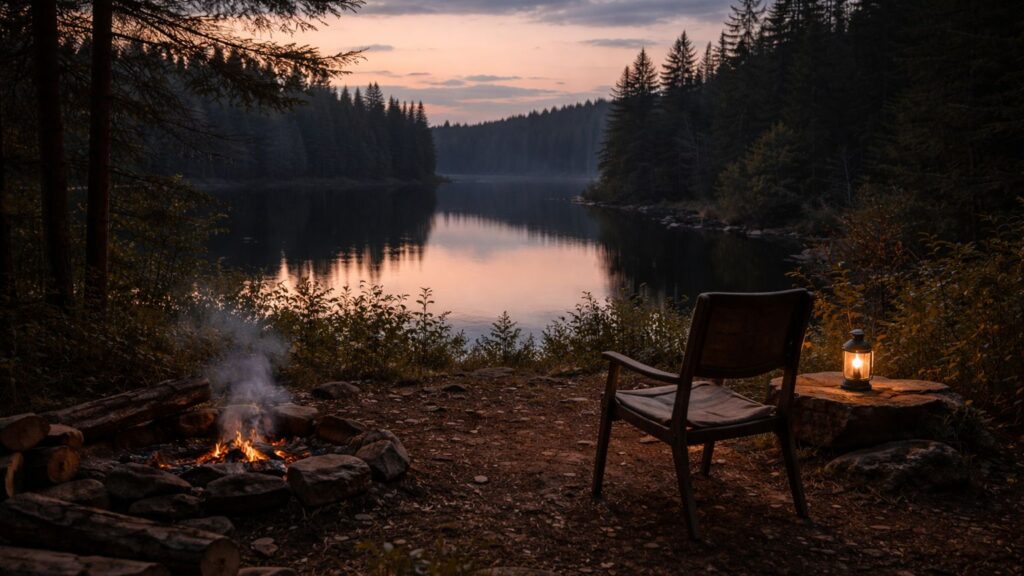
At first, solitude feels like peace. The noise of the city fades, replaced by stillness.
Then, somewhere between week two and month three, the silence starts to echo.
You notice your thoughts louder than before. You crave conversation, even arguments.
Isolation purifies, but it also amplifies.
True off-gridders learn to navigate both, to enjoy solitude without sinking into it.
A radio call, a letter, or a short visit becomes gold.
Human connection doesn’t vanish out here, it just becomes intentional.
What Breaks First When You Go Off-Grid (And How to Prepare for It)
The romantic version of off-grid life assumes systems will work because you installed them correctly. The reality is harsher: the first failures rarely come from bad intentions. They come from overlooked weak points.
Most new homesteaders don’t lose systems because they lack effort. They lose them because they underestimate what fails first.
And it’s almost never what you expect.
The First Failures Aren’t Catastrophic. They’re Small
What actually breaks first:
- Cheap fittings that crack under temperature swings
- Connectors that loosen over time
- Seals that degrade faster than expected
- Improvised fixes that don’t survive real conditions
These aren’t dramatic failures. They’re slow leaks, intermittent power drops, and small inefficiencies that compound into bigger problems.
The real challenge is how many small failures can stack at once.
Water Systems Fail Before Power Systems
People assume power is the most fragile system. In reality, water systems tend to fail first.
Why:
- Constant pressure cycles
- Temperature exposure (freezing and expansion)
- Sediment and buildup
- Mechanical wear in pumps
A small crack or frozen line can take your entire system offline faster than a solar issue.
Preparation:
- Keep spare fittings and clamps
- Insulate aggressively
- Design for easy access and repair
- Always have a manual backup (gravity or hand pump)
Electrical Issues Are Often Human-Caused
Most electrical failures come from:
- Loose connections
- Poor crimps
- Undersized wiring
- Inadequate protection
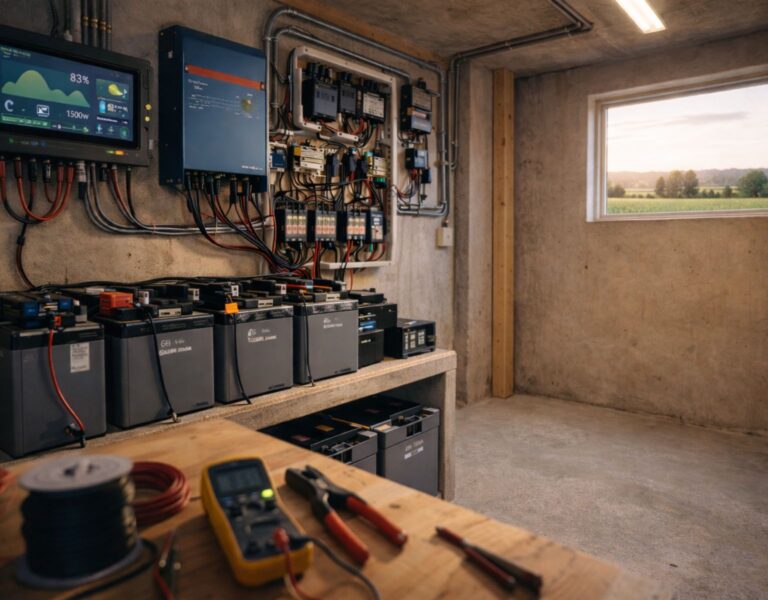
These don’t show up immediately. They show up under load, at night, or during bad weather – when you need the system most.
Preparation:
- Overbuild wiring and protection
- Label everything clearly
- Test under real conditions, not just initial setup
- Keep diagnostic tools accessible
Weather Exposes Every Weak Decision
A system that works in calm conditions can fail quickly under stress.
Wind, rain, cold, and heat test materials and expose design shortcuts.
Examples:
- Panels mounted without accounting for wind load
- Pipes placed where freezing wasn’t considered
- Enclosures that aren’t sealed properly
Preparation:
- Build for worst-case conditions, not average ones
- Assume every system will be stressed at some point
- Reinforce early instead of repairing later
The Real Lesson
Nothing stays “done” off-grid.
Everything moves toward failure unless it’s maintained, reinforced, or redesigned.
The goal is to:
- Expect failures
- Prepare for them
- Recover from them quickly
Because the difference between stress and stability isn’t whether something breaks.
It’s how ready you are when it does.
When Systems Fail (and They Will)
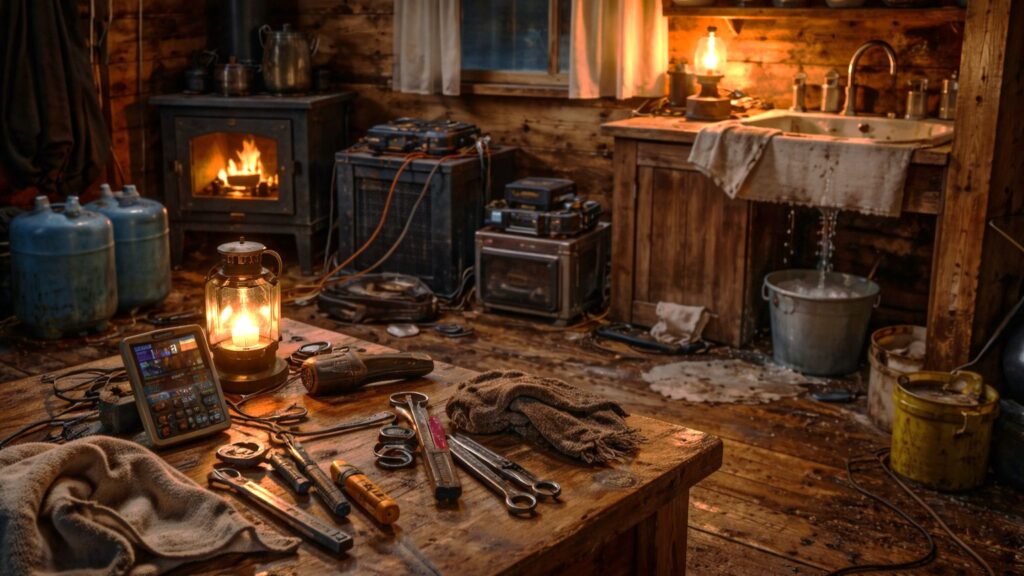
Every off-grid veteran has a story that begins with: “Then everything broke at once.”
Water pump dies the same week your inverter fails. Fuel line freezes. Generator won’t start.
Suddenly, you’re reminded that redundancy isn’t optional.
A backup to the backup reflects hard-earned experience.
You learn to troubleshoot under pressure, in darkness, and in silence.
And when you fix it – when the lights hum back on – the feeling isn’t just relief. It’s rebirth.
“You don’t know gratitude until you hear power return after three days of nothing.”
Community Isn’t Optional
Despite the lone-wolf myth, no one truly does this alone.
Behind every successful homestead is a small network: the neighbor with a tractor, the guy down the road who knows plumbing, the friend who trades eggs for diesel.
Community is infrastructure. Without it, one injury or major failure can end the whole project.
Barter networks, radio groups, and cooperative repair days are the real “grid” that sustains off-grid life.
“The myth says isolation builds strength. The truth says connection builds survival.”
The Deep Joy That Follows Surrender
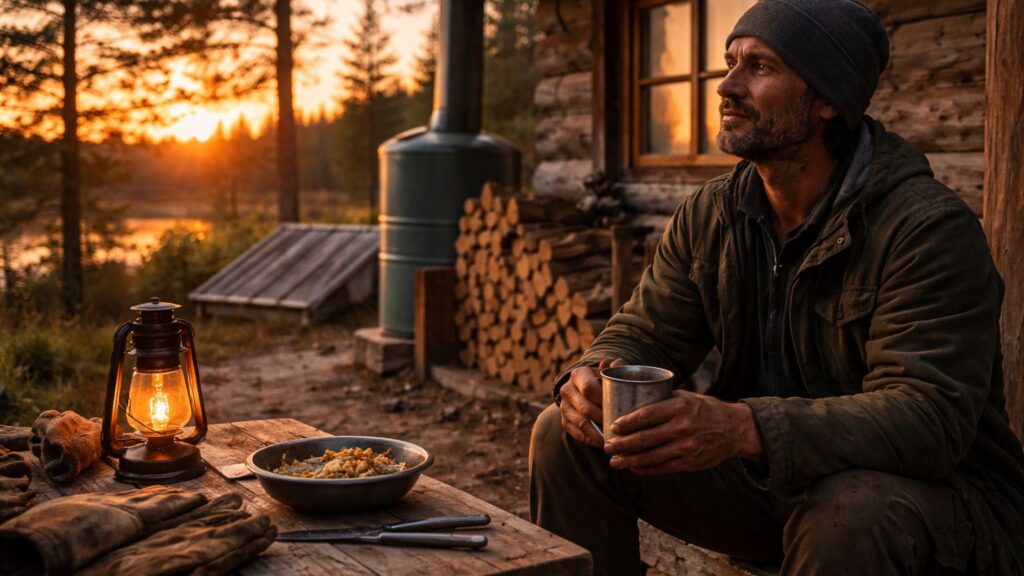
when systems hold.
Eventually, the struggle softens.
You stop fighting the rain, cursing the mud, or fearing the next failure.
You begin to flow with the seasons.
You learn to trust that the sun will return, the batteries will recharge, and tomorrow will bring another chance to mend what broke.
Joy often comes from surrender rather than control. It’s in knowing you belong to something much larger and older than yourself.
Peace comes from remembering you’re part of nature.
The Skill Curve Nobody Talks About
One of the biggest shocks in off-grid living isn’t the workload. It’s how long it takes to become competent.
In the beginning, everything is slow. Tasks that should take an hour stretch into half a day. You double-check every connection, second-guess every decision, and constantly feel like you’re one mistake away from breaking something important.
That feeling doesn’t go away quickly.
There’s a steep and often frustrating skill curve that most people underestimate. It’s not just about learning one system. It’s about learning all of them at once:
- Electrical basics
- Plumbing repairs
- Mechanical troubleshooting
- Fire management
- Weather interpretation
- Resource planning
Each one has its own rules, tools, and failure modes. And unlike a job or a course, there’s no clean progression. You learn under pressure, often when something has already gone wrong.
The “Everything Is New” Phase
Early on, every task requires conscious effort.
Lighting a stove isn’t automatic. Managing power feels like a constant calculation. Even simple routines – hauling water, splitting wood – take more energy than expected because your body and systems aren’t adapted yet.
This is where most people feel overwhelmed, because everything is unfamiliar at the same time.
The Turning Point
Eventually, something shifts.
You stop thinking through every step. Your hands start to remember. You recognize problems earlier. You fix things faster. Systems that once felt fragile start to feel predictable.
This is when off-grid life becomes sustainable.
The work remains, but your relationship to it changes.
Why This Matters
Most people quit or burn out before they reach that point.
They assume the early struggle is what the lifestyle always feels like. They don’t realize they’re still on the steep part of the curve.
Understanding this changes everything.
It reframes frustration as progress.
It turns mistakes into training.
And it gives you a reason to keep going long enough to actually arrive at the version of off-grid life you were aiming for.
The first year teaches you how hard it is. The second year teaches you how to live it.
What the Real Off-Grid Life Teaches You
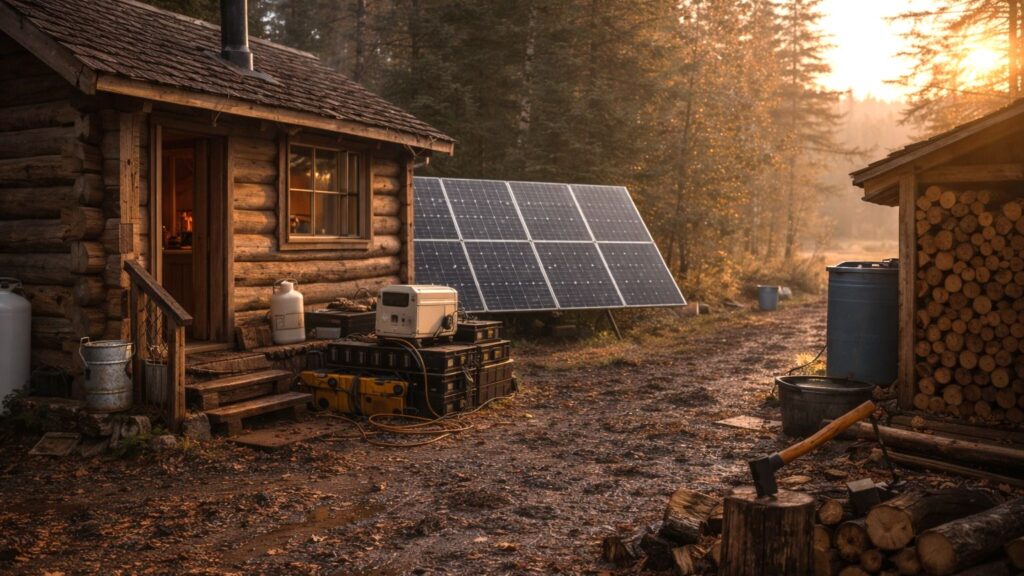
Moving off-grid transforms your relationship with modern life.
You stop outsourcing your problems and start solving them.
You stop scrolling and start doing.
Off-grid life reveals what truly matters:
- Warmth.
- Water.
- Food.
- Connection.
- Purpose.
Everything else becomes secondary.