Top 10 Emergency Water Sources (and How to Make Them Safe)
When the tap stops running, everything changes. Water, the invisible foundation of comfort, hygiene, and survival, becomes the center of life itself.
Whether you’re building a remote cabin, prepping for grid failure, or trekking deep into the wild, knowing how to find, collect, and purify water can mean the difference between thriving and struggling.
This guide walks you through the 10 most reliable emergency water sources for off-grid living, plus the best tools to make each one safe. Every source is ranked not just by availability, but by practicality, because when help isn’t coming, the system you can build and maintain yourself is the one that matters.
1. Rainwater — Nature’s Cleanest Catch
Why it matters: Rain is the most accessible and renewable off-grid water source on Earth: clean, predictable, and easy to scale.
How to collect it:
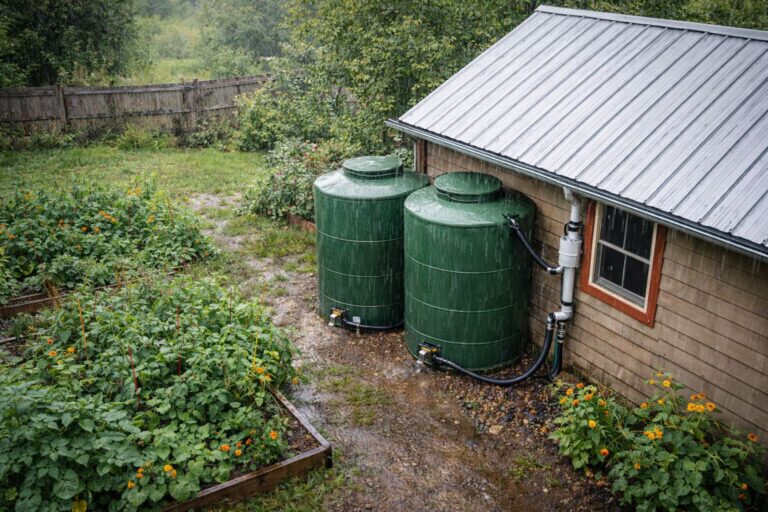
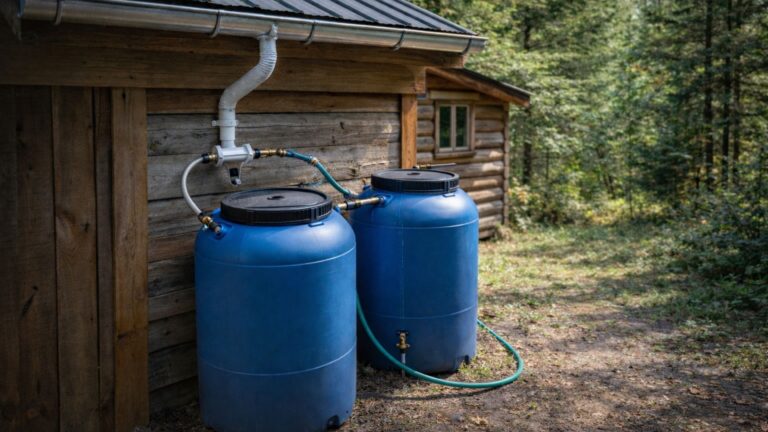
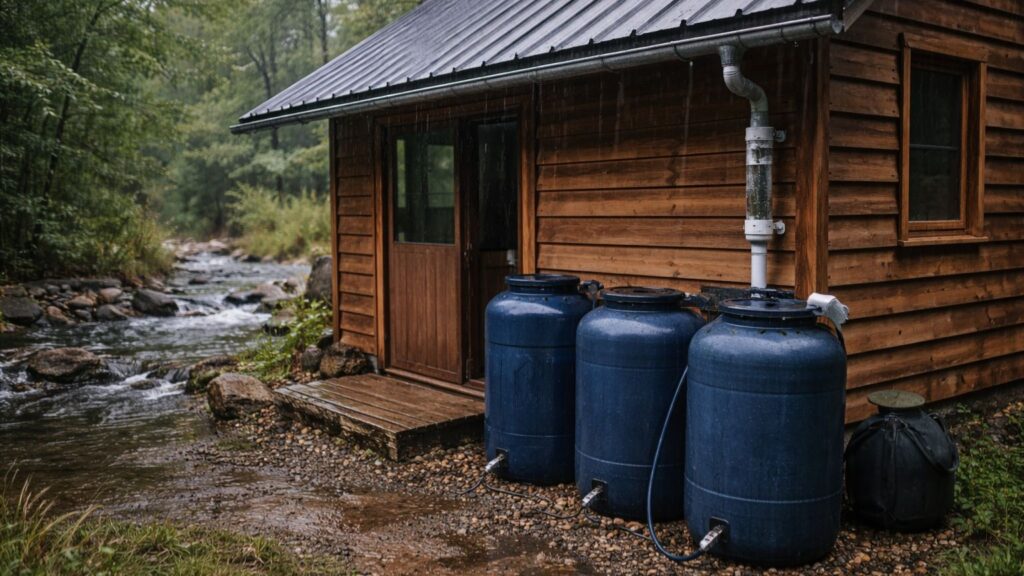
- Use a metal or plastic roof, gutters, and a first-flush diverter to redirect debris from the first minutes of rainfall.
- Channel water into food-grade barrels or bladders, ideally dark-colored to prevent algae growth.
- Keep collection points covered and sealed.
How to make it safe:
Rain is typically clean, but contaminants from roofing materials or airborne pollutants can collect in runoff. Filter through a sediment screen, then boil or use a carbon filter for taste and assurance.
Field Gear Picks:
- Rain Harvest Systems 300-Gallon Kit
- AquaTank2 Collapsible Bladder
- Sawyer Mini Filter
2. Snowmelt and Ice
Why it matters: In cold climates, snow and ice are abundant water stores waiting to be used, but they require careful handling.
How to collect it:
- Scoop fresh, clean snow (avoid yellow, gray, or old crust layers).
- Melt slowly over low heat; rapid melting wastes fuel.
- Never eat snow directly — it lowers body temperature dangerously fast.
How to make it safe:
Fresh snow from open areas is generally clean, but always boil or filter melted water before drinking.
Field Gear Picks:
- Solo Stove Lite
- Jetboil Flash Cooking System
3. Surface Water — Streams, Rivers, and Lakes
Why it matters: Moving water is one of the most dependable wilderness sources, but also one of the riskiest without purification.
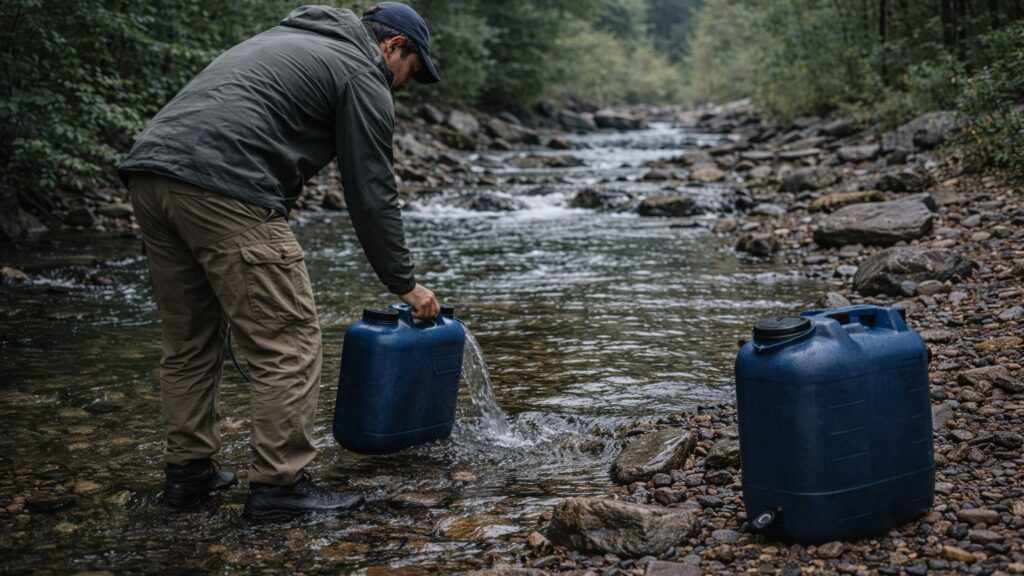
How to collect it:
- Choose flowing water over stagnant pools.
- Collect from upstream, away from livestock or industrial runoff.
- Use a bandana or coffee filter to pre-filter sediment.
How to make it safe:
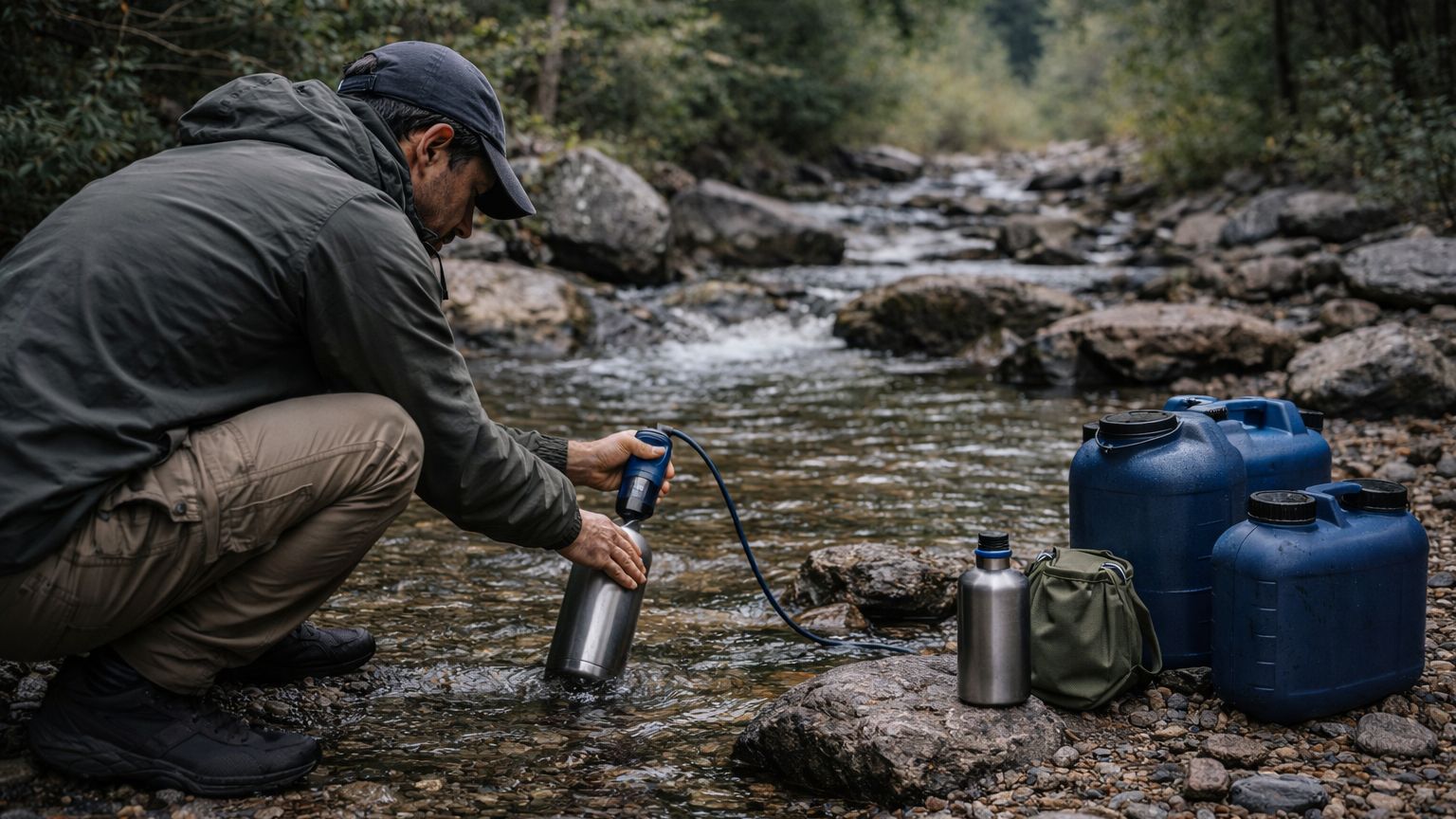
Boil for 1–3 minutes (longer at altitude), or use a microfilter plus chemical treatment for faster field use.
Field Gear Picks:
- LifeStraw Peak Series
- MSR Guardian Purifier
- Platypus GravityWorks Filter
4. Groundwater — Springs and Seeps
Why it matters: Springs are the holy grail of off-grid water, naturally filtered through soil and rock layers.
How to locate it:
- Look for lush vegetation in otherwise dry terrain.
- Follow wildlife trails.
- Check low points and rock bases where water may emerge.
How to make it safe:
While often cleaner than surface water, test before long-term use. Use a carbon filter or UV treatment for added safety.
Field Gear Picks:
- Simple Pump Deep Well Hand Pump
- DuraMac Stainless Hand Pump Kit
5. Dew and Condensation Traps
Why it matters: In arid zones, condensation can provide small but critical amounts of water.
How to collect it:
- Stretch plastic sheeting or tarps overnight to capture dew.
- Build solar stills using a pit, container, plastic cover, and weighted center.
How to make it safe:
Water collected through evaporation is usually safe to drink, but filtering adds an extra layer of confidence.
Field Gear Picks:
- Survival Frog Solar Still Kit
- Bivy Solar Distiller
6. Roof Runoff and Gutters
Why it matters: Your roof can collect large amounts of water with minimal setup.
How to collect it:
- Install gutters with mesh screens or guards.
- Use a first-flush diverter.
- Store in sealed tanks or barrels.
How to make it safe:
Avoid collecting from toxic roofing materials. Always filter or boil before drinking.
Field Gear Picks:
- LeafFilter Gutter Protection
- RainFlo Downspout Diverter
7. Abandoned Wells and Cisterns
Why it matters: Old wells can provide deep groundwater access — but must be treated with caution.
How to assess it:
- Inspect for debris, contamination, or surface runoff.
- Check smell and clarity before use.
How to make it safe:
Use shock chlorination, followed by filtration or boiling.
Field Gear Picks:
- Pumptrol 12V Deep Well Kit
- FloJak Plus Hand Pump
8. Vegetation Sources — Transpiration Bags
Why it matters: Plants release water vapor that can be captured with simple tools.
How to collect it:
- Tie clear plastic bags over leafy branches.
- Allow condensation to collect in sunlight.
How to make it safe:
Generally safe, but purify if contamination is possible.
Field Gear Picks:
- SOL Emergency Plastic Bags
- Survivor Filter Squeeze Kit
9. Swamps, Ponds, and Muddy Water (Last Resort)
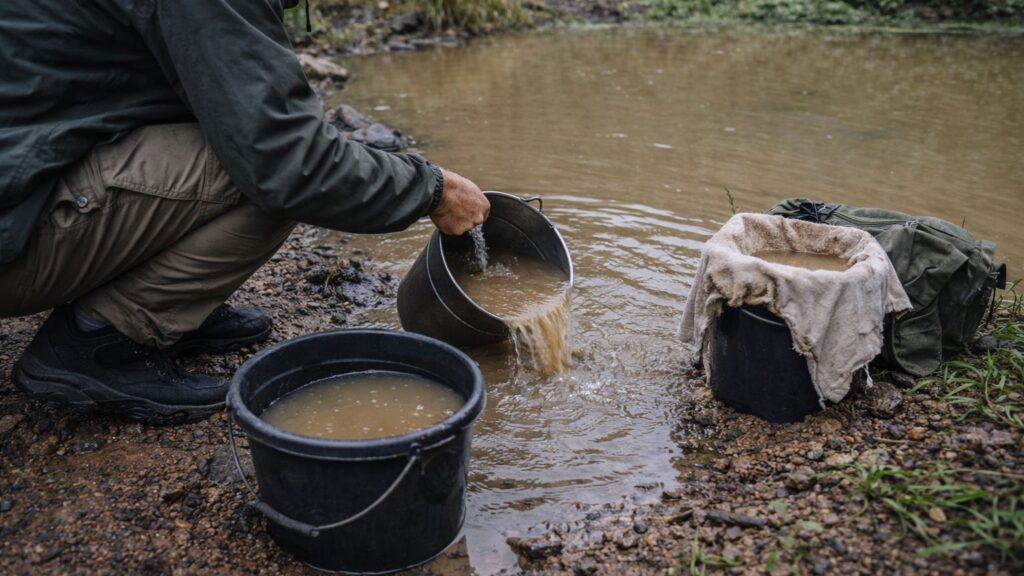
Why it matters: Even dirty water can be made drinkable, but requires more effort.
How to collect it:
- Scoop gently from the surface.
- Let sediment settle.
- Pre-filter through cloth or sand.
How to make it safe:
Boil thoroughly, then use charcoal or chemical treatment.
Field Gear Picks:
- Sawyer Squeeze Filter System
- Aquamira Water Treatment Drops
10. Stored and Recycled Water
Why it matters: The most reliable water source is the one you already control.
How to store it:
- Use BPA-free containers.
- Keep in cool, dark locations.
- Rotate every 6 months.
Bonus:
Use greywater for non-drinking purposes to extend supply.
Field Gear Picks:
- WaterBOB Bathtub Storage Kit
- Augason Farms Water Treatment & Storage Pack
What This Looks Like Day to Day
On paper, emergency water planning sounds straightforward. In real life, it usually looks a lot less tidy.
A person with a cabin might depend on rainwater for most of the year, switch to stored reserves during a dry spell, and keep a creek filter in reserve if both start running low. A rural household may use a well every day, but still keep water barrels filled because pumps fail, pressure tanks break, and winter outages happen at the worst possible time. A traveler or bug-out setup may rely on portable filtration, collapsible containers, and route awareness rather than fixed infrastructure.
That is the practical side of off-grid water: the source matters, but the routine matters more.
For example, collecting rainwater is not just about putting a barrel under a downspout. It means checking screens, keeping gutters clear, managing overflow, and making sure the first dirty runoff is diverted. Surface water is not just about having a stream nearby. It means knowing where to collect from, how weather changes water clarity, and which purification method you trust enough to use every single time.
Even stored water has a practical side that people underestimate. Containers need to be labeled, rotated, kept out of direct sunlight, and protected from freezing. A water reserve is only comforting if you know it is still usable when you need it.
The same goes for treatment gear. A filter buried in a tote somewhere is not a water plan. A UV purifier with dead batteries is not a water plan. Purification tablets you forgot about for three years are not a water plan. Emergency water only becomes real when the tools are accessible, familiar, and maintained.
That is why the most dependable off-grid systems are often boring in the best possible way. They are simple enough to use when tired, stressed, cold, or under pressure. They do not depend on perfect conditions. They do not require heroic effort every day.
A strong setup usually has a rhythm:
- collect when conditions are good
- store more than you think you need
- purify with a method you trust
- rotate supplies before they become questionable
- test the system before it becomes urgent
This is also why redundancy matters so much. If your only method of access requires electricity, that is a weak point. If your only backup relies on a nearby creek, drought can take it away. If your whole system depends on one filter, a clogged cartridge can turn a manageable problem into a bad day fast.
In real life, the goal is not to build a perfect survival fantasy. It is to reduce friction and increase reliability. The closer your system is to being second nature, the more likely it is to hold up when life gets messy.
Purification 101: The Three-Step Rule
No matter the source:
- Filter
- Boil
- Disinfect
This layered approach drastically reduces risk.
Field Gear Picks:
- Katadyn Hiker Pro
- SteriPEN Ultra UV
- Aquatabs Tablets
The Reality of Off-Grid Water in Practice
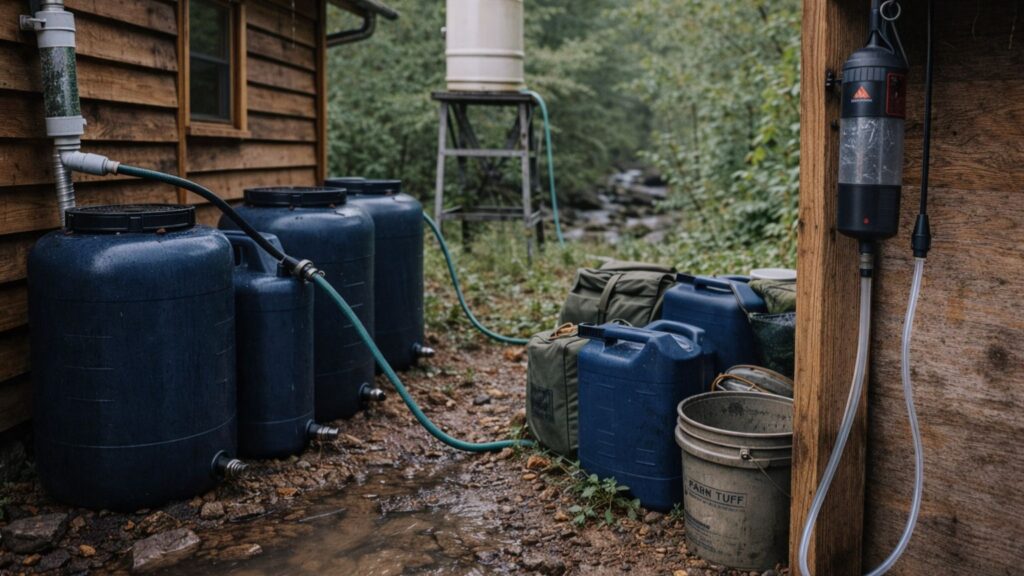
In practice, no one survives long off-grid relying on a single water source. The setups that actually work — the ones that hold up through drought, freezing temperatures, or equipment failure — are layered.
A typical real-world system looks like this:
- Primary source: Rainwater catchment feeding into 200–500 gallons of storage
- Secondary source: Nearby stream, pond, or groundwater access
- Portable backup: Handheld filters or gravity systems for mobility
- Emergency reserve: Stored water (barrels, bathtub bladders, or containers)
Each layer covers a different failure point.
For example:
- Rain systems fail during dry spells
- Surface water can become contaminated or freeze
- Wells can fail mechanically or run dry
- Stored water eventually runs out
But together, they create a system where failure in one area doesn’t become a crisis.
Another key detail most beginners miss: water flow matters just as much as water storage.
Gravity-fed systems, where water moves from a higher tank to a lower use point — remove dependence on pumps, power, and pressure systems. This is one of the simplest upgrades that dramatically increases reliability.
If you take one thing from this guide, it’s this:
You’re not building a water source.
You’re building a water system.
Common Mistakes to Avoid With Emergency Water
Most water problems do not begin with total scarcity. They begin with overconfidence, weak planning, or small mistakes that compound.
One of the most common mistakes is assuming a water source is safe because it looks clean. Clear water can still contain bacteria, parasites, viruses, and agricultural or industrial contaminants. Visual inspection matters, but it tells you far less than many people think.
Another mistake is treating purification as optional. People often plan to filter “if needed” or boil “if the water seems questionable.” That is backwards. Surface water, questionable storage, and unfamiliar sources should be assumed unsafe until treated. Getting sick from water is not a minor inconvenience when you are off-grid. Diarrhea, dehydration, and weakness can spiral quickly when your whole system depends on your own labor.
Many beginners also underestimate storage quality. Water stored in the wrong containers, exposed to sunlight, or left sitting too long without rotation can become a problem of its own. Food-grade, sealed, well-labeled containers are not a luxury detail. They are part of the system.
Then there is the mistake of relying too heavily on one source. A rainwater setup feels secure until a long dry stretch. A well feels permanent until the pump fails. A nearby stream feels dependable until seasonal flow changes or contamination shows up upstream. The more a setup depends on one assumption, the more fragile it becomes.
Another common issue is neglecting maintenance. Gutters clog. Screens tear. Filters clog. Tanks develop buildup. Lids get left loose. Small neglect can quietly degrade water quality long before anyone notices. This is one reason practical off-grid systems beat fancy ones: simple systems are easier to inspect and maintain regularly.
Fuel is another blind spot. Many people assume boiling is always available, but in an emergency, fuel may be limited. If your purification plan depends entirely on burning fuel, it is incomplete. Manual filters, gravity systems, tablets, and stored treated water all reduce that pressure.
People also forget to plan for non-drinking uses. Drinking water is critical, but so are cooking, basic washing, sanitation, and sometimes pets or livestock. A system designed only around drinking water can still leave you struggling. Separating potable reserves from utility water is one of the easiest ways to stretch supplies.
Finally, many people wait too long to build any reserve at all. The best time to solve water problems is before there is stress, urgency, or scarcity. Once a disruption starts, every mistake becomes harder to fix.
A better mindset is simple: assume things can fail, prepare in layers, and make your system easy enough to use that you will actually maintain it. That is what keeps an emergency from becoming a collapse.
Storage, Rotation & Longevity
- Use opaque, food-grade containers
- Avoid sunlight and heat
- Rotate every 6 months
- Store at least 1 gallon per person per day
For long-term setups, combine storage with gravity-fed systems and manual or solar pumps.
Quick Failure Points
Most off-grid water failures don’t happen because people can’t find water. They happen because people assume too much about the water they have.
Here are the mistakes that show up over and over again:
Assuming clear water is safe
Water can look perfectly clean and still carry bacteria, parasites, or chemical contamination. Giardia and E. coli don’t care how “pure” the water looks.
Skipping purification to save time
This is one of the fastest ways to get sick off-grid. Boiling or filtering might feel like a hassle, until it isn’t optional anymore.
Using the wrong storage containers
Not all containers are safe. Non-food-grade plastics can leach chemicals into your water, especially in heat or sunlight.
Relying on a single source
This is the biggest failure point. One dry season, one broken pump, or one contamination event can wipe out your only supply.
Letting systems sit unused
Water systems need occasional cycling. Stagnant water grows biofilm, bacteria, and algae — even in sealed containers over time.
Ignoring seasonal changes
A stream that runs strong in spring can disappear by late summer. Snowmelt that’s abundant in winter becomes irrelevant in July.
The people who do well off-grid aren’t the ones with the most gear — they’re the ones who expect failure and plan for it.
That mindset alone puts you ahead of most setups.
Upgrade Path: From Basic Survival to Full Water Independence
Once you’ve secured basic water access, the next step is upgrading from survival to comfort and reliability.
Here’s what that progression usually looks like:
Stage 1 — Basic Survival
- Manual collection (buckets, containers)
- Portable filters
- Small storage reserves
This works short-term, but it requires constant effort.
Stage 2 — Semi-Permanent Setup
- Rainwater catchment system
- Medium storage (100–300 gallons)
- Gravity-fed distribution
At this stage, water becomes easier: less daily work, more consistency.
Stage 3 — Fully Off-Grid System
- Large-scale storage (500+ gallons)
- Redundant sources (rain + well + backup)
- Pump-assisted or solar-powered systems
- Inline filtration and treatment
Now you’re no longer reacting to water — you’re managing it.
Stage 4 — Resilient, Low-Maintenance System
- Automated diversion and filtration
- Freeze protection or seasonal adaptations
- Minimal manual intervention required
This is where most off-grid setups fail to reach, but it’s where true independence begins.
The difference between struggling and thriving off-grid often comes down to one thing:
Not just having water…
…but building a system that keeps working when you’re not thinking about it.
Final Thoughts: Water Is Life
Every off-grid system depends on water.
At minimum, aim for:
- One primary source
- One backup source
- One stored reserve
The goal isn’t just to find water. It’s to build a system so reliable you stop thinking about it.
That’s real independence.