The 10 Best Portable Solar Generators of 2026: Reliable Power for Off-Grid Living
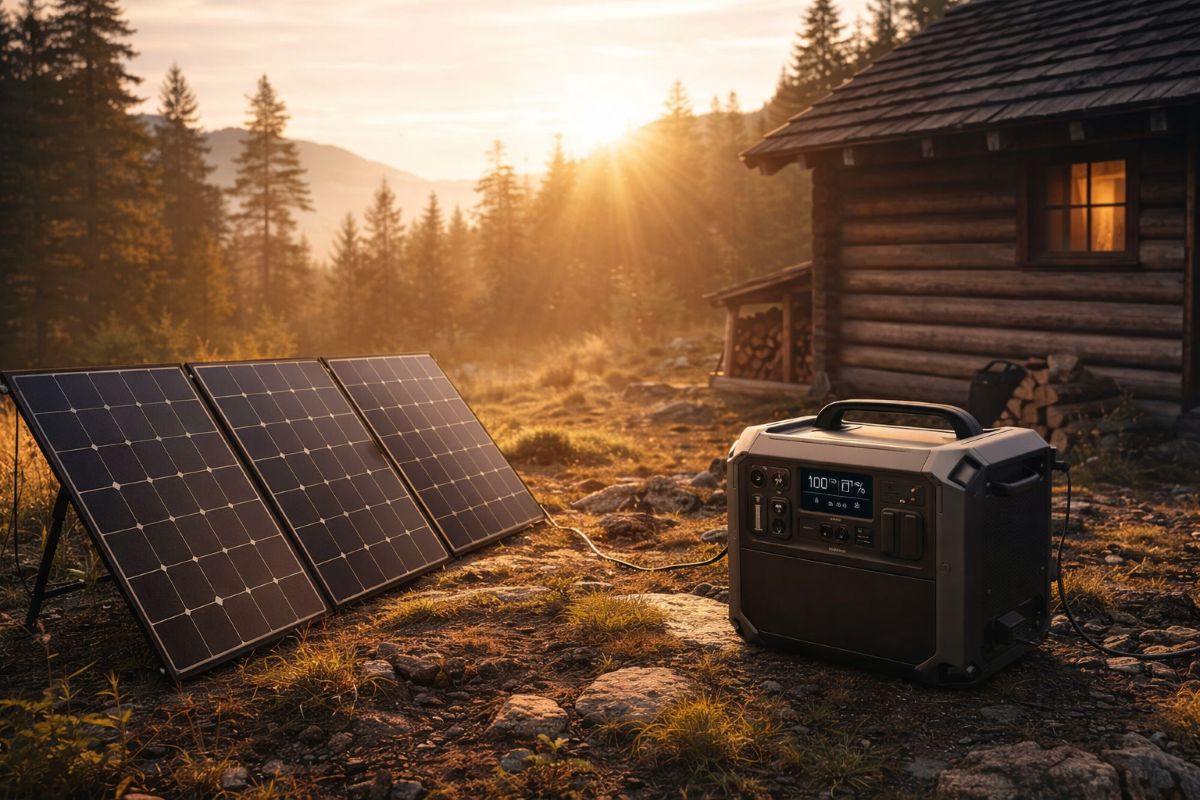
When the grid fails, your backup plan becomes your lifeline.
And when that plan hums quietly in the corner, taking in sunlight and powering everything from a fridge to your Wi-Fi router, it becomes something more than a device. It becomes stability.
Portable solar generators have matured fast. The best systems in 2026 are no longer niche or experimental. They are refined, reliable, and capable of supporting real off-grid setups.
LiFePO₄ batteries have largely replaced older lithium chemistries, bringing longer lifespans and improved safety. Inverters are more efficient, solar input limits are higher, and system integration is more consistent across major brands.
No fumes. No fuel. No noise.
Just stored energy that works wherever you take it.
We looked at how these systems actually perform in the field. Across van builds, off-grid cabins, and real emergency use, we narrowed this list down to the units that hold up when conditions aren’t ideal.
Best Solar Generators by Use Case
If you don’t want to get lost in specs, start here.
| Use Case | Best Pick | Why It Stands Out |
|---|---|---|
| Off-Grid Cabins | EcoFlow Delta Pro | Massive capacity, expandable, can support full systems |
| Vanlife / Mobility | Jackery Explorer 2000 Plus | Lightweight, modular, easy to deploy |
| Emergency Backup | Geneverse HomePower One Pro | Simple, safe, and reliable indoors |
| Budget Setup | BougeRV Fort 1500 | Strong performance at a lower price point |
| Balanced All-Rounder | Bluetti AC200L | Best mix of power, expandability, and usability |
For most people, choosing based on how you’ll actually use the system is more effective than comparing raw numbers.
Who These Systems Are For
Portable solar generators aren’t one-size-fits-all.
Cabin setups need capacity and consistency. You’re running daily loads over long periods, and recharge speed matters just as much as storage.
Vanlife setups prioritize efficiency and portability. A slightly smaller unit that recharges quickly can outperform a larger system that’s harder to manage.
Emergency backup is about simplicity. You want something that works immediately, safely indoors, and without a learning curve.
Hybrid off-grid homes benefit from modular systems that can scale over time as energy needs grow.
Matching the system to your lifestyle matters more than chasing maximum specs.
What to Look For in a Solar Generator
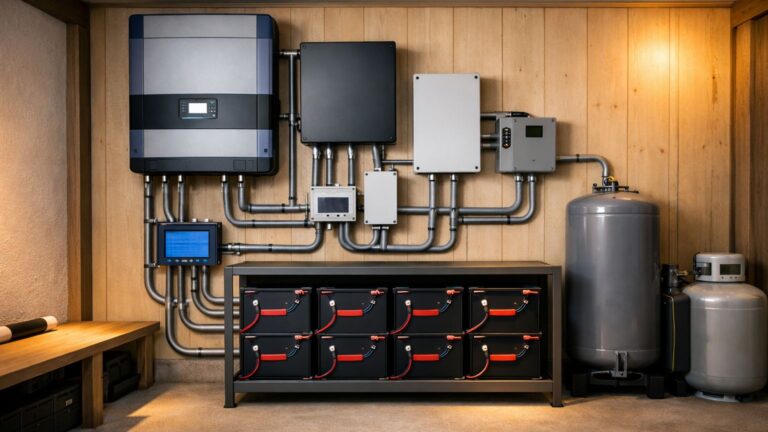
A solar generator isn’t just a battery. It’s a complete power system.
You’re balancing:
- daily energy use
- recharge speed
- inverter limits
- long-term durability
Understanding how these pieces interact is more important than any single spec.
[Related: Choosing the Right Solar Generator Size]
Battery Capacity (Wh) — Your Real Fuel Tank
Battery capacity determines how long your system runs between charges.
A realistic small off-grid setup might include:
- Mini fridge: ~1,400 Wh/day
- Lights and devices: ~300–500 Wh/day
- Miscellaneous loads: ~200–400 Wh/day
That puts real usage around 1,800–2,200 Wh per day.
Rule of thumb:
Buy at least 25–50% more capacity than your daily needs.
That buffer becomes critical when:
- solar input drops
- weather limits charging
- usage spikes unexpectedly
Modern LiFePO₄ batteries typically offer:
- 3,000–5,000 cycles
- strong thermal stability
- consistent long-term performance
These are no longer short-term tools. They are long-term infrastructure.
Inverter Output (W) — What You Can Actually Run
Battery size determines runtime.
The inverter determines what’s possible.
A strong baseline for most setups:
- 2,000W continuous
- 4,000W surge
This allows you to run:
- refrigerators
- pumps
- power tools
- kitchen appliances
Undersizing your inverter is one of the fastest ways to outgrow a system.
Solar Input (W) — How Fast You Recover
Recharge speed is where many systems fall short in real-world use.
A large battery with slow solar input becomes a bottleneck.
Recommended ranges:
- 800–1,200W for mid-size systems
- 1,500W+ for larger setups
More input means:
- faster recovery after heavy use
- better performance in inconsistent weather
- less reliance on perfect conditions
Build Quality and Longevity
Specs don’t tell you how a system holds up over time.
Long-term reliability depends on:
- thermal management
- internal component quality
- port durability
- firmware stability
Failures rarely show up in spec sheets. They show up months into real use.
How to Actually Size Your System (Without Guessing Wrong)
This is where most people get it wrong.
They compare generator specs, pick something that “looks powerful,” and assume it will handle their needs. Then they run into limits within days.
Sizing a solar generator properly isn’t about picking the biggest unit. It’s about matching capacity, output, and recharge speed to how you actually live.
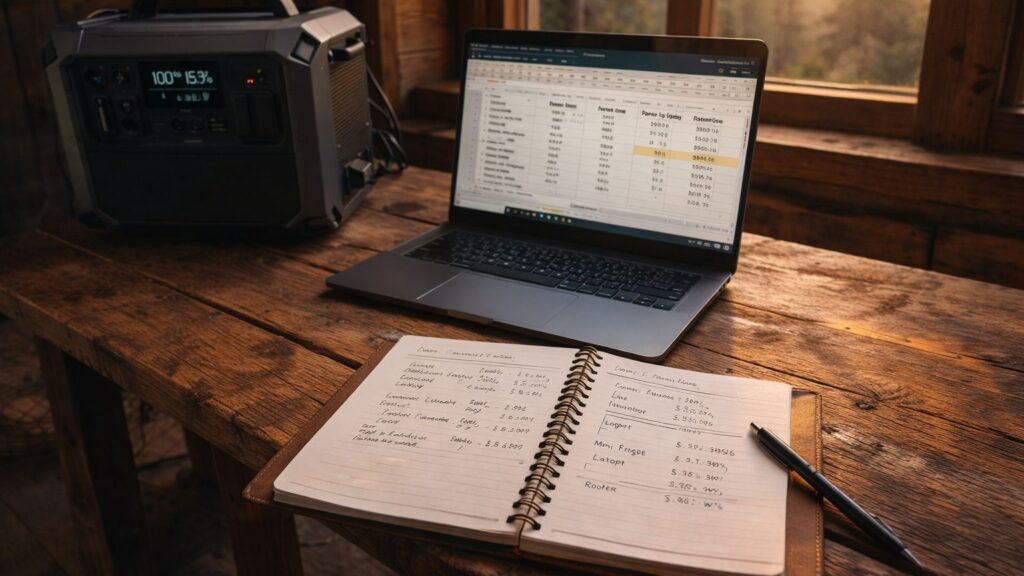
Step 1: Start With Daily Energy Use
Before you look at any product, estimate how much energy you use in a day.
A simple way to do this is to list your essential devices and how long they run:
- Mini fridge (70W × 24h) = ~1,680 Wh
- Laptop (60W × 5h) = ~300 Wh
- Lights (10W × 5h) = ~50 Wh
- Router (12W × 24h) = ~288 Wh
That puts you at roughly 2,300 Wh per day.
This number matters more than anything else.
Step 2: Add a Realistic Buffer
Real-world conditions are never perfect.
Cloud cover, shading, inefficient charging, and unexpected usage all add up.
A safe buffer is:
- +25% minimum for stable environments
- +50% for off-grid or inconsistent solar conditions
So a 2,300 Wh daily load becomes:
- ~2,900 Wh (minimum)
- ~3,500 Wh (recommended)
This is where many setups fail. They are sized too close to the edge.
Step 3: Match Battery Size to Lifestyle
Different setups need different levels of resilience.
Short-term / weekend use:
- 1 day of capacity is enough
- Smaller, lighter systems work well
Part-time off-grid:
- 1–2 days of buffer
- Medium systems (~2000–4000 Wh)
Full-time off-grid:
- 2–3 days of buffer
- Larger or expandable systems (4000 Wh+)
The more consistent your usage, the more valuable extra capacity becomes.
Step 4: Don’t Ignore Inverter Limits
Even if your battery is large enough, your inverter can still bottleneck you.
Example:
A 2000 Wh system with a 1000W inverter can’t run:
- kettles
- microwaves
- power tools
You’ll hit limits even with plenty of stored energy.
For most real-world setups:
- 2000W inverter = baseline
- 3000W+ = future-proofing
If you plan to expand your setup later, this matters more than battery size.
Step 5: Solar Input Is What Keeps You Alive
Battery capacity gets all the attention. Recharge speed determines sustainability.
If your system uses 2,300 Wh per day, your solar input needs to match or exceed that.
In practice:
- 800W solar input → decent recovery in good sun
- 1200W+ → strong recovery, more resilience
- 1500W+ → reliable even in variable conditions
A large battery with weak solar input becomes dead weight after a few cloudy days.
Step 6: Think in Systems, Not Devices
The biggest mindset shift is this:
You’re not buying a generator.
You’re building a system.
That system includes:
- battery capacity
- inverter capability
- solar input
- usage habits
All four have to work together.
A perfectly balanced 2000 Wh system can outperform an oversized 4000 Wh system that’s poorly configured.
Step 7: Plan for Expansion Early
Even if you start small, choose a system that can grow.
Expandable systems let you:
- add battery capacity later
- increase solar input
- adapt to changing needs
This avoids replacing your entire setup when your usage increases.
It’s one of the most cost-effective decisions you can make.
The Simple Rule Most People Miss
If your system can:
- handle your daily load
- recharge fully in a day of decent sun
- run your highest-demand appliance
…it will feel effortless to use.
If it can’t, you’ll constantly work around it.
And that’s the difference between a system that supports your life and one that limits it.
Real-World Setup Examples
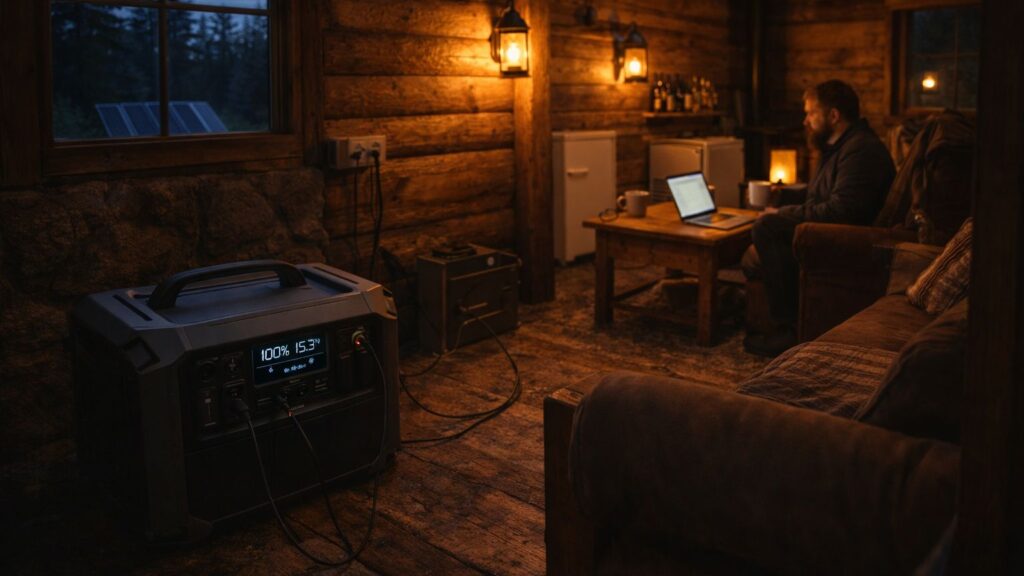
This is where things become practical.
Minimal Cabin Setup (~2000Wh system):
- Mini fridge
- Lights
- Phone + laptop
- Router
This setup can run comfortably for a day, but relies heavily on solar recovery the next day.
Expanded Setup (~4000Wh system):
- Fridge
- Lights
- Devices
- Occasional appliance use
This adds:
- multi-day buffer
- better resilience during poor weather
- more flexibility overall
High-Demand Setup (6000Wh+ expandable):
- Full cabin essentials
- Power tools
- Consistent daily loads
At this level, the system starts behaving like true off-grid infrastructure rather than backup power.
Example Power Usage
| Device | Typical Watts | Runtime on a 2000Wh Generator |
|---|---|---|
| Laptop | 60 W | ~30 hours |
| Mini Fridge | 70 W | ~24 hours |
| LED Lights | 10 W | ~200 hours |
| CPAP Machine | 40 W | ~40 hours |
| WiFi Router | 12 W | ~160 hours |
Real-world performance varies depending on efficiency and usage patterns, but this gives a grounded baseline.
The 10 Best Portable Solar Generators of 2026
Each of these systems has proven itself through a combination of reliability, design, and real-world performance.
1. Bluetti AC200L — Best All-Rounder
Specs
2048 Wh LiFePO₄ battery
2400 W inverter
Up to 1200 W solar input
The Bluetti AC200L strikes one of the best balances available today. It’s expandable, stable, and flexible enough for cabins, vans, or emergency use.
Verdict
A dependable, well-rounded system that fits most off-grid scenarios.
2. EcoFlow Delta Pro — Most Expandable System
Specs
3600 Wh base capacity
3600 W inverter
Expandable to 25 kWh
The Delta Pro pushes into full home backup territory. With expansion batteries and smart integration, it can support major loads for extended periods.
Verdict
A long-term power solution, not just a portable unit.
3. Jackery Explorer 2000 Plus — Easiest Setup
Specs
2042 Wh LiFePO₄ battery
1200 W solar input
3000 W surge
Jackery keeps things simple while adding modular expansion. Lightweight and intuitive, it’s a strong choice for mobile setups.
Verdict
Reliable and beginner-friendly without feeling limited.
4. Anker SOLIX F2000 — Compact and Reliable
Specs
2048 Wh battery
2400 W inverter
500 W solar input
Anker’s build quality and quiet operation make this a strong option for travel, mobile work, and lighter off-grid use.
Verdict
Solid reliability in a compact form.
5. Geneverse HomePower One Pro — Best for Emergencies
Designed for simplicity and safety, this system is easy to deploy during outages and works well indoors.
Verdict
A strong emergency backup option for homes and apartments.
6. Zendure SuperBase V6400 — Smartest System
Advanced battery tech and large expansion capacity make this ideal for serious off-grid setups.
Verdict
Built for users who want a scalable system.
7. BougeRV Fort 1500 — Best Budget Pick
A well-priced unit that still delivers solid performance and LiFePO₄ durability.
Verdict
Excellent value for smaller setups.
8. Goal Zero Yeti 1500X — Proven Durability
Field-tested and rugged, with a long-standing reputation for reliability.
Verdict
A durable, trusted option.
9. ALLPOWERS R4000 — Fastest Solar Charging
With up to 2000W solar input, this system excels in sunny environments with large panel arrays.
Verdict
Best suited for solar-heavy setups.
10. Oukitel BP2000 — Best Modular Under $2,000
Flexible expansion and competitive pricing make this a strong option for budget-conscious builds.
Verdict
A smart entry into modular systems.
What Actually Changes When You Own Your Power
On paper, a solar generator is just a piece of equipment.
In practice, it changes how you think about energy.
Most people are used to unlimited power. You flip a switch, plug something in, and it works. The system behind it is invisible.
Off-grid power makes that system visible.
You start to notice:
- how much energy different devices actually use
- how quickly power is consumed under load
- how weather affects your available energy
- how small changes in usage extend or reduce runtime
At first, this feels like a limitation.
But over time, it becomes awareness.
Energy Becomes Something You Manage, Not Consume
Instead of passive usage, you begin making small, informed decisions:
- running high-draw appliances during peak solar hours
- charging devices when the system is full
- spacing out heavy loads instead of stacking them
These aren’t restrictions. They are optimizations.
And once they become habit, they require almost no effort.
Reliability Feels Different
Grid power is assumed to be stable. That holds until it isn’t.
When outages happen, most people are forced into reactive mode.
With a properly sized solar generator, the experience is different.
- essential systems stay online
- food stays preserved
- communication remains uninterrupted
Instead of reacting to a failure, you continue operating normally.
That shift alone is where most of the value comes from.
Independence Builds Gradually
Very few people go fully off-grid overnight.
It usually starts small:
- powering a few devices
- running a backup setup
- testing solar charging
Then expands:
- adding more capacity
- relying on it more often
- trusting the system under real conditions
Over time, what started as backup becomes primary.
And what felt like a tool becomes infrastructure.
The Goal Isn’t Unlimited Power
It’s controlled, reliable power.
You’re not trying to replicate the grid perfectly.
You’re building something more resilient. A system that:
- supports your essential needs
- adapts to changing conditions
- keeps working when other systems fail
That’s the real advantage.
Not just having power, but understanding it, controlling it, and relying on it when it matters.
Common Mistakes to Avoid
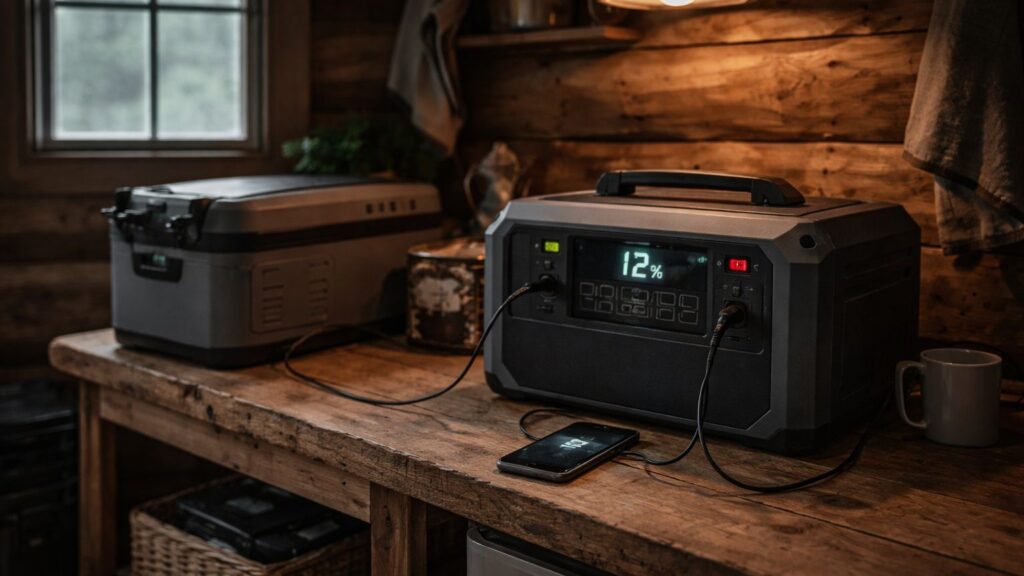
- Undersizing your system
- Ignoring solar input limitations
- Overestimating runtime
- Using poor-quality cables
- Skipping capacity buffer
Most failures come from planning mistakes — not equipment quality.
Field Verdict
Every system on this list can keep essential loads running when the grid goes down.
The difference comes down to how well it fits your setup.
The real advantage isn’t just power — it’s control.
Plan your usage.
Build in buffer.
Prioritize reliability.
And your system won’t just keep things running — it will give you independence when it matters most.