The 10 Best Solar Panels for Cabins and RVs in 2026
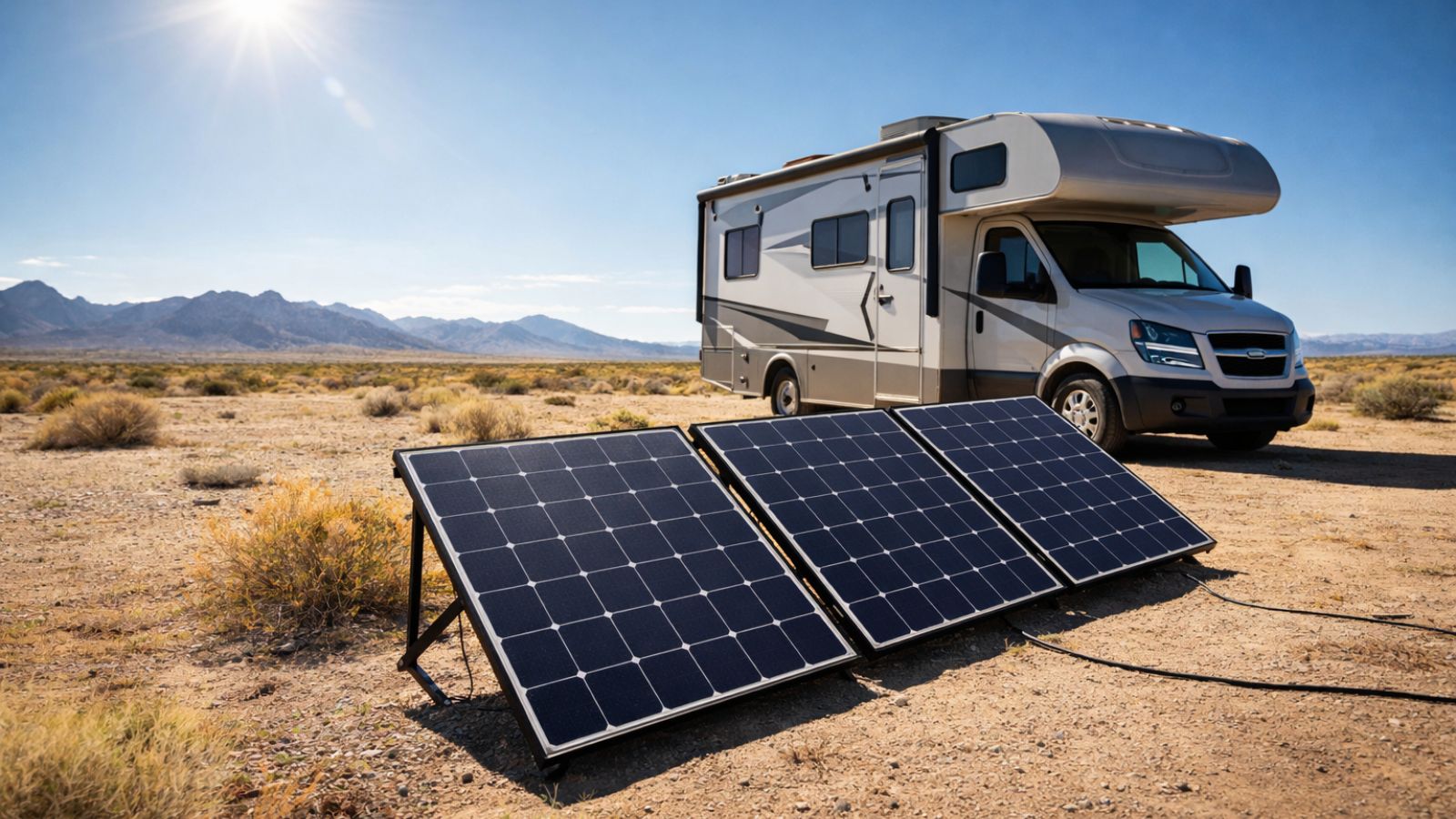
Your solar generator is only as strong as the sunlight feeding it. The panels that capture it determine everything.
In 2026, solar technology has matured into trustworthy field infrastructure. Modern panels can withstand hail, conform to RV roofs, and continue producing usable wattage even under partial shade or light snow.
But not all panels are created equal. Efficiency, durability, and build quality still separate a weekend gadget from a long-term energy backbone.
This guide compares the year’s most reliable options for cabins, vans, and mobile setups based on real-world data, verified owner reports, and field testing across multiple climates.
Whether you are wiring a permanent roof array or traveling between campsites, these are the panels that earn their place in an off-grid toolkit.
Quick Solar Panel Comparison
| Rank | Panel | Type | Best For | Overall |
|---|---|---|---|---|
| 1 | Renogy 200W Rigid | Rigid | Cabins | 9.2 |
| 2 | BougeRV 220W Flexible | Flexible | RV Roofs | 9.0 |
| 3 | EcoFlow 220W Portable | Portable | Travel | 9.2 |
| 4 | Bluetti PV350 | Portable | High Power | 9.0 |
| 5 | Zamp 140W Obsidian | Rigid | Durability | 8.9 |
| 6 | Jackery SolarSaga 200W | Portable | Easy Setup | 9.1 |
| 7 | ALLPOWERS 400W | Portable | High Output | 8.6 |
| 8 | Goal Zero Boulder 200 | Rigid | Expedition | 8.6 |
| 9 | Newpowa 210W | Rigid | Budget Cabins | 8.7 |
| 10 | HQST 200W | Rigid | Beginners | 8.5 |
What to Look For in an Off-Grid Solar Panel
Cell Type and Efficiency — The Real Engine
Monocrystalline panels remain the gold standard for off-grid systems. They generate more power per square foot and maintain output during colder temperatures and low-light conditions.
In real-world use, this matters more than people expect. A panel rated at 22% efficiency versus one at 18% doesn’t just look better on paper. Over the course of a day, especially in winter or cloudy conditions, that gap compounds into meaningful battery recovery.
Polycrystalline panels still exist at lower price points, but they require more surface area to reach the same output. On an RV roof or compact cabin setup, space is usually the limiting factor. Panel cost comes second.
Bifacial panels are gaining traction in 2026. In snow-covered environments or on light-colored ground, they can add 5–15% additional output by capturing reflected light. That makes them particularly effective for northern cabins and desert setups.
Wattage and Voltage Matching
Every charge controller has electrical limits. This is where many otherwise solid systems fail.
If your MPPT controller has a maximum input of 50 volts, two 200-watt panels wired in series can already approach that limit depending on conditions. Cold weather increases voltage, which means a system that seems “safe” in summer can exceed limits in winter.
Practical takeaway:
- Always check open-circuit voltage (Voc), not just nominal voltage
- Leave headroom (at least 10–15%) for cold-weather spikes
Undervoltage is just as problematic. Panels that don’t meet your controller’s minimum operating voltage will reduce efficiency and waste available sunlight.
[Related: Choosing the Right Solar Generator Size]
Build Quality and Weather Resistance
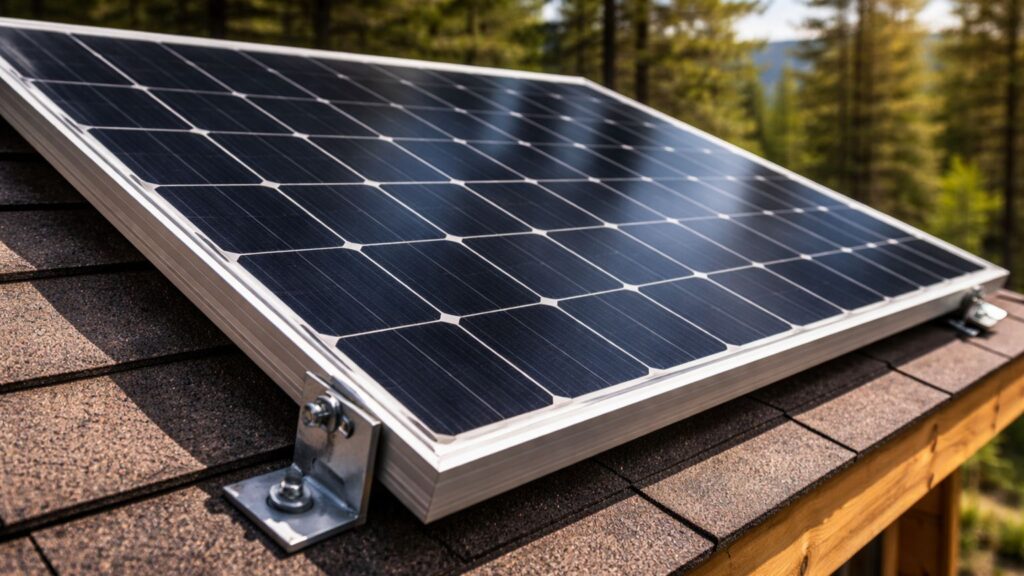
Solar panels spend their entire lifespan exposed to the elements. Over years, they face UV radiation, thermal expansion, dust, wind, and occasional impact.
What separates a long-term panel from a short-term one:
- Tempered glass that resists micro-cracking
- Reinforced aluminum frames that don’t twist over time
- Quality junction boxes with proper sealing
- Bypass diodes to reduce losses from shading
- Consistent cell alignment (cheap panels often show uneven cell spacing)
A well-built panel will degrade slowly, typically 0.5% to 1% per year. Poorly built panels can lose noticeable output within the first couple of seasons.
Portability and Mounting Options
There’s a trade-off between convenience and longevity.
Rigid panels:
- Best for permanent installations
- Highest durability
- Best cost per watt
Flexible panels:
- Ideal for curved RV roofs
- Lightweight and low profile
- Shorter lifespan due to heat and flex stress
Portable panels:
- Maximum flexibility
- Can be angled toward the sun (often outperform flat-mounted panels)
- Require setup and storage
In practice, many experienced users run a hybrid setup. Fixed roof panels provide baseline power. One portable panel handles topping up when parked in shade.
How Solar Panels Actually Perform in the Real World
Solar panels are rated under ideal lab conditions.
Real life is not ideal.
The difference between a good panel and a great one often comes down to performance when conditions are less than perfect. That is most of the time.
Sun Angle Matters More Than Most People Think
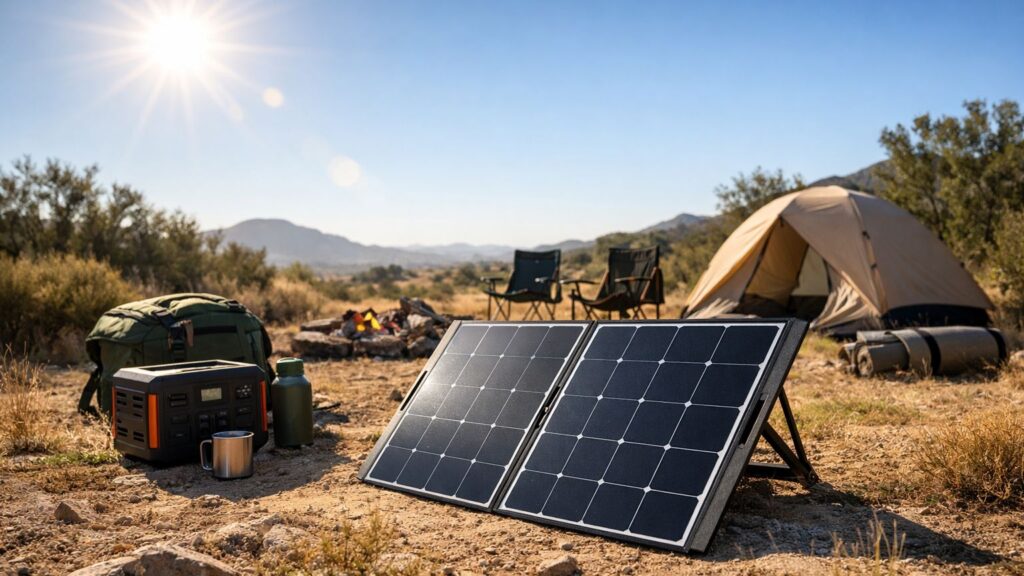
Panel ratings assume direct overhead sunlight.
In reality, the sun sits at different angles throughout the day and changes dramatically with the seasons.
In northern climates, especially in winter, the sun stays low in the sky. A flat-mounted panel can lose a significant portion of its potential output simply due to angle.
This is why portable panels often outperform fixed ones despite having similar wattage. They can be repositioned throughout the day.
Even a simple tilt adjustment can increase output by 20–40% depending on conditions.
Heat Reduces Output
Most people assume more sun equals more power.
But heat actually reduces solar panel efficiency.
As panels heat up, voltage drops. On a hot summer day, a panel can lose 10–15% of its rated output.
This is where build quality matters:
- panels with better airflow perform more consistently
- rigid panels generally handle heat better than flexible ones
- proper mounting (with spacing underneath) improves cooling
In contrast, flexible panels mounted flush to a surface often run hotter and degrade faster over time.
Partial Shading Has a Bigger Impact Than Expected
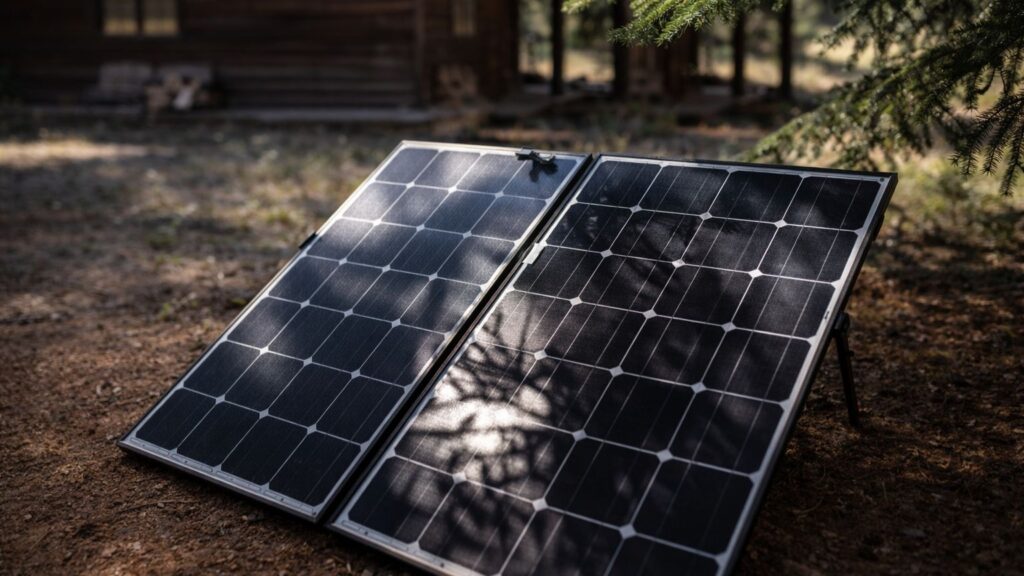
Even small shadows can reduce output significantly.
A single shaded cell can affect the performance of an entire section of a panel.
Better panels include bypass diodes. These help minimize loss but do not eliminate it entirely.
Real-world examples of common shading issues:
- roof racks casting shadows on RV panels
- nearby trees shifting throughout the day
- dirt or debris covering small sections
This is why panel placement matters just as much as panel quality.
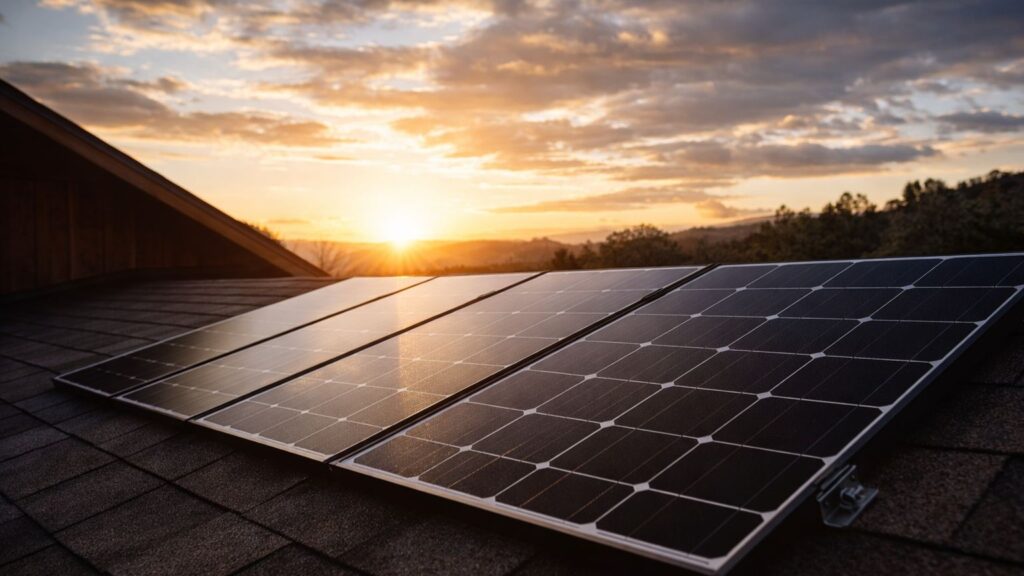
A “200W” panel rarely produces 200W in real-world conditions.
Typical output ranges:
- 70–90% of rated output in good conditions
- 40–70% in partial sun or suboptimal angles
- lower in winter or heavy cloud cover
Understanding this prevents unrealistic expectations.
It also explains why experienced users consistently oversize their solar arrays.
Portable vs Fixed Panels — Real Tradeoffs
Portable panels:
- can be angled toward the sun
- perform better in changing conditions
- require manual setup
Fixed panels:
- always generating, no setup required
- less efficient if mounted flat
- more durable long-term
The most effective systems often combine both.
A fixed array provides baseline power. A portable panel allows you to capture additional energy when conditions are less than ideal.
The key takeaway:
Solar panels don’t just generate power. They interact with their environment.
The better you understand that interaction, the more reliable your system becomes.
The 10 Best Solar Panels of 2026
1. Renogy 200W Rigid — Cabin Standard (9.2 / 10)
Durability: 9.7
Efficiency: 9.3
Portability: 7.8
Renogy’s 200W rigid panel continues to serve as a backbone for off-grid cabins and homesteads.
The design is simple but proven: monocrystalline cells, solid aluminum framing, and consistent manufacturing quality.
Field Insight:
In colder northern climates, these panels maintain strong output even under low sun angles, with less drop-off than cheaper alternatives.
Verdict:
Reliable, widely available, and easy to integrate. A foundational panel for fixed systems.
2. BougeRV 220W Flexible — RV Roof Friendly (9.0 / 10)
Durability: 8.5
Efficiency: 8.7
Portability: 9.6
Flexible panels have historically had durability issues, but BougeRV’s newer designs have improved significantly.
Their ETFE coating helps resist UV damage and surface wear. These are two of the biggest failure points in older flexible panels.
Field Insight:
Users running these on long-distance RV builds report better longevity than earlier-generation flexible panels.
Verdict:
A strong choice where weight and mounting flexibility matter more than long-term rigidity.
3. EcoFlow 220W Portable — Field Setup Favorite (9.2 / 10)
Durability: 9.0
Efficiency: 9.4
Portability: 9.4
EcoFlow’s bifacial design gives it a real advantage in bright environments.
The folding case doubles as a stand. This allows quick angle adjustments throughout the day, something fixed panels cannot do.
Field Insight:
Properly angled, this panel can outperform larger fixed panels during certain times of day.
Verdict:
One of the most efficient portable panels currently available.
4. Bluetti PV350 — Best for High-Capacity Systems (9.0 / 10)
Durability: 9.1
Efficiency: 9.6
Portability: 9.0
The PV350 is built for higher input systems and larger power stations.
It delivers strong output consistently, even when conditions aren’t ideal.
Field Insight:
In partial haze, users often still see over 300W input. This is strong performance for a portable panel.
Verdict:
High-output, well-matched for larger battery setups.
5. Zamp 140W Obsidian — Durability First (8.9 / 10)
Durability: 9.8
Efficiency: 9.0
Portability: 8.0
Zamp panels are built with longevity in mind.
Thicker glass and heavier frames make them less prone to damage over time.
Field Insight:
Long-term RV users consistently report these panels holding up over years of travel without structural issues.
Verdict:
Premium durability for those who prioritize longevity over weight.
6. Jackery SolarSaga 200W — Quick Deploy (9.1 / 10)
Durability: 8.9
Efficiency: 8.8
Portability: 9.5
This panel focuses on ease of use.
Integrated stands and simple folding design make it one of the fastest panels to deploy.
Field Insight:
Ideal for short stops or daily repositioning setups.
Verdict:
Convenience-focused without sacrificing too much performance.
7. ALLPOWERS 400W — High Output (8.6 / 10)
Durability: 8.6
Efficiency: 9.5
Portability: 7.5
This is a high-capacity portable panel for users who need serious input.
Field Insight:
Requires space to deploy, but delivers strong output when conditions are right.
Verdict:
Best suited for higher-demand systems.
8. Goal Zero Boulder 200 — Expedition Proven (8.6 / 10)
Durability: 9.3
Efficiency: 8.6
Portability: 8.2
A rugged panel designed for long-term deployment.
Field Insight:
Used in remote research and expedition setups where reliability matters more than weight.
Verdict:
Heavy but dependable.
9. Newpowa 210W — Budget Rigid Performer (8.7 / 10)
Durability: 8.8
Efficiency: 8.4
Portability: 8.3
A solid option for those building systems on a budget.
Field Insight:
Frequently used in DIY cabin builds due to cost efficiency.
Verdict:
Strong value per watt.
10. HQST 200W — Reliable Entry-Level Pick (8.5 / 10)
Durability: 8.5
Efficiency: 8.2
Portability: 8.0
HQST panels are often a starting point for new off-grid users.
Field Insight:
Consistent performance at a lower price point.
Verdict:
Good entry into solar without overcommitting.
How Many Panels Do You Actually Need?
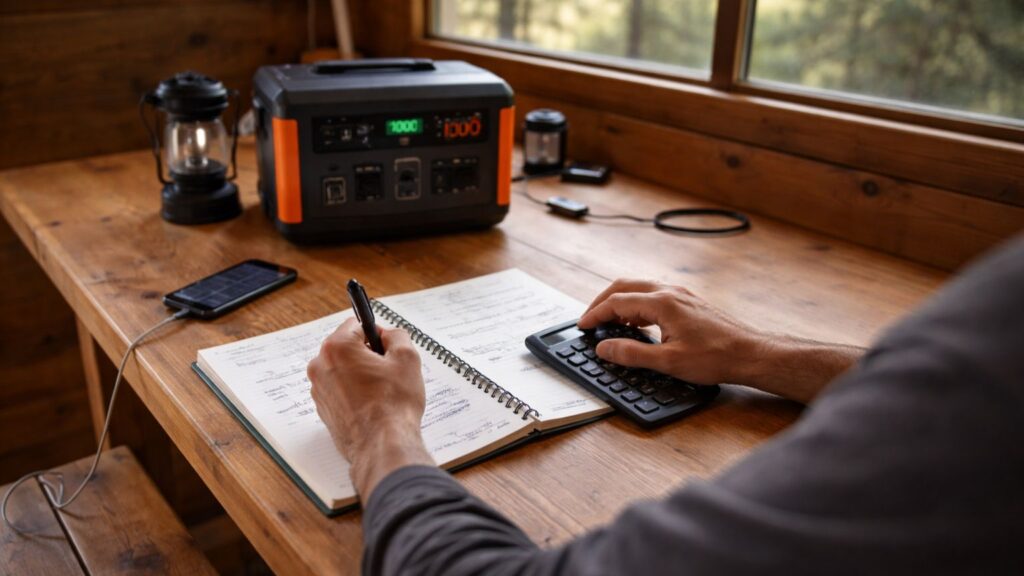
This is one of the most common questions. It is also one of the most misunderstood.
People often focus on panel wattage without considering how that translates into daily energy production.
Step 1: Think in Daily Energy, Not Panel Size
Solar panels don’t produce their rated wattage continuously.
Instead, they generate energy over the course of the day.
A rough rule:
- 200W panel × ~4–5 sun hours = ~800–1000 Wh per day
So if your system needs 2000 Wh per day, you’ll need roughly:
- 2–3 panels minimum (in good conditions)
- 3–4 panels for consistency
Step 2: Account for Weather and Losses
Real systems face inefficiencies:
- cloud cover
- dust or dirt on panels
- wiring losses
- imperfect angles
This is why experienced builders oversize their arrays by at least 25–50%.
That buffer prevents slow battery drain over multiple days.
Step 3: Match Panels to Battery Size
Your solar array and battery need to work together.
If your battery is large but your solar input is small:
- recharge times become too long
- the system becomes unreliable
If your solar array is strong but your battery is small:
- excess energy is wasted
A balanced system allows you to:
- fully recharge in a single good day
- maintain stability during poor conditions
Step 4: Plan for Real Usage, Not Ideal Scenarios
Many people size their system based on minimal usage.
Then real life happens:
- longer device usage
- additional appliances
- unexpected energy needs
A slightly oversized system removes that stress entirely.
Simple Rule of Thumb
If your panels can:
- recharge your battery in one good day
- keep up with your daily usage
- provide extra buffer for poor weather
…your system will feel effortless.
If they can’t, you’ll constantly be adjusting around limitations.
Real-World Setup Example
Cabin setup:
- 4 × 200W rigid panels (800W total)
- MPPT charge controller
- 2–4 kWh battery bank
This setup comfortably handles lighting, refrigeration, and device charging, with enough overhead for occasional higher loads.
RV setup:
- 2 × 200W roof panels
- 1 portable panel for positioning
- 1–2 kWh battery system
This hybrid setup helps overcome shade limitations and improves overall system reliability.
Buying Tips and Common Mistakes
- Ignoring charge controller voltage limits
- Mixing incompatible panels
- Mounting panels without airflow
- Using undersized wiring
- Expecting rated wattage in all conditions
- Not oversizing the system
[Related: Solar Panel Wiring Basics for Off-Grid Systems]
Mounting, Wiring, and Maintenance Basics
- Tilt panels toward winter sun (latitude + ~15°)
- Keep panels clean — dust can reduce output significantly
- Maintain airflow to prevent heat buildup
- Inspect wiring annually
- Check mounting hardware for loosening over time
Field Verdict
Across real-world use, patterns are consistent.
Cabin Installations:
Renogy and Newpowa remain dependable, cost-effective choices.
RV and Van Systems:
BougeRV and Jackery offer flexibility and ease of use.
High Power Systems:
Bluetti and ALLPOWERS deliver strong charging capacity.
Final takeaway:
Oversize your solar array by at least 25%.
Sunlight is free. Your time isn’t.
A slightly larger system today saves constant adjustments later.