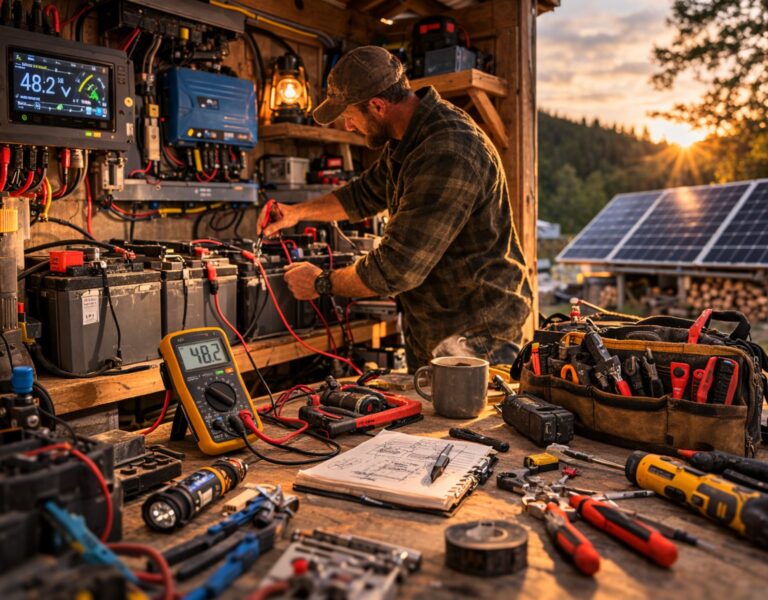
Top 10 Essential Off-Grid Tools Every Toolkit Should Include
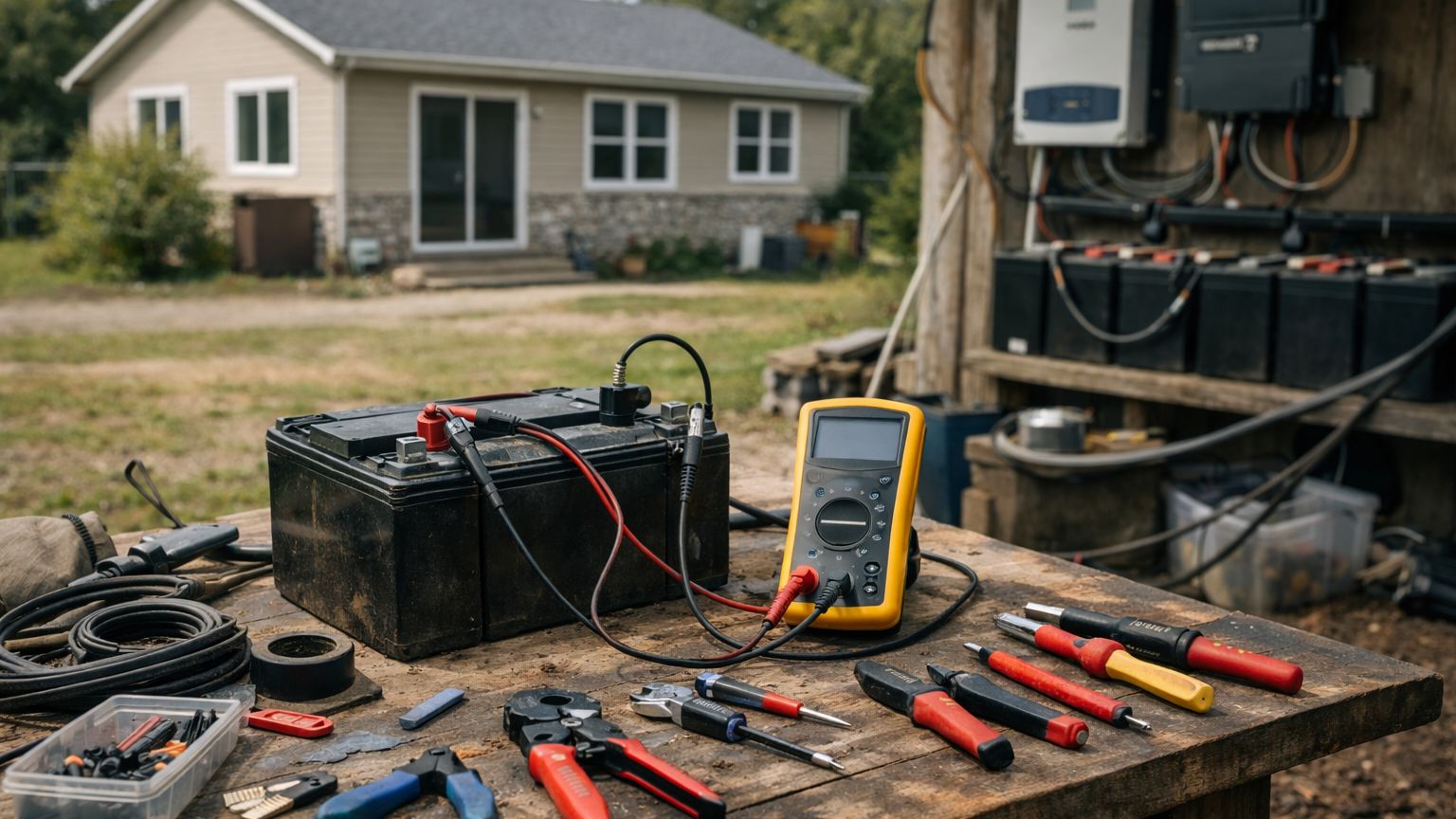
Introduction
When you’re off the grid, there’s no “maintenance call.”
No roadside assistance. No electrician to text when your inverter starts beeping at 2 a.m.
Every off-grid system, whether solar, water, or heat, lives or dies by the toolkit behind it.
This isn’t about collecting shiny gadgets. It’s about knowing what will save your setup when the weather, wiring, or the world goes wrong.
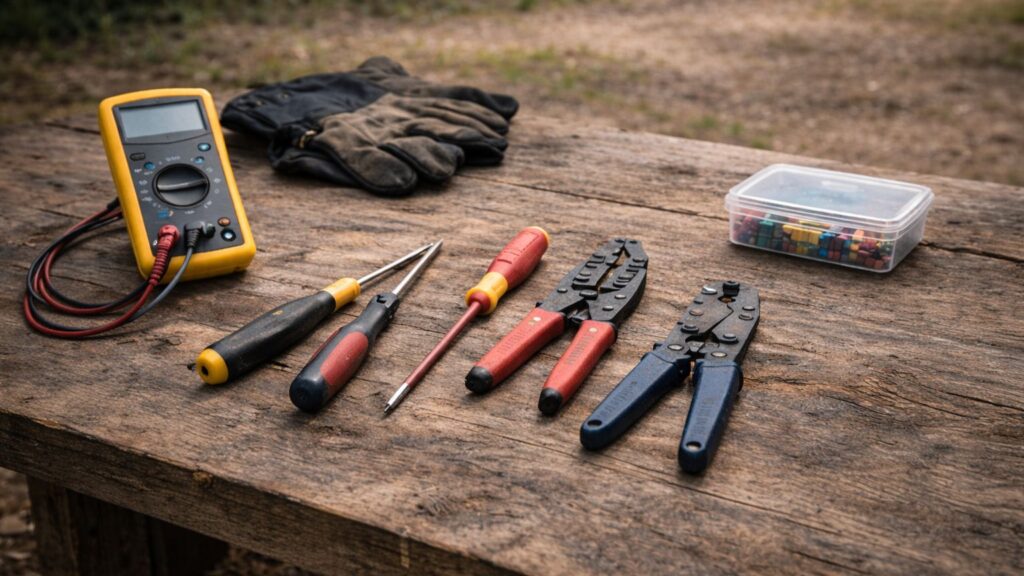
Below are the 10 most essential off-grid tools — field-tested, repair-proven, and ranked by necessity. From diagnostics to power repair, these are the tools that separate comfort from chaos.
1. Multimeter: The Lifeline of Every Electrical System
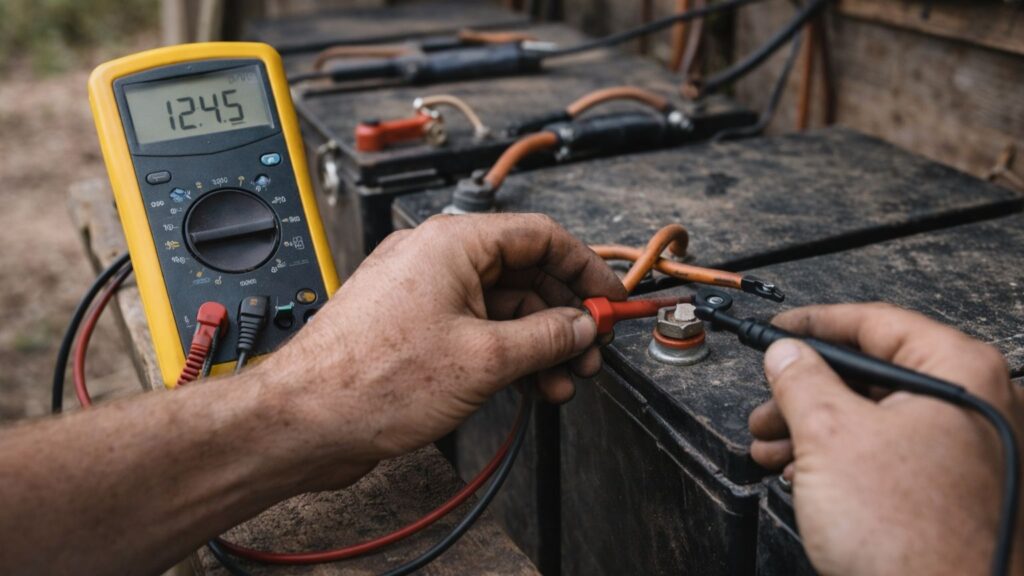
The most important off-grid tool you can own. A multimeter tells you whether power is flowing, where it’s failing, and how to fix it before anything fries.
Why it matters:
- Diagnoses solar panels, charge controllers, batteries, and inverters
- Measures voltage, current, resistance, and continuity
- Prevents blind repair guesswork
Field Tip:
Digital multimeters with auto-ranging make fast troubleshooting much easier.
Recommended Gear:
- Fluke 117 True RMS Multimeter — professional-grade accuracy, rugged housing
- Klein Tools MM400 — affordable, durable, and perfect for everyday checks
2. Insulated Screwdriver Set — Your Electrical Armor
Loose terminal screws, corroded bus bars, and inverter lugs are constant maintenance points.
An insulated set protects you from shocks while tightening connections under load.
Why it matters:
- Essential for DC wiring and battery bus maintenance
- Prevents shorts and sparking across contacts
- Makes fine work on controllers and fuses safe
Recommended Gear:
- Wiha 1000V Insulated Screwdriver Set — German precision, VDE-rated
- Milwaukee ECX Precision Set — great for terminal blocks and inverter boards
3. Torque Wrench — The Unsung Hero of Battery Banks
Over-tighten a lug and you can strip a terminal or crack a post. Under-tighten it, and you risk arcing or voltage drops. Torque specs exist for a reason. In off-grid systems, they matter.
Why it matters:
- Ensures secure, heat-free electrical connections
- Ideal for battery terminals, solar mounts, and plumbing fittings
- Reduces fire and wear risks
Recommended Gear:
- Tekton ½-Inch Drive Torque Wrench — precise, easy-to-read scale
- GEARWRENCH Electronic Torque Wrench — digital torque readout with alerts
4. Compact Circular Saw — Build, Repair, Adapt
When trees fall or materials need cutting, you can’t rely on the grid for tools.
A cordless circular saw can be solar-charged and is invaluable for construction or emergency repair.
Why it matters:
- Cuts wood, plastic, or metal for quick structural fixes
- Works with solar-charged batteries
- Keeps your shelter adaptable in the field
Recommended Gear:
- DeWalt 20V MAX Circular Saw — reliable, runs on solar-charged batteries
- Makita 18V LXT Brushless Saw — efficient and compact
5. Pipe Wrench + Thread Tape — Control Your Water Flow
Water systems fail at joints. Leaks, air gaps, or stripped threads.
A solid pipe wrench and thread tape fix 90% of plumbing problems before they become floods.
Why it matters:
- Tightens or re-seals PVC, PEX, and steel fittings
- Prevents leaks that waste precious stored water
- Works for both cold and hot water systems
Recommended Gear:
- RIDGID 14″ Aluminum Pipe Wrench — classic, unbreakable
- Blue Monster PTFE Thread Tape — rated for potable systems
6. Battery Terminal Brush + Dielectric Grease — Keep Power Flowing
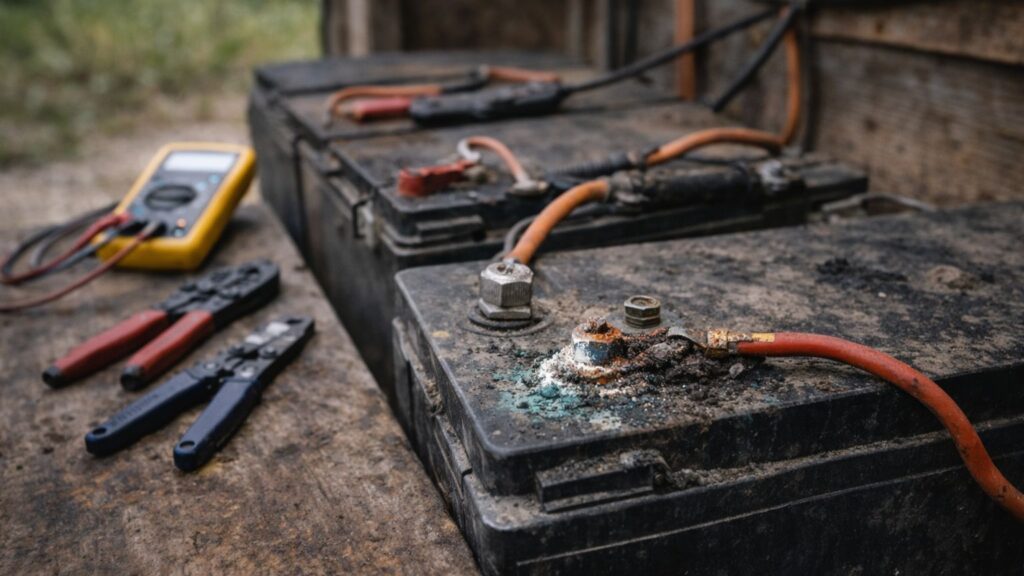
Corrosion kills voltage faster than anything else in an off-grid system.
A clean, tight terminal ensures every watt goes where it’s needed.
Why it matters:
- Removes oxidation and improves conductivity
- Prevents voltage drops and BMS faults
- Extends battery life
Recommended Gear:
- Permatex Battery Cleaner & Protectant Kit
- NOCO NCP2 Dielectric Grease
Pro Tip:
Clean your terminals quarterly, especially in humid or coastal climates.
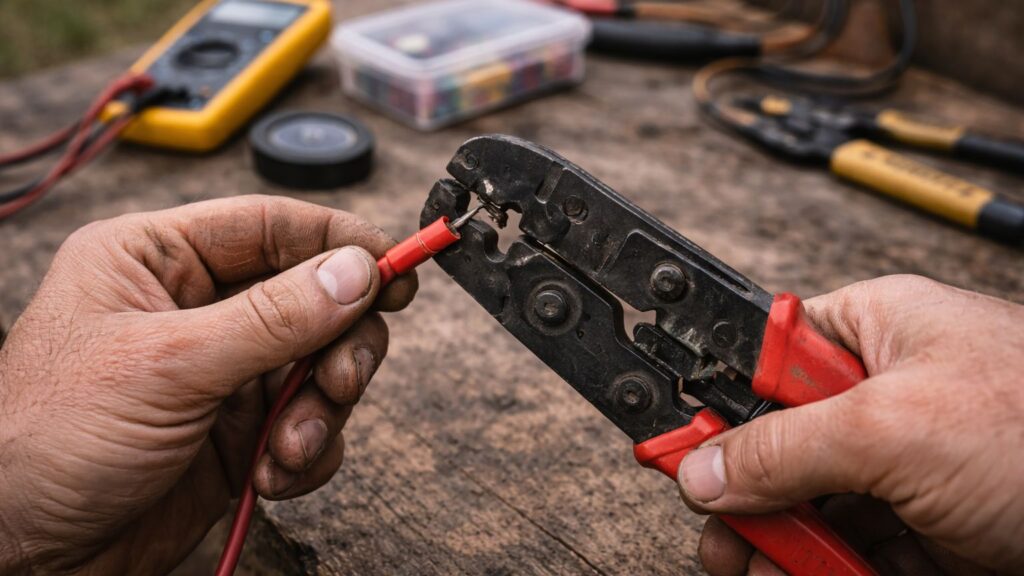
7. Crimping Tool & Heat Shrink Kit — For Reliable Wiring Connections
If you rely on butt connectors and electrical tape, you’re one storm away from failure.
Crimped and heat-sealed connections resist corrosion, vibration, and moisture.
Why it matters:
- Repairs solar cables, fuses, and inverter lines
- Creates strong, water-resistant electrical joints
- Safer than soldering in the field
Recommended Gear:
- IWISS Ratcheting Crimping Tool Set
- TICONN 620-Piece Heat Shrink Connector Kit
8. Folding Shovel — From Utility Trenches to Emergency Latrines
Simple, effective, and endlessly useful. Whether trenching cables, digging greywater channels, or clearing mud after storms, a solid folding shovel is mandatory.
Why it matters:
- Multi-use for power, plumbing, or defense
- Packs small and doubles as a fire tool
- Great for leveling battery or solar pad foundations
Recommended Gear:
- Gerber E-Tool Folding Shovel
- Cold Steel Special Forces Shovel
9. Work Gloves & Headlamp — The Unsung Duo
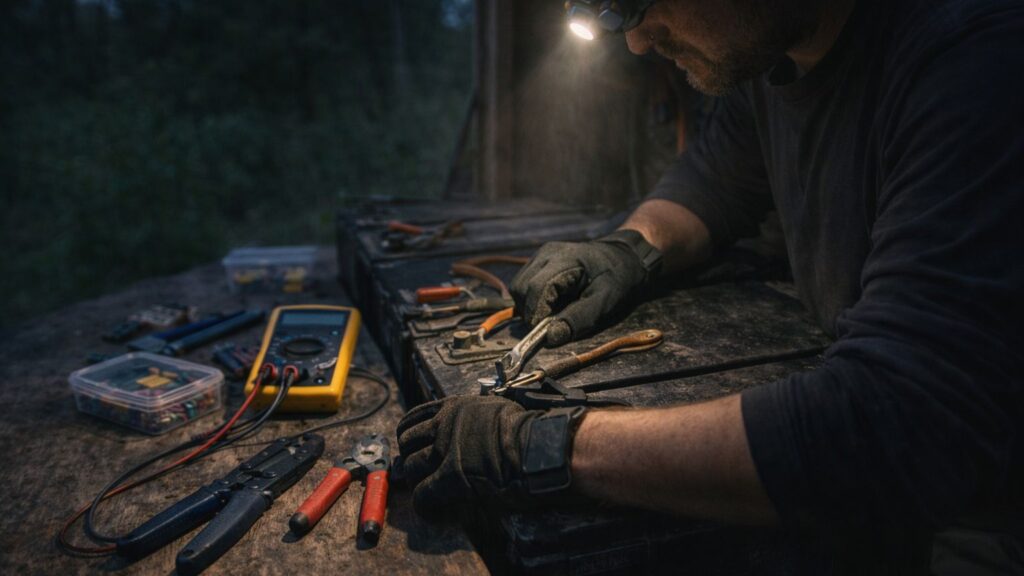
Repairs happen at night. In the rain. When you’re tired.
Good gloves and a bright, hands-free light can make the difference between a clean fix and a dangerous one.
Why it matters:
- Protects from cuts, burns, and electrical shock
- Headlamps keep both hands free in confined spaces
- Crucial during night maintenance or storm response
Recommended Gear:
- Mechanix Wear Original Gloves
- Petzl Actik CORE Headlamp
10. Handheld Power Bank & Solar Charger — Backup for the Backup
Even the best systems fail. A compact power bank and solar charger keep your radios, GPS units, and phones alive when the main grid, or your own, goes down.
Why it matters:
- Keeps communication devices running
- Small enough to stash in go-bags
- Charges from the sun, no wall needed
Recommended Gear:
- Anker 757 PowerHouse Mini
- Goal Zero Nomad 20 Solar Panel
Bonus: The Off-Grid Repair Kit
Every toolkit should also contain:
- Electrical tape (high-temp rated)
- Zip ties (UV-resistant)
- Spare fuses (DC-rated)
- Hose clamps
- Super glue & JB Weld
- Small fastener assortment (bolts, nuts, washers)
- Compact first aid kit (for you, not the system)
These small items are what make emergency repairs possible when you’re miles from town.
What This Looks Like in Real Life
An off-grid toolkit isn’t something you think about once, it evolves with your system.
At first, it might just be a multimeter, a basic screwdriver set, and a few spare fuses. But after your first real failure, a loose battery terminal, a blown fuse at night, or a leaking fitting, your toolkit becomes more intentional.
Most experienced off-grid users eventually organize their tools into tiers:
- Primary Kit (Grab-and-Go): Multimeter, insulated drivers, headlamp, gloves
- Repair Kit (System Work): Torque wrench, crimping tools, connectors, grease
- Field Kit (Outdoor / Emergency): Shovel, saw, clamps, tape, zip ties
This layered approach means you’re never digging through a full toolbox during a crisis. You grab the right kit, fix the issue, and move on.
That’s the difference between reacting and being prepared.
Real-World Setup: How to Organize an Off-Grid Toolkit That Actually Works
Most people fail at off-grid maintenance not because they lack tools, but because their tools are disorganized, incomplete, or buried when needed most.
A real off-grid toolkit isn’t just a box. It’s a system.
Start by dividing your tools into functional categories based on how problems actually occur in the field:
1. Electrical Diagnostics Kit
This is your first-response kit when something stops working.
- Multimeter
- Insulated screwdrivers
- Spare fuses
- Headlamp
This kit should be small, portable, and instantly accessible. When power drops, you don’t want to think. You want to move.
2. Electrical Repair Kit
Once you’ve diagnosed the issue, this is where the real work happens.
- Crimping tool
- Heat shrink connectors
- Dielectric grease
- Torque wrench
Keep this separate so you’re not digging through everything during a repair.
3. Mechanical & Structural Kit
For physical repairs and system adjustments:
- Circular saw
- Pipe wrench
- Folding shovel
- Fasteners and clamps
These tools handle everything from mounting panels to fixing water systems.
4. Emergency Micro-Kit
This is what you grab when things go wrong fast:
- Zip ties
- Electrical tape
- Multi-bit screwdriver
- Small flashlight or backup headlamp
This kit should live in your vehicle or near your exit point.
Key Principle:
If a tool takes more than 10 seconds to find, it’s effectively missing.
Experienced off-grid operators don’t just own tools, they stage them.
That’s what turns a stressful failure into a 10-minute fix instead of a 2-hour problem.
Field Maintenance Strategy
1. Keep Tools Centralized
Use a roll-up tool bag or rugged hard case that travels easily between your power room, vehicle, and field site.
2. Schedule Preventive Maintenance
Inspect electrical connections, tighten lugs, and reapply dielectric grease every 3–6 months.
3. Label Everything
Permanent marker or color-coded heat shrink can save you hours during a crisis.
4. Protect Against Moisture
Store tools in a sealed bin with silica gel packs if humidity is an issue.
Common Mistakes to Avoid
Even with the right tools, mistakes can cost you time, safety, and system lifespan.
1. Skipping Torque Specs
Loose or over-tightened connections are one of the most common causes of off-grid electrical failure.
2. Using Cheap Connectors
Low-quality crimps and connectors fail under vibration, heat, and moisture.
3. Ignoring Corrosion
Battery terminals and exposed wiring degrade slowly, until they suddenly don’t work at all.
4. No Redundancy
If your only multimeter breaks, you’re blind. If your only headlamp dies, you’re working in the dark.
5. Poor Tool Storage
Moisture ruins tools. Rusted gear fails when you need it most.
Avoiding these mistakes is just as important as choosing the right tools.
Common Failure Scenarios (And the Exact Tools That Solve Them)
Off-grid systems rarely fail all at once. They fail in small, frustrating ways that escalate if you don’t catch them early.
Understanding the most common failure scenarios, and matching them to the right tools, is what separates reactive users from prepared ones.
Scenario 1: Sudden Power Drop or Flickering Lights
This is one of the most common issues and often gets blamed on batteries when it’s actually a connection problem.
Likely Cause: Loose or corroded terminals
Tools Used:
- Multimeter (to confirm voltage drop)
- Insulated screwdriver (to tighten connections)
- Terminal brush + dielectric grease (to restore conductivity)
Scenario 2: System Shows Power, But Devices Won’t Run
Everything looks normal — but nothing works.
Likely Cause: Blown fuse or failed connection
Tools Used:
- Multimeter (continuity test)
- Crimping tool + connectors (to rebuild the line)
- Spare fuses
Scenario 3: Water Leak Near Pump or Tank
Water systems fail quietly — until they don’t.
Likely Cause: Loose threads or worn seal
Tools Used:
- Pipe wrench
- Thread tape
- Hose clamps (from your repair kit)
Scenario 4: Structural Damage After Storm
Fallen branches, shifting mounts, or damaged supports.
Tools Used:
- Circular saw (cut damaged sections)
- Shovel (clear debris or re-level ground)
- Fasteners (secure temporary fixes)
Scenario 5: Dead Devices During Critical Moments
Phones, radios, or GPS units stop working when you need them most.
Tools Used:
- Power bank
- Solar charger
Key Insight:
Every failure becomes manageable when you already own the solution.
Without the right tool, a minor issue becomes a full system failure.
With the right tool, it’s routine maintenance.
That’s the mindset shift that defines real off-grid readiness.
Real-World Example: Midwinter Failure Drill
It’s -10°C, your inverter beeps, and your lights flicker. You trace the issue:
- Multimeter shows battery voltage at 11.8V
- You open the junction box and find a corroded lug
- Insulated screwdriver tightens it, dielectric grease seals it, and the voltage climbs back to 12.7V
That’s the power of having the right tools. Knowledge and readiness equal resilience.
Upgrade Path: Building a Pro-Level Off-Grid Toolkit
Once your basic toolkit is dialed in, the next step is upgrading for efficiency and resilience.
Level 1 — Essential (Starter Setup):
- Multimeter
- Screwdriver set
- Basic repair kit
Level 2 — Functional (Reliable System Maintenance):
- Torque wrench
- Crimping tool kit
- Battery maintenance gear
Level 3 — Advanced (Full Self-Reliance):
- Spare inverter components
- Backup multimeter
- Portable diagnostic tools
- Secondary power bank and panel
At the highest level, your toolkit is part of the system. Not just something you grab when things break.
That’s when you’re no longer just living off-grid.
You’re maintaining it like a professional.
Who This Toolkit Is NOT For
Not every off-grid setup needs this level of preparation.
If you’re running a weekend cabin, a small van setup, or a lightly used backup system, you can get away with a much simpler toolkit.
This list is designed for people who:
- Rely on their systems daily
- Live remotely or without fast access to services
- Need to fix problems immediately, not eventually
If that’s not you, some of this may feel excessive — and that’s fine.
But understand this:
The moment your system becomes critical — for heat, water, or power — your toolkit becomes critical too.
People often underestimate how quickly small issues escalate off-grid:
- A loose terminal becomes a dead battery
- A small leak becomes a drained tank
- A weak connection becomes a system shutdown
If you’re okay waiting for repairs or making trips into town, you don’t need everything on this list.
If you’re not, then this toolkit isn’t optional.
It’s infrastructure.
Final Thoughts — Tools are Freedom
A wrench, a meter, and the willingness to use them are the real off-grid luxuries.
Gear breaks. Wires corrode. Nature tests your patience.
But with the right tools, you don’t wait for rescue. You become the repair crew.
Every system eventually fails. What matters is how fast you can fix it.