Mental Toughness for Off-Grid Life: Skills No Gear Can Replace
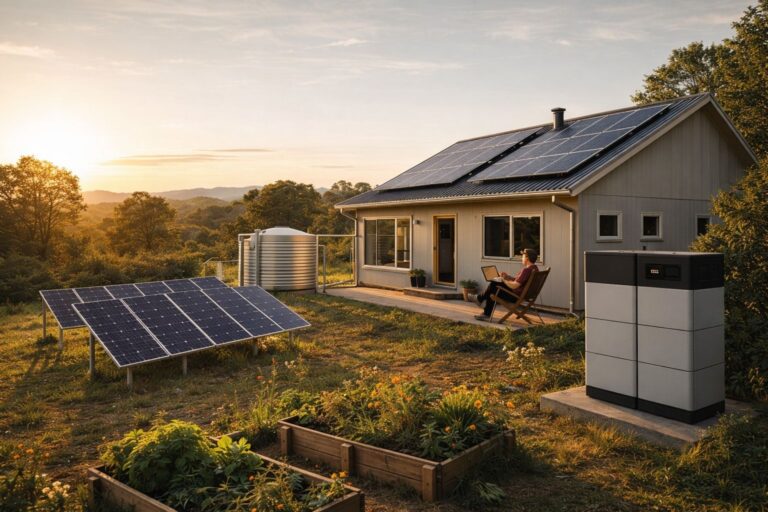
Solar panels, batteries, and backup generators can keep your lights on. But they can’t power your spirit.
Off-grid living isn’t just a technical challenge. It’s a psychological expedition into solitude, uncertainty, and self-discipline.
The strongest off-grid setups are built from steel and silicon.
The strongest off-grid people are built from patience, perspective, and perseverance.
Let’s talk about the side of off-grid life that doesn’t get posted. The inner work that keeps everything else standing.
The Hidden Battle: Why Off-Grid Living Is 80% Mental
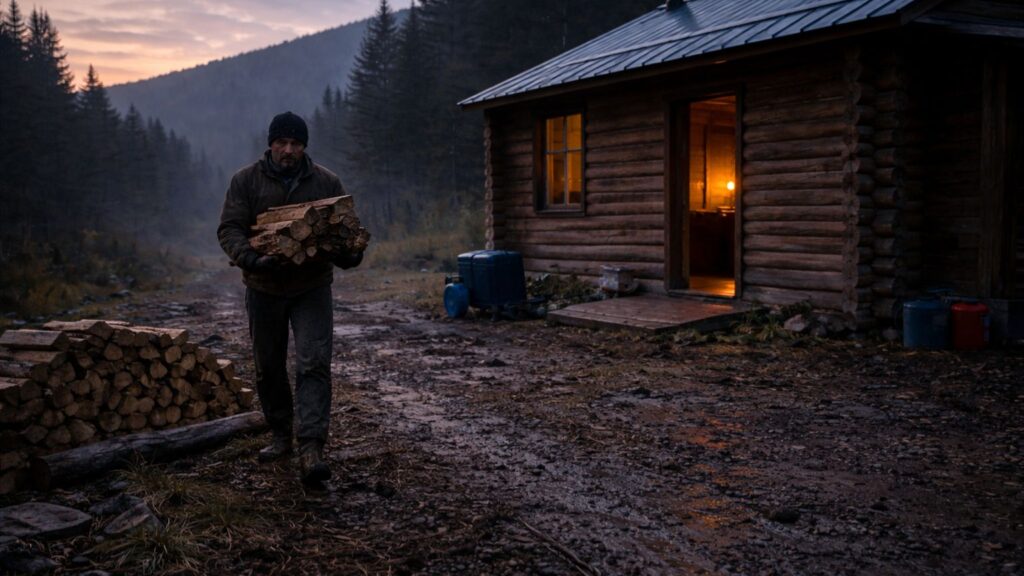
When people imagine off-grid life, they think about solar panels, rainwater catchment, or generator hookups. Few realize that the hardest system to manage is the human nervous system.
Out here, there’s no tech support line, no quick fix, and no social crowd to buffer the grind. You face isolation, noise fatigue, mechanical breakdowns, and long winters that test your patience to its limits.
Your biggest failure point isn’t your inverter. It’s the voice that says, “Why bother?”
Mental toughness off the grid means not letting the emotional weather dictate your course. It’s endurance over inspiration, grit over glamour.
The Early Shock — From Novelty to Reality
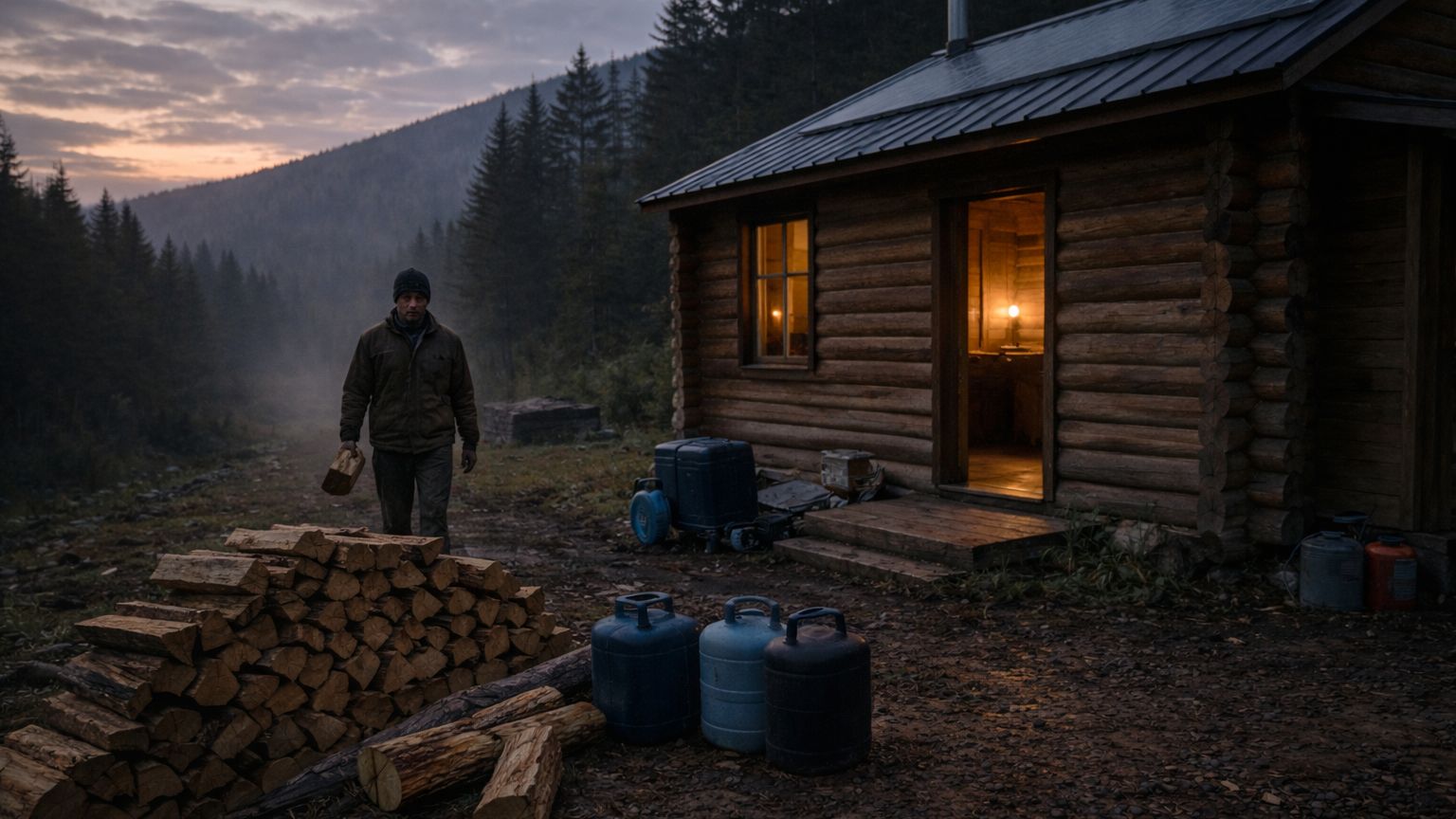
The first month off-grid feels like a dream: sunsets, stars, quiet mornings, coffee by the fire.
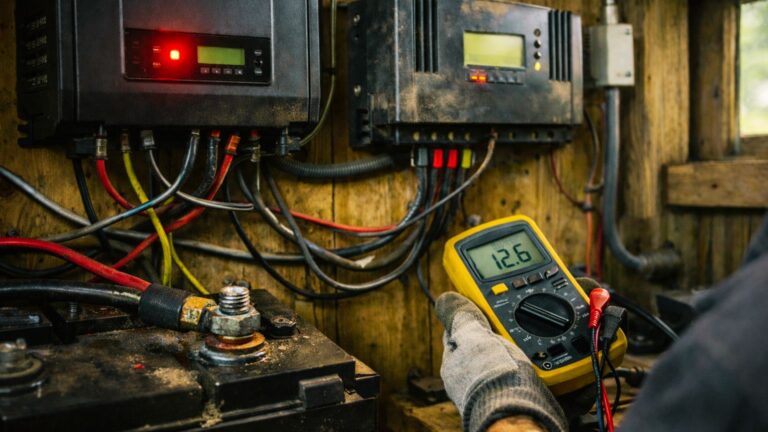
Then reality sets in. Systems need constant attention. Batteries sag in the cold. The pump quits mid-shower. The romantic illusion evaporates. And this is where most people quit.
The mind rebels when comfort fades. But if you stay through the crash. If you face that “What have I done?” moment and keep going, you cross into something sacred: adaptation.
That moment isn’t failure. It’s initiation. It’s where you stop consuming the idea of freedom and start earning it.
“If you can’t find peace without comfort, you’ll never find it with it.”
Building Grit — The Power of Routine and Repetition
Off-grid life rewards consistency, not drama.
The daily system checks, water filters, wood splits, and voltage logs may seem tedious, but they build rhythm.
Every small task is a meditation. Every repeated action is mental conditioning.
The more routine you embrace, the less chaos you feel.
Practical habits that build resilience:
- Log your solar and battery data daily.
- Inspect panels, cables, and lines before breakfast.
- Stack your woodpile by the moon, not the mood.
- End every day with gratitude for what didn’t break.
Repetition is mastery disguised as boredom. Routine turns reaction into readiness.
Isolation, Loneliness, and the Myth of Self-Sufficiency

There’s a myth in the off-grid world that true independence means doing everything alone.
In reality, isolation is one of the most dangerous threats to long-term sustainability.
Too much solitude warps perception. You start talking to your tools, doubting your skills, or inventing problems to solve just to feel control.
Counter it with connection:
- Stay in contact via ham radio or satellite messenger.
- Trade or barter with neighbors once a week.
- Keep correspondence — letters, logs, or journals — as a thread of continuity.
You can live alone without feeling alone. The trick is keeping small, meaningful communication alive.
“Self-sufficiency doesn’t mean isolation. It means interdependence without dependence.”
Managing Fear and Uncertainty
A failing inverter at midnight, a howling wind, a creaking roof. These moments can summon primal fear.
But fear isn’t your enemy; it’s information.
Train your nervous system like you train your solar array — keep it stable under load.
Practical mental resets:
- Pause before reacting. Observe, don’t panic.
- Break problems into binary questions: “Power or no power? Input or output?”
- Write your thoughts down; panic hates paper.
When things go wrong, your heart will race before your logic does. Let your breath lead the brain.
Cognitive Load and System Awareness
Off-grid living forces you to carry more variables in your head than most people ever need to track. Battery state, fuel levels, weather windows, water reserves, food rotation, maintenance intervals, and small equipment issues all compete for attention. Even when nothing dramatic is happening, your brain is still running background checks on the entire property.
That mental load wears people down faster than they expect. It is not always the big breakdown that pushes someone toward burnout. More often, it is the constant accumulation of low-level vigilance. You are always remembering one more thing, watching one more system, anticipating one more possible failure. After enough days of that, decision quality drops. You forget steps. You rush jobs. You miss signs that would have stood out if your mind had more room.
This is why mental toughness off-grid is not just about grit. It is also about reducing cognitive friction wherever possible.
One of the best ways to do that is to move critical information out of your head and into the environment. If your system depends on memory alone, it is already less resilient than it should be.
Useful ways to reduce cognitive load off-grid:
- Keep one visible daily checklist for routine checks.
- Use labeled storage so tools and spare parts never become a scavenger hunt.
- Log power, water, and fuel trends in one notebook instead of scattered scraps.
- Standardize where key gear lives and return it there every time.
- Group repeated tasks into predictable sequences instead of handling them randomly.
The more repeatable your systems become, the less mental energy they require. That does not make you less engaged. It makes you more available for the things that actually matter.
A cluttered environment multiplies cognitive load. So does an overcomplicated setup. If three devices do the job of one, or if your maintenance routine depends on remembering five exceptions, you are not building resilience. You are building hidden drag into everyday life.
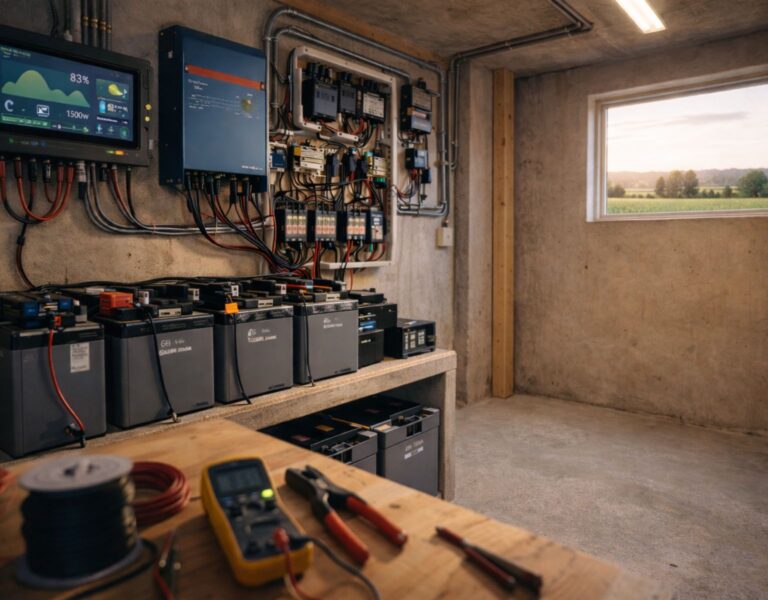
This is why simple layouts, clean workflows, and visible organization matter psychologically as much as mechanically. A neat battery room calms the mind. A labeled fuel system lowers uncertainty. A wood stack that is dry, ordered, and easy to access removes one more source of friction from a hard day.
Off-grid life already asks a lot from your attention. The answer is not to become superhuman. The answer is to design your life so your brain does not have to be in emergency mode all the time.
Mental resilience grows faster in environments that support clarity. Strong people still need systems that reduce error, simplify choices, and lower the daily cost of staying functional. In that sense, organization is not cosmetic. It is psychological infrastructure.
Emotional First Aid — Tools for Psychological Maintenance
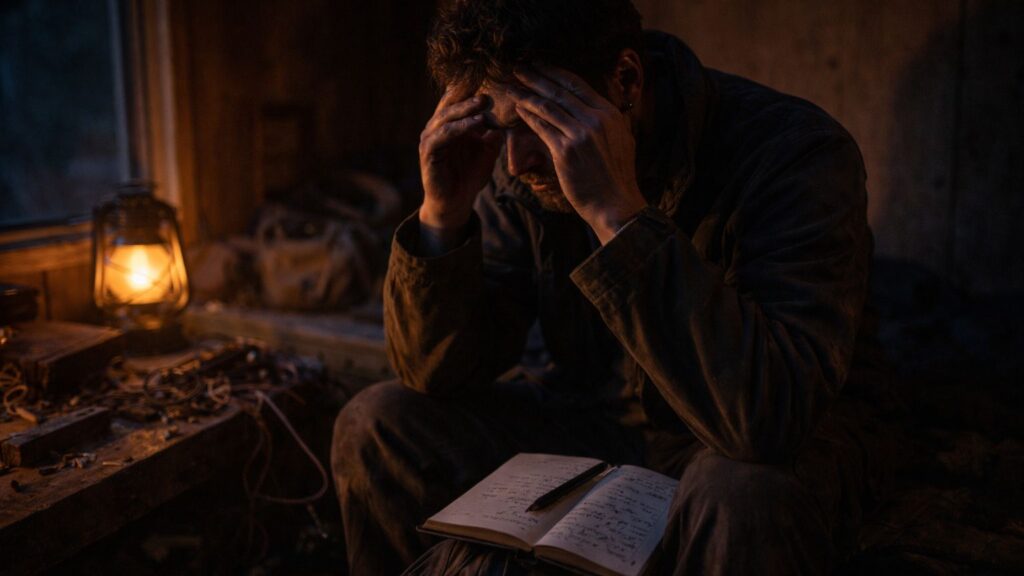
Physical first aid stops bleeding. Emotional first aid stops burnout.
The off-grid lifestyle magnifies emotion. Small problems feel huge when you’re alone in the woods.
Field-tested tools:
- Journaling: Dump thoughts to clear mental clutter.
- Cold water immersion: Short dips reset your nervous system.
- Breathwork: 4-7-8 breathing to slow cortisol spikes.
- “Field gratitude”: Pause and name three good things, even if one is “my system didn’t explode today.”
You maintain your panels to keep energy flowing. Maintain your emotions to keep your will intact.
Boredom-Proofing the Off-Grid Mind
Boredom is the silent killer of motivation.
When you stop engaging your curiosity, small frustrations start to dominate your thoughts.
The cure is creative play. Build, make, learn.
Ideas:
- Whittle or carve simple tools.
- Grow a micro garden indoors.
- Learn a language or instrument.
- Keep a “project jar”: 20 ideas to grab when boredom hits.
You don’t escape boredom — you outcreate it.
“A busy hand keeps a calm mind.”
Decision Fatigue and Simplicity
Every day off-grid involves hundreds of small choices: how to ration water, when to start the generator, what food to cook before it spoils.
Over time, those micro-decisions drain mental bandwidth.
The key is to automate and simplify.
Techniques:
- Batch chores (water + laundry + shower = one pump session).
- Pre-label containers and tools.
- Use checklists instead of memory.
- Standardize your gear and maintenance tools.
Simple systems make strong people. Complexity breaks willpower faster than weather breaks wood.
When Your Mind Becomes the Weak Link

Most people assume the first off-grid failure will be mechanical. They picture a dead battery bank, a frozen line, a failed inverter, or a generator that refuses to start. Sometimes that is true. But in real life, the operator is often the first system to drift.
Fatigue changes judgment. Frustration shortens patience. Isolation narrows perspective. Once that happens, you stop noticing small issues with the same discipline you had at the beginning. Maintenance gets delayed. Logs stop being updated. Little warning signs start to feel easy to ignore.
That is how mental strain turns into physical breakdown.
You skip a battery check because you are irritated and tired. You tell yourself you will tighten that connection tomorrow. You stop rotating stored supplies because you are mentally overloaded and just want one easy day. None of those choices feel dramatic in the moment. But off-grid living punishes drift slowly, then all at once.
The danger is that mental decline rarely announces itself clearly. It often shows up as subtle changes in behavior.
Common signs your mindset is becoming the weak link:
- You stop following routines that used to keep you steady.
- You avoid small repairs because they feel heavier than they should.
- You begin resenting basic maintenance tasks instead of respecting them.
- You delay action until problems become annoying enough to force your hand.
- You start making rushed decisions just to get the task over with.
This is one reason off-grid mental toughness should not be framed as permanent intensity. You do not need to be fired up every day. You need to stay operational. That means catching your own drift early enough to correct it.
When your head is foggy, go back to first principles. Check the basics. Write things down. Slow your sequence. Do the next obvious task instead of dramatizing the whole problem. A tired brain tends to turn five small issues into one giant emotional wall. But most of the time, the system still comes back to order one step at a time.
This mindset matters because the off-grid lifestyle creates feedback loops. A strong routine keeps your systems stable, and stable systems protect your peace of mind. But once your mind starts slipping, the systems degrade, and degraded systems create more stress. That cycle is hard to reverse unless you notice it early.
The goal is not to shame yourself for mental fatigue. The goal is to respect it as a real operational variable. Off-grid competence includes knowing when your own attention, patience, and discipline are dropping below useful levels.
In that sense, self-awareness is not soft. It is part of maintenance. The person running the system is part of the system. If you ignore that, no amount of gear will save you for long.
Failure as Feedback, Not Defeat
If you haven’t failed off-grid yet, you haven’t lived off-grid long enough.
Every breakdown is a classroom. Every mistake refines your awareness.
Stop seeing failure as proof of inadequacy. See it as a built-in teacher.
When you fix something under pressure, you rewrite your neural pathways from panic to purpose.
Each small victory builds the ultimate form of confidence: earned calm.
“You don’t rise to the occasion. You fall to the level of your preparation.”
Resilience Through Skill Stacking

Knowledge is mental armor.
Every new skill reduces anxiety by turning the unknown into the familiar.
Start stacking small wins:
- Learn basic electrical troubleshooting.
- Understand how to sharpen and maintain every blade you own.
- Master fire-starting in every condition.
- Study emotional regulation techniques alongside survival ones.
Competence is confidence. The more you can do, the less you fear what you can’t control.
The Stoic Blueprint for Off-Grid Living
The Stoics of ancient Rome would’ve thrived off-grid.
Their entire philosophy was built around resilience and adaptability:
- Control what you can.
- Accept what you can’t.
- Respond with virtue, not panic.
Try these daily Stoic practices:
- Negative visualization: Imagine losing comfort, then feel gratitude when you haven’t.
- Voluntary hardship: Cold showers, fasting, or morning chores before coffee.
- Reflection: Write one line each night — “What tested me, and how did I respond?”
Modern tech changes, but human nature doesn’t. Stoicism is the ancient firmware upgrade your off-grid mind needs.
The Peace After the Storm — Settling Into True Independence
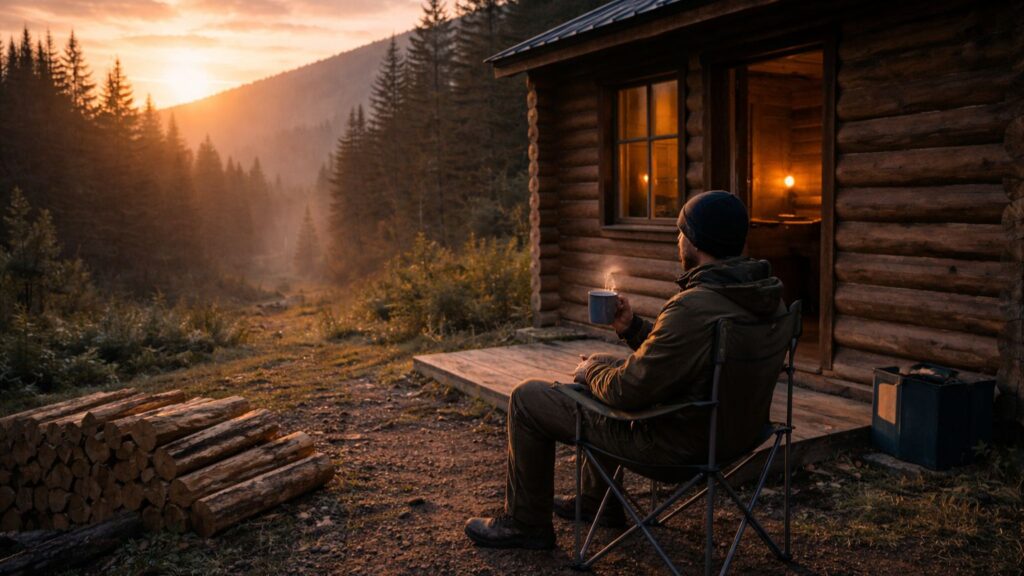
After enough seasons, something shifts.
The noise in your head quiets. The fear of breakdowns fades. You stop waiting for things to fail and start trusting that if they do, you’ll handle it.
That’s mental sovereignty.
It’s not about escaping difficulty; it’s about transforming your response to it.
The off-grid life becomes less about surviving and more about belonging.
You move from panic to presence, from resistance to rhythm.
That’s the final freedom. Not just living off the grid, but living off the noise.