The Future Grid: How AI, Batteries, and Smart Micro-Systems Are Redefining Independence
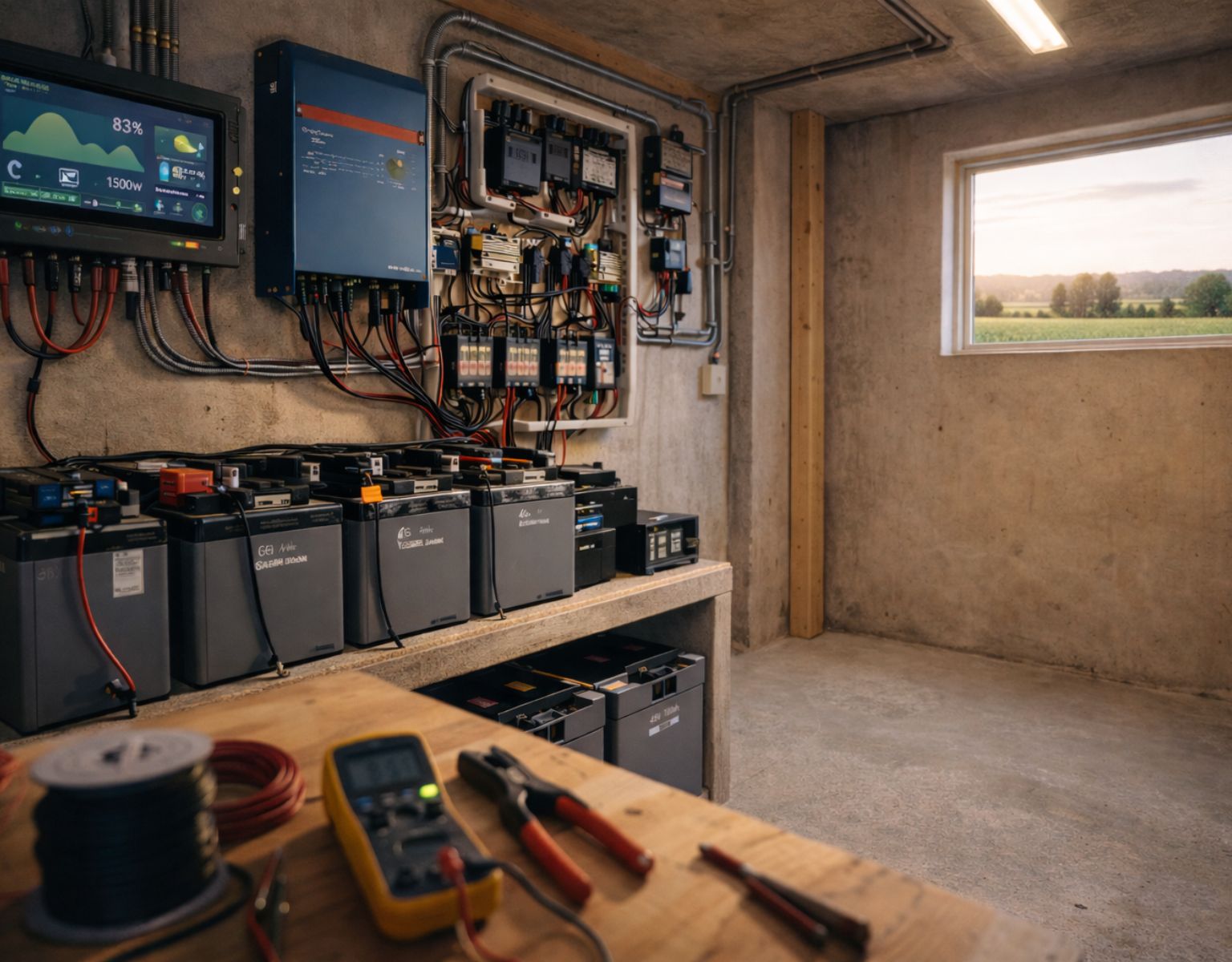
For decades, off-grid living carried a reputation for sacrifice.
Dim lights. Limited appliances. Careful power budgeting every evening.
But that image no longer reflects reality.
Today’s off-grid systems combine lithium batteries, hybrid inverters, and intelligent control systems that allow homes to operate with remarkable stability and awareness. In many cases, these decentralized systems are becoming more adaptable and resilient than the centralized electrical grid itself.
The future of energy independence isn’t simply about generating power. It’s about building systems that understand how power is used, predict when it will be needed, and adapt automatically to changing conditions.
Why the Old Grid Model Doesn’t Work Anymore
The centralized electrical grid was designed during a time when power generation happened in a few massive locations.
Large power plants produced electricity, transmission lines carried it across long distances, and utilities controlled the system from the top down.
While this approach powered modern civilization for over a century, it has several fundamental weaknesses.
Centralized grids are vulnerable to:
- large-scale outages from storms or infrastructure failure
- transmission losses across long distances
- slow response to localized energy demand
- expensive infrastructure upgrades
When a single major component fails, entire regions can lose power.
In contrast, decentralized systems distribute energy generation across thousands of smaller nodes.
Solar arrays, batteries, and local microgrids allow homes and communities to produce and manage power independently. As these technologies improve, they create energy systems that are more flexible, efficient, and resilient than the centralized model.
The Rise of AI-Powered Energy Management
Modern off-grid power systems increasingly rely on automation and intelligent control.
In practical terms, this means local software and smart controllers that continuously monitor energy production and consumption.
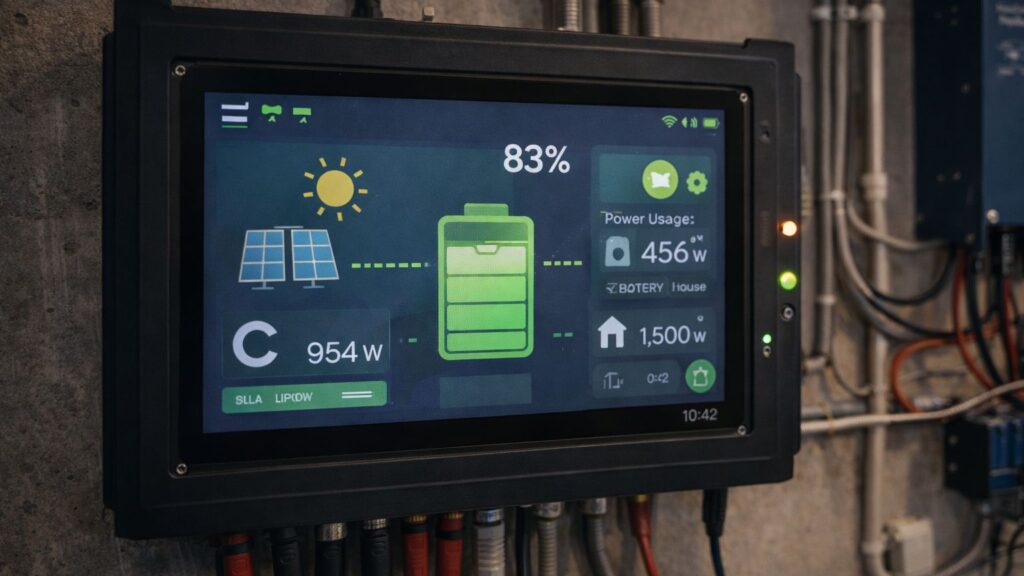
These systems can:
- track historical energy usage patterns
- estimate solar generation based on weather forecasts
- prioritize critical electrical loads
- alert owners before problems occur
- adjust charging behavior to protect battery life
Instead of reacting after a failure happens, the system anticipates potential problems and adapts ahead of time.
Smart Inverter Platforms
Several inverter platforms already incorporate advanced automation capabilities.
Victron Multiplus-II with Cerbo GX
This platform allows users to build highly customizable energy systems with detailed monitoring, programmable rules, and remote diagnostics.
Growatt Hybrid Inverters
Growatt systems integrate solar charging, inverter functionality, and monitoring tools within a single unit.
EG4 Hybrid Inverters
Designed for scalable microgrid environments, EG4 systems combine battery communication, load prioritization, and advanced monitoring.
These devices act as the central nervous system of a modern off-grid power network.
Smart Batteries and Predictive Storage Systems
Lithium batteries have transformed off-grid energy storage.
Earlier battery technologies required constant manual monitoring and strict usage limits. Modern lithium systems include advanced electronics that manage charging and discharging automatically.
Most lithium battery banks include integrated Battery Management Systems (BMS) that monitor:
- individual cell voltages
- battery temperature
- charge and discharge rates
- state of charge
- safety limits
If a battery begins to operate outside safe parameters, the BMS can automatically reduce output or shut down charging to prevent damage.
Examples of Smart Battery Systems
Several widely used lithium platforms illustrate this evolution.
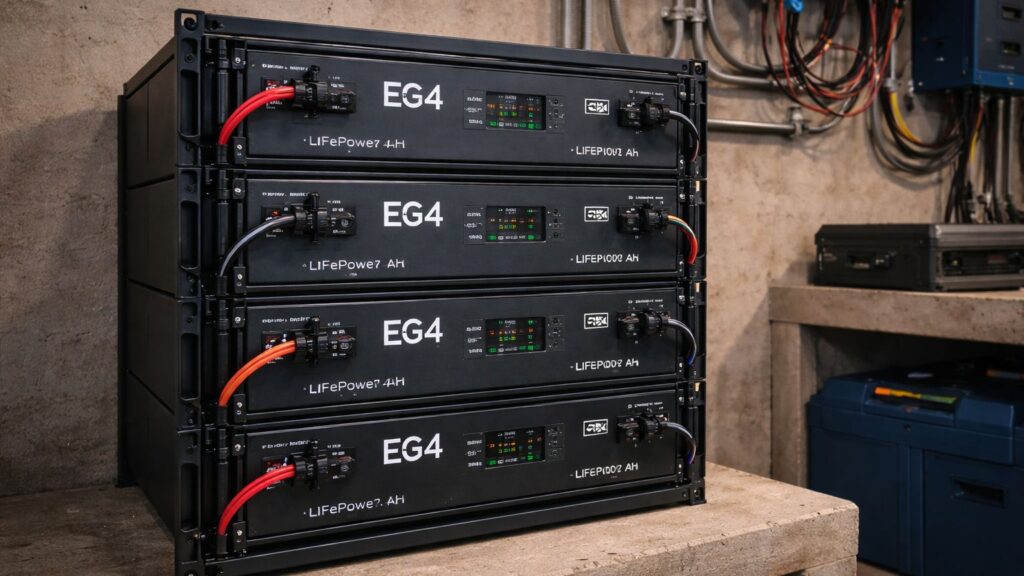
EG4 LiFePower4 48V Battery
A modular rackmount battery designed for scalable systems, with communication protocols that allow direct integration with hybrid inverters.
Battle Born 12V Lithium Batteries
Known for reliability and long cycle life, these batteries include internal protection systems and optional Bluetooth monitoring.
Bluetti Expansion Batteries
These modular units pair with portable power stations and provide plug-and-play energy expansion.
Together, smart batteries and hybrid inverters create systems capable of monitoring their own health and adjusting behavior automatically.
Microgrids: Self-Balancing Power Systems
A microgrid is essentially a small-scale electrical ecosystem.
Instead of relying on a distant power plant, a microgrid generates and manages electricity locally.
Typical components include:
- solar arrays
- battery banks
- hybrid inverters
- backup generators
- smart load controllers
The advantage of this approach is flexibility.
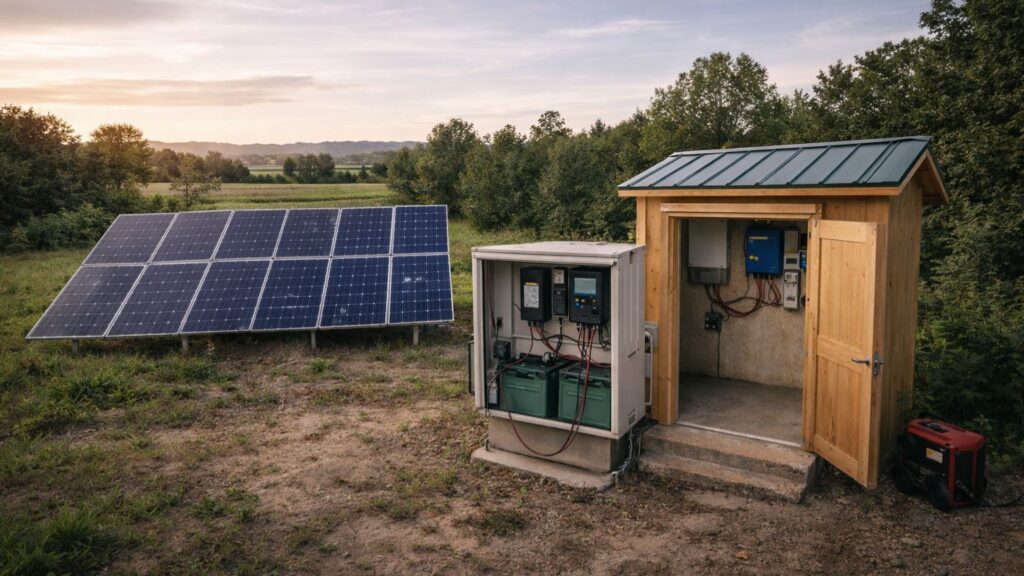
If solar production drops during cloudy weather, the system can automatically reduce non-essential loads or start a generator. When solar output increases, the system can charge batteries and restore additional appliances.
Advanced microgrid controllers can even reconfigure power flows when equipment fails.
For example, a system might:
- switch to a backup battery bank
- isolate a failing inverter
- prioritize critical circuits like refrigeration or communications
This ability to automatically adapt is sometimes described as self-healing infrastructure.
Off-Grid Automation: Sensors, Switches, and Control
Automation allows off-grid systems to react quickly to changing conditions.
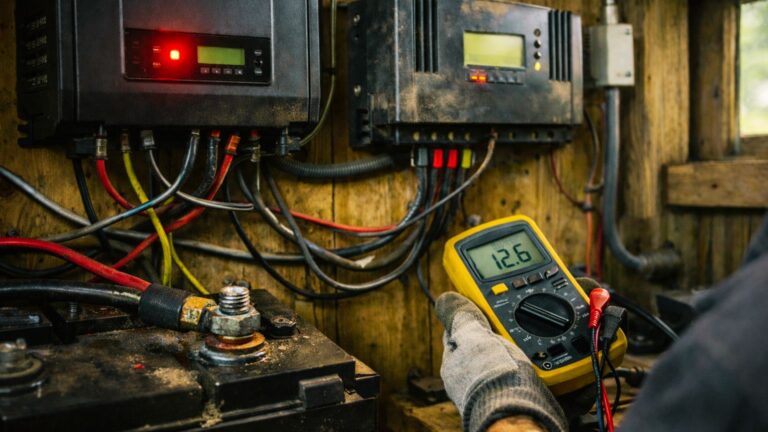
Sensors continuously monitor key system variables such as voltage, current, temperature, and solar input.
When the system detects certain thresholds, automation logic can trigger responses.
Examples of automated behavior include:
- shutting down water heaters when batteries reach low levels
- activating appliances during peak solar production
- sending alerts when inverter temperatures rise
- maintaining minimum power levels for critical equipment
This type of automation allows systems to operate efficiently without constant manual supervision.
Resilience During Grid Failures
One of the most important advantages of decentralized power systems is resilience.
Traditional grid outages can leave entire regions without electricity for hours or days.
Off-grid microgrids operate independently.
When storms, fires, or infrastructure failures disrupt the main grid, decentralized systems continue operating normally.
In many cases, hybrid systems can even interact with the grid during normal conditions while automatically isolating themselves during outages.
This approach, sometimes called grid-interactive microgrids, allows homes to benefit from both systems while maintaining independence when needed.
Local Intelligence vs Cloud Control
Many smart home systems rely heavily on cloud connectivity.
While cloud platforms offer convenience, they also introduce vulnerabilities.
If the internet fails or a service provider shuts down, those systems can stop working entirely.
Modern off-grid systems increasingly prioritize local intelligence instead.
Platforms like Home Assistant, Victron GX systems, and other automation hubs allow users to build powerful control systems that operate completely offline.
This approach ensures that essential power infrastructure remains functional regardless of internet availability.
Building a Smart Off-Grid System Today
Building an intelligent power system is more accessible than ever.
A basic setup might include:
- solar panels and charge controller
- hybrid inverter
- lithium battery bank
- energy monitoring system
- smart relays for load control
As systems grow, additional layers can be added:
- automated generator start
- energy dashboards
- predictive load management
- multi-source energy inputs such as wind or hydro
Over time, these components create a power system that behaves less like a simple battery backup and more like a self-managed energy network.
What This Shift Looks Like in the Real World
It’s easy to talk about AI-driven energy systems in abstract terms. In reality, this transition is already happening, quietly, and often without people fully realizing it.
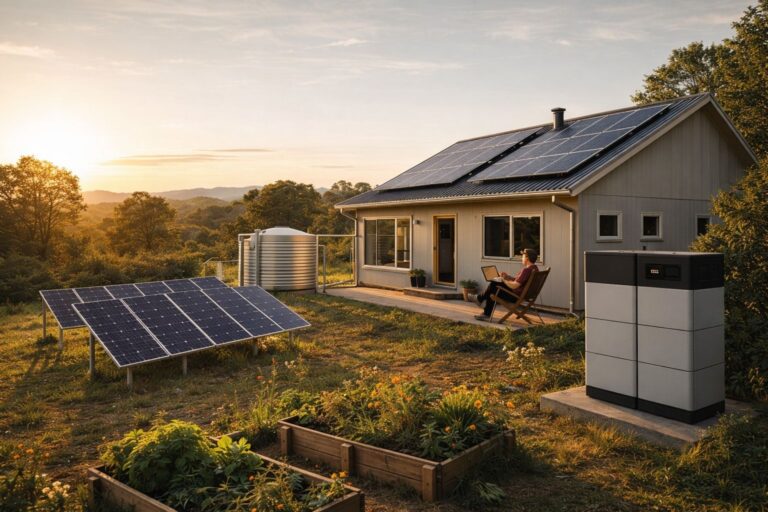
Across rural properties, cabins, and even suburban homes, small-scale energy systems are beginning to behave less like backup power and more like independent infrastructure.
The Modern Off-Grid Home Is No Longer “Off”
A properly built system today doesn’t feel like a compromise.
Lights stay on. Appliances run normally. Internet stays connected. Power availability is consistent enough that daily life doesn’t revolve around conserving energy.
What’s changed isn’t just battery capacity. It’s system awareness.
Instead of guessing when to use power, homeowners can see exactly:
- how much energy is being produced in real time
- how much is stored in batteries
- how much each appliance is consuming
- when the system is approaching limits
This visibility changes behavior naturally, without requiring strict discipline.
People don’t feel restricted — they feel informed.
Automation Replaces Constant Decision-Making
Older off-grid setups required constant attention.
- Turn things off at night
- Avoid running multiple appliances
- Monitor battery levels manually
Modern systems remove much of that burden.
Automation handles decisions that used to require human intervention:
- delaying non-essential loads until solar production peaks
- limiting power draw when battery levels drop
- shifting usage patterns automatically
- protecting batteries from over-discharge
Instead of managing power moment-to-moment, the system manages itself within defined boundaries.
This is where the shift from “manual survival system” to “intelligent infrastructure” becomes clear.
Hybrid Living Is Becoming the Default
One of the biggest changes is that people are no longer choosing strictly between grid and off-grid.
They’re blending both.
Hybrid systems allow homes to:
- use solar and batteries as primary power
- draw from the grid only when needed
- sell excess energy back where regulations allow
- isolate completely during outages
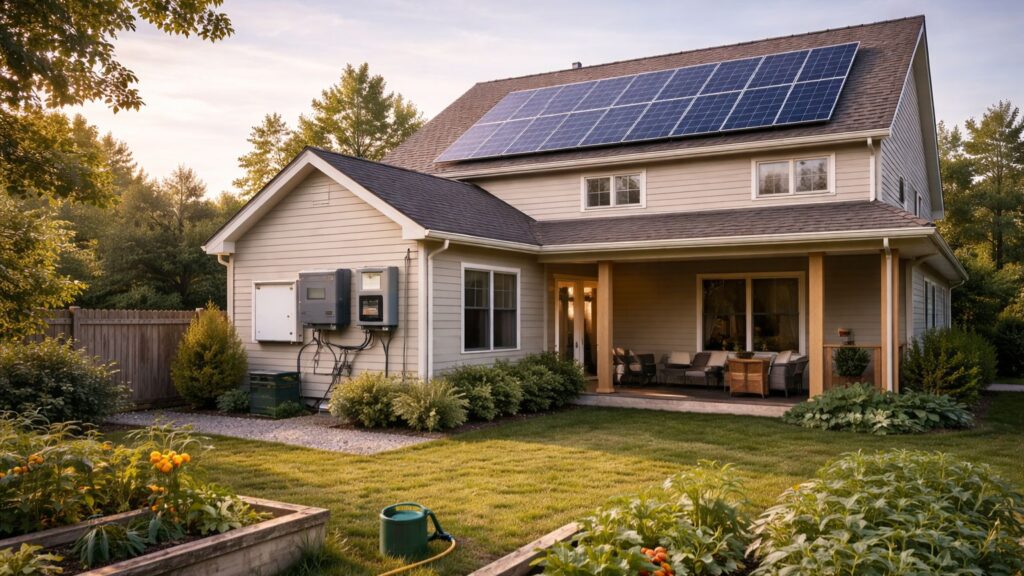
This creates a flexible model where the grid becomes a backup, not a dependency.
In some regions, homeowners are intentionally reducing their reliance on utilities without disconnecting entirely.
This approach offers resilience without sacrificing convenience.
Small Systems Are Scaling Faster Than Expected
What used to require large, expensive installations can now be built in stages.
A system might start with:
- a small solar array
- a single battery bank
- a basic inverter
Then expand over time:
- additional battery capacity
- more solar panels
- automated load control
- secondary energy sources
This modular growth is one of the key drivers of adoption.
People don’t need to commit to a full system upfront. They can build capability gradually, learning as they go.
Real-World Reliability Is Surpassing Expectations
One of the biggest misconceptions about off-grid systems is that they are fragile or unreliable.
In practice, many well-designed systems are proving to be more stable than traditional grid service.
Why?
Because:
- there are fewer long-distance transmission dependencies
- systems are localized and easier to diagnose
- failures are often isolated rather than widespread
- users are directly aware of system performance
When something does go wrong, it affects a single system — not an entire region.
And because the owner understands the system, recovery is often faster.
The Skills Gap Is Closing
Historically, building and maintaining an off-grid system required deep technical knowledge.
That barrier is shrinking.
Modern systems are:
- more plug-and-play
- better documented
- supported by online communities
- increasingly automated
At the same time, tools and interfaces are improving.
Instead of complex wiring diagrams, users now interact with dashboards, apps, and visual data.
This makes it possible for more people to build and operate their own energy systems without being specialists.
A Quiet Shift Toward Energy Sovereignty
What’s happening isn’t just a technological shift. It’s a structural one.
People are moving from:
- consuming energy → managing energy
- relying on infrastructure → owning infrastructure
- reacting to outages → designing around them
This doesn’t happen overnight, and it doesn’t require extreme lifestyle changes.
It happens gradually:
- adding a battery system
- installing a few solar panels
- automating a few circuits
- learning how your system behaves
Over time, those small steps compound into something significant.
A home that can operate independently.
A system that adapts instead of fails.
A level of control that didn’t exist before.
The future grid isn’t something that will arrive all at once. It’s already forming — one system, one home, one upgrade at a time.
What It Actually Takes to Build a Smart Off-Grid System
The idea of an intelligent, self-managing power system is compelling, but it doesn’t happen automatically.
Behind every “smart” system is a set of deliberate choices around cost, complexity, and design priorities.
It Starts Simpler Than You Think
Most systems don’t begin fully automated.
A realistic starting point looks like:
- a basic solar array
- a lithium battery bank
- a hybrid inverter with monitoring
At this stage, the system is already capable — just not fully optimized.
The intelligence comes later.
Adding Control in Layers
Automation is typically added step by step.
First layer:
- system monitoring dashboards
- basic alerts (low battery, high load)
Second layer:
- smart relays to control appliances
- load prioritization
Third layer:
- automated scheduling
- conditional logic (if X happens, do Y)
Each layer increases efficiency without requiring a full redesign.
The Cost Reality
Smart systems don’t require extreme budgets, but they aren’t free upgrades either.
Costs typically come from:
- higher-end hybrid inverters
- communication-enabled batteries
- control hubs and sensors
- time spent configuring and testing
However, these costs often offset over time through:
- reduced fuel consumption
- longer battery lifespan
- fewer system failures
Complexity vs Reliability
More automation introduces more complexity.
That’s not always a benefit.
A well-designed system balances:
- automation (for efficiency)
- simplicity (for reliability)
Too much complexity can create:
- harder troubleshooting
- dependency on specific components
- failure points in control systems
Why Local Control Matters
One of the most important design decisions is where intelligence lives.
Systems that rely heavily on cloud platforms risk losing functionality when:
- internet access fails
- services change or shut down
Local-first systems keep all critical functions operating independently.
This is especially important for:
- remote cabins
- emergency preparedness setups
- long-term resilience
The Learning Curve Is Real — But Manageable
Even with modern tools, building a smart system requires some learning.
You’ll need to understand:
- basic electrical flow
- system limits and thresholds
- how automation rules interact
The good news is that most platforms now provide:
- visual dashboards
- prebuilt templates
- active user communities
You don’t need to be an engineer — just willing to learn the system over time.
Real-World Insight
The most effective systems are not the most complex.
They are the ones that:
- match the owner’s skill level
- solve real problems
- remain easy to maintain
The Practical Rule
Start simple.
Add intelligence only where it solves a problem.
Because the goal isn’t to build the smartest system possible.
It’s to build one that works, every day, in any condition.
The Next Decade of Energy Independence
The next generation of off-grid systems will likely include even more advanced capabilities.
Emerging technologies already being developed include:
- predictive AI energy forecasting
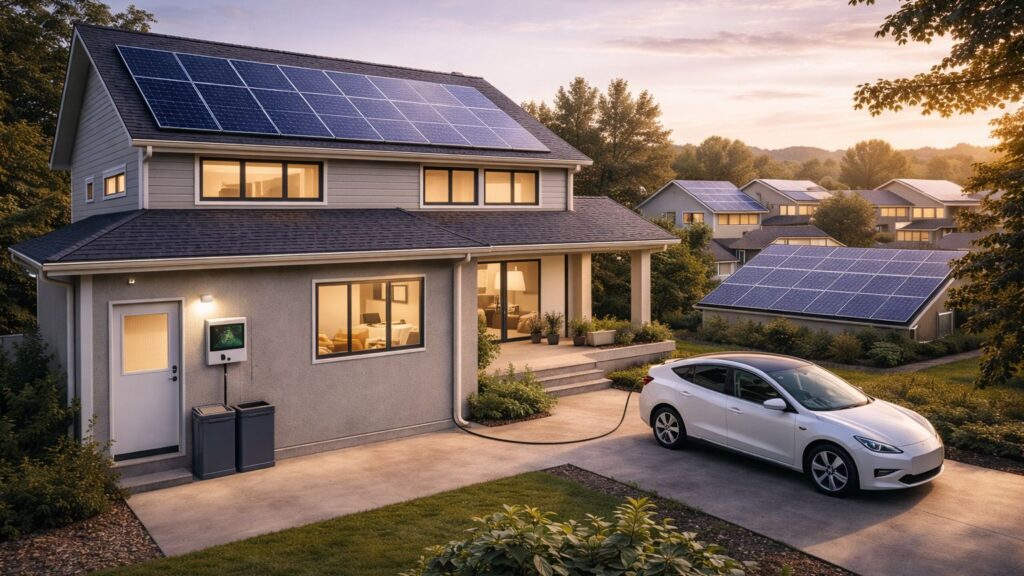
- vehicle-to-home battery integration
- neighborhood-scale microgrids
- distributed energy trading networks
- fully automated power balancing systems
As costs fall and technology improves, these systems will continue spreading beyond remote homesteads.
What began as a niche solution for rural living is rapidly becoming a blueprint for the future of energy.
Final Thoughts: Intelligence Is the New Independence
Off-grid living used to require constant vigilance.
Today, intelligent power systems reduce that burden dramatically.
Automation allows energy systems to anticipate problems, protect critical devices, and optimize power usage automatically.
In many ways, these decentralized systems are already surpassing the reliability of traditional infrastructure.
Energy independence is no longer about living with less.
It’s about building systems that are smarter, more adaptable, and more resilient than the grid itself.