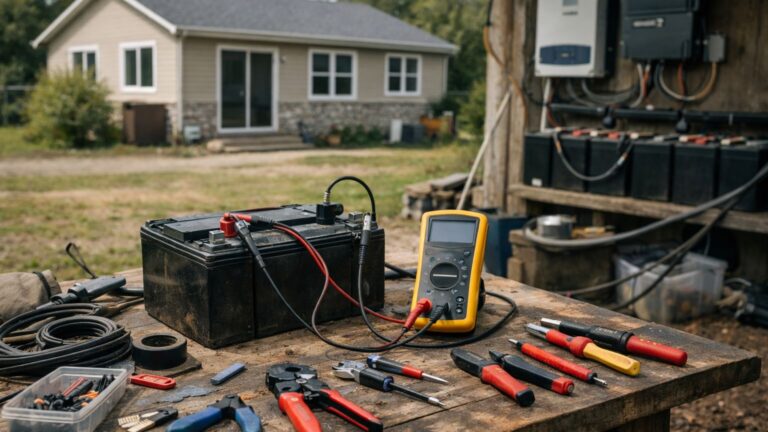
Field Maintenance Manual: The Essential Off-Grid Toolkit
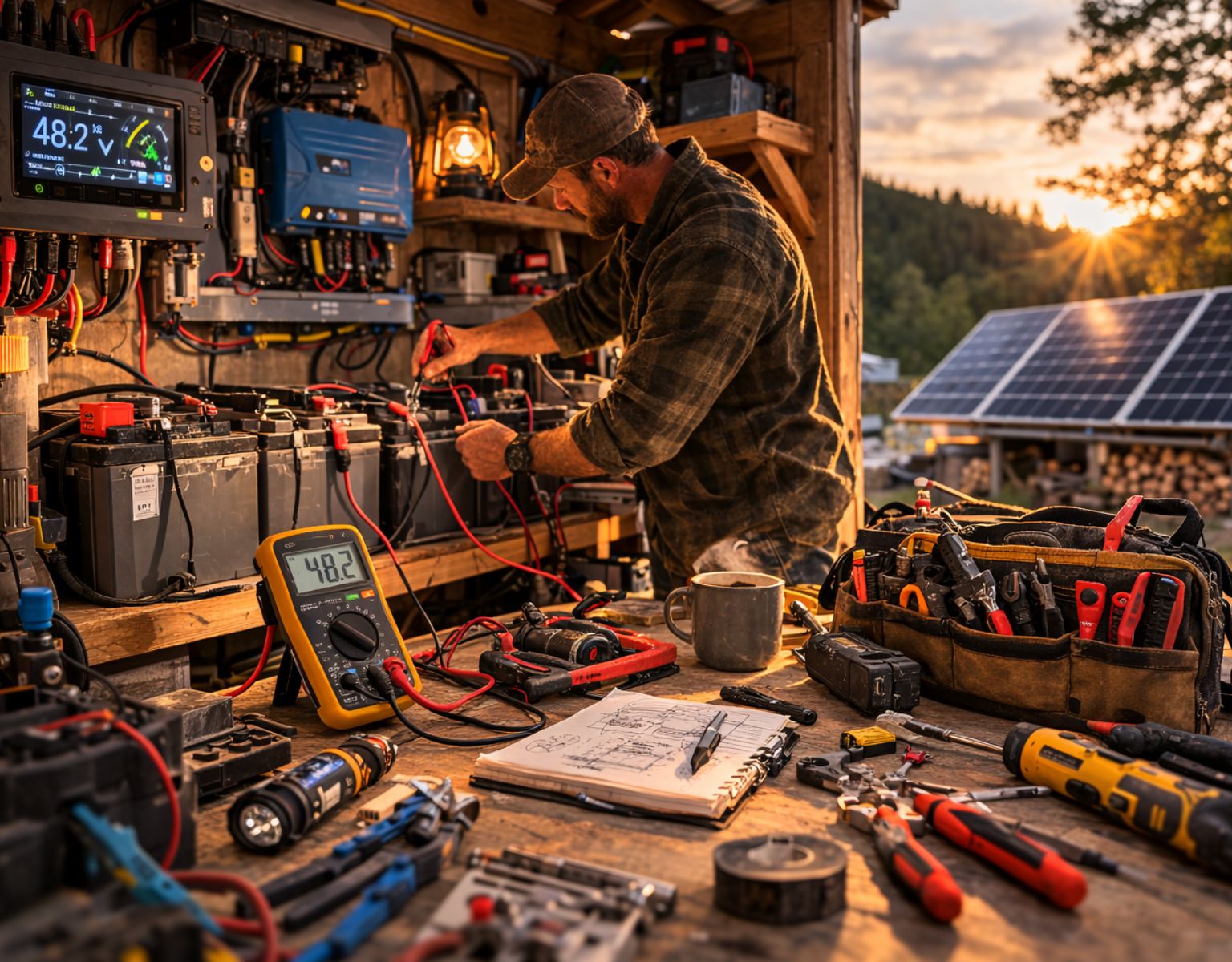
In the off-grid world, things break, and there’s no one coming to fix them.
A loose terminal, a cracked pipe, a blown fuse, or a leaking gasket can shut your whole system down if you’re not prepared.
This guide covers the must-have tools, diagnostic gear, and critical spare parts every off-grid operator should keep close at hand. Whether you’re maintaining a remote cabin, a solar-powered homestead, or a bug-out trailer, the right toolkit turns system failures into quick repairs instead of full shutdowns.
Why Off-Grid Repairs Are Inevitable
Even the best-designed systems fail eventually.
Outdoor infrastructure faces constant stress:
- UV radiation degrades plastics and wiring insulation
- Wind loosens bolts and mounting hardware
- Freeze-thaw cycles crack fittings and joints
- Animals chew wires, insulation, and hoses
- Water systems accumulate sediment and scale
Off-grid systems also combine multiple disciplines: electrical, plumbing, structural, and mechanical. When one component fails, it can cascade into others.
Without a nearby hardware store or service technician, your toolkit becomes the difference between a minor inconvenience and a full system outage.
A well-prepared repair kit ensures you can diagnose problems quickly and restore critical systems before they fail completely.
Core Tool Categories: Electrical, Plumbing, Structural
A functional off-grid repair kit should cover three essential domains.
Electrical Tools
Most off-grid infrastructure depends on electrical systems, including solar arrays, batteries, pumps, and communications gear.
Essential electrical tools include:
- Multimeter for testing voltage and continuity
- Clamp meter for measuring current draw
- Wire stripper and crimper for connectors
- Screwdriver set with multiple bit types
- MC4 solar connector tool kit
- Heat gun for shrink tubing and cable repairs
Electrical failures are among the most common off-grid problems, so having reliable tools for diagnosing wiring issues is critical.
Plumbing Tools
Water systems also require regular adjustment and occasional repairs.
Recommended plumbing tools include:
- Channel-lock pliers
- Pipe cutter for PVC, copper, or PEX
- PEX crimp tool if your system uses PEX
- Several rolls of Teflon tape
- Drain snake or flexible wire for clearing clogs
- Bucket and towels for spill containment
Water leaks can quickly become major issues in remote environments, especially during freezing conditions.
Structural and General Tools
Cabins and off-grid shelters constantly need maintenance.
General-purpose tools should include:
- Cordless drill or driver
- Hammer and pry bar
- Folding saw or cordless saw
- Adjustable wrench and socket set
- Tape measure and level
- Headlamp or portable work light
Simple structural repairs can prevent small problems from turning into expensive rebuilds.
Diagnostic Tools: Meters, Testers, and Visual Checks
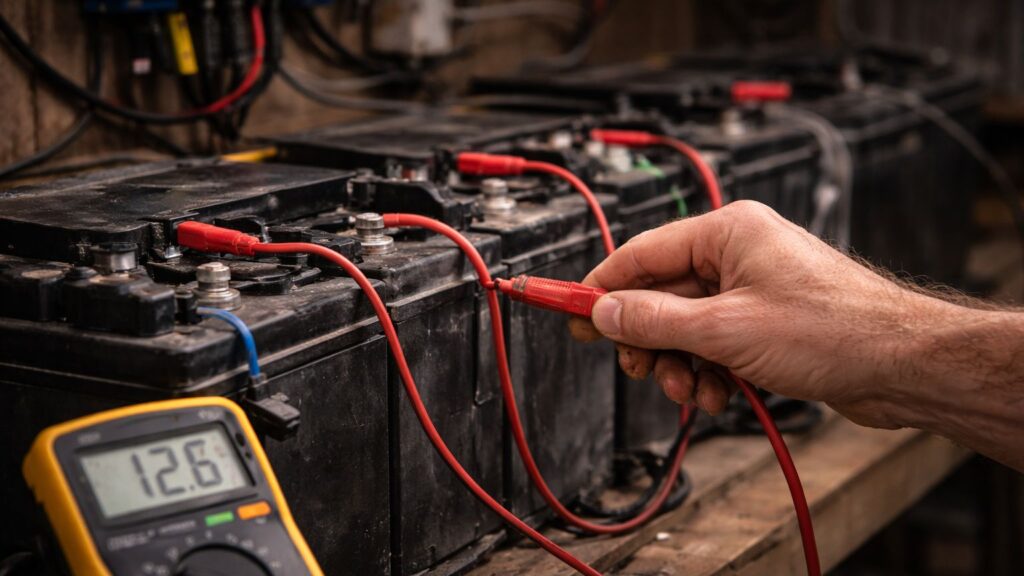
Troubleshooting is about speed and certainty. The right diagnostic tools help isolate problems quickly.
Electrical Diagnostics
A few high-quality tools can identify most electrical failures.
Recommended diagnostic equipment includes:
- Fluke 117 multimeter for accurate voltage testing
- Klein CL800 clamp meter for measuring current flow
- Outlet or polarity tester for AC circuits
- Infrared thermometer for detecting overheating components
Thermal hotspots often reveal failing batteries, loose terminals, or overloaded circuits before they become dangerous.
Visual and Physical Inspection Tools
Many failures can be diagnosed visually.
Useful inspection tools include:
- Inspection mirror for viewing hidden spaces
- USB borescope camera for tight plumbing runs
- Color-coded labels for wiring identification
- Waterproof marker for marking circuits or pipes
Clear labeling dramatically reduces troubleshooting time when problems arise.
Must-Have Spares and Consumables
Even the best tools cannot fix a system without replacement parts.
Off-grid operators should maintain a stockpile of common failure components.
Electrical Spares
Critical electrical replacements include:
- DC fuses of multiple types
- Spare breakers
- MC4 solar connectors
- Ring terminals and wire lugs
- Assorted wire gauges
- Heat-shrink tubing
Electrical connections are often the first components to fail under harsh outdoor conditions.
Hardware and General Consumables
A small hardware inventory solves many problems immediately.
Recommended items include:
- Stainless steel screws and bolts
- Washers and locknuts
- Zip ties of multiple sizes
- Adhesive cable mounts
- Silicone sealant
- Electrical tape and duct tape
- Threadlocker and anti-seize compound
- WD-40 or similar lubricant
Plumbing Spares
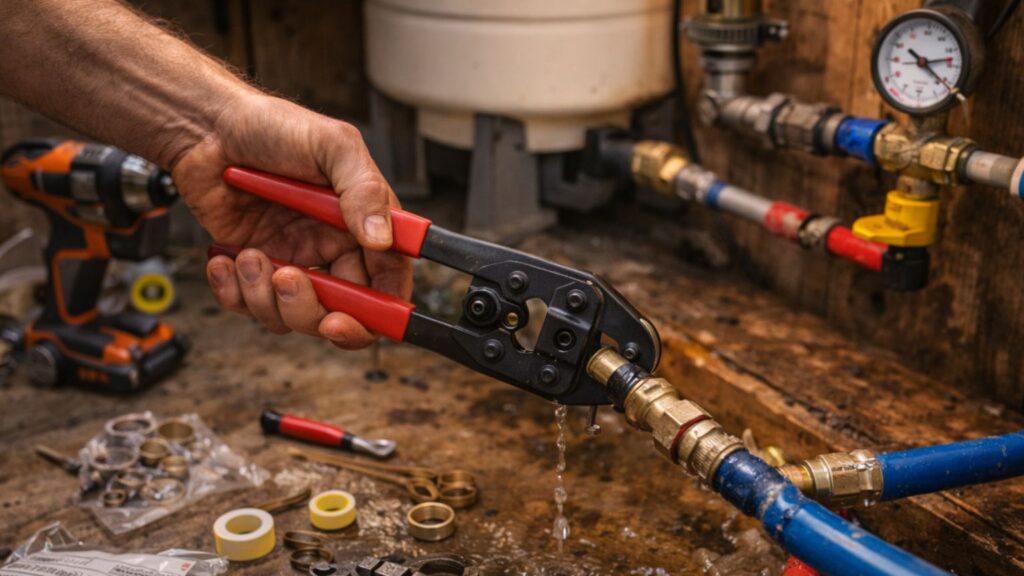
Water systems should always include replacement fittings.
Common plumbing spares include:
- PEX elbows and couplings
- Hose clamps
- Spare pipe sections
- Inline sediment filters
- Rubber washers and O-rings
- Pipe sealant compound
Organization Tips: Cases, Labels, and Loadouts
A well-stocked toolkit is only useful if you can locate items quickly.
Organization matters, especially during emergencies or poor weather.
Best practices include:
- Separate tools by category (electrical, plumbing, structural)
- Store small parts in labeled bins or organizers
- Use weatherproof label tape
- Maintain an inventory card in each tool case
- Store tools in a dry, insulated location
Many off-grid operators prefer modular hard cases or heavy-duty tool rolls to keep equipment protected.
Building a Field-Ready Maintenance Mindset
Tools matter, but mindset is what keeps systems running.
One of the biggest differences between someone who struggles off-grid and someone who thrives is not what they own, but how they approach problems. Equipment fails, systems degrade, and unexpected issues show up at the worst possible time. The operators who stay ahead are the ones who treat maintenance as an ongoing discipline, not a reaction.
Think in Systems, Not Components
Off-grid infrastructure is never isolated.
A solar system is not just panels. It’s wiring, connections, batteries, charge controllers, inverters, and loads. A water system is not just a pump. It’s intake, filtration, pressure regulation, storage, and distribution.
When something fails, the instinct is often to focus on the visible problem. But experienced operators step back and ask:
- What upstream component caused this?
- What downstream systems might be affected?
- Is this a symptom or the root failure?
For example, a battery bank shutting down may not be a battery issue at all. It could be a loose connection, an overloaded inverter, or a failing charge controller.
This systems-level thinking prevents repeat failures and saves time in the long run.
Diagnose Before You Touch Anything
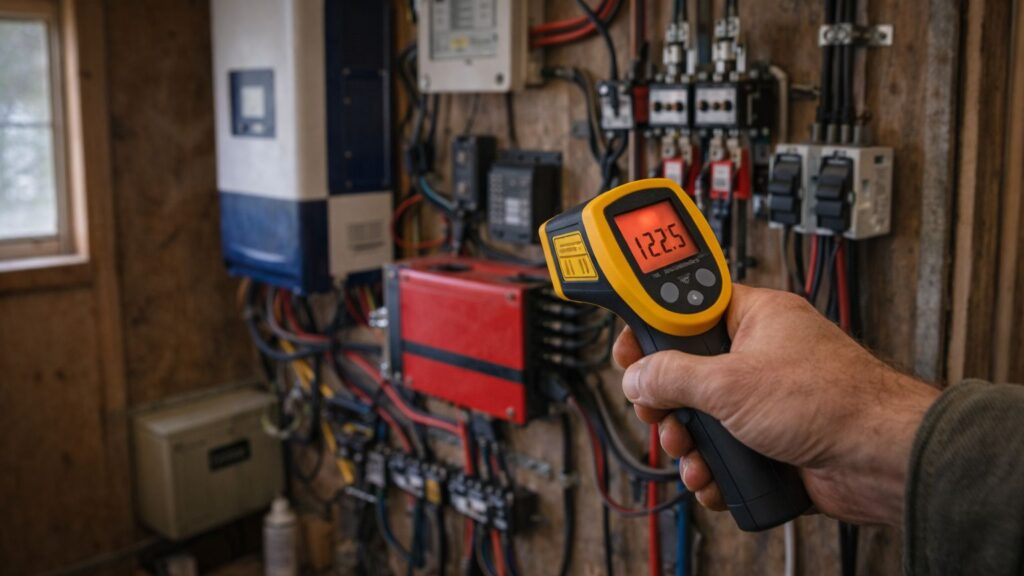
A common mistake in field repairs is jumping straight into action.
Tightening random connections, swapping parts, or disassembling components without a clear diagnosis can make the problem worse, especially in electrical systems.
Instead, slow down and follow a simple process:
- Observe symptoms carefully
- Measure with the right tools
- Confirm the failure point
- Then act
A multimeter reading takes seconds but can prevent hours of guesswork.
The goal is not speed. It’s accuracy. Fast, wrong fixes are what lead to repeated breakdowns.
Redundancy Is a Strategy, Not a Luxury
In grid-connected life, redundancy is invisible. If something fails, the system behind the wall keeps running.
Off-grid, redundancy has to be intentional.
This doesn’t mean doubling everything. It means identifying critical failure points and building simple backups.
Examples include:
- Spare fuses and breakers already matched to your system
- A secondary water pump or manual backup method
- Extra wiring and connectors pre-cut and ready
- A backup way to generate heat or cook food
The goal is not perfection. It’s resilience.
Even a small backup can turn a system failure into a temporary inconvenience instead of a full shutdown.
Pre-Position Tools Where They’re Needed
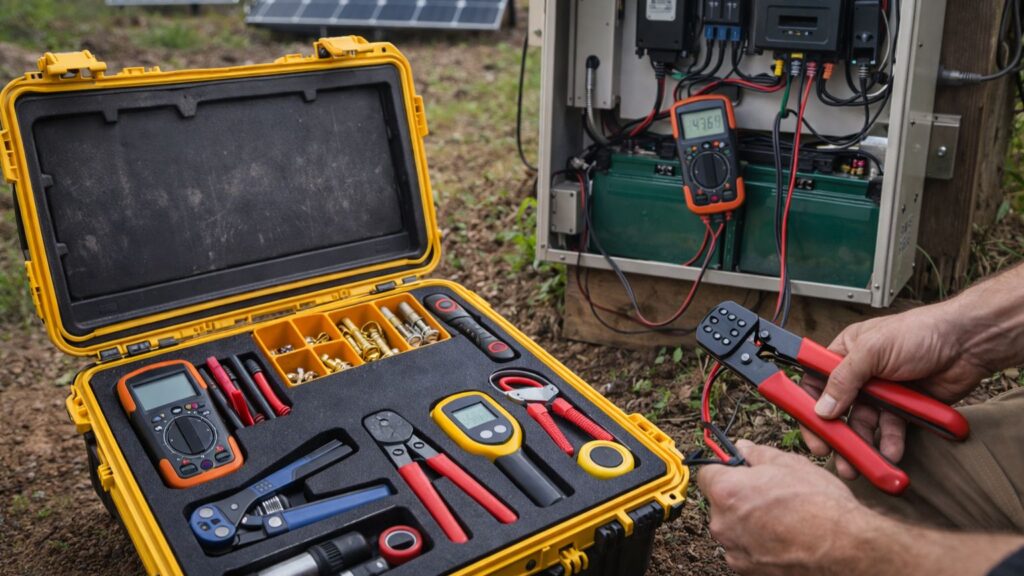
A toolkit locked in a storage box 100 feet away is not a field kit. it’s storage.
In real-world scenarios, especially in bad weather or low light, accessibility matters more than completeness.
Consider staging smaller kits in key locations:
- Near your battery bank or inverter wall
- Inside your mechanical or pump room
- In your main living space for quick fixes
- In a vehicle or mobile kit if your setup spans multiple structures
Each kit doesn’t need everything. Just the essentials for that specific system.
This reduces response time dramatically when something goes wrong.
Label Everything Like Someone Else Will Fix It
Clear labeling is one of the most overlooked advantages in off-grid maintenance.
When systems are clean and labeled, troubleshooting becomes straightforward. When they’re not, even simple problems become frustrating.
At minimum, label:
- Breakers and fuse blocks
- Solar input lines and battery connections
- Water shut-off valves and flow direction
- Critical switches and disconnects
Use consistent naming and make it readable in low light.
Even if you are the only one maintaining the system today, labeling protects you in the future, when you’re tired, rushed, or dealing with a failure under pressure.
Accept That Failures Will Happen. Then Plan for Them
The goal of a maintenance kit is not to eliminate failure. That’s impossible.
The goal is to reduce downtime and regain control quickly.
Every experienced off-grid operator has dealt with:
- A system going down at night
- A frozen component in winter
- A dead battery bank at the worst moment
- A leak that shows up out of nowhere
What separates experienced operators is not avoiding these events. It’s how quickly they respond.
When you accept failure as part of the system, you naturally start preparing for it:
- You keep spares on hand
- You organize your tools
- You test your systems regularly
- You stay familiar with how everything works
This mindset removes panic from the equation.
Practice Before It Matters
One of the most powerful things you can do is simulate repairs before they’re urgent.
- Test your multimeter on known circuits
- Practice disconnecting and reconnecting MC4 connectors
- Replace a fitting or fuse even if it hasn’t failed yet
- Walk through your system and trace each connection
These small actions build familiarity.
When something actually breaks, you’re not figuring it out for the first time. You’re repeating something you’ve already done.
That confidence is what turns a stressful situation into a manageable one.
A well-built toolkit gives you the ability to act.
A field-ready mindset ensures you act effectively.
Together, they are what keep an off-grid system running, not perfectly, but reliably.
Example Repair Scenarios and Required Tools
Understanding common failure scenarios helps determine which tools matter most.
Solar Panel Not Charging
Possible causes include loose connectors or damaged wiring.
Tools required:
- Multimeter to test panel voltage
- MC4 disconnect tool
- Spare connectors
- Wire strippers and screwdrivers
Water Pump Failure
Pump issues often stem from electrical faults or clogged filters.
Tools required:
- Clamp meter to measure amperage
- Multimeter to test voltage
- Pipe wrench or pliers
- Replacement fuse or relay
Frozen Pipe Crack
Cold climates regularly cause plumbing failures.
Tools required:
- Heat gun for thawing
- Pipe cutter and crimp tool
- Replacement pipe section
- Towels and containment bucket
Battery System Shutdown
Battery systems sometimes trip protection circuits.
Tools required:
- Infrared thermometer to check cell temperatures
- Multimeter for voltage testing
- Breaker reset or fuse replacement
- Battery management app or diagnostic interface
Creating a Maintenance Schedule That Actually Gets Followed
Most off-grid failures aren’t caused by lack of tools. They’re caused by things being overlooked for too long.
Loose connections, worn seals, dirty filters, and minor corrosion rarely fail suddenly. They degrade over time until something finally gives.
The challenge isn’t knowing what to maintain. It’s maintaining things consistently.
Why Most Maintenance Plans Fail
People tend to overcomplicate maintenance schedules.
They create detailed checklists, spreadsheets, or rigid timelines that look good on paper but don’t hold up in real life.
Off-grid living is variable:
- Weather changes your priorities
- Seasonal demands shift your focus
- Time and energy fluctuate
If your system is too rigid, you stop following it.
The Simple Maintenance Model That Works
Instead of tracking everything precisely, use a tiered approach:
Daily Awareness
These are things you notice without effort:
- Unusual sounds from pumps or inverters
- Changes in system performance
- Smells (burning, dampness, gas)
- Visible leaks or condensation
You’re not inspecting — you’re paying attention.
Weekly Quick Checks
Set aside a few minutes once a week to look at:
- Battery voltage and general system status
- Visible wiring and connections
- Water system pressure and flow
- Any active warning signs
This is not a deep inspection, just a quick scan to catch early issues.
Monthly Hands-On Checks
This is where you physically interact with systems:
- Tighten accessible electrical connections
- Inspect and clean solar panels if needed
- Check filters and sediment traps
- Test backup systems briefly
Monthly checks prevent small issues from building up.
Seasonal Maintenance
Season changes are where the biggest risks appear.
Before winter:
- Insulate exposed pipes
- Check heating systems
- Verify battery performance in cold conditions
Before summer:
- Inspect ventilation systems
- Clean solar panels thoroughly
- Check water storage for algae or buildup
Seasonal checks prepare your system for stress.
Keep It Simple Enough to Repeat
The best maintenance system is one you actually follow.
If it takes too long, you’ll skip it.
If it’s too complex, you’ll forget parts of it.
Focus on:
- Short routines
- Clear priorities
- Repeatable habits
Even a simple 10-minute weekly check can prevent major failures.
Use Visual Triggers Instead of Lists
Instead of relying on written schedules, tie maintenance to things you already do.
Examples:
- Check battery system when you turn on lights at night
- Inspect water system when filling tanks
- Look at solar input during peak sun hours
This builds maintenance into your routine without needing reminders.
Track Only What Matters
Not everything needs to be recorded.
Track things that:
- Change over time
- Indicate system health
- Help diagnose future issues
Examples include:
- Battery voltage trends
- Solar production levels
- Water pressure consistency
A simple notebook or log can be enough.
Don’t Wait for Failure Signals
One of the biggest mistakes is waiting for something to “feel wrong.”
By the time you notice a problem:
- A connection may already be loose
- A component may already be degraded
- A system may already be stressed
Regular checks catch issues before they become noticeable.
Field Insight
The difference between stable and unstable off-grid systems is rarely equipment.
It’s attention.
Operators who spend a few minutes regularly checking their systems avoid most major failures.
Those who don’t eventually deal with problems that could have been prevented.
Maintenance isn’t about doing everything perfectly.
It’s about staying slightly ahead of failure.
And that comes from consistency, not complexity.
Preventative Maintenance Habits
Repairs become much easier when systems are inspected regularly.
Simple preventative habits include:
- Tightening solar mounting hardware twice per year
- Inspecting battery terminals for corrosion
- Flushing water filters and sediment traps
- Checking wiring insulation for rodent damage
- Testing backup systems before storm seasons
Off-Grid Proven Tools We Recommend
| Tool | Use Case |
|---|---|
| Fluke 117 Multimeter | Electrical diagnostics |
| Klein CL800 Clamp Meter | Current measurement |
| IWISS MC4 Crimp Kit | Solar cable repair |
| RIDGID Pipe Cutter | Plumbing work |
| Veto Pro Pac Tech-MCT | Tool organization |
| Wiha Insulated Driver Set | Electrical safety tools |
Final Thoughts: Be Your Own Maintenance Crew
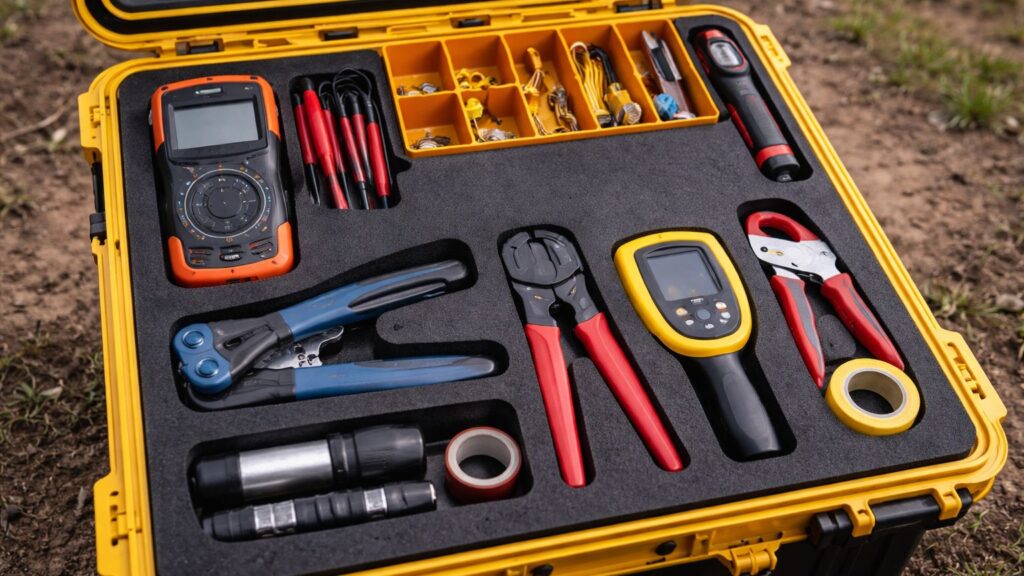
Living off-grid means taking responsibility for the systems that support your life.
You are not just the homeowner. You are the technician, the electrician, the plumber, and the repair crew.
The right tools give you confidence.
The right spare parts give you options.
And preparation keeps your systems running when help is far away.
Build your maintenance kit before you need it.
Practice the repairs before they matter.
Because when you are hours from the nearest hardware store, the ability to fix things yourself becomes one of the most important skills you have.
Off Grid Atlas
Wrench ready. Failure proof. Off-Grid proven.