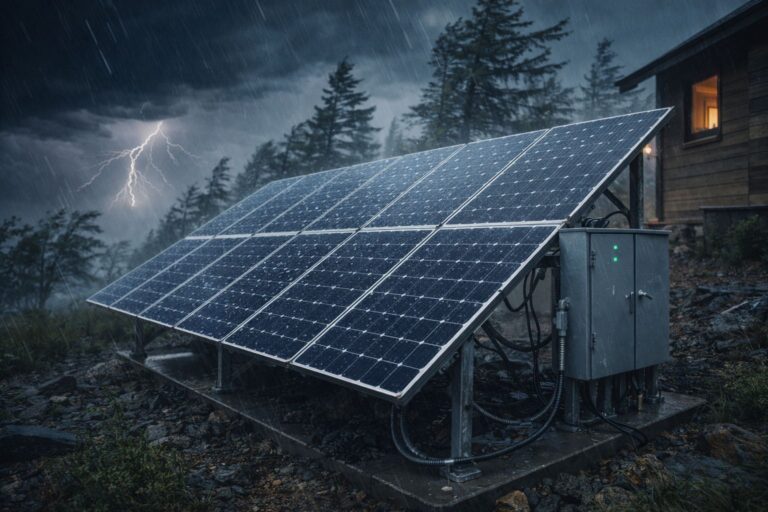
Off-Grid Atlas: Top 10 Off-Grid Backup Generators for Black-Sky Events (2026 Edition)
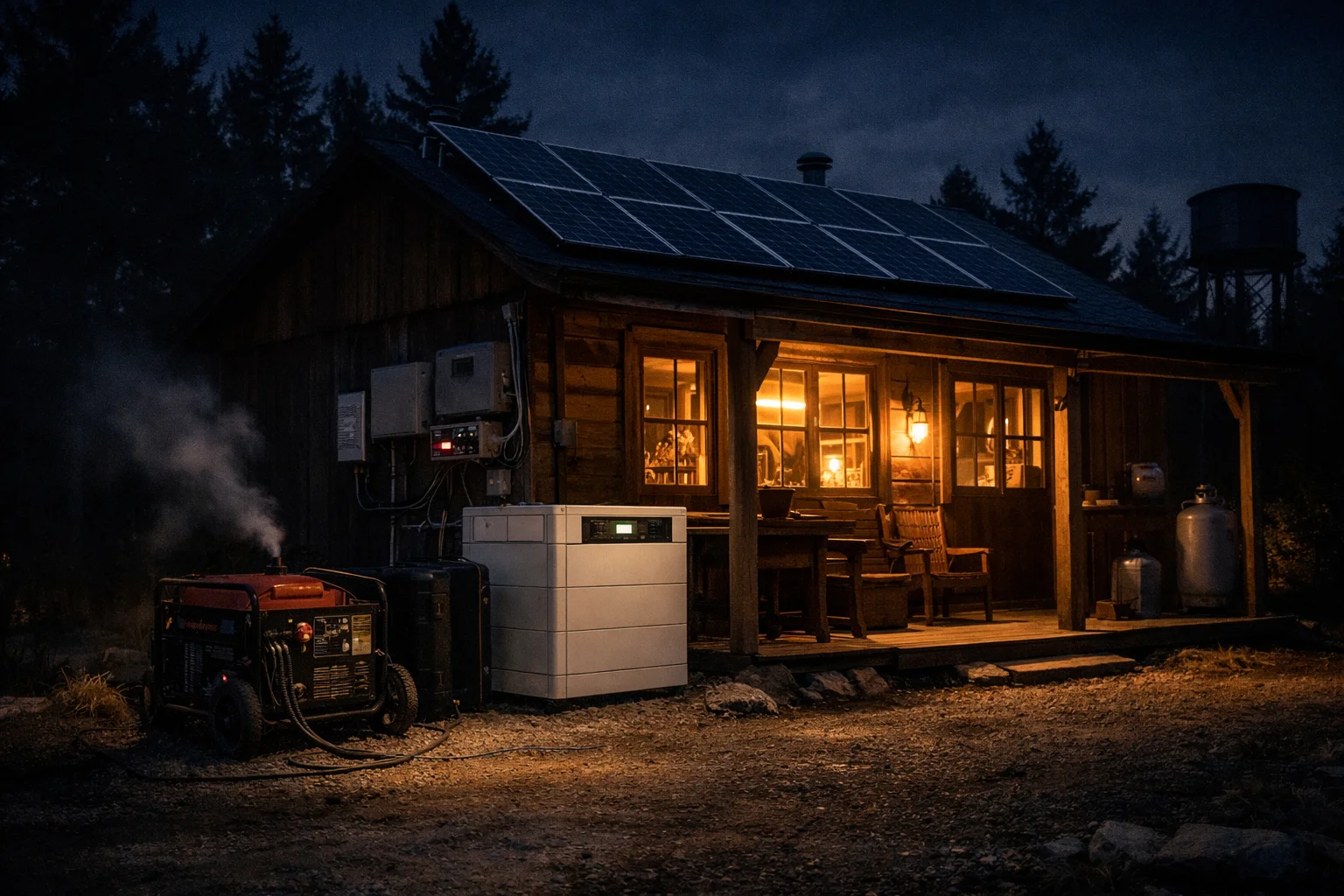
Long outages turn a generator into a managed part of the power system. Its best job is charging batteries, carrying high-surge loads, protecting a well pump or refrigeration circuit, and keeping essential communications available while solar production is weak. The strongest setup runs quietly from batteries for most hours, then uses fuel in planned charging windows.
This guide ranks ten real generator and battery-generator pathways for cabins, homesteads, workshops, vans, and full-time off-grid homes. Every permanent installation needs correctly rated transfer equipment, grounding and bonding designed for the specific system, outdoor siting, exhaust clearance, load calculation, and local-code compliance. Never operate a portable generator in a home, garage, shed, crawlspace, porch enclosure, or any partly enclosed area.
The Shortlist (Why These 10 Made It)
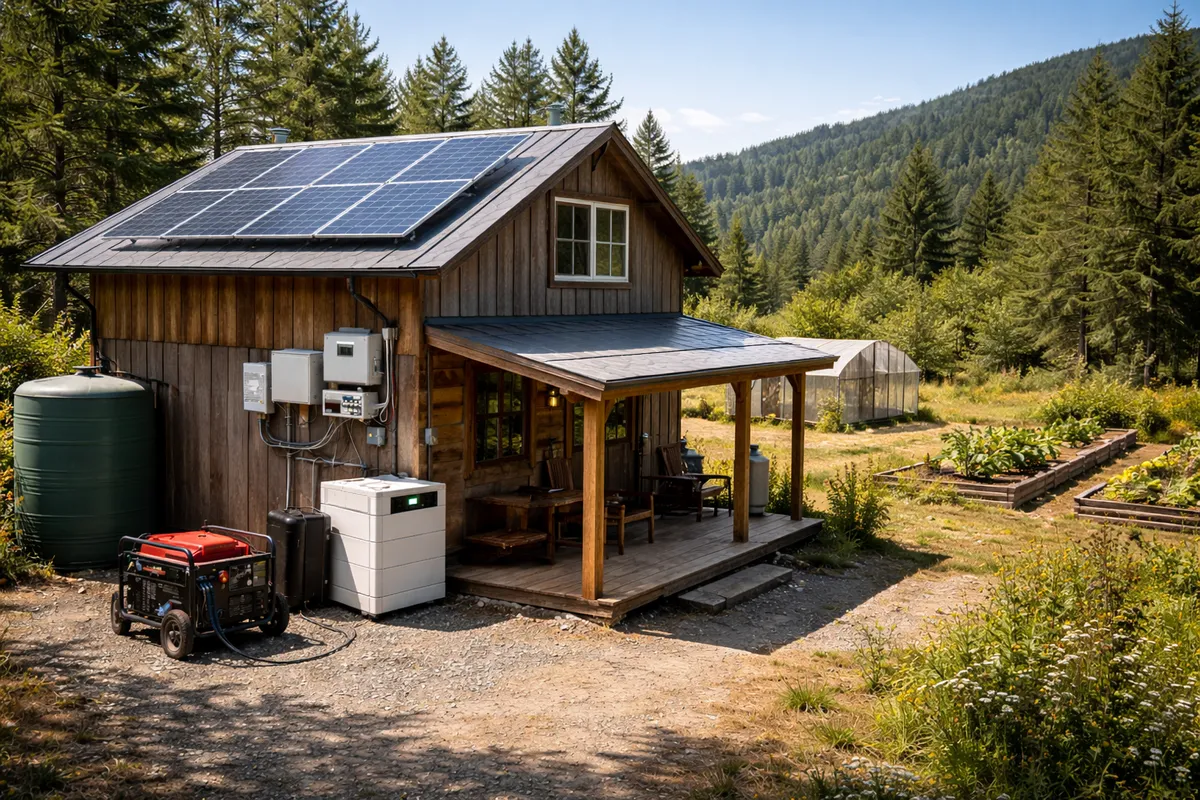
The list covers four useful roles. Hybrid battery systems provide silent power for daily essentials and accept solar or generator charging. Dual-fuel portables handle bulk charging, pumps, tools, and recovery work. Permanent standby units serve fixed homes with automatic transfer equipment and established propane supply. Compact battery generators support light cabins, communications, medical devices, and a cleaner indoor power layer.
Each pick earned its place through a distinct use case, realistic support ecosystem, and fit with an off-grid workflow. Generator output alone does not decide the winner. Fuel availability, voltage, starting surge, noise, service access, charging compatibility, cold-weather operation, and the quality of the transfer plan all matter more once the outage lasts beyond a day.
1) EcoFlow DELTA Pro Ultra — Modular Hybrid Backbone
Why it’s here: The EcoFlow DELTA Pro Ultra is one of the most capable modular battery-inverter systems for a cabin or home that wants silent power first and fuel backup second. Its inverter and battery expansion options allow a property to start with a critical-load plan and grow toward more circuits as the solar array, budget, and electrical design develop. It produces 120/240V output in supported configurations and can integrate with EcoFlow transfer hardware and compatible generator charging.
Where it shines: It suits full-time cabins and homes with refrigeration, lighting, communications, a pressure pump, efficient cooking loads, and occasional high-surge equipment. The system is especially useful where quiet evenings matter, because batteries carry normal loads without the constant sound, exhaust, maintenance, and fuel use of an engine generator.
Field opinion: Build the system around a critical-load panel first. Put the refrigerator, freezer, communications, water pump, selected lighting, freezer alarms, and a few receptacle circuits on that panel. Then add a generator only to charge the battery bank during poor solar weather or to run large temporary loads. This operating pattern stretches fuel and simplifies daily decisions.
Watchouts: A high-capacity battery system still needs a realistic energy model. Electric resistance heat, electric water heating, large air-conditioning loads, and heavy workshop equipment can drain even a substantial battery bank quickly. Professional electrical design, transfer equipment, and clear circuit labels are essential.
2) BLUETTI EP900 + B500 — Installed Battery System for Fixed Properties
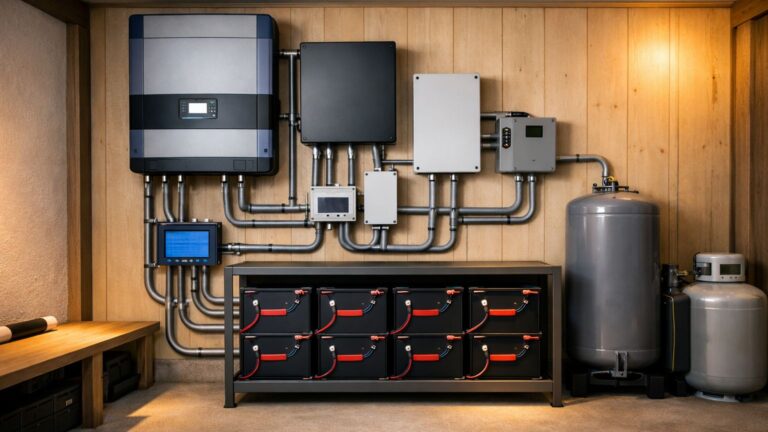
Why it’s here: The BLUETTI EP900 with B500 batteries is a fixed hybrid battery pathway for homes, cabins, and shops that need an installed system with scalable storage and whole-property planning. It belongs in this ranking because it gives owners a clean, quiet way to carry daily essential loads while preserving a fuel generator for the periods when weather and demand require it.
Where it shines: A finished cabin, workshop, or rural home with a dedicated mechanical area and an electrical contractor who can integrate solar, batteries, essential circuits, and generator input into one understandable system. Battery-first operation can make a property far more comfortable during an extended outage because sleep, meals, and communications do not depend on engine runtime.
Field opinion: This is a system for people who want an installed power plant, not a collection of portable boxes. The extra planning is worthwhile when the property has a well pump, long occupancy periods, multiple freezers, or a permanent solar array. Use a fuel generator as an occasional charging source and reserve the battery bank for the loads that benefit from silence and stable power.
Watchouts: Verify current regional availability, installer support, generator-input compatibility, warranty terms, enclosure requirements, and all electrical approvals before purchase. Battery systems need an accessible, temperature-appropriate installation location and a documented shutdown procedure.
3) DuroMax XP13000EH — High-Output Dual-Fuel Portable
Why it’s here: The DuroMax XP13000EH represents the large open-frame dual-fuel generator category: substantial 120/240V capacity, propane or gasoline operation, electric start, and the ability to handle well-pump surge, power tools, recovery work, and fast battery charging. It is not a subtle machine, yet its raw capability can be exactly what a rural property needs after storm damage.
Where it shines: Daytime work periods, high-amperage pump starts, construction repairs, pressure washing, freezer recovery, and bulk charging a large battery bank. It earns its keep when the goal is to run a demanding load for a limited planned period, then shut down and return to battery or solar power.
Field opinion: Propane is the cleaner storage fuel for many prepared properties. It avoids carburetor varnish and can stay ready for long periods when stored in approved outdoor tanks or cylinders. Gasoline adds flexibility when fuel is locally available, though it demands disciplined rotation, stabilizer, safe containers, and an accurate inventory.
Watchouts: Open-frame generators are loud, heavy, and attractive to thieves. Place the unit outdoors on a stable pad with its exhaust directed well away from buildings, windows, doors, vents, vegetation, and neighbours. Use a listed transfer switch or generator inlet; never backfeed a building through a receptacle.
4) Westinghouse WGen9500DFc — Strong Dual-Fuel Critical-Loads Generator
Why it’s here: The Westinghouse WGen9500DFc is a current dual-fuel portable-generator pathway that combines high output, electric start, CO-sensing safety technology, and transfer-ready connections. It suits owners who need a substantial fuel generator for a cabin or home but want familiar controls and a broad North American support footprint.
Where it shines: It is well suited to a critical-load panel with a well pump, refrigerator, freezer, lights, selected outlets, communications, sump equipment, and battery charger. It also supports an off-grid workflow where the owner starts the generator in daylight, charges batteries at an efficient bulk rate, completes water pumping or workshop tasks, then returns the property to quiet operation.
Field opinion: This generator works best as a scheduled fuel buffer. Make a written run plan: charge from a defined battery state of charge, start high-surge loads one at a time, refill only after cooldown, and log fuel use. The plan reduces noise, prevents surprise outages, and teaches the household what the system can actually sustain.
Watchouts: CO shutoff is an important safety layer, yet placement still controls the risk. Exhaust can enter a structure through windows, attic vents, crawlspaces, and open doors. Follow the manual, keep working CO alarms inside the home, and never assume a covered porch or open garage is safe generator space.
5) Champion Dual-Fuel Inverter Generator — Best Mid-Size Quiet Fuel Layer
Why it’s here: Champion’s current dual-fuel inverter-generator range gives smaller cabins and mobile setups a quieter alternative to large open-frame machines. Models vary in output and availability, so the correct purchase begins with a load calculation. The category is valuable because inverter power is cleaner for electronics, easier to manage at modest loads, and generally quieter for battery charging or refrigeration support.
Where it shines: Cabins with a modest battery bank, RVs, communications kits, freezers, efficient refrigerators, CPAP equipment, and owners who need a generator that can be moved and maintained without a dedicated equipment shed. A mid-size inverter generator can also work in parallel with a second matching unit where the manufacturer supports that configuration.
Field opinion: Choose the smallest generator that can start the required loads and charge the battery system at an efficient rate. Oversized generators can spend most of their hours lightly loaded, wasting fuel and creating unnecessary noise. A right-sized inverter paired with battery storage usually feels more capable than a giant generator run continuously.
Watchouts: Confirm the exact model’s surge rating, propane derating, parallel capability, receptacles, neutral configuration, and transfer-switch compatibility. Keep approved spare oil, a spark plug, air-filter element, propane hose, and a written maintenance schedule with the unit.
6) EcoFlow Smart Generator Dual Fuel — Best Managed Charger for EcoFlow Batteries
Why it’s here: The EcoFlow Smart Generator Dual Fuel is designed to support EcoFlow DELTA battery systems through controlled charging and app-based monitoring. Its value is the coordination: the generator can top up a compatible battery system when stored energy falls, then stop once the set condition is met. That makes it a coherent companion product for an EcoFlow-based cabin power system.
Where it shines: It is ideal for a battery-first cabin that mainly needs fuel support during prolonged clouds, smoke, winter shade, or unusually high use. The portable inverter format can also support small essential loads directly, although its best role is charging the battery bank efficiently so the home returns to quiet battery power.
Field opinion: Smart integration is useful only when the underlying load plan is disciplined. Put overnight loads on battery power, use solar whenever it is productive, and run the fuel generator during the day when it can combine charging with water pumping, laundry, or workshop work. The result is fewer engine hours and better fuel endurance.
Watchouts: This is a support generator, not a substitute for a large 120/240V portable or permanent standby system. Confirm current compatibility with the exact EcoFlow battery model, charging cable, propane connection, and any home-panel equipment before building the system around it.
7) Jackery Explorer 3000 Pro — Best Simple Battery Generator for Essential Loads
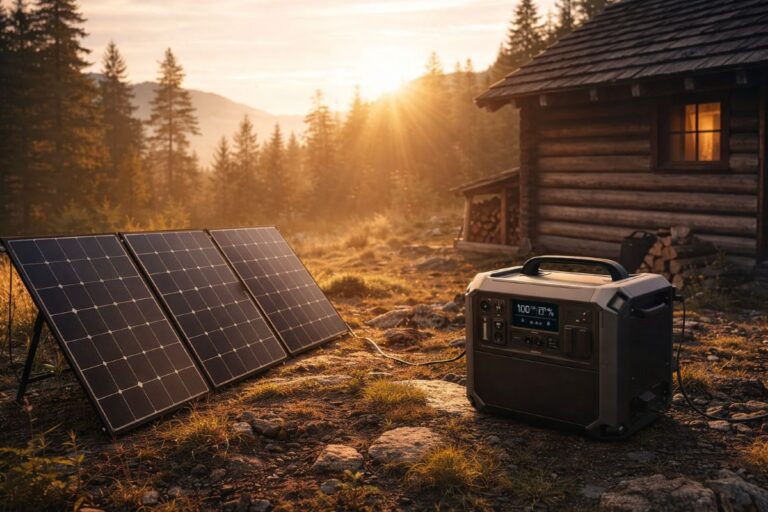
Why it’s here: The Jackery Explorer 3000 Pro is a portable battery generator built for people who need straightforward stored power for refrigerators, lights, communications, CPAP equipment, laptops, small appliances, and selected tools. It is silent indoors, produces no exhaust at the point of use, and can recharge from solar, AC, or a suitable generator arrangement.
Where it shines: Light cabins, weekend properties, vanlife, remote work, medical-device backup, and a designated indoor essential-load station. It can also act as the quiet half of a paired system: a propane inverter generator charges it outdoors during the day, and the battery carries the home through the evening.
Field opinion: Treat this as a load-management tool. It becomes far more useful when paired with efficient refrigeration, LED lighting, DC or USB charging, an energy meter, and a written list of permitted loads. A portable battery station gives clear feedback through its display, which helps households learn where their energy is actually going.
Watchouts: Portable battery generators have finite storage and limited surge capability. They do not replace a 240V well-pump solution, large electric heating load, or a house-scale battery bank. Cold-weather charging restrictions, solar-panel placement, and safe indoor storage conditions should be reviewed before winter use.
8) Kohler 14RESAL Standby Generator — Best Automatic Propane Standby Path
Why it’s here: A permanently installed propane standby unit such as the Kohler 14RESAL serves a completely different role from a portable generator. It can start automatically through an approved transfer switch, carry selected or whole-home loads depending on design, and protect a fixed property when owners are away. For a rural home with a buried or large exterior propane tank, this is a mature resilience solution.
Where it shines: Full-time homes, cabins with plumbing that must stay protected, properties with remote monitoring, and owners who cannot rely on physically starting a portable generator during every outage. It is also useful where a well pump, sump system, refrigeration, and security equipment need reliable automatic transfer.
Field opinion: Automatic standby earns its price through dependable absence coverage. It can keep the building in a safe operating condition when roads are blocked or the owner is elsewhere. Pair it with a battery system when quiet operation and reduced fuel use matter; let the generator handle extended weather and larger loads while the battery carries everyday essentials.
Watchouts: Standby generators need permits, correct setback and exhaust siting, fuel calculations, transfer equipment, regular exercise, annual service, and a local service provider. Confirm current specifications and supported transfer configurations through an authorized dealer before purchase.
9) Lion Energy Safari — Portable Battery Power for Communications and Medical Priorities
Why it’s here: The Lion Energy Safari line provides a portable battery-power pathway for small critical loads, field communications, medical support, lighting, radios, charging, and compact solar use. It ranks separately from the Jackery because its audience often prioritizes portable 12V-oriented equipment, expansion choices, and storage of sensitive gear as part of a broader preparedness kit.
Where it shines: A designated communications case, amateur-radio station, vehicle kit, mobile first-aid support, light cabin backup, and small power needs that should remain silent and independent from the larger generator. It fits well with surge protection, spare DC fuses, quality cables, and a documented charging routine.
Field opinion: Use a portable battery system as part of a layered communications plan. Keep the radio, satellite messenger, phone charging, flashlights, laptop, and small medical loads separate from high-draw household circuits. This preserves essential capabilities even when the main battery bank is being conserved.
Watchouts: Capacity and inverter rating determine what the unit can truly carry. Read the watt-hour figure, continuous output, surge output, low-temperature guidance, and solar-input limits. Protective storage for portable electronics can be useful, though full system resilience still comes from grounding, surge protection, spares, and load separation.
10) Honda EU7000is — Premium Quiet High-Output Inverter Generator
Why it’s here: The Honda EU7000is represents the premium large inverter-generator category: significant portable output with quieter, cleaner inverter power than a comparable open-frame unit. It is a strong fit for a property that needs to charge batteries quickly, support sensitive electronics, run pumps and tools within its rating, and keep noise lower during a long outage.
Where it shines: It suits cabins with critical-load panels, established generator pads, battery chargers, pumps, construction tools, refrigeration, and owners willing to maintain a premium engine-generator platform. It can serve as the fuel engine in a hybrid design where batteries provide overnight and low-load power.
Field opinion: The price buys a more comfortable generator experience, yet fuel planning still controls endurance. A quiet, efficient generator becomes most valuable when it runs at a purposeful load. Pair it with battery storage, an appropriate charger, and a critical-load schedule so every engine hour performs several jobs.
Watchouts: This unit is gasoline-focused, so fuel rotation and storage demand care. Use approved containers, rotate stock on a documented schedule, stabilize fuel according to product instructions, and keep ignition sources away from storage and refueling. Propane dual-fuel alternatives may be simpler for properties that already maintain large propane reserves.
Quick-Glance Matrix (Use Case First)
| Scenario | Best pick | Why it fits |
| Whole-home silent-first system | EcoFlow DELTA Pro Ultra | Modular batteries, solar integration, 120/240V pathway |
| Installed home battery system | BLUETTI EP900 + B500 | Fixed-property hybrid design with scalable storage |
| Heavy tools and hard pump starts | DuroMax XP13000EH | High-output dual-fuel portable category |
| Large critical-load panel | Westinghouse WGen9500DFc | Dual fuel, transfer-ready configuration, strong output |
| Quiet mid-size fuel backup | Champion dual-fuel inverter | Efficient support for modest cabins and batteries |
| EcoFlow battery charging | EcoFlow Smart Generator Dual Fuel | Managed charging within one ecosystem |
| Light cabin and indoor essentials | Jackery Explorer 3000 Pro | Portable silent battery power |
| Automatic fixed-property protection | Kohler 14RESAL | Standby generator and transfer path |
| Communications and medical kit | Lion Energy Safari | Portable lower-draw power layer |
| Premium large inverter output | Honda EU7000is | Quiet high-output generator category |
How to Choose (Black-Sky Logic > Marketing)
Start with loads. List the equipment that protects life, water, food, communication, and the building itself: refrigerator, freezer, water pump, septic or sump pump, lights, router, medical equipment, heating controls, phone charging, and selected outlets. Record the running watts, startup surge, daily hours, and voltage. This produces a design brief that a generator retailer’s headline wattage cannot provide.
Then separate power from energy. A generator’s wattage tells you which loads it can start and run at one time. Battery capacity and fuel supply determine how long the property can operate. A 7kW generator may start a pump easily, yet it can still waste fuel if left idling to run a few lights. A battery bank may run a refrigerator quietly for many hours, yet it must be recharged with solar or fuel before its stored energy runs out.
Fuel strategy comes next. Propane stores well in approved outdoor cylinders or tanks, is easy to meter, and can support generators, cooking, and heating appliances. Gasoline is widely available and useful for many portables, though it needs rotation and safe storage. Diesel can fit a property that already uses it for machinery or a vehicle heating system. Select the fuel chain that you can maintain year-round, then add a second pathway where the consequences justify it.
Finally, decide how power enters the building. A generator inlet and listed transfer switch or interlock make the process repeatable and safe. A critical-load subpanel prevents accidental operation of large loads. Clear labels let any household member operate the system under stress. Professional electrical work turns a pile of capable equipment into a reliable backup-power system.
Off-Grid Proven Setups (Pick Your Stack)
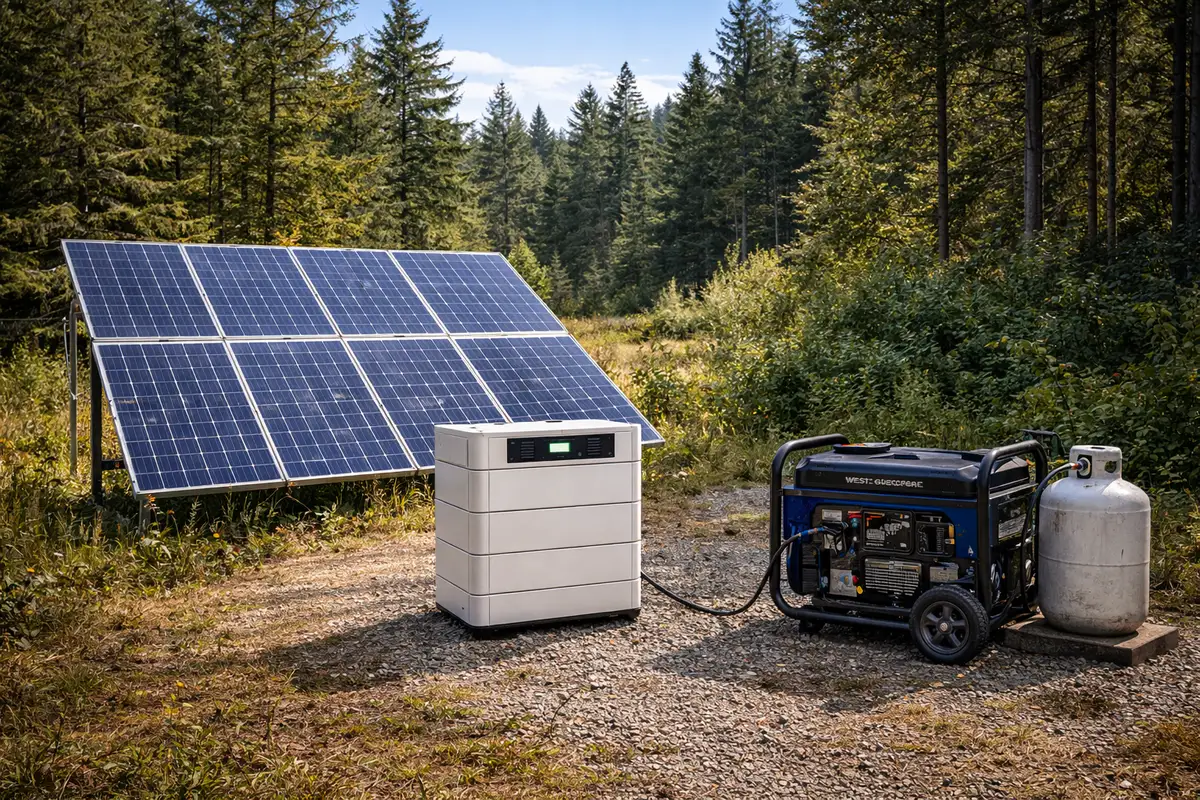
A) Silent-First Homestead (Hybrid)
Core: EcoFlow DELTA Pro Ultra or BLUETTI EP900 system sized for critical circuits. Fuel assist: Westinghouse WGen9500DFc, DuroMax XP13000EH, or a correctly sized propane standby generator. Solar: A fixed array designed around winter production and battery charging. Panel: A critical-load subpanel with refrigerator, freezer, water, lights, communications, and selected receptacles.
This stack works because stored power handles the many hours of low demand, while the engine generator runs in planned daytime windows. A well pump can run while the generator is on, batteries can accept bulk charging, and workshop tasks can happen at the same time. The household then returns to battery power for evening, sleep, and quiet communications.
B) Cabin Essentials (Low Fuss)
Core: Jackery Explorer 3000 Pro or a comparable portable battery station. Fuel assist: Champion dual-fuel inverter generator. Solar: Portable panels used where they receive clear daylight. Loads: Efficient refrigerator, lights, router, phones, laptop, CPAP, and modest water or tool use.
This is a practical first resilience layer for a weekend property. The battery station stays inside with the essential low-draw loads, and the generator charges it outdoors during daylight. The owner learns actual energy use before committing to a larger battery bank, a fixed array, or permanent transfer equipment.
C) Repair and Recovery Kit (Heavy Tools)
Core: DuroMax XP13000EH or Westinghouse WGen9500DFc through a properly sized inlet and transfer system. Buddy: A small battery station for indoor lights, communications, and overnight refrigeration support. Fuel: Propane reserve, maintained gasoline fallback where appropriate, engine oil, and a complete spare-parts kit.
This stack focuses on recovery after a storm: pumping water, clearing debris, running tools, charging batteries, and protecting frozen food. The battery station prevents the generator from running all night simply to support phones and a few lights. The heavy portable carries the tasks that batteries should not be asked to handle.
Real Fuel Storage Strategy (What Actually Works Over 30+ Days)
Fuel planning should be based on measured cycles, not optimistic runtime claims. Track how much fuel the generator burns while charging the batteries from a defined state of charge, running the well pump, and carrying typical critical loads. Repeat the test in cold weather, because fuel vaporization, battery charging, and heating demand can all change the result.
Propane is attractive for long storage because it does not degrade the way gasoline can. A property may use 20-pound cylinders for portability, 100-pound cylinders for a more substantial buffer, or a permanently installed tank where permitted. Cylinder size affects cold-weather vaporization, accessible storage, handling, and refilling logistics. Keep tanks outdoors, upright, protected from impact, and accessible after snow or ice.
Gasoline needs a formal rotation system. Use approved containers, label purchase dates, follow the stabilizer manufacturer’s guidance, and consume rotated fuel through compatible equipment before it ages beyond your planned interval. Store it away from the home, ignition sources, and living areas according to local rules. Diesel has storage advantages for properties already using it, although water contamination, microbial growth, winter treatment, and filter maintenance belong in the plan.
The best endurance comes from generator cycles. Start the engine when batteries are low enough to accept a useful bulk charge, run the pump and other planned high-demand tasks, then shut down once the most efficient part of charging is complete. Solar can handle later charging when sun returns. This pattern preserves fuel, reduces noise, and reduces maintenance hours.
Failure Scenarios: What Happens When Things Go Sideways
The first common failure is a generator that has not been exercised. Starter batteries weaken, fuel systems gum up, oil is low, a mouse damages wiring, or a propane hose hardens. Monthly exercise under a meaningful load exposes these issues while stores, service shops, and daylight are available. Keep the manual, a maintenance log, and the required fluids with the equipment.
The next failure is load creep. A cabin begins with a refrigerator, lights, and router, then someone adds a space heater, kettle, toaster oven, hair dryer, battery charger, and power tool. The generator may overload or the battery may drain far faster than expected. A written load priority list prevents arguments and gives every household member a simple operating rule.
Transfer errors are another serious risk. Improvised cords, unlabelled breakers, undersized conductors, wet connections, and unsafe backfeeding create shock, fire, and utility-worker hazards. Use listed generator cords of the correct gauge, protect connections from water, and have an electrician install and inspect permanent transfer equipment.
Human factors matter as much as machinery. People forget refills, ignore maintenance dates, lose a key cable, or leave a tank inaccessible behind snow. A labelled spares bin, a fuel log, a monthly test, and a short blackout drill solve a surprising number of real-world failures.
Maintenance & Failure Modes (What Actually Breaks)
- Stale gasoline and restricted carburetors: Rotate fuel, follow stabilization guidance, and exercise gasoline generators under load.
- Dead electric-start battery: Test the starter regularly and maintain the battery according to the manual.
- Low oil or delayed oil change: Keep the correct oil grade, funnel, drain pan, and service interval record nearby.
- Propane regulator or hose failure: Inspect seals and hoses, keep compatible approved spares, and leak-test connections.
- Blocked cooling or exhaust path: Keep outdoor placement clear of snow, leaves, nesting material, and stored gear.
- Undersized generator cord: Use a listed cord sized for distance, current, and connector type.
- Battery charging incompatibility: Confirm generator output, charger input, neutral requirements, and charging limits before an outage.
- CO exposure: Keep generators outside and well away from openings; maintain working CO alarms inside the structure.
Fuel Math You Can Use Today
Build your daily estimate from actual measurements. An efficient refrigerator and freezer may use roughly 1 to 3 kWh per day depending on age, room temperature, and how often doors open. Lighting, phone charging, a router, and a laptop may add less than 1 kWh per day in an efficient setup. A pressure pump, septic pump, microwave, or workshop equipment can create short high-power events that change the generator and inverter requirements.
Use a plug-in energy meter for 120V appliances and the battery monitor for DC and inverter loads. Record a normal day, a cold day, and a storm day. Then add a reserve for error, battery temperature, extra occupants, and equipment aging. The data tells you whether a portable battery station is enough, whether you need a 240V generator, and how much stored fuel supports your intended outage duration.
Transfer Equipment and Critical-Load Design
The generator becomes useful only when power reaches the right circuits safely. A portable unit normally connects through a listed exterior inlet, correct generator cord, and a manual transfer switch or panel interlock installed by a qualified electrician. A permanent standby generator uses an automatic transfer switch designed for the generator and service equipment. These arrangements isolate utility conductors and make the sequence repeatable under pressure.
Start with a critical-load panel. Refrigeration, freezer alarms, well or booster pump, selected lighting, communications, a bathroom receptacle, heating controls, and a few kitchen outlets are common choices. Electric range elements, electric dryer, resistance heaters, large water heaters, and workshop circuits belong outside that panel unless the power design specifically supports them. Clear labels give every household member a practical operating map.
Neutral bonding, grounding, generator configuration, inlet rating, cord length, and transfer method all interact. The required arrangement depends on the equipment and installation. Do not modify a generator neutral, improvise a connection, or use a male-to-male cord. An electrician who understands generator transfer systems can prevent expensive equipment damage and serious safety hazards.
Generator Siting, Weather, and Noise
Portable generators need a permanent outdoor operating location before the emergency begins. Select a stable non-combustible pad clear of doors, windows, soffit intakes, crawlspace openings, dryer vents, vegetation, and neighbour property. Follow the manual’s clearance rules and local requirements. Exhaust must disperse safely in the direction of prevailing airflow, even when doors or windows are opened later.
Rain and snow require a purpose-built operating solution that preserves required airflow and exhaust clearance. A loose tarp, closed shed, garage, or improvised box creates fire, overheating, and carbon-monoxide hazards. Generator enclosures and covers must be specifically designed for operating equipment, fitted to the model, and installed according to their instructions. Keep fuel filling, oil checks, and emergency shutdown accessible without entering an exhaust path.
Noise shapes endurance. A generator that infuriates neighbours or prevents sleep will be used poorly. Battery-first operation, day-time charging windows, vibration isolation suited to the pad, and a location that uses distance and terrain all reduce the impact. Never build a sound barrier that traps exhaust or cooling air. Quiet comes from operating strategy first, then appropriate equipment and siting.
A 30-Day Resilience Operating Schedule
On day one, establish the battery state of charge, fuel inventory, weather outlook, and critical loads. Move the refrigerator and freezer to their normal efficient settings, stop discretionary loads, and write the first generator-charge window. During that window, run the well pump, laundry, tool battery chargers, or other planned daytime tasks while the engine is already operating. Check the battery monitor before shutdown and record the fuel used.
During the following days, use solar whenever it is available, run low-draw loads from batteries, and group high-demand work into fuel-generator periods. Keep the home at a conservative, predictable operating level. Review freezer temperature, water supply, medical-device needs, weather radio, satellite or cellular communication, and propane access each morning. A daily ten-minute system check prevents small shortages from becoming a crisis.
At the end of each week, inspect the generator oil level, air intake, exhaust clearance, cords, fuel connections, battery state, and transfer equipment. Rotate the next gasoline container if that is part of the plan. Test CO alarms, clear snow from vents and solar panels, and verify that the backup communication layer is charged. This schedule turns a month-long outage into ordinary equipment management.
Product Selection Questions Before Checkout
Ask whether the generator provides the voltage your actual loads need. A cabin with only standard receptacle loads may work with 120V equipment, while a 240V well pump, large shop tool, or certain HVAC equipment requires a 120/240V design. Confirm running watts and starting watts from appliance labels or measurement, then leave a sensible margin for motor starts and future needs.
Ask how the generator will charge batteries. Inverter chargers can have input limits, power-factor behavior, and generator-quality requirements. A large open-frame generator may have enough raw wattage but still need careful charger settings. A smaller inverter generator may be ideal for a moderate charger. Verify compatibility with the inverter or battery manufacturer before purchase, especially for bonded-neutral generators and transfer panels.
Ask who can service it. Find the local dealer, identify the oil, filter, spark plug, battery, propane hose, and common consumables, then price the parts. Read the manual’s maintenance intervals and cold-weather guidance. Reliable equipment is equipment with a support path, a spares bin, and an owner who knows its normal behavior.
Load-Shedding Rules That Preserve Fuel
Create three operating tiers. Tier one protects life and property: refrigeration, water, essential lights, medical equipment, communications, alarms, and safe heating controls. Tier two supports normal living: laptop work, selected cooking, laundry during generator windows, and limited entertainment. Tier three includes convenience loads: resistance heat, high-watt kitchen appliances, power-hungry tools, and optional climate control. The rules should be posted beside the panel.
Stagger motor loads. Let the well pump finish before starting a large compressor. Charge tool batteries after bulk battery charging has stabilized. Avoid running a microwave, kettle, hair dryer, and workshop load together on a modest generator. These habits reduce overload trips, voltage dips, fuel burn, and wear on equipment.
Efficient devices multiply resilience. LED lighting, a modern refrigerator, insulated food storage, low-power communications, direct-DC charging, and a well-sealed building reduce the size of generator and battery system required. Conservation is operational design: it extends fuel without reducing the essential quality of life.
Buying Notes (Affiliate-Friendly Without the Hype)
Availability and service support often matter more than a small advantage on a specification sheet. A generator with an authorized repair shop, current manual, available air filter, and compatible transfer hardware is easier to own than an obscure model with impressive advertised watts. Confirm the exact model number, current configuration, outlets, fuel options, and warranty region before linking or buying.
Build the cart around operation, not the generator alone. Include the correct generator cord, inlet or transfer equipment, approved fuel connection, oil, funnel, spark plug, air filter, wheel-kit hardware, weather-resistant cover used only when the generator is shut down, lock, grounding solution where required by the system design, CO alarms, and an energy monitor. These accessories turn a product into a working plan.
Generator Readiness Checklist
| Check | What to confirm | Why it matters |
| Load list | Running watts, surge watts, voltage, daily hours | Prevents undersizing and fuel surprises |
| Critical panel | Each essential circuit labelled and tested | Keeps large discretionary loads offline |
| Inlet and transfer | Listed equipment installed and understood | Prevents dangerous backfeed and cord confusion |
| Outdoor pad | Stable, clear, accessible, protected from snow | Supports safe exhaust and service access |
| CO alarms | Installed, tested, replacement dates recorded | Gives early warning inside the building |
| Fuel reserve | Quantity counted, dates logged, containers inspected | Connects outage duration to real inventory |
| Propane path | Cylinder, regulator, hose, connections checked | Avoids simple fuel-delivery failures |
| Gasoline plan | Stabilizer, rotation interval, approved storage | Protects engine reliability and fire safety |
| Oil and parts | Correct oil, spark plug, filter, tools, manual | Makes routine maintenance possible during an outage |
| Battery plan | Charge thresholds, essential loads, solar expectations | Preserves stored energy and fuel |
| Charger test | Generator and inverter charger operated together | Reveals compatibility issues early |
| Weather plan | Snow clearing, rain-safe operating method, lighting | Keeps the generator accessible in severe weather |
| Security plan | Lock, sightline, serial number, theft deterrence | Protects a high-value outdoor asset |
| Communication kit | Radio, phone charging, backup battery, contacts | Maintains coordination when networks are weak |
| Monthly exercise | Run time, load, fuel use, observations logged | Keeps mechanical systems familiar and healthy |
Seasonal Generator Preparation
Before winter, service the engine according to the manufacturer schedule, test the starter, inspect the spark plug and air filter, and verify that the unit can run the actual critical-load combination. Clear the planned generator pad, prepare a safe path from the home, and confirm that propane tanks, gasoline containers, and access gates remain reachable after snow accumulation. Winter is the wrong time to discover that a cord is too short, a tank valve is frozen, or the inlet is hidden behind stored gear.
Before wildfire season, inspect exterior vents and generator placement for vegetation, ash, and smoke exposure. Replace loaded air filters, keep the portable battery station charged indoors, and establish a cleaner-air room that can support communication and medical loads. Smoke can reduce solar harvest and make outdoor maintenance harder, so the fuel generator and battery system need a conservative operating plan.
Before hurricane or severe-storm season, inspect roof penetrations, transfer equipment, grounding, drainage around the generator pad, and fuel storage security. A generator that survives a normal test can still fail when wind-driven rain, flooding, or debris blocks airflow. Secure loose objects, keep the unit above expected standing water, and plan a shutdown procedure for conditions outside the manufacturer’s operating limits.
Verdicts (Strong Opinions, Light Ego)
- Best overall hybrid backbone: EcoFlow DELTA Pro Ultra.
- Best installed battery pathway: BLUETTI EP900 + B500.
- Best high-output dual-fuel portable: DuroMax XP13000EH.
- Best critical-load dual-fuel generator: Westinghouse WGen9500DFc.
- Best quiet mid-size fuel layer: Champion dual-fuel inverter generator.
- Best EcoFlow battery companion: EcoFlow Smart Generator Dual Fuel.
- Best simple portable battery station: Jackery Explorer 3000 Pro.
- Best automatic standby path: Kohler 14RESAL through a qualified installer.
- Best portable communications layer: Lion Energy Safari.
- Best premium large inverter generator: Honda EU7000is.
FAQ (You’ll Ask These on Day 3 Without Power)
Q: Should I buy diesel? Diesel fits best where the property already stores, rotates, and services diesel equipment. Propane dual-fuel units are simpler for many cabins because propane stores well and can support other appliances. Choose the fuel chain you can actually maintain through winter.
Q: Can a generator charge batteries and run loads at the same time? Yes, when the generator, charger, transfer equipment, and load plan are sized for the combined demand. Use daytime generator windows for bulk charging, pumping, and tool work, then return to battery power for quiet lower-load periods.
Q: Can I run central air conditioning or electric heat? Some systems can support these loads with sufficient generator, inverter, battery, soft-start, and fuel capacity. They change the power design dramatically. A heat-loss model and professional load calculation should guide any whole-home HVAC backup plan.
Q: How often should I test the system? Run a monthly exercise, check fuel and oil, verify the transfer procedure, and test a realistic set of critical loads. Conduct a longer seasonal drill before winter or wildfire season to learn actual fuel use and battery performance.
Bottom Line
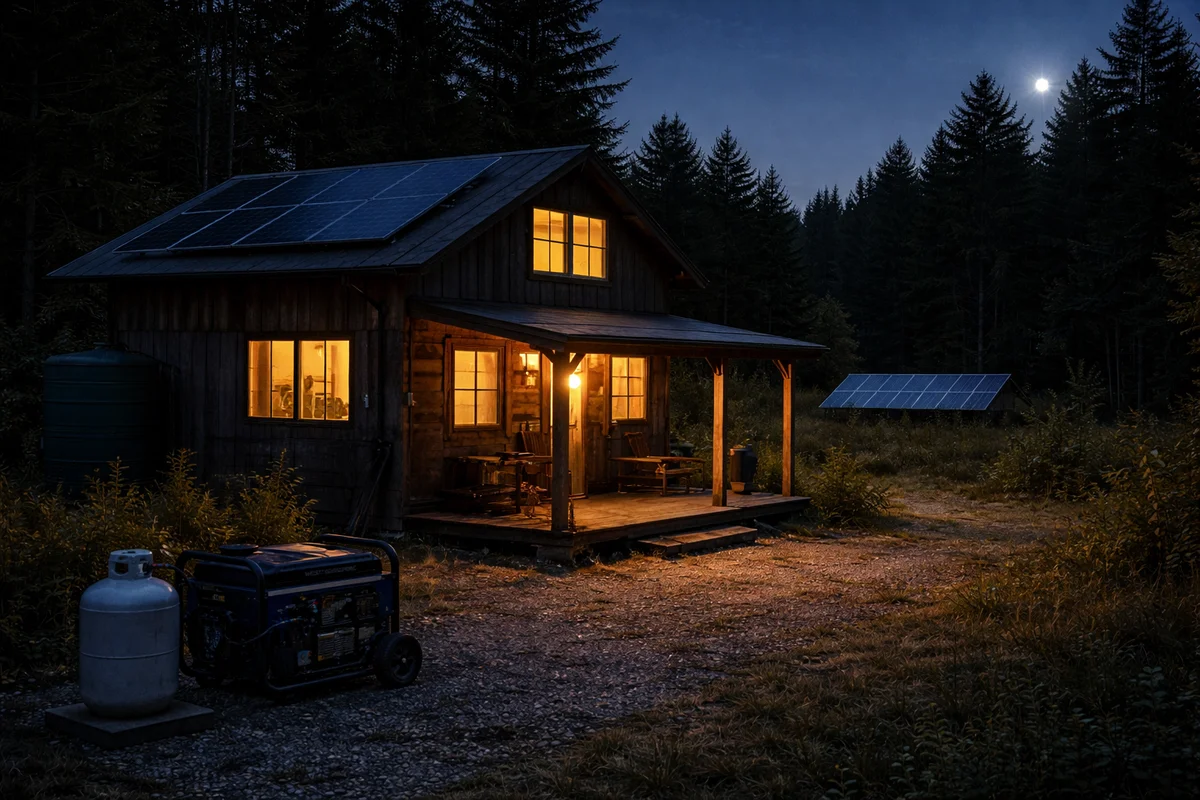
A durable blackout-power plan is battery-first, fuel-smart, and transfer-clean. Start with critical loads, measure real energy use, choose a generator that suits the fuel chain, and practice the routine before the weather forces it. The result is quieter, safer continuity for the parts of off-grid life that genuinely matter.