Top 10 Off-Grid Heating Systems for Every Climate
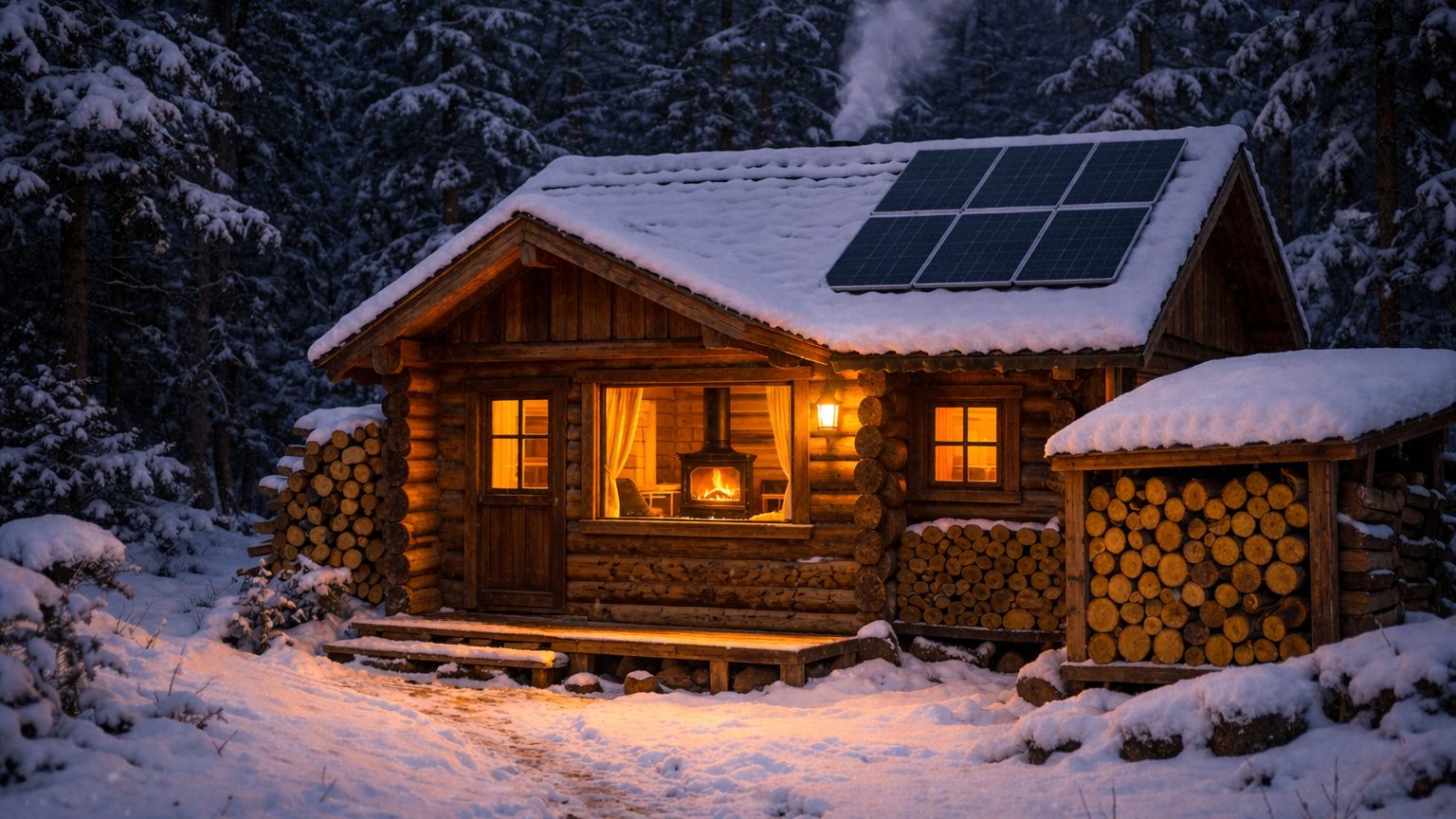
Heat isn’t a luxury off-grid. It’s life support.
When winter hits and there’s no grid to fall back on, your heating system becomes the heart of your survival setup. But there’s no one-size-fits-all solution. The perfect system for a cabin in Alaska will fail miserably in the Arizona desert.
This guide breaks down the 10 most reliable off-grid heating systems — from classic wood stoves to high-efficiency rocket heaters and modern radiant loops — so you can build warmth that lasts, no matter the weather.
Why Off-Grid Heating Is a System, Not a Single Device
Most beginners think “buy a stove, stay warm.”
But heating off the grid is an ecosystem: generation, transfer, and retention.
You’re not just burning fuel; you’re managing airflow, insulation, moisture, and thermal storage. Every part works together.
The Three Pillars of Heat:
- Source: Fire, propane, solar, biofuel.
- Transfer: Airflow, water loops, or radiant mass.
- Retention: Insulation, stone, cob, or thermal mass that holds the warmth.
If you get these three working in harmony, your cabin stays warm with half the fuel and one-tenth the stress.
#1 — Rocket Mass Heater: Low Fuel, High Output
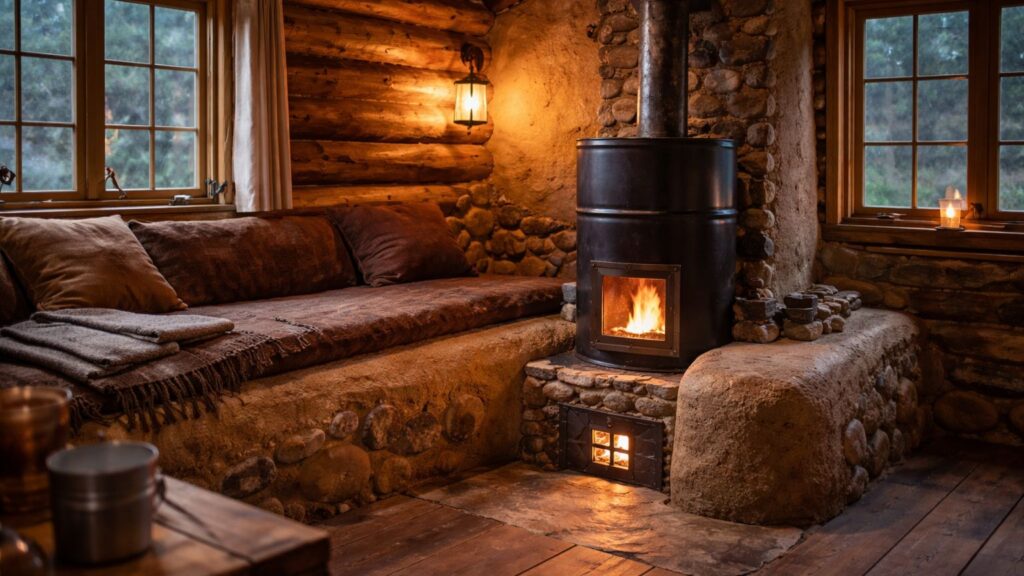
The king of off-grid efficiency. A rocket mass heater burns small twigs or scrap wood at near-complete combustion, storing the heat in a large cob or stone bench that radiates warmth for 12+ hours.
Why it works:
- Minimal fuel use: burns 70–90% less than a standard wood stove.
- Almost no smoke: clean burn technology.
- Stores energy like a thermal battery.
Ideal for: Cold, dry climates where firewood is plentiful.
Top sources: Liberator Rocket Heater, Walker Stove Kits, or DIY cob builds.
“If a wood stove is a furnace, a rocket heater is a thermal symphony.”
#2 — Wood Stove: The Classic Backbone
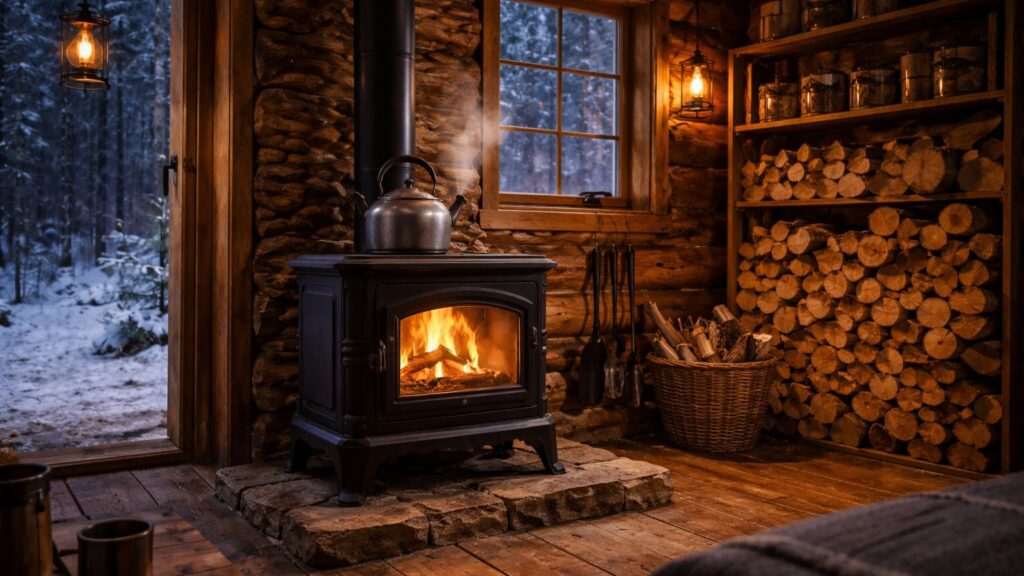
If you want reliability you can repair with hand tools, the wood stove wins. It doubles as a heater and a cooktop, with zero electronics and full field serviceability.
Pros:
- Simple, proven, and long-lasting.
- Produces radiant and convective heat.
- Excellent backup when solar or propane fails.
Tips:
- Keep a moisture meter for firewood. Wet wood kills efficiency.
- Clean chimney every 2–3 months.
Recommended brands: Drolet, Jøtul, Vermont Castings, Regency.
Best for: Moderate-to-cold climates with consistent fuel supply.
#3 — Propane Heaters: Clean and Controlled
For cabins or mobile rigs, propane remains a solid off-grid workhorse. It burns cleanly, lights instantly, and runs on refillable tanks.
Advantages:
- No smoke or soot.
- Easy temperature control.
- Great as a backup for solar or wood systems.
Safety tip: Always install a CO detector and use vented models indoors.
Top models:
- Mr. Heater Big Maxx
- Camco Olympian Wave 6
- Dyna-Glo Blue Flame
Best for: Mixed climates, tiny homes, or backup heating.
#4 — Rocket Water Heater / Thermal Loop Systems
This hybrid system channels the exhaust heat from a fire (rocket stove or wood burner) into a water loop that feeds a radiant floor or wall.
Benefits:
- Heats both water and air.
- Stores energy longer than air systems.
- Zero fuel waste: total heat recycling.
Used properly, a thermal loop can keep your home at a steady 21°C (70°F) for hours after the fire goes out.
DIY Resources: Permies.com rocket heater forums and Radiantec kits.
#5 — Solar Thermal Heating (Air & Water Systems)
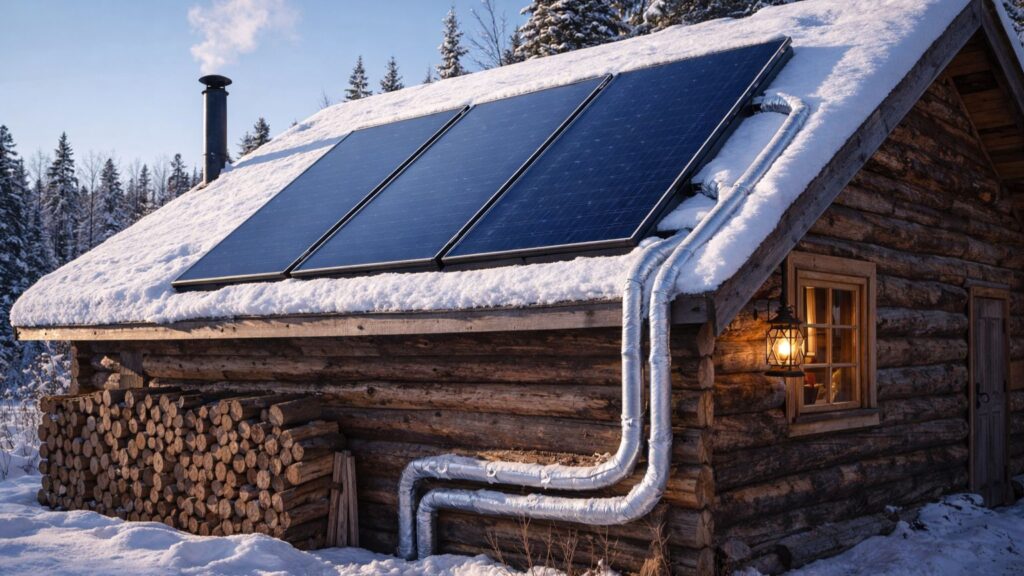
Harnessing sunlight directly for heat is the ultimate passive strategy.
Instead of converting sunlight to electricity, solar thermal panels absorb it as warmth, ideal for sunny regions.
Two main types:
- Solar Air Heaters: Black panels that preheat cabin air.
- Solar Water Heaters: Glycol or water loops that feed radiant floors or storage tanks.
Advantages:
- Zero running cost.
- Silent and maintenance-free.
- Works even in sub-freezing temps with glycol fluid.
Best for: Southern U.S., desert, or high-sun regions.
#6 — Radiant Floor and Thermal Battery Systems
Imagine walking barefoot on a warm concrete floor while snow falls outside.
Radiant systems heat from the ground up, using hot water loops or electric mats embedded in the floor.
Pros:
- Efficient heat distribution.
- Compatible with multiple sources (wood, solar, propane).
- Provides stable, comfortable warmth without blowing air.
Add-ons: Sunamp Thermal Batteries can store solar or wood heat for on-demand release.
Top brands: Radiantec, Warmboard, Sunamp.
#7 — Pellet Stoves and Biofuel Burners
For off-gridders who want cleaner combustion and less tending, pellet stoves are a middle ground between automation and tradition.
Why they work:
- Feed automatically for 12–24 hours.
- Consistent output.
- Fuel is renewable and compact to store.
Caution: They need a small power source for augers and fans, so pair with battery or inverter backup.
Solid options:
- Castle Serenity
- PelPro PP130
- ComfortBilt HP50
#8 — Diesel and Kerosene Heaters (Mobile & Cabin Use)
Originally designed for trucks and boats, these small heaters have become off-grid staples for workshops, RVs, and micro-cabins.
Benefits:
- Sips fuel: a gallon lasts a full day.
- Quick-start and thermostatic control.
- Operates on 12V or 24V DC.
Reliable models:
- Planar 2D (Canadian built, rugged).
- Webasto Air Top 2000 STC.
- Generic “Chinese Diesel Heaters” (budget-friendly).
Best for: Small spaces, mobile setups, or temporary shelters.
#9 — Geothermal and Earth-Tube Heating
If you plan for the long game, geothermal systems offer nearly free heat forever.
By tapping into the earth’s stable underground temperature (around 55°F / 13°C), you can warm or cool your space efficiently year-round.
Options:
- Closed-loop geothermal heat pumps.
- Earth tubes (passive): buried pipes that preheat incoming air.
High upfront cost, low long-term maintenance. Perfect for permanent homesteads.
#10 — Hybrid Systems: Fire, Sun, and Stone
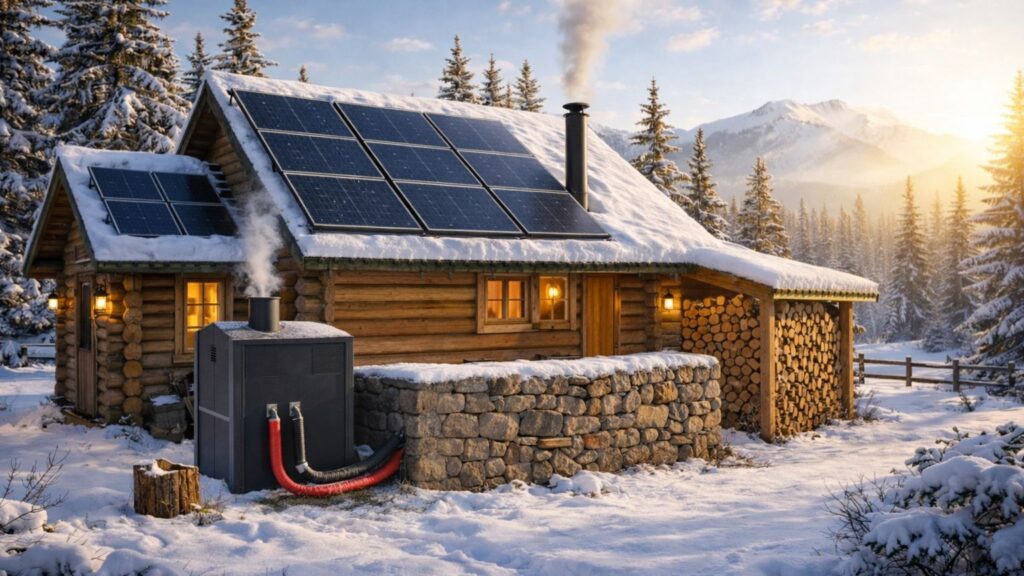
The best systems blend multiple heat sources for seamless, year-round reliability.
Example Setup:
- Winter: Rocket mass + wood backup.
- Spring/Fall: Solar thermal + radiant floor.
- Emergency: Propane or diesel heater.
Layer your systems like clothing: each has a season, and redundancy means resilience.
“A hybrid setup isn’t overkill. It’s peace of mind in physical form.”
Insulation and Retention — The Unsung Hero of Heat
Before you think about generating more heat, make sure you’re keeping it.
Insulation is the cheapest, most powerful heater you’ll ever buy.
Key areas:
- Roof (30% of loss)
- Walls (25%)
- Floor (15%)
- Windows and doors (30%)
Add thermal mass inside (stone, cob, concrete) to hold heat longer.
“You don’t heat the air — you heat the house’s memory.”
Common Heating Failures (And How to Avoid Them)
Most off-grid heating problems don’t come from bad equipment. They come from small mistakes that compound over time.
Understanding failure points ahead of time can save you from cold nights, frozen pipes, and emergency fuel runs.
One of the most common issues is underestimating moisture.
Wet firewood reduces heat output dramatically and creates creosote buildup in chimneys. This not only lowers efficiency but increases fire risk. Always season wood properly and verify with a moisture meter before burning.
Another failure point is poor airflow.
Even the best stove will struggle if airflow is restricted. Blocked intakes, poorly designed chimneys, or negative pressure inside the cabin can choke combustion. This leads to smoke backflow, incomplete burns, and wasted fuel.
Thermal imbalance is another overlooked issue.
Many off-grid homes have hot spots near the heater and cold zones elsewhere. This happens when heat isn’t distributed properly. Radiant systems, ceiling fans, or simple airflow planning can solve this without adding more heat sources.
System dependency is a hidden risk.
Pellet stoves, diesel heaters, and even some propane systems rely on small electrical components. If your battery bank fails or your inverter goes down, your heat source can fail with it.
That’s why redundancy matters.
Every off-grid heating setup should include at least one system that operates without electricity, typically wood or passive solar.
Fuel storage mistakes also cause problems.
Running out of propane during a cold snap or discovering your diesel has gelled in freezing temperatures can quickly turn into a survival situation. Always store fuel properly and maintain a buffer supply.
Lastly, neglecting maintenance is a slow failure.
Chimneys clog, seals wear out, and components degrade. Off-grid systems don’t forgive neglect. Build a maintenance routine into your seasonal workflow:
- Clean chimneys regularly
- Inspect seals and joints
- Test detectors and safety systems
- Rotate fuel supplies
Most failures are preventable. The key is treating your heating system as something you actively manage, not something you set and forget.
Because off-grid, small problems don’t stay small for long.
Safety and Air Quality in Off-Grid Heating
- Always install a carbon monoxide detector.
- Keep stoves and heaters clear of flammable surfaces.
- Maintain chimney draft and fresh-air intake.
- Use spark arrestors on all wood stoves.
A safe system is a sustainable one. Build for decades, not seasons.
Matching the System to Your Climate
| Climate | Recommended Systems | Notes |
|---|---|---|
| Cold-Dry (Rockies, Alaska) | Rocket + Wood + Radiant | Maximum thermal storage. |
| Cold-Wet (PNW, Appalachia) | Pellet + Propane Hybrid | Reliable in humidity. |
| Warm-Arid (Southwest) | Solar Thermal + Radiant | Uses sun, avoids smoke. |
| Variable (Midwest) | Propane + Wood Backup | Balance of automation and control. |
How to Size Your Heating System for Real-World Off-Grid Use
Choosing the right heating system is only half the equation. If the system is undersized, even the most efficient setup will struggle. If it’s oversized, you waste fuel, money, and create uneven heat cycles that make your space uncomfortable.
Start with heat loss, not heater size.
Every off-grid structure loses heat through its envelope — walls, roof, windows, and floor. A small, well-insulated cabin may only need 10,000–20,000 BTU/hr. A poorly insulated structure of the same size might need double that.
The mistake most people make is choosing based on square footage alone.
Instead, factor in:
- Insulation quality (R-value of walls and roof)
- Air sealing (drafts matter more than you think)
- Ceiling height (volume, not just floor space)
- Climate extremes (design for worst-case, not average)
A simple rule of thumb:
- Tight, insulated cabin → 20–30 BTU per sq ft
- Average structure → 30–40 BTU per sq ft
- Drafty or poorly insulated → 40–60+ BTU per sq ft
But that’s just the starting point.
Real-world systems also need buffer capacity. When temperatures drop suddenly or you open doors repeatedly, your system must recover quickly. That’s where thermal mass or dual systems come in.
Example:
A 600 sq ft off-grid cabin in a cold climate might calculate to 18,000 BTU/hr. Instead of installing a single 18,000 BTU heater, a more resilient approach would be:
- 20,000–25,000 BTU primary heater
- Thermal mass (stone, concrete, or water)
- Backup heater (propane or diesel)
This creates a system that can handle spikes without constant adjustment.
Also consider fuel availability. A perfectly sized wood stove is useless if your firewood supply runs low in late winter. Always size with both heat demand and fuel logistics in mind.
Finally, test your system in stages. Run it during shoulder seasons first, monitor performance, and adjust before deep winter hits.
Off-grid heating isn’t about hitting a perfect number. It’s about building a system that adapts when conditions stop being predictable.
Cost and Maintenance Breakdown
| System | Cost | Fuel | Maintenance | Lifespan |
|---|---|---|---|---|
| Rocket Mass | $400–$1500 | Wood | Moderate | 20+ yrs |
| Wood Stove | $800–$2500 | Wood | Low | 15–30 yrs |
| Propane | $300–$1200 | Propane | Low | 10+ yrs |
| Solar Thermal | $600–$2000 | Sunlight | Very Low | 20+ yrs |
| Radiant Floor | $1500–$4000 | Variable | Low | 25+ yrs |
Designing a Heating System That Works Without You
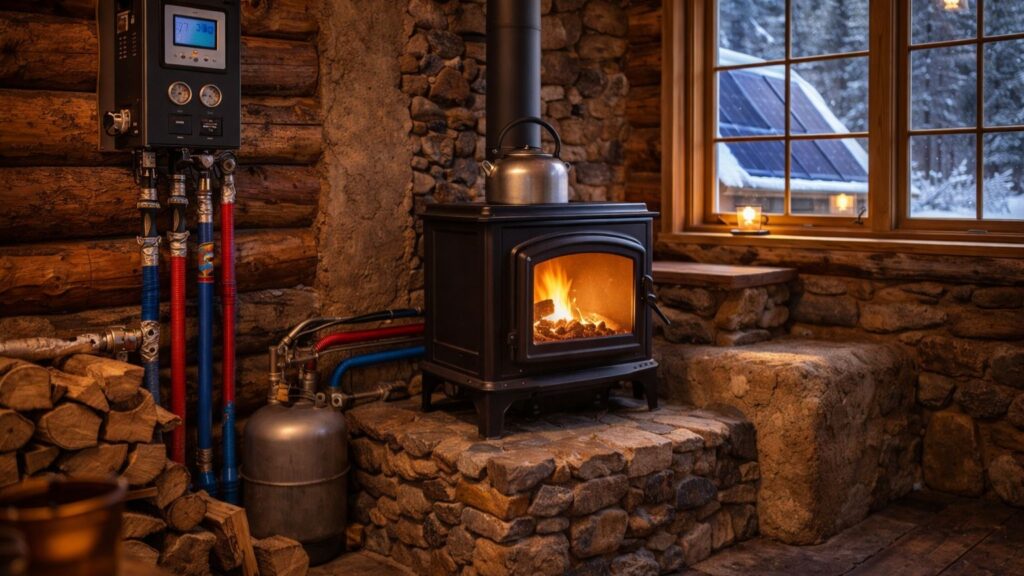
The ultimate goal of an off-grid heating system isn’t just warmth. It’s reliability without constant attention.
A system that requires you to constantly feed, adjust, or monitor it becomes a burden, especially during storms, illness, or long workdays.
Designing for autonomy starts with reducing intervention.
Wood stoves are reliable, but they require regular loading. Rocket mass heaters extend burn cycles, but still need active use. Pellet stoves automate feeding, but depend on electricity.
The solution isn’t choosing one system. It’s combining strengths.
A resilient setup might look like:
- Primary system: wood or rocket mass heater
- Passive support: solar thermal or earth tubes
- Backup system: propane or diesel heater
- Thermal mass: stone, water, or concrete
This creates layers of heat that continue working even when you’re not actively managing them.
Thermal mass is the key to reducing workload.
When heat is stored in mass instead of air, your system keeps working long after the fire is out. This smooths temperature swings and reduces how often you need to intervene.
Automation can also help, but it should never be the only solution.
Thermostats, pumps, and controls are useful, but they should support your system, not define it. Always design so that your core heat source can function without electronics if needed.
Think about failure scenarios:
- What happens if you’re away for 12 hours?
- What happens if power drops overnight?
- What happens if fuel runs low?
A well-designed system answers these questions before they become problems.
Finally, design for comfort, not just survival.
A system that technically keeps you above freezing but feels cold, uneven, or damp will wear you down over time. Radiant heat, stable temperatures, and good airflow make a massive difference in daily quality of life.
The best off-grid heating systems fade into the background.
They don’t demand your attention. They quietly do their job — day after day, season after season.
That’s the real benchmark of success.
The Off-Grid Proven Heating Hierarchy
- Insulate first. You can’t outheat bad design.
- Store heat smart. Use thermal mass and radiant flow.
- Keep it simple. Fewer moving parts = fewer failures.
- Layer for redundancy. A backup is worth its weight in firewood.
“Warmth isn’t a luxury. It’s freedom measured in degrees.”