Heat Without the Grid – Wood Propane and Pellet Systems
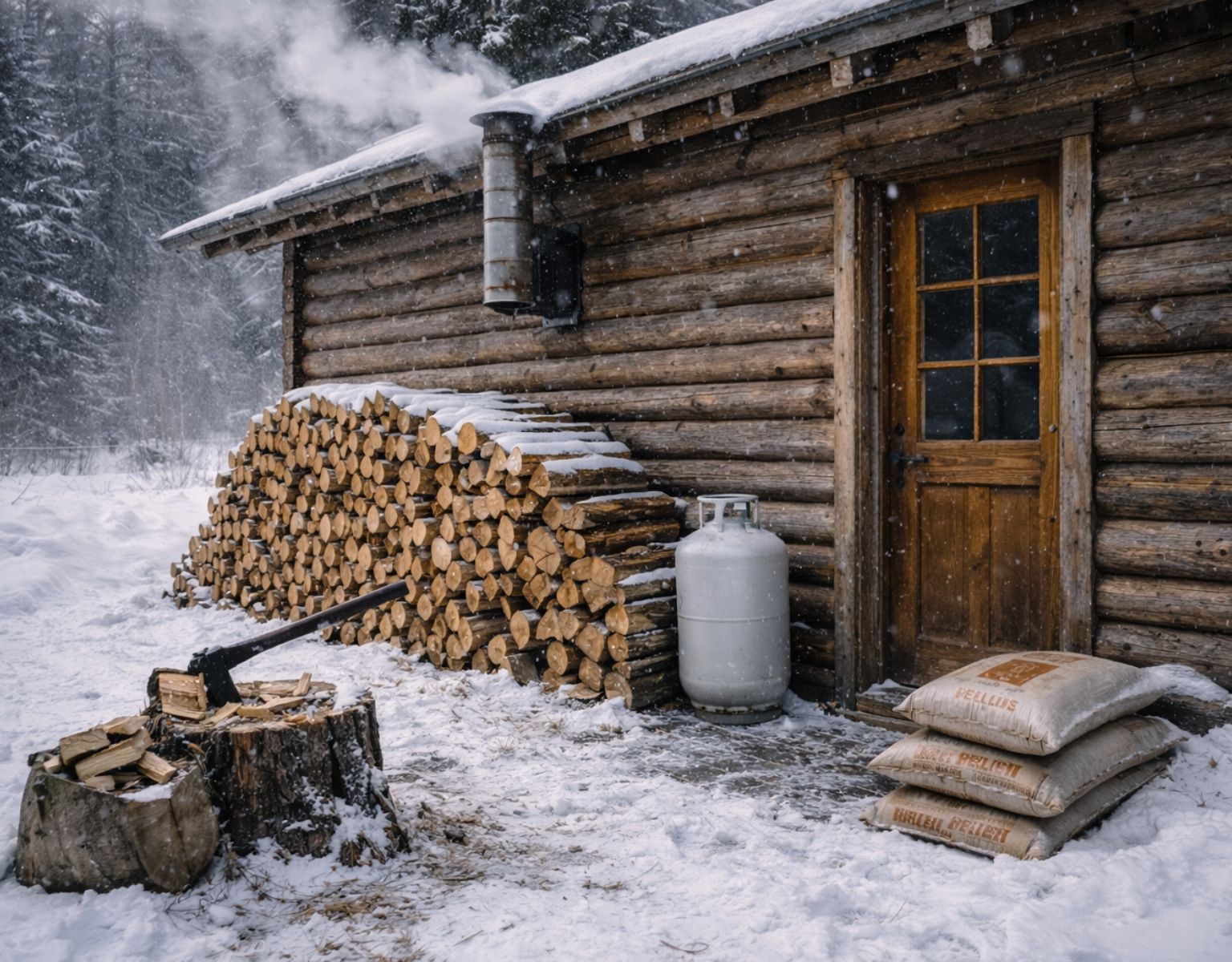
When the temperature drops and the wind howls, your heat source becomes your lifeline. Off-grid living isn’t just about staying powered. It’s about staying warm through winter storms, blackouts, and blizzards.
So what’s the best way to heat a cabin, RV, or homestead without electricity? You’ve got three serious contenders: wood stoves, propane heaters, and pellet systems.
Each has its place. Each has trade-offs. This guide breaks down heat output, fuel cost, maintenance, startup requirements, and safety so you can choose the system that will keep you warm when the grid cannot.
Who This Is For
This guide is built for people who aren’t just browsing. They’re preparing.
You’ll get the most value here if you are:
- Building or upgrading an off-grid cabin
- Living full-time off-grid in cold climates
- Preparing for winter outages or grid failure
- Running a van, tiny home, or remote shelter
- Looking for a reliable backup heating system
If your goal is comfort, this helps.
If your goal is resilience, this matters.
What Off Grid Heating Needs to Do
Before getting into specific heaters, every off-grid heating system must meet a few basic requirements.
A real survival-ready heating system must:
- Work with zero or minimal electricity
- Start easily in freezing conditions
- Heat the entire living space
- Run for hours or days unattended
- Use fuel that can be stored locally
- Remain reliable in extreme cold and wind
At −20°C, when solar power is gone and the batteries are drained, your heating system becomes a matter of survival and becomes the core of your off-grid resilience.
Real-World Reality Check
Most heating systems look good on paper. The real test is what happens when:
- Batteries are depleted after 3 cloudy days
- Fuel delivery is delayed or unavailable
- Temperatures drop faster than expected
- You’re asleep and the system needs to run unattended
If your heating system can’t handle those conditions, it’s not truly off-grid ready.
Comparing the Big Three Heating Systems
| Feature | Wood Stove | Propane Heater | Pellet Stove |
|---|---|---|---|
| Startup | Manual fire | Push button / pilot | Electric ignition |
| Fuel Cost | Low if sourced locally | Medium | Medium-high |
| Heat Output | High | Medium-high | Medium |
| Maintenance | Ash removal, chimney cleaning | Very low | Moderate |
| Ventilation | Chimney required | Vented or vent-free | Direct vent or chimney |
| Power Required | None | Minimal | Required |
| Safety Risks | Sparks, creosote, CO | CO, oxygen depletion | Hopper jams, power loss |
| Best Use | Cabins, homesteads | RVs, small cabins | Hybrid off-grid homes |
Key Insight
Different setups call for different heating systems.
Most experienced off-grid users eventually land on a hybrid approach, not a single solution.
[See Related: Top 10 Off-Grid Heating Systems for Every Climate]
Wood Heat: Raw Fuel, Total Independence
Why People Choose Wood Heat
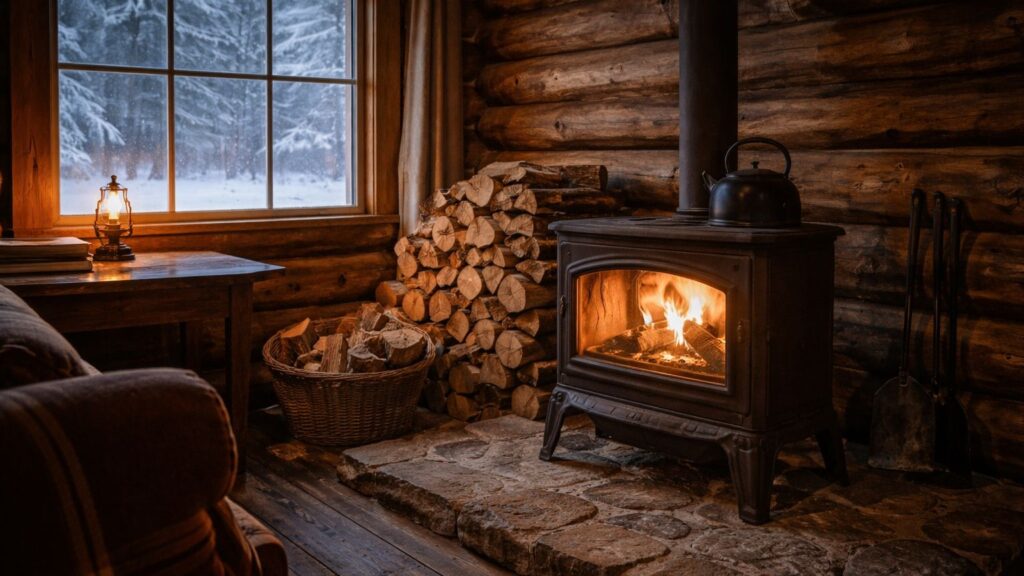
Wood heat remains the most independent heating option available.
Benefits include:
- No electricity required
- Renewable local fuel source
- Long burn cycles with seasoned hardwood
- Radiant heat that warms structures deeply
- Many models allow cooking directly on the stove
For many off-grid cabins and homesteads, wood remains the backbone of winter survival.
The Advantage Most People Miss
Wood heat warms walls, floors, furniture, and other thermal mass throughout the structure.
Walls, floors, furniture, and even stored water absorb and retain heat. This creates a more stable indoor temperature compared to forced air systems that cycle on and off.
That thermal stability becomes critical during long cold snaps.
Challenges of Wood Heating
Wood heating does come with responsibilities.
You’ll need to:
- Load fuel regularly
- Remove ash
- Maintain and clean the chimney
- Store dry seasoned firewood
A reliable wood system requires planning months ahead of winter.
The Work Factor
This is the biggest trade-off.
Wood heat is:
- Physical
- Time-consuming
- Front-loaded in effort
But that work translates directly into independence.
Recommended Wood Stoves
Drolet Escape 1800
- Output: 75,000 BTU
- Heats: 500 to 2,100 sq ft
- Why it works: durable, EPA-certified, strong heat output
Cubic Mini Grizzly
- Output: about 8,000 BTU
- Heats: 200 to 400 sq ft
- Perfect for vans, boats, and tiny homes
Vogelzang Defender
- Output: 68,000 BTU
- Affordable and widely available option
Firewood Tips
Use seasoned hardwoods such as:
- Oak
- Maple
- Ash
Store firewood off the ground with airflow and weather protection.
A common rule of thumb is roughly one cord of wood per 1,000 square feet per winter depending on insulation and climate.
Pro Tip: Seasoning Matters More Than Species
Even premium hardwood performs poorly if it isn’t properly seasoned.
- Ideal moisture content: below 20%
- Drying time: 6–18 months depending on climate
- Wet wood = low heat + heavy creosote buildup
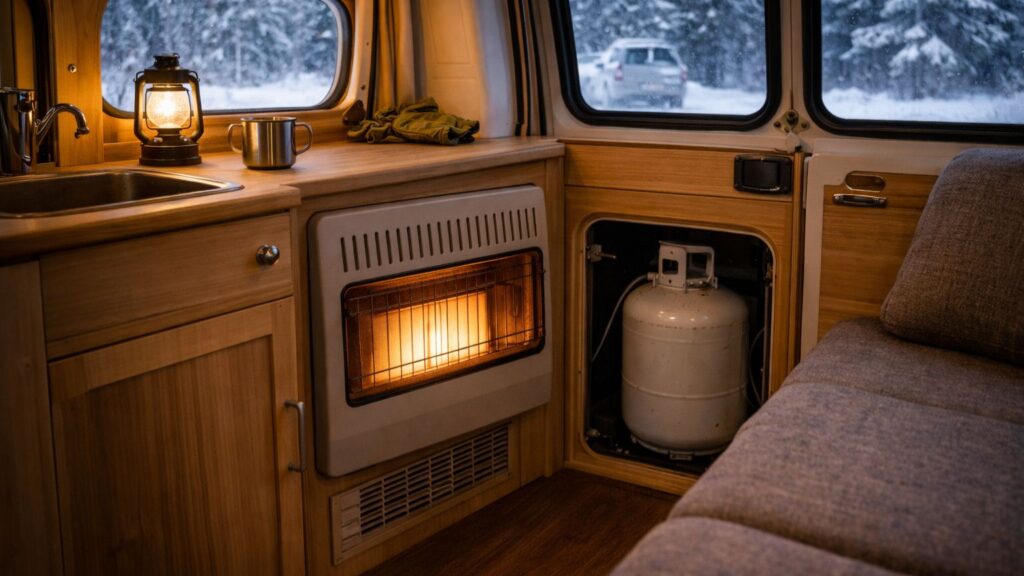
Propane Heat Clean Efficient and Reliable
Why Propane Works Well Off Grid
Propane heaters provide instant heat with minimal maintenance.
Advantages include:
- Instant ignition
- Clean combustion
- No ash or chimney maintenance
- Easy fuel storage using cylinders or tanks
- Widely available
For RVs, small cabins, and backup heating systems, propane is extremely practical.
Where Propane Shines
Propane excels in:
- Quick heat startup
- Overnight temperature stabilization
- Backup during wood stove downtime
- Mobile applications
It’s the system you turn to when you need heat now.
Challenges of Propane
Some considerations include:
- Ventilation requirements
- Safe tank storage
- Higher fuel cost during long winters
Hidden Limitation
Propane depends on supply chains.
If roads are blocked or deliveries stop, your heating system becomes limited to what you’ve stored.
Recommended Propane Heaters
Mr Heater Big Buddy
- Output: 4,000 to 18,000 BTU
- Heats up to 450 sq ft
- Features: oxygen depletion sensor and battery fan
Camco Olympian Wave 8 Catalytic Heater
- Output: 4,200 to 8,000 BTU
- Silent catalytic heating without visible flame
Ashley Hearth Direct Vent Heater
- Output: 11,000 BTU
- Wall mounted system with thermostat capability
Propane Fuel Tips
A standard 20 lb propane tank typically provides around 20 hours of heat at medium output.
Always keep at least two tanks rotated and stored safely outside or in ventilated storage boxes.
Pro Tip: Scale Your Storage Early
Most beginners underestimate fuel consumption.
A realistic winter setup often includes:
- 4–8 tanks minimum for backup
- Larger stationary tanks for full-time use
- A refill plan before peak winter demand
Pellet Heat Smart Consistent and Low Maintenance
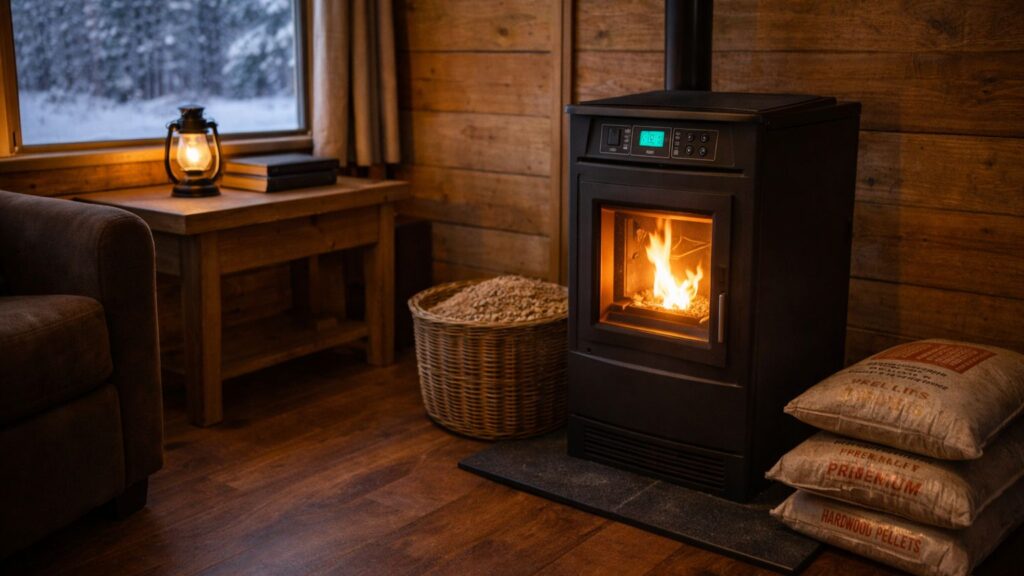
Pellet stoves bring modern convenience to off-grid heating.
Why Pellet Systems Work
Advantages include:
- Automatic fuel feeding
- Consistent temperature control
- Clean efficient combustion
- Long burn times with hopper storage
Many pellet systems can also run on small battery backups during outages.
The Real Benefit
Pellet systems remove the daily manual work of wood heat while maintaining a solid level of efficiency.
For many off-grid homes, this creates a balance between comfort and independence.
Challenges of Pellet Heating
Pellet systems do require:
- Electricity for the auger and fan
- Dry pellet storage
- Occasional mechanical maintenance
The Critical Weak Point
Pellet stoves are only as reliable as their power source.
If your battery system fails, the stove stops.
Recommended Pellet Stoves
Comfortbilt HP22
- Output: 50,000 BTU
- Heats up to 2,800 sq ft
- Large hopper and programmable thermostat
PelPro PP130
- Output: 40,000 BTU
- Up to 96 hours of run time
Castle Serenity
- Compact design
- Suitable for smaller homes up to 1,500 sq ft
Off Grid Pellet Hack
A small 12V battery system paired with a compact inverter can run many pellet stove augers and fans during outages.
Most systems draw roughly 80–120 watts.
That means:
- A 100Ah battery can run a pellet stove for 8–12 hours
- A small solar system can sustain daily operation
Pellet Storage Tips
Use premium hardwood pellets for best performance.
Store pellets indoors or in sealed containers to prevent moisture damage.
A 40 lb bag typically burns for about 24 hours at medium heat output.
How Long Each Heating System Actually Runs (Real-World Burn Times)
Heating systems are often compared by output. BTUs, efficiency, and specs.
But in real off-grid conditions, a more important question is:
How long will it run without intervention?
Because overnight performance and unattended operation are what define whether a system is truly reliable.
Wood Stove Burn Times
Burn time depends heavily on:
- firebox size
- wood type
- how the stove is loaded
Typical ranges:
- Small stoves: 3–5 hours
- Medium stoves: 6–8 hours
- Large stoves: 8–12+ hours (with hardwood)
Hardwoods like oak and maple burn longer and more steadily than softwoods.
[See Related: Top 10 Off-Grid Cooking Systems (No Electricity Needed)]
The Overnight Reality
Even with a high-quality stove, many setups require:
- a reload before bed
- another reload early morning
Unless you’re running a large firebox with dense hardwood, full overnight burns can be inconsistent.
Field Insight
Most experienced users don’t rely on wood alone overnight.
They combine it with:
- propane backup
- or residual heat from thermal mass
This keeps indoor temperatures stable until morning.
Propane Heater Run Time
Propane systems are much more predictable.
A standard 20 lb tank contains about 430,000 BTUs.
At different output levels:
- Low setting (~4,000 BTU): ~100+ hours
- Medium (~9,000 BTU): ~45–50 hours
- High (~18,000 BTU): ~20–25 hours
What This Means in Practice
At moderate use, a single tank can last:
- 2–4 days of continuous heating
- or longer with intermittent use
This makes propane ideal for:
- overnight heat
- unattended operation
- backup during extreme cold
Pellet Stove Run Time
Pellet systems are designed for consistency.
Typical hopper sizes:
- 40 lb hopper → ~24 hours at medium heat
- Larger systems → 48–72 hours
Because pellets feed automatically, heat output stays stable without manual adjustment.
The Limiting Factor
Pellet systems are limited by:
- hopper size
- power availability
If pellets run out or power drops, the system stops.
Comparing Real-World Use
| System | Hands-On Time | Overnight Reliability | Predictability |
|---|---|---|---|
| Wood | High | Medium | Low |
| Propane | Very low | High | High |
| Pellet | Low | High (with power) | High |
[See Related: Cooking Off-Grid: Solar Ovens, Propane, and Rocket Stoves Compared]
The Real Insight Most People Miss
Heating systems demand time and attention.
- How often do you need to reload?
- Can it run while you sleep?
- Will it still be working when you wake up?
The Rule That Defines a Good System
A reliable off-grid heating system:
- runs through the night
- requires minimal intervention
- and keeps temperatures stable without constant adjustment
Why This Changes System Design
Once you understand burn times, most people naturally move toward:
- wood for daytime heat
- propane or pellet for overnight stability
This creates a system that is both independent and predictable.
Heat output matters.
But how long that heat lasts, without you touching the system, matters more.
Heating Cost Comparison
| System | Stove Cost | Install Cost | Fuel Cost | Maintenance |
|---|---|---|---|---|
| Wood | $600–$2,500 | $300–$1,200 | $150–$500 per cord | Chimney cleaning |
| Propane | $150–$1,000 | $0–$500 | $2.75–$4.50 per gallon | Minimal |
| Pellet | $900–$2,500 | $200–$800 | $250–$600 per season | Moderate |
Wood remains the cheapest long-term option if you harvest or split fuel yourself.
Pellet systems cost more but require less physical work.
Propane sits in the middle, easy, but dependent on supply.
Best Heating Systems by Scenario
Cabins
Best combination:
Wood stove for primary heat with propane backup for fast startup or emergencies.
Vans and Mobile Rigs
Best option:
Compact propane catalytic heaters such as the Olympian Wave series.
Homesteads and Full Time Off Grid Homes
Best setup:
Pellet stove paired with solar and battery backup for automatic daily heating.
Hybrid Off Grid Preparedness
Many resilient homes combine all three systems:
Wood for long-term heat
Propane for quick heat and backup
Pellet systems for stable day-to-day operation
Diversifying fuel sources provides the highest level of winter resilience.
Real World Setup Example
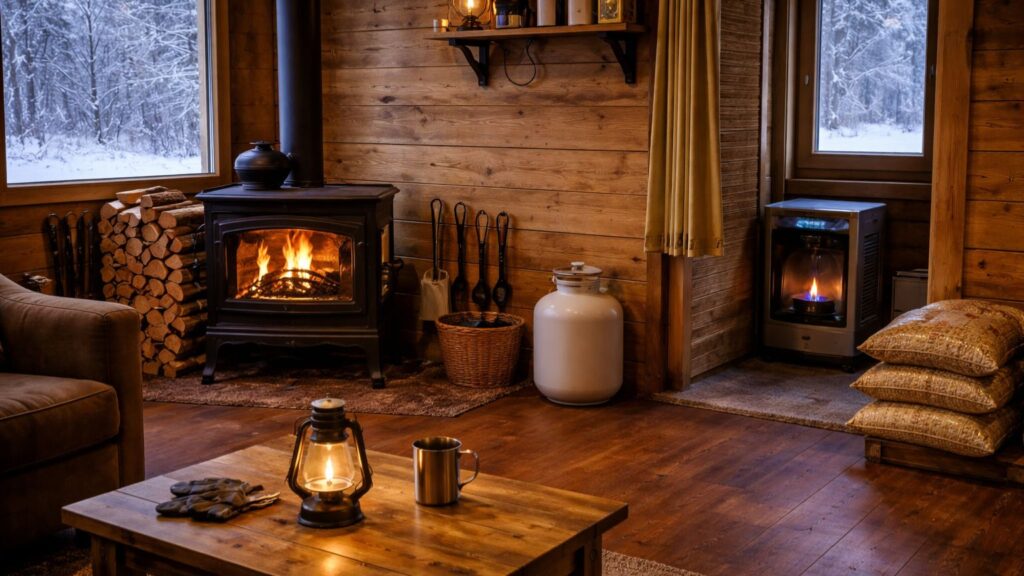
A practical cold-climate off-grid setup often looks like this:
- Primary: Wood stove (daily heating + independence)
- Secondary: Propane heater (quick startup + backup)
- Supplemental: Pellet stove (automated daytime heating)
Fuel strategy:
- 3–6 cords of wood stored and seasoned
- 4–10 propane tanks rotated
- 1–2 pallets of pellets stored dry
Power strategy:
- Solar + battery system sized to run pellet stove
- Backup generator for extended outages
This layered approach eliminates single points of failure.
Common Mistakes to Avoid
1. Relying on One Heat Source
No matter how good it is, one system is a risk.
2. Underestimating Fuel Needs
Winter lasts longer than expected. Always overestimate.
3. Ignoring Ventilation
Carbon monoxide is silent and deadly. Every system needs proper ventilation.
4. Skipping Maintenance
Chimneys, regulators, and augers all need regular inspection.
5. Overcomplicating the System
The more complex your setup, the more failure points you introduce.
[See Related: Top 10 Fail Points in Off-Grid Systems (and How to Prevent Them)]
Off Grid Proven Heaters
| Product | Type |
|---|---|
| Drolet Escape 1800 | Wood Stove |
| Cubic Mini Grizzly | Wood Stove |
| Mr Heater Big Buddy | Propane Heater |
| Olympian Wave 8 | Propane Heater |
| Comfortbilt HP22 | Pellet Stove |
| PelPro PP130 | Pellet Stove |
Final Thoughts
Power can fail. Roads can close. Batteries can drain.
But if you still have heat, you still have a base. A place to shelter and ride out the storm.
The best off-grid heating system is one that remains reliable when temperatures drop below zero and help is nowhere nearby.
For some homes that means a crackling wood stove.
For others it is a silent propane wall heater.
For many modern off-grid homes it is a pellet stove humming through the night.
Many experienced off-grid users rely on layered heating strategies with multiple backups.
Whatever system you choose, make sure it is proven.
Because warmth is not a luxury.