Top 10 Off-Grid Cooking Systems (No Electricity Needed)
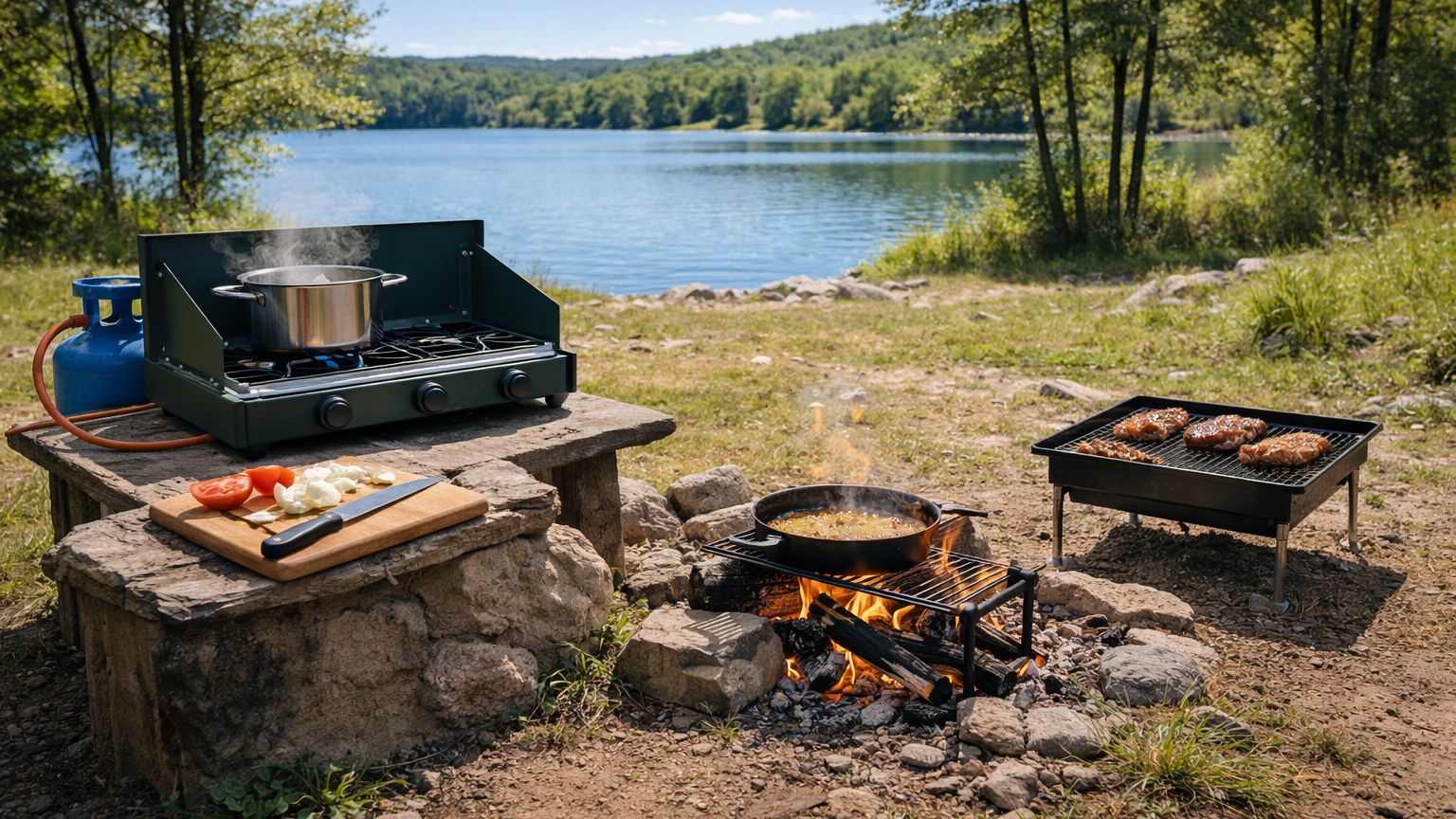
When the lights go out, the smell of cooking becomes a reminder that essential routines can continue.
Off-grid life demands heat that doesn’t depend on the grid, the weather, or a monthly bill. Whether you’re homesteading full-time, living out of a van, or building your emergency backup plan, cooking independence is one of the most important forms of resilience.
This guide breaks down the 10 best off-grid cooking systems, from solar power to traditional fire-based methods, plus the real-world pros, cons, and best gear for each.
1. Solar Ovens — Harness the Sun
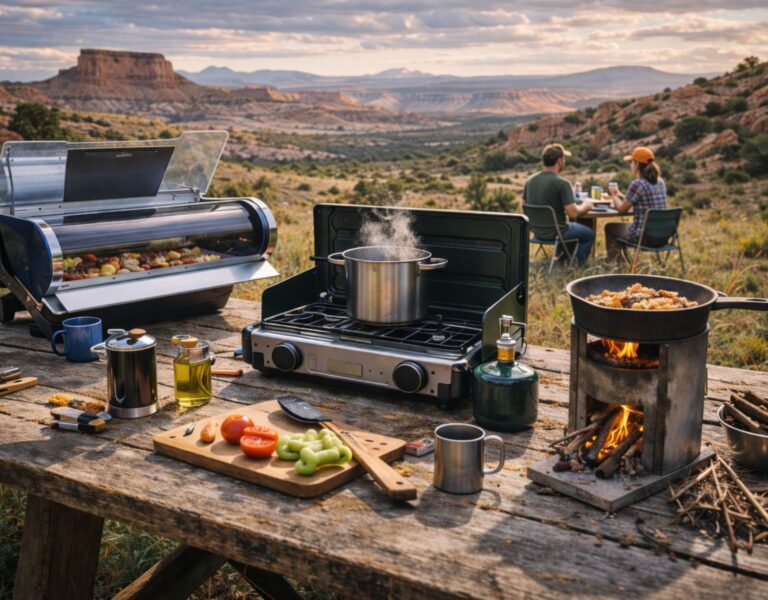
Clear skies provide an abundant source of cooking energy. Solar ovens use mirrors and insulated chambers to trap sunlight and turn it into cooking heat, up to 400°F on a good day. No flame, no smoke, no fuel to haul.
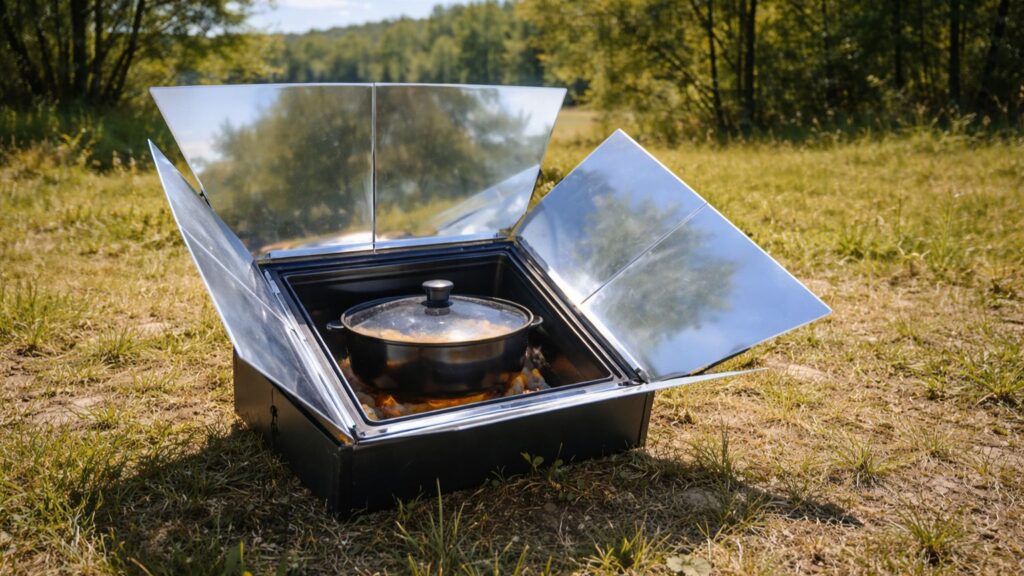
Why it works off-grid:
- 100% renewable energy, zero cost to operate
- Silent, safe, and great for baking or slow-cooking
- No moving parts = zero maintenance
Field Limitations:
Slow cook times (1–3 hours) and weather dependency. Not ideal for cloudy or forested regions.
Field Picks:
- GoSun Sport Solar Cooker — lightweight, heats up to 550°F, cooks in 30 minutes
- All-American Sun Oven — large-capacity glass chamber, perfect for bread or stews
Pro Tip: Always preheat your solar oven before adding food. It shortens cook time by 20–30%.
2. Propane Camp Stove — Reliable and Fast
For consistent, instant heat, nothing beats propane.
It’s clean-burning, efficient, and works rain or shine. It’s ideal for cabins and RVs that need reliability without grid ties.
Why it works off-grid:
- High BTU output and adjustable flame
- Runs on easily stored 1lb or 20lb propane cylinders
- Great for fast frying, boiling, or canning
Field Limitations:
Finite fuel supply. Keep spare cylinders and a refill plan.
Field Picks:
- Coleman Classic 2-Burner Propane Stove — the off-grid veteran
- Camp Chef Everest 2X — 20,000 BTU burners, wind guards, push-button ignition
Pro Tip: Store propane tanks outside, upright, and covered. Never indoors.
3. Dual-Fuel (Butane/Propane) Portable Stoves — Flexible and Compact
When versatility matters, dual-fuel stoves deliver.
These compact systems can burn both propane and butane. Ideal for small spaces, bug-out kits, or mobile kitchens.
Why it works off-grid:
- Flexible fuel compatibility = backup-ready
- Lightweight and portable
- Clean flame with precise control
Field Limitations:
Butane performs poorly below freezing. Use propane in winter.
Field Picks:
- GasOne Dual Fuel Stove GS-3400P — built-in adapter for both canister types
- Iwatani 35FW Butane Stove — Japanese-made precision and durability
Pro Tip: Butane is perfect for warm weather cooking; propane is better for cold climates.
4. Wood Gas Stove — Efficient Flame from Natural Fuel
A modern twist on ancient fire.
Wood gas stoves use secondary combustion, re-burning wood smoke to create a powerful, clean flame from twigs, pinecones, or pellets.
Why it works off-grid:
- Burns nearly smokeless once hot
- Fuel is free and everywhere
- Compact, efficient, and eco-friendly
Field Limitations:
Requires dry biomass; less effective in wet conditions.
Field Picks:
- Solo Stove Titan — stainless design, burns twigs into a jet-flame vortex
- BioLite CampStove 2+ — charges USB devices as it cooks, fan-assisted combustion
Pro Tip: Collect small, dry sticks ahead of time and store them in a mesh bag for emergency use.
5. Rocket Stove — Maximum Heat, Minimal Fuel
If you want to boil water fast, this is your tool.
Rocket stoves use an L-shaped chamber that channels air for ultra-efficient combustion. It’s deal for cooking with scraps of wood or crop waste.
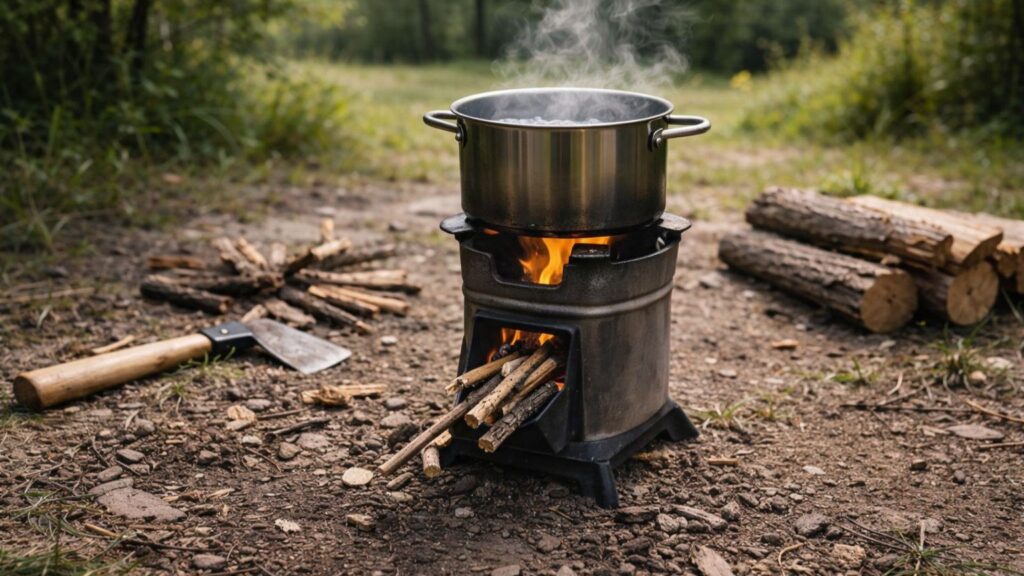
Why it works off-grid:
- Uses minimal wood, delivers concentrated heat
- Great for frying, searing, or sterilizing water
- Simple design, DIY-friendly
Field Limitations:
High flame temperature requires stable, heat-proof surfaces.
Field Picks:
- EcoZoom Versa Rocket Stove — burns wood, charcoal, or biomass pellets
- StoveTec Rocket Stove Deluxe — ceramic insulation for longer heat retention
Pro Tip: Feed small pieces gradually to maintain a clean, hot burn. Overloading suffocates airflow.
6. Alcohol Stove — Lightweight and Foolproof
If you need a backup that fits in your hand, the alcohol stove is your best option.
Fueled by denatured alcohol, HEET, or ethanol, these stoves are ultralight, silent, and reliable in nearly any condition.
Why it works off-grid:
- Compact, spill-proof, and easy to refill
- Great for minimalist or emergency cooking
- No pressurized gas or complex parts
Field Limitations:
Lower BTU output, not suitable for heavy meals or group cooking.
Field Picks:
- Trangia Spirit Burner — the gold standard of alcohol stoves
- TOAKS Titanium Stove — ultralight design, fits in a mug
Pro Tip: Use a windscreen to improve efficiency and reduce fuel use by up to 40%.
7. Charcoal Grill or Barrel Stove — Heat and Flavor
Simple, strong, and familiar. The charcoal grill remains a timeless off-grid cooking tool.
Charcoal delivers consistent heat for long cooking sessions, perfect for grilling, baking, or even emergency heating.
Why it works off-grid:
- Readily available fuel, long burn time
- Dual use for heat and cooking
- Works with briquettes or lump charcoal
Field Limitations:
Heavy, smoky, and slow to cool. Not ideal for small indoor spaces.
Field Picks:
- Weber Go-Anywhere Charcoal Grill — compact and durable
- Lodge Sportsman Pro Grill — cast iron durability with adjustable airflow
Pro Tip: Use a charcoal chimney starter. No lighter fluid, no toxic smoke.
8. Pellet Stove or Biomass Cooker — Controlled Off-Grid Power
Pellet systems bridge the gap between traditional wood and modern automation.
These stoves burn compressed biomass pellets for consistent, clean, high-BTU cooking.
Why it works off-grid:
- Efficient, smoke-free burn with minimal ash
- Can integrate with solar fan or thermoelectric generator
- Ideal for semi-permanent homestead kitchens
Field Limitations:
Pellets need dry storage; mechanical parts require occasional maintenance.
Field Picks:
- BioLite BaseCamp Stove — converts heat to electricity for USB charging
- Camp Chef SmokePro DLX Pellet Grill — dual-use for grilling and backup heating
Pro Tip: Keep a hand-crank blower or battery backup to ignite pellets during low voltage.
9. Dutch Oven + Tripod — The Classic Campfire Kitchen
Few things represent off-grid comfort like a cast-iron Dutch oven hanging over hot coals.
It’s slow, steady cooking. The kind that turns simple ingredients into reliable, hearty meals.
Why it works off-grid:
- Heavy cast iron retains and radiates heat
- Works with fire, coals, or stove tops
- Durable for generations
Field Limitations:
Heavy and not travel-friendly. Requires a stable fire setup.
Field Picks:
- Lodge 6-Quart Camp Dutch Oven — pre-seasoned, rugged classic
- Texsport Heavy-Duty Campfire Tripod — stable and adjustable for uneven terrain
Pro Tip: Stack coals on both top and bottom for even baking, like bread, biscuits, or cobbler.
10. Thermal Cooker — Cook Without Constant Fuel
Thermal cookers use insulation to trap heat after an initial boil, allowing food to continue cooking for hours without extra energy.
Why it works off-grid:
- Saves 50–80% fuel
- Perfect for stews, rice, and soups
- No burning or supervision required
Field Limitations:
Slow cook times, less effective for searing or browning.
Field Picks:
- Tiger Magic Thermal Cooker — polished stainless steel and multi-layer insulation
- Saratoga Jack’s 7L Thermal Pot — large capacity for families
Pro Tip: Bring food to a rolling boil for at least 10 minutes before sealing the cooker.
[See Related: Cooking Off-Grid: Solar Ovens, Propane, and Rocket Stoves Compared]
Bonus: DIY Clay or Cob Oven — The Permanent Solution
Clay ovens combine simple materials, zero electricity, and a timeless design. Clay or cob stoves store radiant heat for bread, pizza, and roasting.
Why it works off-grid:
- Made from local materials (sand, clay, straw)
- Holds heat for hours
- Perfect for homesteads or community setups
Pro Tip: Build it under a covered area to protect it from rain and extend its lifespan.
Real-World Setup: Building a Redundant Off-Grid Cooking System
Most off-grid cooking failures come from relying on a single cooking method.
A resilient setup is layered.
At minimum, your cooking system should include three tiers:
Primary System (Daily Use)
This is what you rely on every day:
- Propane stove
- Pellet grill
- Solar oven (in sunny climates)
It should be fast, predictable, and easy to operate.
Secondary System (Fuel Backup)
When your primary fuel runs low or conditions change:
- Rocket stove
- Wood gas stove
- Charcoal grill
These systems rely on natural or stored solid fuel.
Tertiary System (Emergency / Passive Cooking)
When everything else fails:
- Alcohol stove
- Thermal cooker
- Dutch oven over open fire
These require minimal infrastructure and can operate under almost any condition.
Key Principle:
If one system fails, you should already be set up to cook using another within minutes.
Multiple cooking layers prevent small problems from becoming major disruptions.
Choosing the Right System
| Lifestyle | Best Systems | Why |
|---|---|---|
| Mobile (van/RV) | Dual-fuel stove, propane, alcohol | Compact, quick ignition |
| Cabin / Homestead | Solar oven, rocket stove, pellet stove | Renewable and scalable |
| Emergency Prep | Alcohol stove, propane burner, Dutch oven | Long storage, multi-fuel |
| Wilderness Camp | Wood gas, rocket, Dutch oven | Local fuel, minimal gear |
Rule of Three:
Every off-grid setup should have three cooking options: one renewable (solar or wood), one stored-fuel (propane or alcohol), and one passive (thermal or cob).
Common Mistakes to Avoid When Cooking Off-Grid
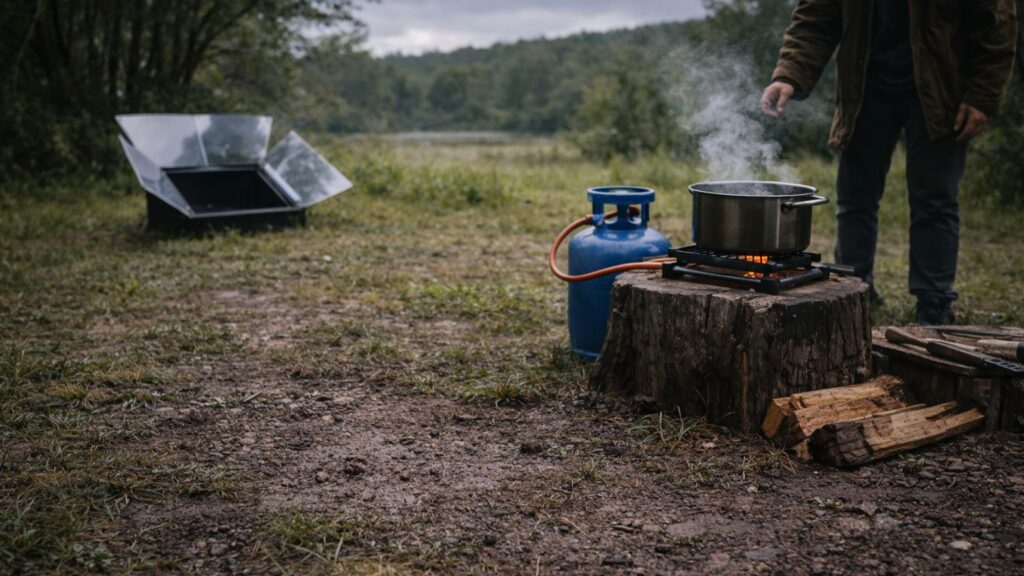
Even the best cooking system can fail if used incorrectly.
1. Relying on One Fuel Type
If your propane runs out or your wood gets wet, your kitchen shuts down.
2. Ignoring Weather Conditions
Solar ovens fail in cloud cover. Butane struggles in cold. Wind destroys efficiency.
3. Poor Fuel Storage
Wet wood, degraded fuel canisters, or poorly stored pellets reduce performance dramatically.
4. No Ignition Redundancy
Always have multiple ways to start a fire — lighters, ferro rods, matches.
5. Cooking Too Close to Shelter
Fire risk increases fast in dry conditions or enclosed setups.
6. Underestimating Cook Time
Off-grid cooking often takes longer. Plan accordingly.
Avoiding these mistakes can have a bigger impact than upgrading your gear.
Fuel Strategy: How to Store and Manage Cooking Fuel Off-Grid
Your cooking system is only as reliable as your fuel strategy.
Most people focus on the stove, even though fuel availability often becomes the limiting factor. If you run out, your system doesn’t matter.
A resilient setup plans fuel in layers:
Stored Fuel (Controlled + Predictable)
- Propane tanks
- Alcohol fuel
- Biomass pellets
These give you consistent, reliable cooking regardless of conditions. The tradeoff is storage space and eventual depletion.
Natural Fuel (Unlimited but Variable)
- Firewood
- Twigs and biomass
- Charcoal
This is your long-term fallback. It’s renewable, but depends on weather, dryness, and collection effort.
Passive Fuel (Energy Already Captured)
- Solar heat
- Thermal retention
These systems reduce fuel consumption instead of replacing it.
Best Practice:
Never rely on just one category.
A strong off-grid kitchen might look like:
- Propane for daily cooking
- Wood or charcoal as backup
- Solar or thermal to reduce usage
Storage Rules That Matter:
- Keep propane tanks upright, shaded, and outside
- Store wood off the ground and covered
- Keep pellets and fuel dry at all times
- Rotate stored fuel to avoid degradation
The goal is maintaining the ability to cook regardless of changing conditions.
That’s what separates a functional setup from a resilient one.
Safety First
- Ventilate. Never use gas or charcoal stoves in enclosed spaces
- Keep extinguishers and fire blankets nearby
- Store fuel upright, cool, and shaded
- Always cool ashes before disposal
Bonus gear: First Alert Fire Extinguisher, HeatShield Mat, Flame Guard Blanket
What This Looks Like in Real Life
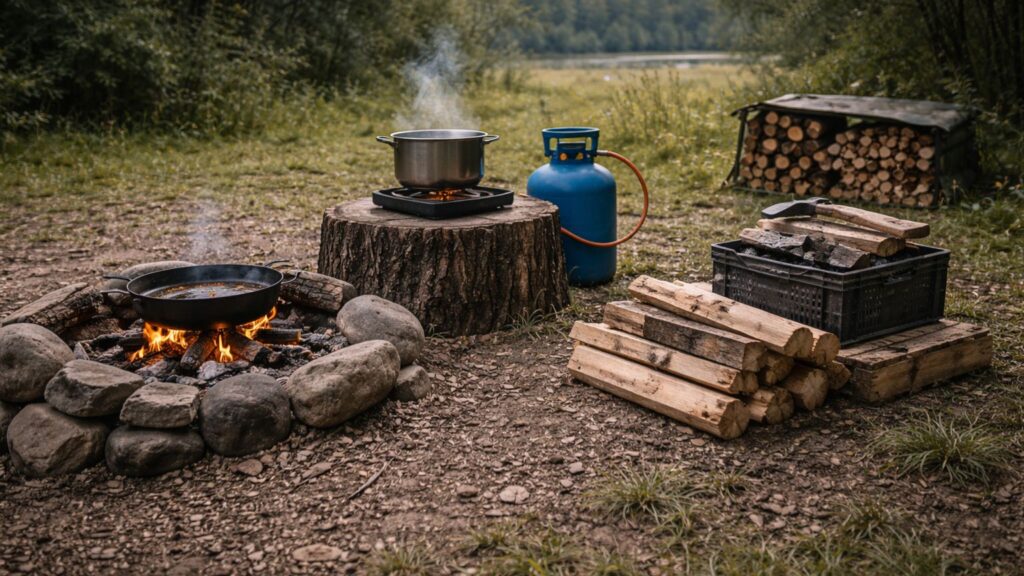
Most off-grid setups don’t rely on a single cooking system. They evolve into a practical combination based on daily needs, fuel availability, and environment.
A typical real-world setup might look like this:
Morning (Fast + Efficient):
A propane stove handles quick meals. Coffee, eggs, boiling water. It’s predictable and doesn’t depend on weather.
Midday (Free Energy):
If conditions allow, a solar oven takes over. Bread, rice, or slow-cooked meals can run in the background without burning fuel.
Evening (High Heat + Volume):
A rocket stove or charcoal setup is used for larger meals. Frying, grilling, or cooking for multiple people.
Backup Layer (Always Ready):
An alcohol stove or thermal cooker sits unused most days. But it’s there when everything else fails.
This layered approach means:
- You’re never dependent on one fuel source
- You adapt to weather automatically
- You reduce long-term fuel consumption
- You always have a fallback option
In practice, off-grid cooking revolves around choosing the system that makes the most sense for current conditions.
That flexibility contributes greatly to long-term resilience.
Final Thoughts — Cooking Is Civilization
Cooking without the grid provides both security and independence. Each meal cooked by fire, sun, or stored fuel reconnects you with self-reliance.
Every system you master is another step toward independence.
Your kitchen is a central part of your off-grid infrastructure. Make it so that it never depends on the grid.