From Grid-Dependent to Grid-Ignorant: Designing Systems You Forget Are There
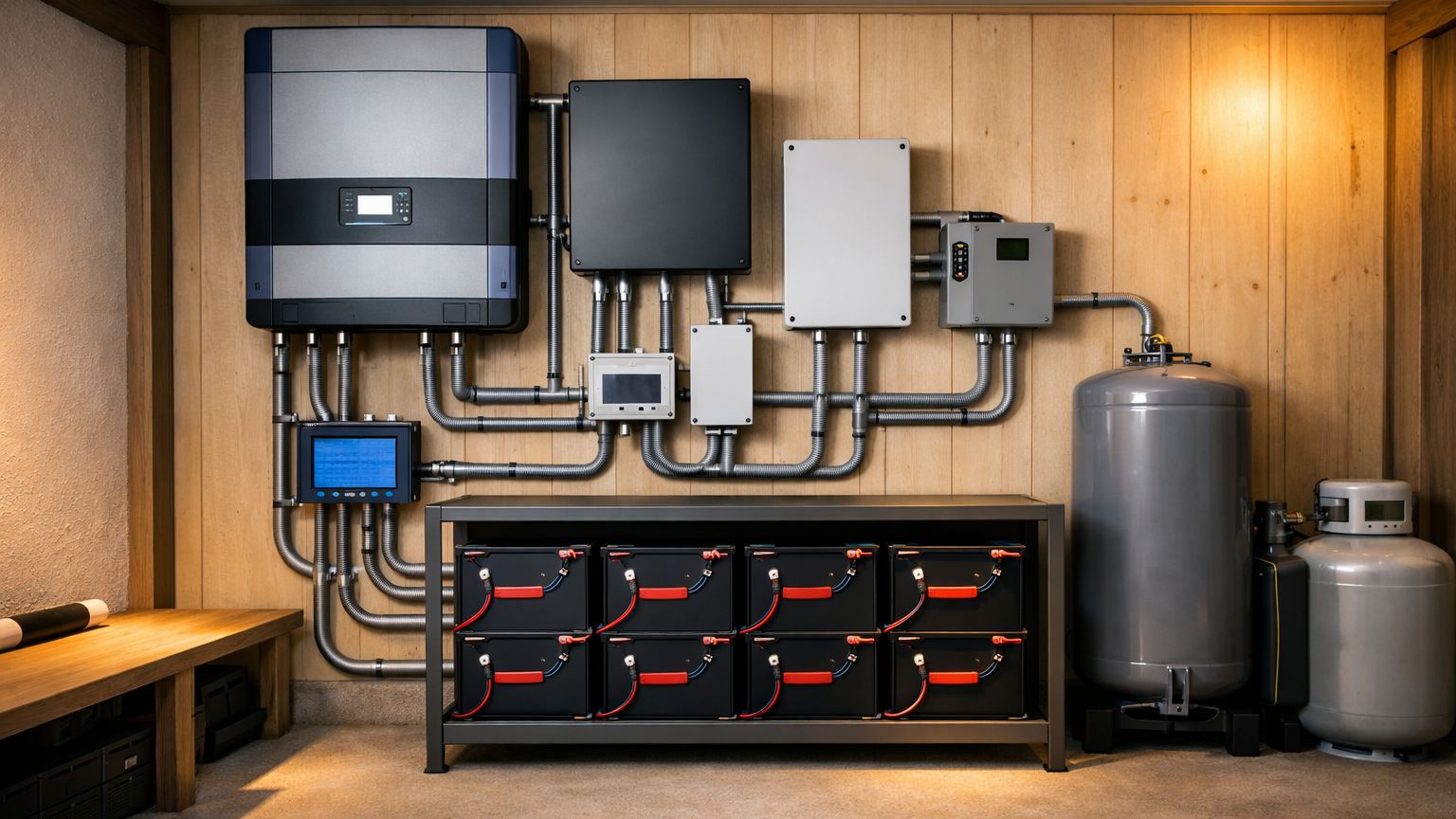
Most people chasing off-grid freedom make the same mistake. They build systems they constantly have to think about.
They check charge controllers every morning, restart generators by hand, tweak water valves, and babysit their batteries like newborns.
True sovereignty comes when everything runs without you.
That’s what it means to become grid-ignorant.
Beyond the grid, your systems hum quietly in the background while you live your life instead of constantly managing infrastructure.
The Goal of Grid Ignorance
Being “off-grid” means you’ve left the utility company.
Being “grid-ignorant” means you’ve left dependence itself.
The goal is trust. Systems so dialed in, they disappear from your mind until you need them.
It’s the moment when your inverter, your water pump, and your heating all run silently, with no alerts, no micromanagement, no anxiety.
“You don’t master off-grid life when you understand every system. You master it when you forget they exist.”
Start with the End in Mind — The Hands-Off Blueprint
Most off-grid setups are designed around activity: what you do each day.
Grid-ignorant design flips that. It’s about what you don’t have to do.
When planning a system, ask:
- “If I was gone for two weeks, would this keep running?”
- “What fails first, and how do I prevent it silently?”
- “Can I repair this without shutting everything down?”
Core blueprint principles:
- Critical vs Non-Critical Loads: Separate circuits so essentials (fridge, comms, pump) never compete with luxuries (A/C, tools).
- Redundancy Built In: Every system gets a backup before it breaks.
- Maintenance by Design: Accessible wiring, quick disconnects, labeled panels.
Design for absence. Build for sleep.
Automation That Actually Works Off-Grid
Automation should provide stability under stress. The best systems automate the boring stuff: charging, load switching, generator starts, and environmental control.
Examples:
- Auto-start generators: fire up when battery voltage drops to a set threshold.
- MPPT controllers: throttle solar input intelligently in mixed light.
- Hybrid inverters: switch seamlessly between power sources without you noticing.
- Smart relays: stagger loads so heavy devices don’t trip breakers.
Reliable gear to consider:
- Victron Multiplus II + Cerbo GX for total automation and data logging.
- Growatt SPF 5000ES for hybrid solar-generator blending.
- EG4 PowerPro with auto-balance and Wi-Fi diagnostics.
Automation should remove friction and avoid creating dependency. If a device fails, the system must revert gracefully to manual, not crash.
“The best automation vanishes into the background, like lungs that breathe without command.”
Passive Systems — The Forgotten Heroes
Technology isn’t the only form of automation.
Physics itself is the oldest system engineer. Silent, reliable, maintenance-free.
Passive systems you can trust forever:
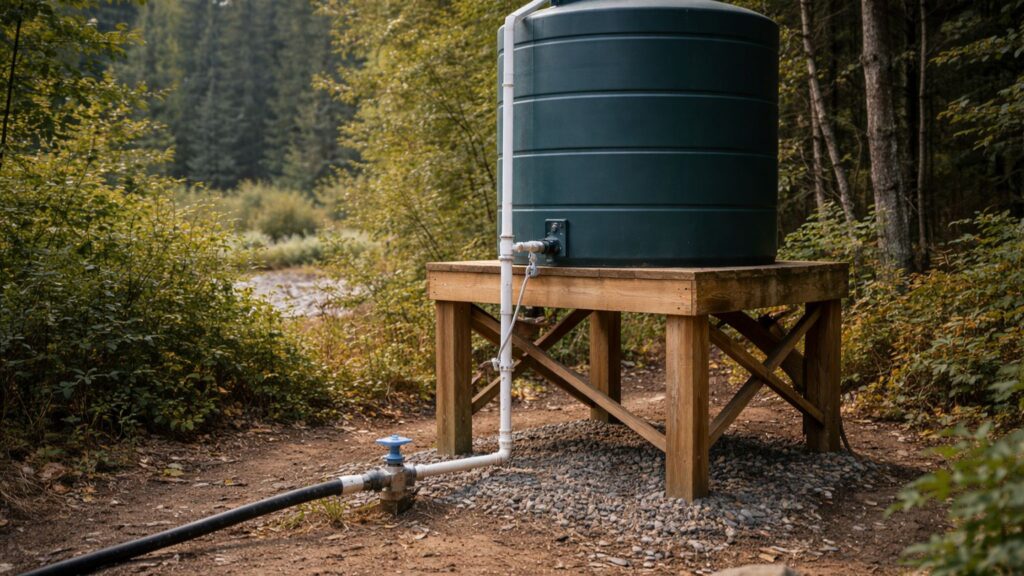
- Gravity-fed water tanks: flow without pumps or pressure.
- Thermal mass heating: stone or cob walls that radiate heat for hours.
- Convection ventilation: natural airflow from high/low vents instead of fans.
- Solar ovens: zero moving parts, zero cost after setup.
Every passive solution is one less thing to break.
Every mechanical shortcut traded for natural flow adds peace of mind.
“If you can solve it with gravity, never solve it with electricity.”
Designing for Redundancy (The Rule of Three)
Off-grid life rewards the paranoid planner.
Every critical system should have three layers:
- Primary: your daily driver.
- Backup: automatic or manual failover.
- Emergency fallback: brute-force survival mode.
Example — Power:
- Solar array + batteries (primary)
- Auto-start generator (backup)
- 12V emergency line or inverter bypass (fallback)
Example — Water:
- Pumped well (primary)
- Rain catchment (backup)
- Gravity-fed reserve tank (fallback)
Example — Heat:
- Propane furnace (primary)
- Wood stove (backup)
- Thermal mass or solar wall (fallback)
Redundancy functions as insurance built into the design.
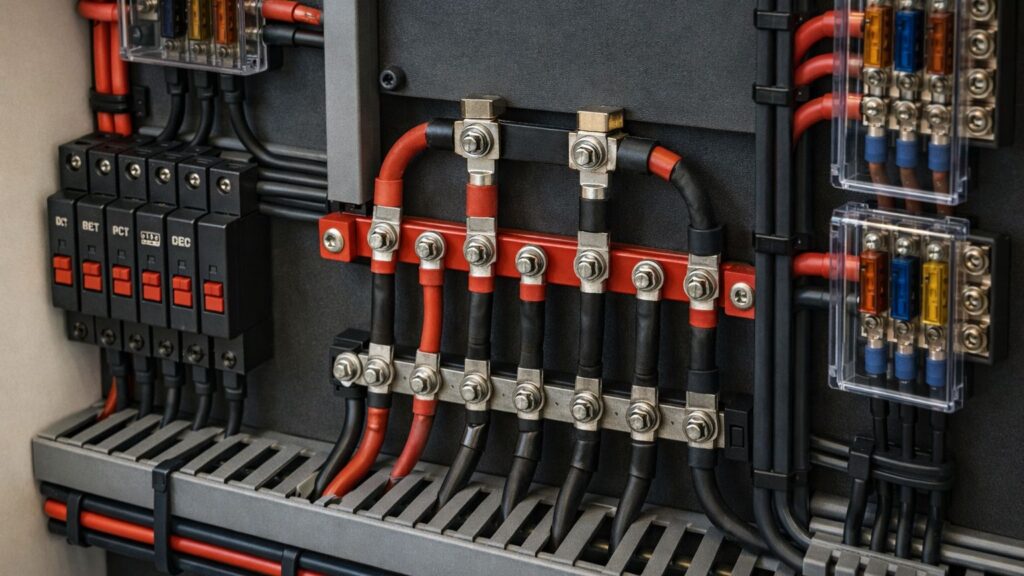
Intelligent Power Distribution
Most failures come from overload, not underproduction.
The smarter you allocate, the less you worry.
Layered load control:
- Sub-panels for critical vs comfort loads.
- Smart shunts that alert before overcurrent hits.
- Auto-relays that shed nonessential circuits if batteries dip.
For monitoring, pair:
- Victron SmartShunt (real-time current data).
- Emporia Vue (load breakdown per circuit).
- Cerbo GX or Bluetti App (remote oversight).
Keep your lights and fridge in the “untouchable” zone. Everything else can flicker without consequence.
Maintenance That Maintains Itself
True system longevity starts before installation.
Design your environment to protect your hardware.
Passive longevity techniques:
- Dust-proof enclosures for electronics.
- Ventilated battery boxes to regulate temperature.
- Shade panels and inverters. Heat kills silently.
- Corrosion-proof conduit and marine-grade wire.
- Auto-test features on pumps and generators every 14 days.
A well-designed system operates reliably even when you’re away.
“Maintenance-free doesn’t exist. Maintenance-efficient does.”
Real-World Examples of “Forgettable Systems”
Example 1 — The Autonomous Cabin:
- 3.6 kW solar + 300Ah LiFePO₄ + 2 kW wind hybrid.
- Generator auto-starts only twice per winter.
- Owner visits monthly. Everything runs year-round.
Example 2 — The Gravity Greenhouse:
- Rain-fed drip irrigation via 250-gallon header tank.
- Thermal barrel wall stabilizes night temperature.
- No power input, no pumps, no problems.
Example 3 — The Redundant Farmstead:
- Dual inverter system: one solar, one generator.
- Heat via masonry stove + backup propane.
- Remote monitoring through Victron VRM.
Every example shares one principle: invisibility through intention.
(See Related: Beyond Solar: How to Build a True Energy-Sovereign Life)
Where Most Systems Fail (And Why People Stay Stuck Managing Them)
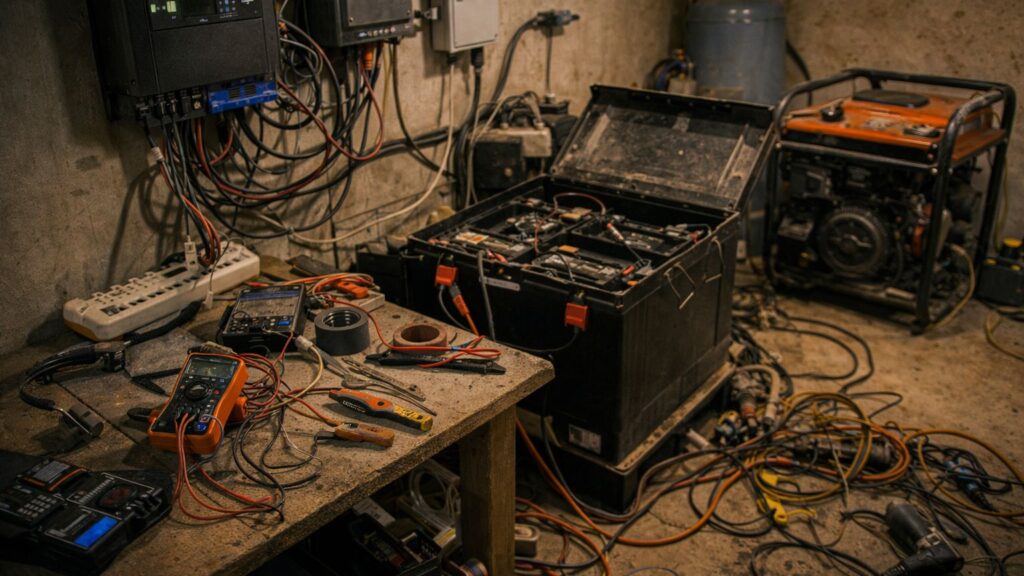
Most off-grid systems don’t fail catastrophically. They fail slowly, through constant small demands on your attention.
A pump that needs occasional priming.
A battery bank that requires daily monitoring.
A generator that “usually” starts, but not always.
None of these are dealbreakers on their own. But together, they create a system that quietly owns your time.
That’s the trap.
The Hidden Cost of “Almost Reliable”
A system that works 90% of the time sounds acceptable, until you realize you’re compensating for the other 10% every single day.
You check things “just in case.”
You adjust loads preemptively.
You stay mentally tethered to infrastructure, even when nothing is technically wrong.
This is where most people plateau.
They’ve achieved independence from the grid, but not from maintenance thinking.
Why This Happens
There are three common causes:
1. Undersized Systems
When capacity is too tight, everything runs near its limit. That creates volatility, and volatility demands attention.
2. Over-Complex Design
Too many interconnected components means more failure points. Each added layer increases the chance of intervention.
3. No Failure Planning
Most systems are designed to work, not to fail gracefully. When something goes wrong, it cascades instead of stabilizing.
The Shift: From Reactive to Pre-Stable
The goal is to eliminate the need for constant reaction.
That means:
- Designing systems that absorb variation instead of transmitting it
- Accepting slight inefficiencies in exchange for long-term stability
- Prioritizing consistency over peak performance
A slightly oversized, slightly underutilized system is almost always the quieter one.
What Changes When You Get This Right
When these failure points are removed, something important happens:
You stop anticipating problems because the system has proven it can handle itself.
And that’s the real shift from grid-dependent to grid-ignorant:
You’re no longer managing risk in real time.
You’ve already designed it out of the system.
That’s where attention returns to your life instead of your infrastructure.
Monitoring Without Micromanaging
In the age of dashboards and data, it’s easy to become addicted to numbers.
But constant monitoring doesn’t equal control. It equals anxiety.
Follow the 80/20 rule:
- 80% of issues reveal themselves through pattern shifts.
- 20% require active checking.
Set alerts for genuine thresholds, not every fluctuation.
Your job is to trust your system rather than constantly watch it.
“If you need to stare at the monitor to feel secure, you’ve built a system that doesn’t deserve it.”
Building for Future You
Your off-grid system should become less demanding as it ages. Design for the future version of yourself, the one with less stamina but more wisdom.
Principles for futureproof design:
- Label everything. Every wire, fuse, and conduit.
- Use quick disconnects for swap-outs.
- Keep spare parts for every major component.
- Use modular architecture: replace one piece, not the whole system.
- Store your system map physically and digitally.
Call it elder-proof engineering.
If you can’t fix it with calm hands and limited strength, it’s too complicated.
What a Truly “Invisible” System Looks Like in Practice

It’s easy to say a system should be “forgettable.” It’s much harder to design one that actually behaves that way in real-world conditions.
An invisible system isn’t just automated. It’s resilient, predictable, and quiet under stress. It doesn’t demand attention because it’s been engineered to handle variation without constant correction.
The Difference Between Quiet and Fragile
A system that seems quiet on a good day might still be fragile underneath.
For example:
- A battery bank that holds steady in sunshine but drops rapidly under cloud cover
- A water system that works flawlessly until a minor clog slows flow
- A generator that starts reliably in summer but struggles in cold weather
These systems appear stable, until conditions shift.
A truly invisible system performs consistently across changing conditions, not just ideal ones.
Real Markers of a Forgettable System
You’ll know your system is reaching this level when:
- You stop checking it out of habit
- Alerts become rare and meaningful
- Daily routines no longer revolve around infrastructure
- Small fluctuations don’t require intervention
- You can leave for days without planning around system risk
At that point, your system has crossed from “managed” to “trusted.”
Designing for Consistency, Not Perfection
Perfection is brittle. Consistency is durable.
Instead of chasing peak performance, aim for:
- Stable voltage ranges rather than maximum output
- Moderate load levels rather than full capacity usage
- Predictable cycles instead of constant adjustment
A system that runs at 70–80% capacity consistently will outlast one that pushes 100% intermittently.
The Real Outcome
When everything is designed correctly, something subtle happens:
You stop thinking about your systems.
They fade into the background because they’ve proven themselves reliable.
And that’s the goal.
Quiet, dependable function that lets you live without interruption.
The Peace of Grid Ignorance

There’s a silence that comes when everything just works.
You wake up, make coffee, and forget that your home is powered by the sun, fed by gravity, and heated by stored energy.
That’s when you’ve reached real off-grid freedom.
Your systems operate quietly in the background, allowing you to focus on life instead of infrastructure.