The 6 Best Smart Green Roof and Living Wall Systems for Off Grid Homes
A truly resilient off-grid home does more than generate power and collect water.
It works with the environment itself.
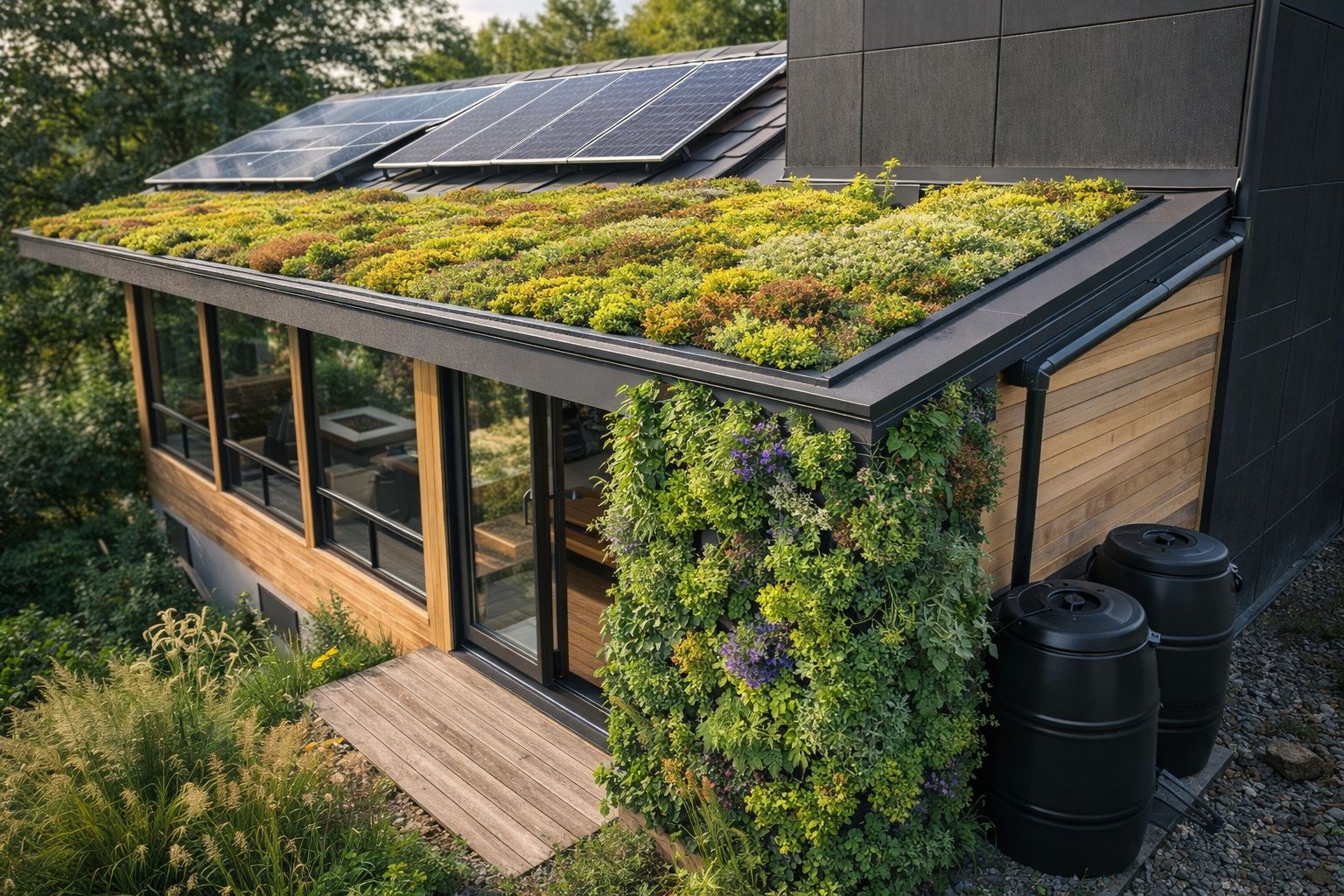
Green roofs and living walls are becoming one of the most interesting innovations in sustainable home design. These systems turn roofs and walls into living ecosystems that provide insulation, manage rainwater, improve air quality, and even produce food.
Modern systems now combine traditional green architecture with sensors, automated irrigation, and solar-powered controls that allow them to function efficiently in off-grid environments.
This guide explores how green roofs and living wall systems work and highlights the six best smart systems currently available for off-grid homes.
Why Green Roofs and Living Walls Matter
Green infrastructure provides several important advantages for off-grid buildings.
Thermal insulation
Living plant layers help regulate indoor temperatures, reducing both heating and cooling demand. In real-world off-grid builds, this can mean noticeably lower battery draw overnight in winter and reduced reliance on fans or AC during peak summer hours. Even a shallow green roof can buffer temperature swings by several degrees.
Rainwater management
Vegetated roofs absorb rainfall and slow runoff, improving water management around buildings. This is especially valuable for cabins on sloped terrain, where unmanaged runoff can erode soil or compromise foundations. Green roofs act like a sponge, buying you time to direct water where you actually want it.
Air quality improvements
Plants naturally filter airborne particles and carbon dioxide. While this effect is more noticeable in urban environments, it still contributes to healthier air around enclosed off-grid structures, especially when combined with passive ventilation.
Biodiversity support
Green surfaces attract pollinators, birds, and beneficial insects. Over time, even a small green roof can become a micro-ecosystem that stabilizes local plant life and improves soil resilience around your build.
Food production potential
Many systems allow herbs, vegetables, or edible plants to be grown directly on roofs or walls. This isn’t just a novelty. In well-designed systems, it becomes a practical extension of your food supply.
When combined with solar panels, rainwater harvesting, and passive architecture, green systems become a functional part of an off-grid home’s ecosystem.
Types of Green Roof Systems
Extensive Green Roofs
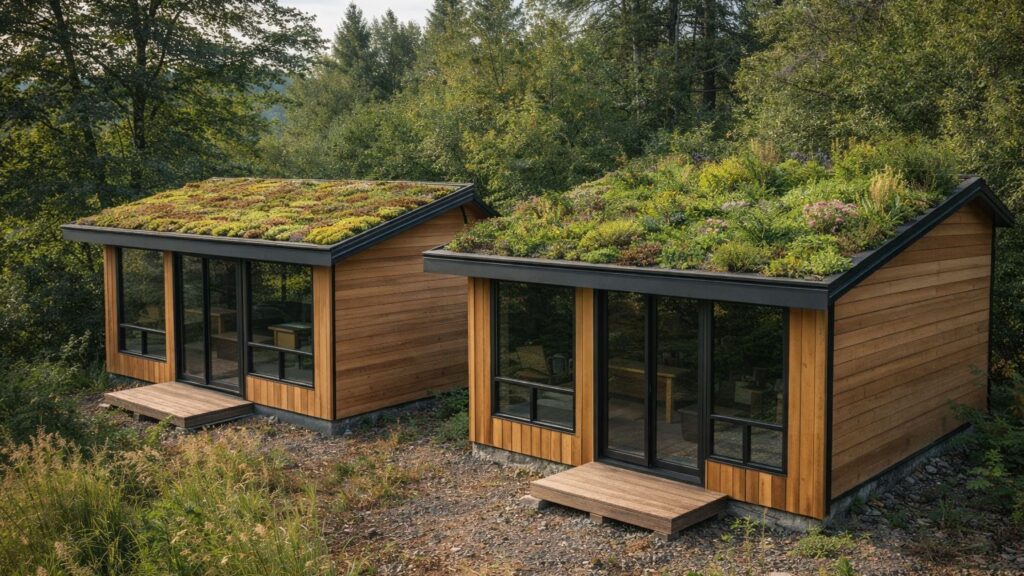
Extensive roofs are shallow systems typically between two and six inches deep.
They are lightweight and usually planted with drought-tolerant species such as sedum or moss.
These systems require minimal maintenance and are ideal for cabins, sheds, and small off-grid homes.
In practice, extensive systems are where most people should start. They add insulation and water buffering without requiring structural upgrades. They also tolerate neglect far better than deeper systems, which matters if you’re not on-site year-round.
Intensive Green Roofs
Intensive roofs use deeper soil layers that can support shrubs, vegetables, and even small trees.
Because of the added weight, these systems require stronger structural support but offer more gardening possibilities and higher insulation performance.
A key consideration here is load calculation. Wet soil is significantly heavier than dry soil, and snow load can compound that weight. If you’re planning an intensive system, it needs to be engineered into the structure from the beginning. Retrofitting is rarely worth the risk.
Modular Green Roof Systems
Modular tray systems use pre-grown vegetation installed in trays or panels.
These trays snap together and allow sections to be replaced or upgraded individually.
This approach simplifies installation and makes modular green roofs popular for DIY builds and phased construction.
For off-grid builders, modular systems also reduce risk. If something fails, such as drainage, plant health, or root intrusion, you can isolate and fix a section without tearing apart the entire roof.
Living Wall Systems
Living walls bring the benefits of green roofs to vertical surfaces.
Hydroponic Living Walls
Hydroponic systems circulate nutrient-rich water through plant panels.
They are lightweight and efficient but require pumps and periodic monitoring.
These systems shine in controlled environments or interior walls where you want consistent growth. However, they introduce a dependency on pumps and power. This is something to account for in off-grid setups.
introduce a dependency on pumps and power — something to account for in off-grid setups.
Soil-Based Living Walls
Soil-based wall systems use modular pockets filled with growing media and irrigated through drip systems.
They are simpler than hydroponic systems and tend to be more tolerant of temperature changes.
For outdoor off-grid applications, soil-based systems are often the better choice. They handle fluctuations, partial neglect, and irregular watering much more gracefully.
Smart Living Walls
Smart living walls integrate sensors and automated irrigation systems.
Moisture sensors monitor soil conditions and trigger watering only when necessary.
Some systems also provide mobile app monitoring and climate data.
In an off-grid context, the real advantage isn’t convenience. It’s efficiency.
Smart systems prevent overwatering, reduce pump cycles, and optimize limited water reserves.
Installation Layers Explained (What Actually Goes Under a Green Roof)
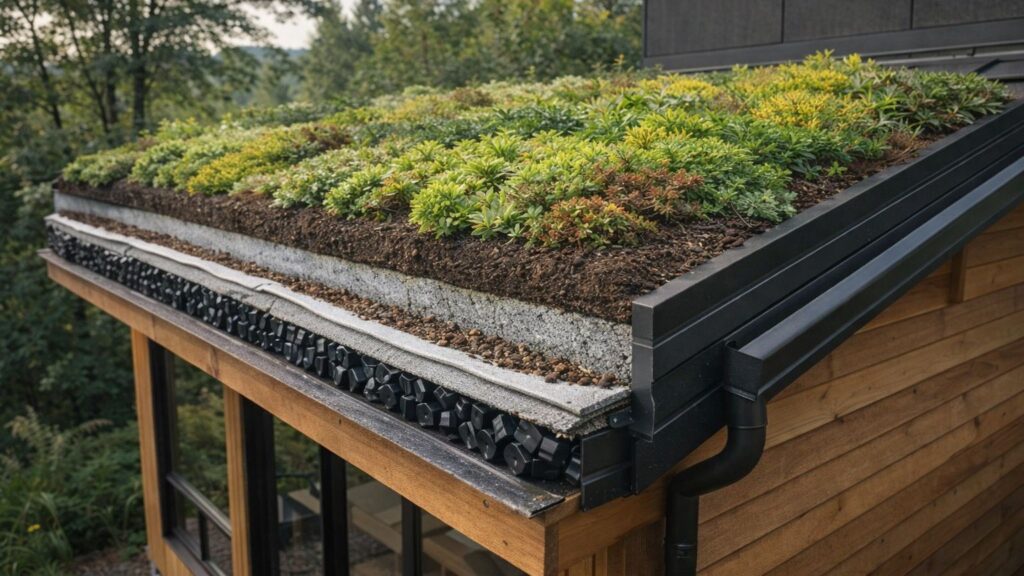
A green roof is not just soil and plants placed on top of a structure.
It is a layered system designed to protect the building while supporting plant life.
Understanding these layers is critical, especially in off-grid builds where repairs can be more difficult and costly.
1. Structural Roof Deck
This is the base layer, typically wood, concrete, or metal, that supports the entire system.
Before installing any green roof, the structure must be able to handle:
- saturated soil weight
- plant mass
- water retention
- snow load (in colder climates)
This is one of the most commonly underestimated factors in DIY builds.
2. Waterproofing Membrane
This is arguably the most important layer in the entire system.
A high-quality waterproof membrane prevents moisture from penetrating the roof structure.
If this layer fails, everything above it becomes a liability.
For off-grid homes, durability matters more than cost savings here. This is not where you cut corners.
3. Root Barrier
Plants will naturally seek moisture and nutrients, and over time, roots can penetrate weak materials.
A root barrier layer protects the waterproof membrane from root intrusion, preventing long-term structural damage.
Some systems integrate this into the waterproofing layer, but it’s critical to confirm.
4. Drainage Layer
The drainage layer allows excess water to move away from the roof surface while retaining enough moisture for plant health.
Without proper drainage:
- roots can rot
- soil becomes waterlogged
- structural weight increases significantly
Many modular systems include built-in drainage channels, which simplify this step.
5. Filter Fabric
This layer prevents fine soil particles from clogging the drainage system.
It acts as a separator between the growing medium and the drainage layer, maintaining long-term system performance.
Skipping this layer often leads to slow drainage failure over time.
6. Growing Medium
This is not standard garden soil.
Green roof growing media is engineered to be:
- lightweight
- well-draining
- nutrient-balanced
Using regular soil is one of the fastest ways to overload a roof and create drainage issues.
7. Vegetation Layer
The top layer consists of selected plants suited to your climate and system type.
For off-grid builds, the best choices are:
- drought-tolerant species
- native plants
- shallow-root systems (for extensive roofs)
The goal is resilience, not constant maintenance.
Why This Matters for Off-Grid Builds
In a grid-connected home, repairs are inconvenient.
In an off-grid home, they can be disruptive and costly.
A properly layered green roof:
- protects your structure long-term
- reduces maintenance needs
- improves overall system reliability
If you understand the layers, you understand the system. That’s what separates a feature from real infrastructure.
The 6 Best Green Roof and Living Wall Systems
1. GreenGrid Modular Roof Trays
GreenGrid trays come pre-grown with hardy plant species and feature excellent drainage and root protection.
They are widely used in residential and commercial green roof installations.
Verdict
A reliable modular system ideal for off-grid builders who want a straightforward installation. Especially useful if you’re retrofitting an existing structure without overcomplicating the process.
2. LiveRoof Hybrid Modules
LiveRoof modules integrate together seamlessly once installed, creating the appearance of a continuous living surface.
Verdict
A strong choice for homeowners focused on aesthetics as well as performance. If your build is visible or part of a larger property design, this system delivers a cleaner visual result without sacrificing function.
3. SemperGreen Roof Systems
SemperGreen systems support deeper root layers and integrated irrigation systems.
They are often used in larger homes or eco-lodge style buildings.
Verdict
Best suited for larger off-grid homes with more structural support. This is where you start moving from “green feature” into “fully integrated landscape system.”
4. GrowUp Smart Wall Kit
GrowUp systems combine hydroponic growing panels with automated irrigation and lighting controls.
Verdict
An excellent smart living wall option for both indoor and outdoor applications. Particularly useful if you want consistent food production in a controlled environment.
5. Watex Urban Green Wall
Watex panels use soil-based modular pockets with drip irrigation.
They are lightweight, affordable, and easy to expand.
Verdict
A practical entry point for homeowners interested in vertical gardens. Low complexity, scalable, and forgiving — a strong match for most off-grid builds.
6. Natufia Smart Garden Wall
Natufia systems are fully automated hydroponic walls that monitor humidity, nutrient levels, and plant growth.
Verdict
A premium system for homeowners seeking fully automated indoor food production. Best used where reliability and convenience outweigh system simplicity.
Integrating Green Systems with Off Grid Infrastructure
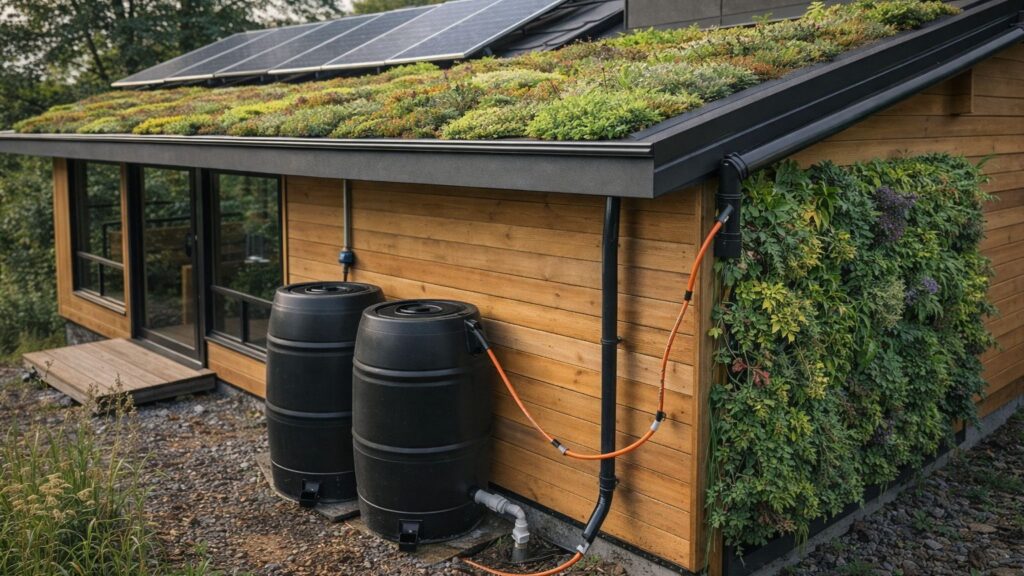
Green roofs and walls can integrate directly with other off-grid systems.
Rainwater harvesting systems can supply irrigation water.
Solar panels can power small pumps and monitoring sensors.
Greywater recycling can feed plant systems in some designs.
A practical example: a small off-grid cabin routes roof runoff into a first-flush diverter, then into storage tanks. From there, a low-voltage pump feeds a drip irrigation line for a living wall. Moisture sensors reduce unnecessary watering cycles, preserving both water and power.
[Related: Choosing the Right Solar Generator Size]
The key is thinking in loops, not isolated systems. Water, energy, and plant life should support each other.
Common Mistakes to Avoid
- Underestimating roof load capacity. Always calculate saturated weight, not dry weight
- Installing systems without waterproof root barriers. Root intrusion will eventually cause damage
- Poor drainage planning — standing water is one of the fastest ways to fail a system
- Overwatering from manual irrigation — especially common in early setups
- Choosing plant species incompatible with the local climate — native or adapted species always outperform imported ones
A lot of green roof failures aren’t design failures. They’re planning shortcuts. Taking the time upfront saves significant cost and effort later.
Real-World Setup Example
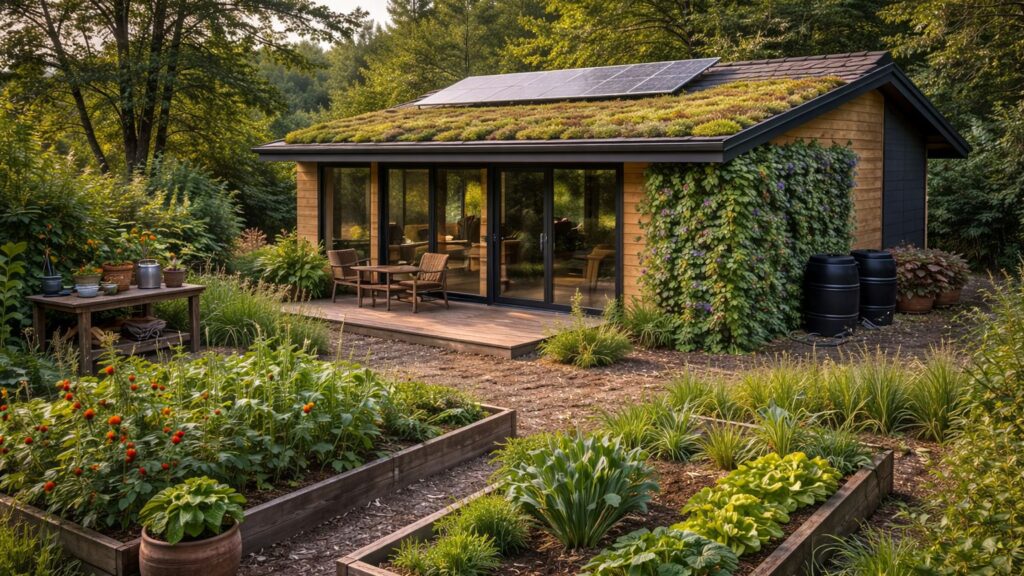
A small off-grid home in a temperate climate installs an extensive modular green roof using sedum trays.
The system includes:
- Root barrier membrane
- Drainage layer
- Lightweight growing medium
- Modular vegetation trays
Rainwater is captured and stored in tanks, with overflow directed into a small garden swale.
On one exterior wall, a soil-based modular living wall grows herbs and greens. A simple gravity-fed drip system handles irrigation, eliminating the need for pumps.
The result:
- Reduced interior temperature swings
- Lower water runoff impact
- Supplemental food production
- Minimal maintenance requirements
This kind of setup strikes the balance most off-grid builders are looking for: resilience without unnecessary complexity.
Field Verdict
Green roofs and living walls represent one of the most practical ways to upgrade an off-grid home beyond basic survival systems.
They reduce energy demand, improve water management, support biodiversity, and transform buildings into living systems.
More importantly, they shift the mindset from isolated systems to integrated infrastructure.
When done right, these aren’t just features. They become part of how the home functions day to day.