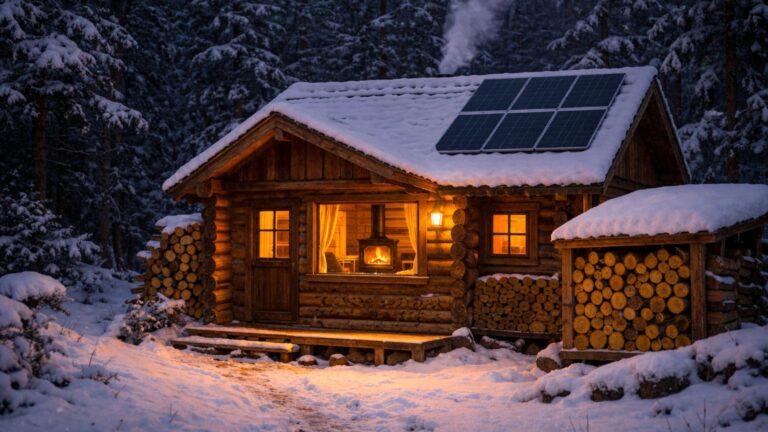
Shelter Engineering: Materials and Layouts for Energy-Efficient Cabin Design
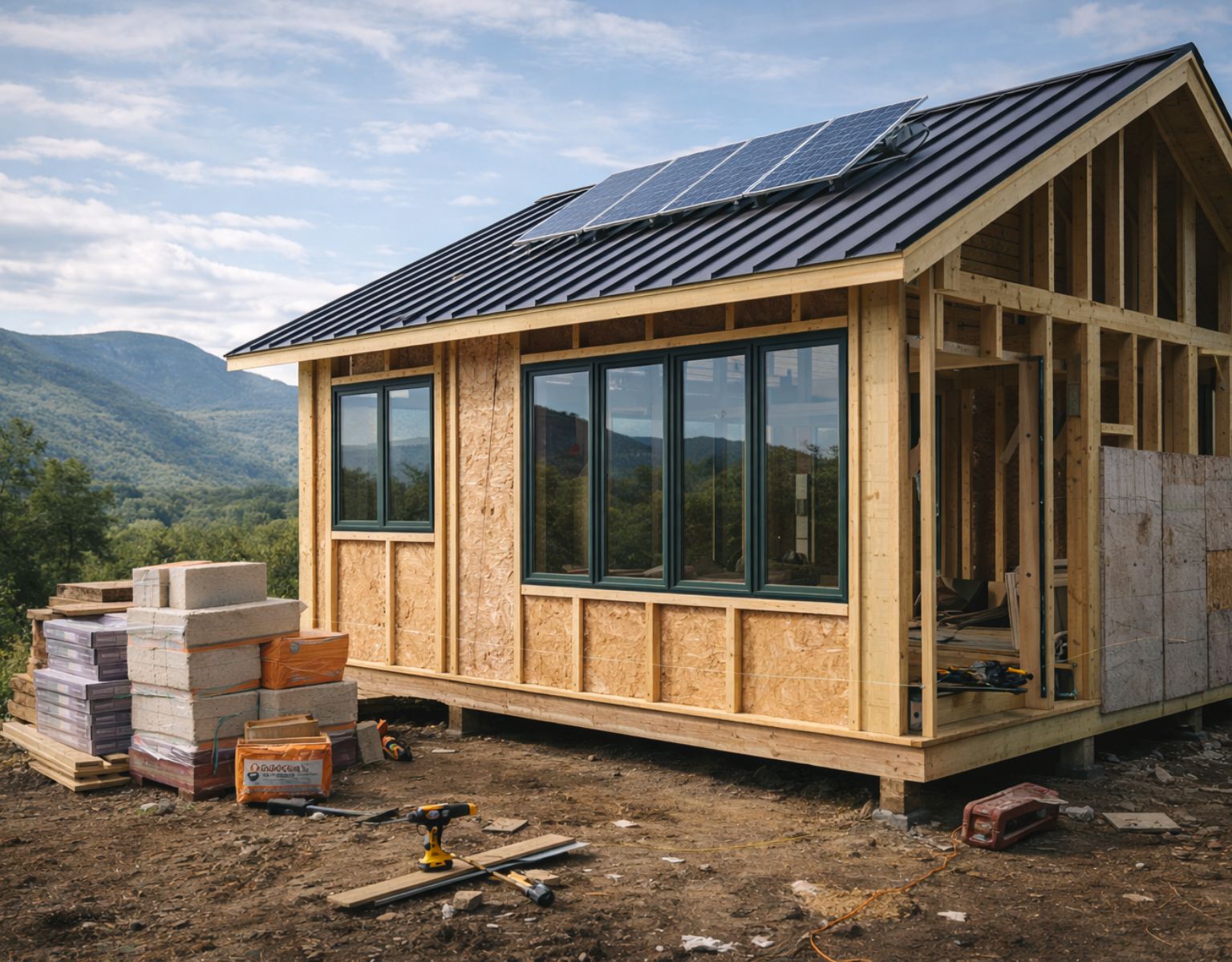
Your shelter is your first battery.
It stores warmth, defends against cold, and lets you live comfortably with less fuel, less gear, and less stress.
In the off-grid world, how you build is just as important as what you power.
This guide breaks down how to design a field-ready, energy-efficient off-grid cabin using smart layouts, passive solar principles, proper insulation, and natural ventilation.
Whether you’re working with 100 sq ft or 800 sq ft, this approach helps you stay warm in winter, cool in summer, and off-grid proven year round.
Why Design Matters in Off-Grid Shelter
You can’t throw solar panels at a drafty cabin and expect it to work.
Without grid power to fall back on, your cabin must conserve every BTU, whether it comes from the sun, a wood stove, or your own body heat.
Efficient shelter design:
- Reduces fuel load
- Minimizes heat loss
- Controls moisture
- Increases comfort with less tech
And most of these decisions are made before the first board is nailed down.
The Cost of Getting It Wrong
A poorly designed cabin doesn’t just feel uncomfortable. It forces every other system to work harder.
Common outcomes of inefficient builds:
- Increased wood or fuel consumption
- Larger and more expensive solar systems
- Faster battery drain
- Unstable indoor temperatures
Over time, this compounds into:
- Higher costs
- More maintenance
- Lower reliability
A well-designed shelter reduces the load on everything else.
That’s why experienced off-grid builders treat the structure itself as the first and most important system.
Thermal Logic: R-Values, Heat Loss, and Retention
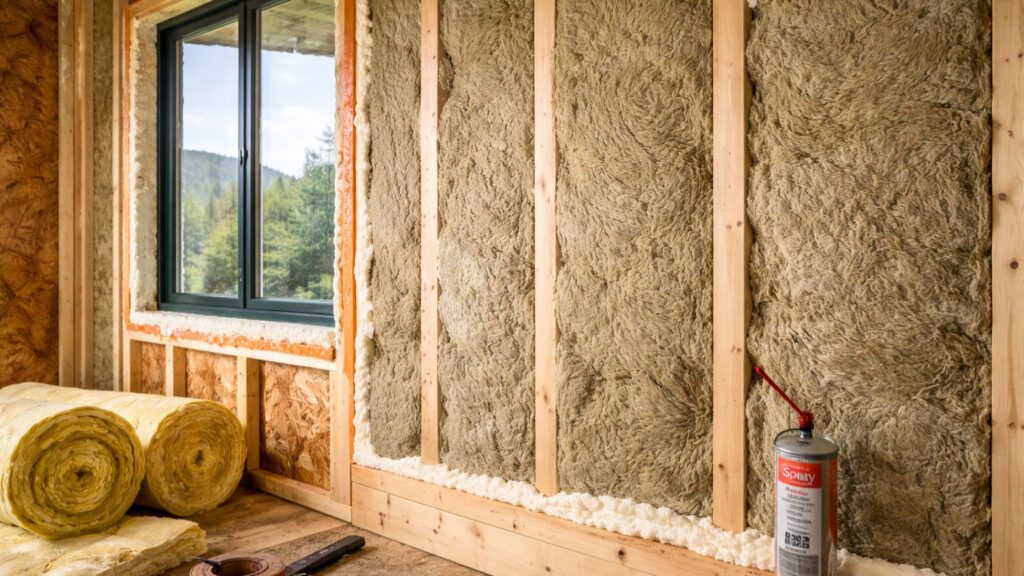
R-Value Basics
- R-value = resistance to heat flow
- Higher R = better insulation
- Walls, floors, ceilings, and windows all matter
| Material | Approx. R-Value per Inch |
|---|---|
| Fiberglass Batt | R-3.2–R-3.8 |
| Rigid Foam Board | R-4.5–R-6.5 |
| Mineral Wool | R-3.7–R-4.2 |
| Straw Bale | R-2.4 |
| Log Wall (8–12″) | R-1.4–R-1.8 |
| SIP Panels | R-4–R-7 per inch |
Minimum targets:
- Walls: R-20+
- Roof: R-30+
- Floor: R-10+
Air Sealing vs Insulation
Insulation slows heat movement, but air leaks carry heat out rapidly.
Even small gaps can undermine an otherwise well-insulated structure.
Key leak areas:
- Window frames
- Door seals
- Wall penetrations
- Roof junctions
A tightly sealed cabin can outperform a higher R-value build that leaks air.
In off-grid design, sealing gaps is one of the highest return improvements you can make.
Heat Loss Zones
- Roofs lose the most heat because warm air rises
- Windows bleed heat rapidly
- Floors over cold ground or crawl spaces siphon warmth
The Passive Solar Equation: Simplified
Harnessing the sun’s heat for free is the core of passive solar design.
Key Principles
- South-facing windows (Northern Hemisphere)
- Thermal mass inside the cabin
- Roof overhangs to block summer sun and allow winter sun
- Tight building envelope with strong air sealing
Example:
A 200 sq ft cabin with:
- 60% glazing on the south wall
- 4″ concrete floor slab
- 2′ roof overhang
can stay 10–15°F warmer on sunny winter days without active heating.
Thermal Mass and Heat Storage
Capturing sunlight is only part of the equation. Storing it is what makes passive solar effective.
Thermal mass materials absorb heat during the day and release it slowly at night.
Examples include:
- Concrete floors
- Stone features
- Water containers
Even modest thermal mass can stabilize indoor temperatures and reduce heating demand.
Window Orientation and Size Rules
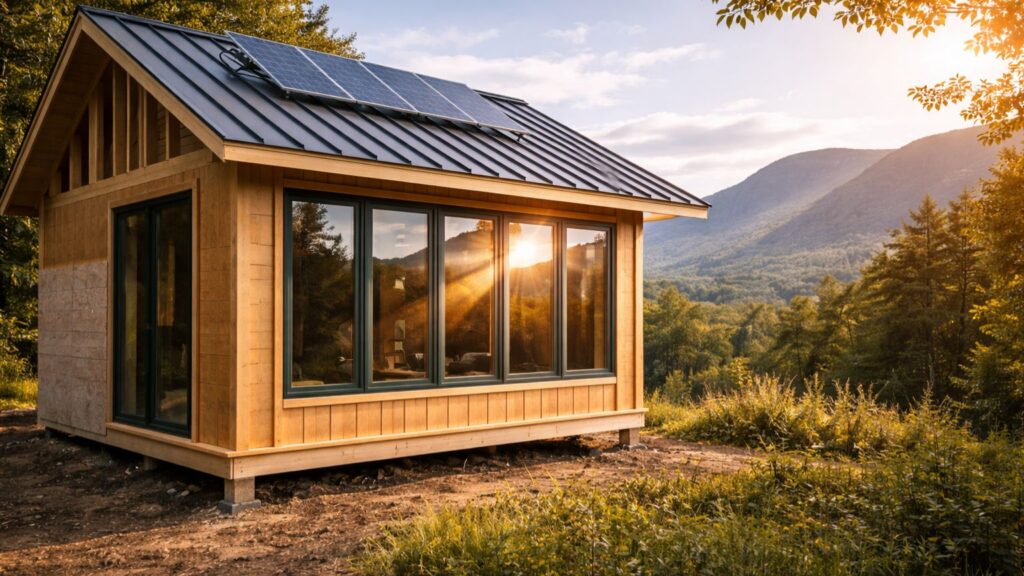
South-Facing Windows
Capture winter sunlight and passive heat.
Recommended sizing:
- 7–12% of total floor area
North-Facing Windows
Minimize these to reduce heat loss.
Use smaller triple-pane windows where possible.
East and West Windows
Limit them to avoid overheating during summer afternoons.
Use curtains, shutters, or exterior shading when possible.
Recommended Window Types
- Double-pane argon filled: Standard
- Triple-pane low-E: Ideal for cold climates
- Fixed windows leak less air than operable units
Example product:
Andersen 400 Series Casement Windows
Best Insulation Materials for Off-Grid Builds
Your insulation must be mold resistant, high R-value, and easy to install without specialized equipment.
Material Cost vs Performance Comparison
Choosing insulation isn’t just about R-value. It’s about how cost, durability, moisture resistance, and install complexity all interact in a real off-grid build.
| Material | R-Value per Inch | Cost (Relative) | Moisture Resistance | Install Difficulty | Best Use Case |
|---|---|---|---|---|---|
| Fiberglass Batt | R-3.2–3.8 | $ | Low | Easy | Budget builds, dry climates |
| Mineral Wool (Rockwool) | R-3.7–4.2 | $$ | High | Easy | Cold climates, fire resistance |
| Rigid Foam (XPS) | R-5–6.5 | $$ | Very High | Moderate | Floors, exterior sheathing |
| Spray Foam (Closed Cell) | R-6–6.5 | $$$ | Very High | Difficult | Airtight builds, small cabins |
| Sheep’s Wool | R-3.5–4 | $$$ | Medium | Easy | Natural builds, humidity control |
| SIP Panels | R-4–7/inch | $$$$ | High | Moderate | Full structural builds |
Top Insulation Options
Rockwool ComfortBatt
- R-4.2 per inch
- Fire resistant
- Water resistant
- Easy to cut and press fit
Foamular Rigid Board (XPS)
- R-5 per inch
- Excellent compressive strength
- Ideal for floors and roof decks
Sheep’s Wool Batts
- Natural and renewable
- Breathable insulation system
- Helps regulate humidity
Closed Cell Spray Foam
- R-6.5 per inch
- Built-in vapor barrier
Use spray foam carefully due to curing off-gassing.
Wall Systems, Roof Angles, and Floor Design
Wall Options
- 2×6 framing (R-21+) standard for most cabins
- SIP panels for faster construction and high insulation
- Cordwood or cob for high thermal mass builds
Roof Angle
A roof pitch between 30° and 45° works well in snowy regions.
Benefits include:
- Snow shedding
- Good solar panel angles
- Durable metal roofing compatibility
Floor Design
Pier-and-beam floors need underside insulation of R-10 or higher.
Slab-on-grade foundations with foam insulation provide excellent thermal mass.
Rugs, cork tiles, and wood flooring can improve comfort over cold floors.
Building Envelope Strategy: The System That Controls Everything
When people think about off-grid efficiency, they usually jump to insulation values or heating systems.
But experienced builders know something different:
The building envelope is the system.
It determines how hard everything else has to work.
What the Building Envelope Actually Includes
Your envelope is everything that separates inside from outside:
- Walls
- Roof
- Floor
- Windows and doors
- Seals, joints, and transitions
If any part of this system is weak, heat escapes, cold air enters, and moisture builds up.
A strong envelope doesn’t just insulate. It controls airflow, moisture, and temperature stability.
The Three Pillars of a High-Performance Envelope
To work properly, your cabin needs to balance three things:
1. Insulation (Resistance to Heat Flow)
This slows down heat transfer.
Without it, your cabin loses warmth constantly.
2. Air Sealing (Stopping Air Movement)
Air leaks are often a bigger problem than low insulation.
Moving air carries heat away far faster than conduction.
Even small gaps can cause:
- Drafts
- Cold spots
- Uneven heating
- Increased fuel use
3. Moisture Control (Keeping Materials Dry)
Moisture is what quietly destroys buildings over time.
It leads to:
- Mold
- Rot
- Insulation failure
- Structural damage
A proper envelope manages where moisture goes, not just how much insulation you install.
Why Most Cabins Underperform
Many off-grid cabins look solid but fail in performance because they focus on one layer only.
Common mistakes include:
- Adding insulation but ignoring air sealing
- Installing vapor barriers incorrectly
- Using materials that trap moisture
- Poor window and door sealing
This creates cabins that:
- Feel drafty even when insulated
- Lose heat faster than expected
- Develop condensation problems in winter
The “Continuous Layer” Concept
A high-performing envelope works because it is continuous.
That means:
- No gaps in insulation
- No breaks in the air barrier
- No exposed thermal bridges
Think of it like wrapping your cabin in a complete shell.
Where most builds fail is at transitions:
- Wall to roof
- Wall to floor
- Around windows and doors
These are the weak points where performance is lost.
Thermal Bridging: The Hidden Heat Leak
Even with good insulation, heat can escape through structural materials like wood framing.
This is called thermal bridging.
Examples include:
- Studs in walls
- Rafters in roofs
- Floor joists
Wood has a much lower R-value than insulation, so heat moves through it more easily.
Ways to reduce thermal bridging:
- Add continuous exterior insulation (foam board)
- Use advanced framing techniques
- Minimize unnecessary framing members
This can significantly improve real-world performance without dramatically increasing cost.
Window and Door Integration
Windows and doors are always the weakest part of the envelope.
Even high-quality units will underperform if installed poorly.
Key considerations:
- Proper flashing to prevent water intrusion
- Airtight sealing around frames
- Insulated framing cavities
A well-installed mid-range window will outperform a poorly installed premium one.
Roof-Wall Connection: Critical Detail
The joint where walls meet the roof is one of the most common failure points.
If not sealed properly, this area allows:
- Warm air to escape
- Cold air to enter
- Moisture to accumulate
Solutions include:
- Continuous air barrier from wall to roof
- Careful sealing of all seams
- Proper insulation coverage at the top plate
Real-World Performance vs Spec Sheets
On paper, many materials look similar.
In reality, performance depends on installation quality and system design.
A cabin with:
- Perfect sealing
- Moderate insulation
- Good layout
will outperform one with:
- High insulation
- Poor sealing
- Weak envelope continuity
This is one of the biggest misconceptions in off-grid building.
Designing for Stability, Not Extremes
Your goal is not to make the cabin hot quickly — it’s to keep it stable.
A stable cabin:
- Holds heat overnight
- Doesn’t overheat during sunny days
- Recovers quickly after temperature drops
This reduces the need for constant intervention.
The Off-Grid Advantage
When your envelope is dialed in:
- Heating systems can be smaller
- Fuel consumption drops significantly
- Solar requirements decrease
- Interior comfort improves dramatically
This is where real efficiency comes from.
Not more gear. Better structure.
Field Insight
If you had to prioritize one upgrade in an off-grid build, it wouldn’t be solar.
It would be improving the envelope.
Because once heat stays inside, everything else becomes easier.
That’s the difference between a cabin that survives off-grid and one that thrives.
Heating Behavior Inside the Cabin (How Layout Affects Real Comfort)
Even a well-built cabin can feel inefficient if heat doesn’t move properly inside.
Most people focus on insulation and materials, but how heat behaves inside the space is just as important.
Heat Doesn’t Distribute Evenly
Warm air rises and collects at the highest point in the cabin.
This creates:
- warm ceilings
- cooler floors
- uneven temperature zones
In lofted cabins, this effect is even more pronounced.
The Stack Effect (Working With It, Not Against It)
The “stack effect” is the natural movement of warm air upward and cool air downward.
Instead of fighting it, design around it.
Examples:
- sleeping lofts stay warmer naturally
- main living areas benefit from mid-height heat distribution
- lower storage areas remain cooler
Stove Placement Matters More Than Output
A wood or pellet stove placed poorly will create hot and cold pockets.
Ideal placement:
- near the center of the cabin
- slightly offset toward living space
- with open airflow paths
Avoid placing heat sources:
- in corners
- behind partitions
- near exterior walls only
Ceiling Height Trade-Offs
High ceilings look great, but they require more energy to heat.
In small off-grid cabins:
- 7–8 ft ceilings are more efficient
- lofts can add usable space without increasing volume too much
Simple Air Circulation Fixes
You don’t need complex systems to move heat effectively.
Low-power solutions:
- small DC fans to push warm air downward
- ceiling fans on low speed (winter mode)
- open floor plans with minimal barriers
These dramatically improve comfort without increasing fuel use.
Zoning Your Cabin
Instead of trying to heat every space equally, focus on zones.
- primary living space = fully heated
- sleeping areas = slightly cooler
- storage areas = minimally heated
This reduces total energy demand.
Real-World Insight
A cabin that is technically “warm” can still feel uncomfortable if heat is uneven.
But a cabin with good airflow and layout:
- feels warmer at lower temperatures
- uses less fuel
- stays more stable overnight
The Rule Most People Miss
Heat output matters.
But how that heat moves inside your space matters just as much.
Design for flow — not just insulation.
That’s what makes a cabin feel truly efficient.
Natural Ventilation and Humidity Control
A tightly sealed cabin still needs fresh air exchange.
Without airflow:
- Moisture accumulates
- Mold develops
- Condensation damages materials
Moisture Is the Silent Problem
Moisture buildup is one of the most overlooked issues in off-grid cabins.
Sources include:
- Cooking
- Breathing
- Wet gear
- Heating systems
Without proper ventilation, this leads to:
- Condensation
- Mold
- Material degradation
Managing airflow is just as important as managing heat.
Passive Ventilation Techniques
- High-low vent placement
- Ridge vents combined with operable windows
- Controlled airflow rather than uncontrolled leaks
Target indoor humidity:
40–60% relative humidity.
Optional Air Exchange Systems
Lunos e2 HRV
- Ultra-low power heat recovery ventilator
- 12V compatible
Panasonic WhisperGreen
- Extremely efficient AC ventilation fan
Build Order and Decision Timing (What to Get Right First)
A well-designed cabin can still underperform if decisions are made in the wrong order.
Off-grid shelter efficiency isn’t just about materials. It’s about when and how those materials are chosen and installed.
The Biggest Mistake: Designing Backwards
Many builds start with:
- floor plans
- aesthetics
- interior layouts
And only later consider:
- insulation
- solar orientation
- airflow
- structural efficiency
By that point, major opportunities are already lost.
The Correct Order of Decisions
High-performance off-grid cabins follow a different sequence:
- Site positioning and solar orientation
- Building footprint and layout
- Envelope strategy (insulation, air sealing, materials)
- Window placement and sizing
- Roof design and pitch
- Interior layout and finishes
Why Orientation Comes First
Before anything is built, the cabin should be positioned to take advantage of:
- winter sun exposure
- prevailing winds
- natural shade in summer
Even a few degrees off optimal orientation can reduce passive solar gains.
Locking in the Envelope Early
Your insulation and air sealing strategy should be decided before framing begins.
This affects:
- wall thickness
- material choices
- construction methods
Changing these decisions later is expensive and often ineffective.
Window Decisions Are Structural Decisions
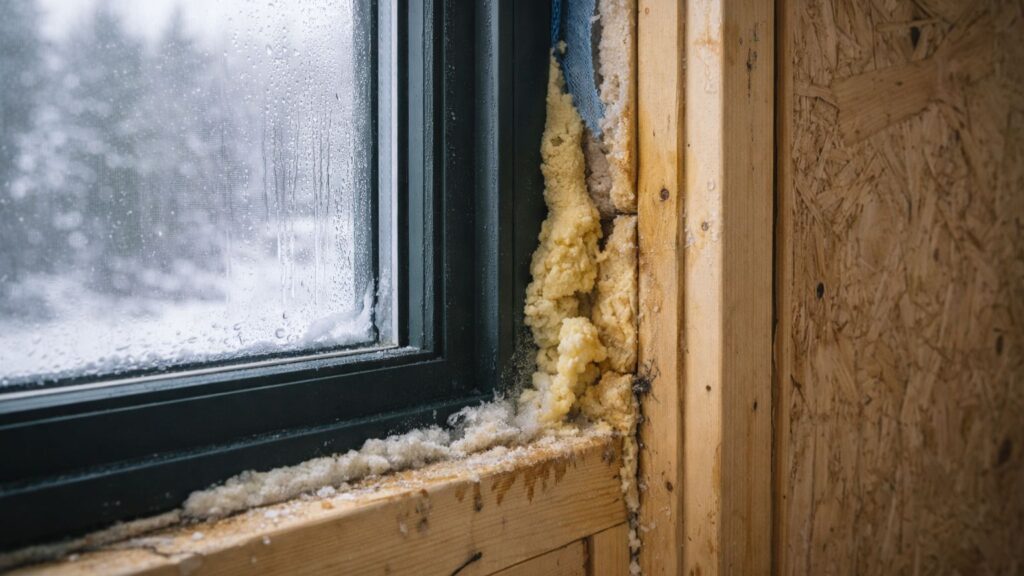
Window placement is not just aesthetic. It directly affects:
- heat gain
- heat loss
- structural framing
Oversized or poorly placed windows can undo an otherwise efficient build.
Roof Design Impacts Everything
Your roof determines:
- snow load performance
- solar panel efficiency
- water runoff
- attic ventilation
Changing roof pitch or orientation after framing is difficult. Get this right early.
Interior Layout Comes Last
Interior design should adapt to the structure, not the other way around.
For example:
- place sleeping areas where heat naturally collects
- keep main living areas in solar gain zones
- avoid blocking airflow with unnecessary walls
The Compounding Effect of Early Decisions
Small early decisions have large long-term impacts.
A well-oriented, well-sealed cabin can:
- reduce heating needs by 30–50%
- allow smaller heating systems
- require less solar capacity
Real-World Build Insight
Most inefficient cabins aren’t built with bad materials.
They’re built in the wrong order.
The Rule That Simplifies Everything
Design the shell first.
Everything else fits inside it.
When your structure is working for you:
- heating becomes easier
- cooling becomes passive
- energy systems become smaller
Because in off-grid building, efficiency is not something you add later.
It’s something you lock in from the very beginning.
Example Layouts: 100–800 Square Foot Cabins
120 sq ft Micro Cabin
- 10×12 footprint
- Loft sleeping
- SIP walls (R-25)
- Shed roof facing south
- One wood stove
- Solar vent fan
- Two windows total
320 sq ft Base Camp Cabin
- 16×20 footprint
- Open plan layout with loft
- Rockwool plus foam insulation
- Passive solar south wall
- Covered porch on west side
- Roof solar and rainwater collection
800 sq ft Family Cabin
- Two bedroom layout
- Full kitchen and bathroom
- SIP envelope with radiant slab floor
- Triple pane windows
- Pellet stove plus propane backup
- Ridge and soffit airflow zones
Scaling Efficiency With Size
As cabins grow, maintaining efficiency becomes more challenging.
Smaller cabins:
- Heat quickly
- Lose heat quickly
Larger cabins:
- Require zoning strategies
- Benefit from multiple heating areas
Instead of heating everything evenly, focus on:
- Core living spaces
- Controlled airflow between rooms
This reduces energy demand while maintaining comfort.
Off-Grid Proven Building Materials and Tools
| Item | Use |
|---|---|
| Rockwool ComfortBatt | Insulation |
| Foamular XPS Board | Rigid insulation |
| Havelock Wool Batts | Natural insulation |
| Andersen 400 Series Windows | Efficient glazing |
| Panasonic WhisperGreen | Ultra efficient fan |
| Lunos e2 HRV | Low power air exchanger |
Final Thoughts: Build Shelter That Thinks for You
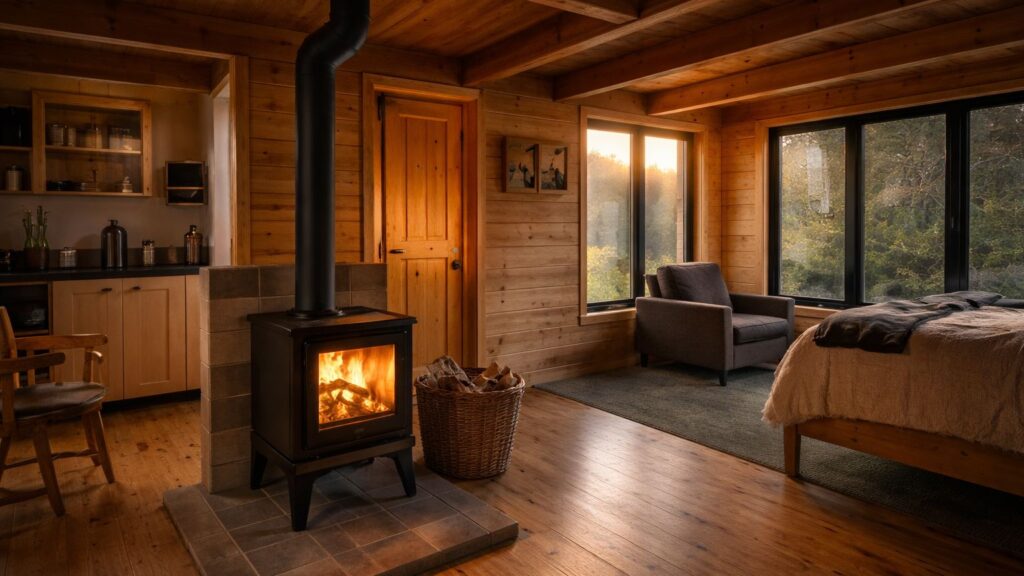
When a cabin is designed properly, it works quietly in the background.
It holds warmth longer.
It stays cooler deeper into summer.
It burns less fuel and requires less energy.
Every material, roof angle, and window placement becomes part of a system.
Don’t just build walls.
Engineer your shelter.
Because comfort isn’t a luxury when you live off-grid. It is a fuel saving, life preserving system.