Micro Farms in the Wild: Off-Grid Hydroponics and Soil Systems That Actually Produce
You can’t always rely on supply chains.
Supermarkets aren’t guaranteed either.
But you can grow real food anywhere, even in a one room cabin, a converted van, or a remote off grid plot.
With the right mix of hydroponics, soil based beds, and passive watering, you can build a compact micro farm that feeds you consistently even when resources are low and power is limited.
This guide shows you how to grow leafy greens, herbs, root crops, and more using smart design, minimal electricity, and field tested setups. Whether you want to supplement your food, feed a family, or start a barter system, this is where it begins.
Who This Is For
This guide is built for real-world use, not hobby gardening.
It’s for you if:
- You want reliable food production off-grid
- You’re working with limited space (van, cabin, backyard)
- You want to reduce grocery dependence
- You need systems that work without constant power
- You care about long-term resilience, not short-term yield
This isn’t about perfect gardens. It’s about consistent food under imperfect conditions.
Why Off Grid Food Systems Matter More Than Ever
Food independence is not a luxury anymore. It is a survival skill.
Whether it is economic collapse, grid failure, or simple rural remoteness, your food supply needs to be:
- Local
- Low maintenance
- Energy efficient
- Year round when possible
A well designed micro farm can:
- Cut grocery reliance by 50 to 80 percent
- Recycle greywater and compost
- Regenerate soil instead of stripping it
- Provide greens, protein, and carbohydrates in a 10 by 10 room
The Hidden Advantage
Food systems don’t just feed you. They also stabilize your entire off-grid setup.
When you grow food:
- You reduce supply chain exposure
- You reduce fuel usage for trips into town
- You gain barter potential
- You build long-term soil and ecosystem value
It compounds over time.
Food Density vs Effort (What Actually Feeds You)
Not all crops are equal when you’re working with limited space and energy.
High-value off-grid crops:
- Leafy greens (fast, repeat harvest)
- Herbs (high flavor, small footprint)
- Potatoes (high calorie yield per square foot)
- Beans and legumes (protein + nitrogen fixing)
- Microgreens (7–14 day harvest cycles)
Low-efficiency crops in small systems:
- Corn (space heavy, low return)
- Large squash (sprawling growth)
- Watermelon (high water demand)
The goal is output per square foot, not variety.
Focus on crops that:
- Grow fast
- Regrow after harvest
- Provide real nutritional density
That’s how micro systems become reliable food sources.
Key Constraints Power Water Space and Climate
Power
Many hydro systems use pumps or lights. You will need solar and battery support or passive alternatives.
LED grow lighting draws minimal watts if used efficiently.
Practical Insight:
Most small hydroponic setups can run on 50–150 watts total. That means even a modest solar system can support year-round indoor growing if managed correctly.
Water
Off grid systems cannot waste water.
Use:
- recirculating systems
- mulch beds
- gravity fed storage tanks
Real World Tip:
Hydroponics uses up to 90% less water than soil growing, but only if your system is sealed and recirculating properly.
Space
Think vertical, modular, and stackable.
Use:
- windows
- shelves
- unused corners
Key Insight:
Vertical systems can produce 3–5x more food per square foot than traditional beds.
Climate
Insulation, thermal mass, and microgreen tunnels can extend the growing season.
In cold climates grow lights and compact greenhouse setups help maintain production.
Cold Climate Trick:
Place grow systems near interior walls or heat sources to prevent freezing without needing additional energy.
Hydroponics Off Grid Efficient Lightweight High Yield
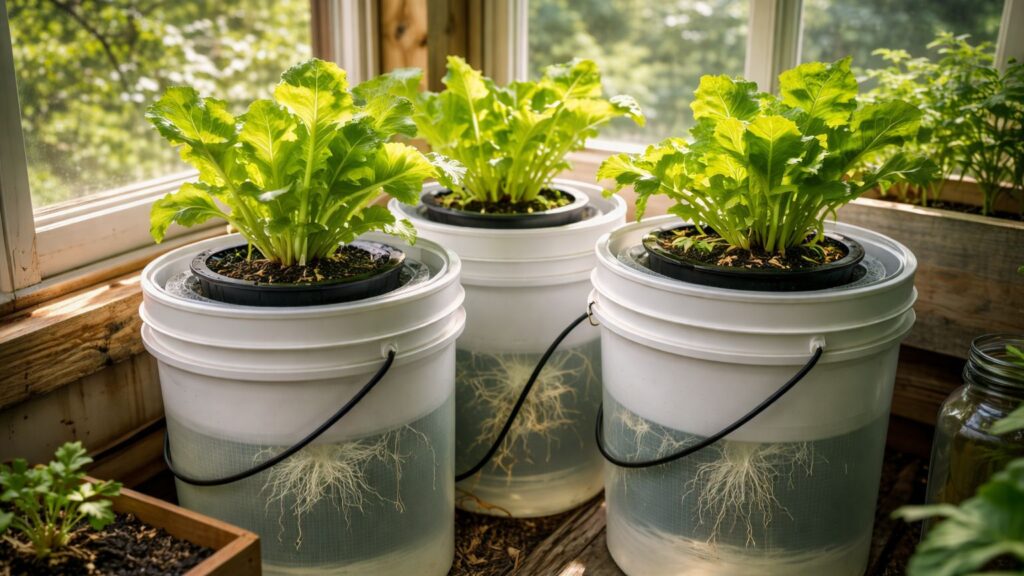
Hydroponics grows plants without soil using water, nutrients, and a root support structure. It works extremely well in small spaces and mobile systems.
Common off grid hydroponic methods include:
- Kratky Method with no pumps or electricity
- Deep Water Culture with solar powered air pump
- Nutrient Film Technique for continuous harvests
Why Hydroponics Works Off Grid
- Faster growth cycles
- Minimal soil dependency
- Controlled nutrient delivery
- Reduced pest pressure
But it must be simplified to work off-grid.
Nutrient Management Without Overcomplication
Hydroponics depends on nutrients — but off-grid systems need simplicity.
Instead of chasing perfect ratios, focus on:
- Stable pH (5.5–6.5 for most greens)
- Consistent nutrient strength
- Regular water top-offs
Basic off-grid approach:
- Pre-mixed liquid nutrients (simplest)
- Store concentrates in cool, dark conditions
- Mix in batches to reduce daily work
Field Insight:
Perfect nutrient balance matters less than consistency.
A stable system with “good enough” nutrients will outperform a perfectly tuned system that fails intermittently.
The Kratky Method No Power Required
Plants sit above a nutrient solution while roots grow downward into the water.
As the water level slowly drops, roots gain access to oxygen.
Perfect crops include:
- lettuce
- herbs
- leafy greens
Basic setup requires:
- opaque bucket or tote
- net pots and clay pebbles
- hydroponic nutrient solution
Why It Works:
Zero moving parts. Zero failure points. That’s what makes Kratky one of the most reliable off-grid systems.
Deep Water Culture With Solar Pump
Deep Water Culture systems grow one plant per bucket with oxygenated water supplied by an air pump.
Typical components include:
- five gallon bucket
- air stone and pump
- small solar panel and 12V battery
Upgrade Tip:
Use a timer or run the air pump intermittently — roots don’t need constant aeration, which reduces power demand.
Nutrient Film Technique Systems
NFT systems move a thin stream of nutrient rich water through channels where plant roots absorb nutrients continuously.
These systems are ideal for fast growing greens and herbs.
Caution:
NFT systems are more efficient, but also more fragile. If the pump fails, roots can dry quickly.
Best Soil Based Systems for Remote Setups
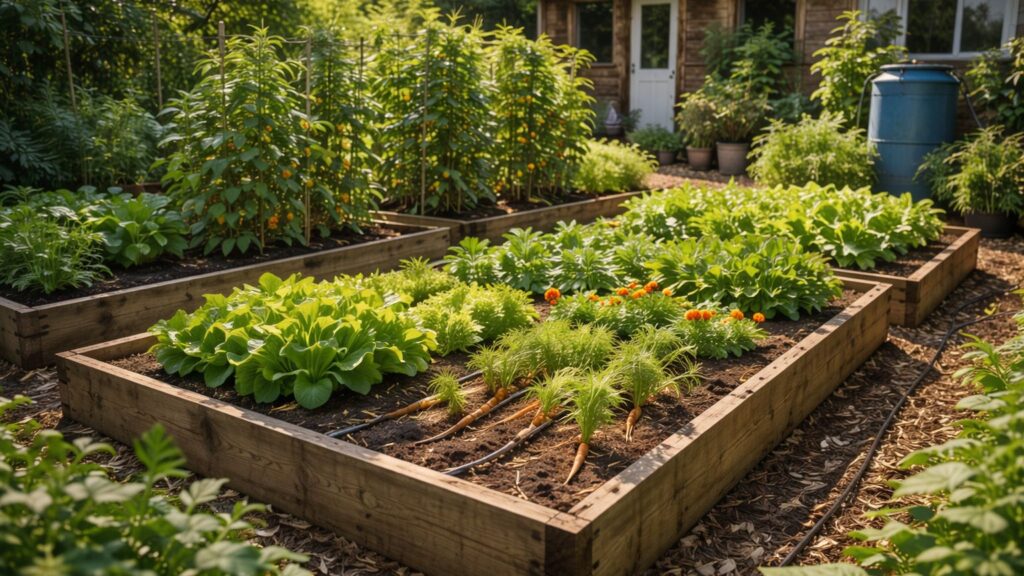
Soil remains essential for many off grid crops especially root vegetables and cold hardy plants.
Reliable options include:
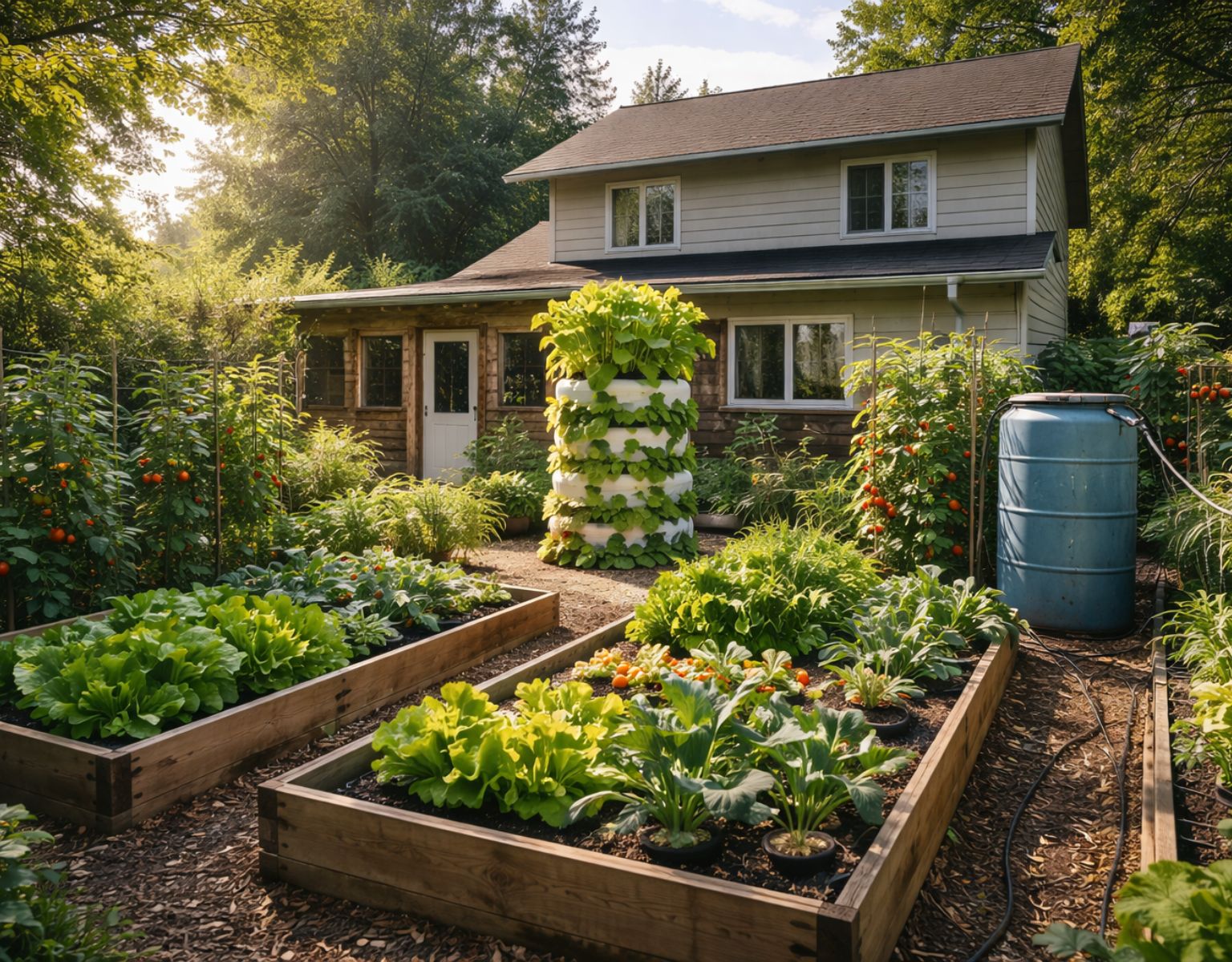
- raised grow beds
- grow bags or fabric pots
- no till garden beds
Why Soil Still Matters
Hydroponics is efficient, but soil systems:
- Store nutrients naturally
- Require less monitoring
- Support larger crops (potatoes, carrots, squash)
- Recover more easily from mistakes
Building Soil That Improves Over Time
Off-grid soil systems should not degrade. They should improve every season.
Key practices:
- Add compost continuously
- Avoid tilling (protect soil structure)
- Use mulch to retain moisture
- Rotate crops when possible
Over time, your soil becomes:
- More water efficient
- More nutrient dense
- More resilient to temperature swings
Long-Term Advantage:
A well-built soil bed becomes easier to manage every year, not harder.
That’s the opposite of most systems people rely on.
Simple Raised Bed Design
A practical raised bed can be built with:
- 4 by 8 foot cedar or treated lumber frame
- compost rich soil mix
- mulch layer such as straw or wood chips
Performance Tip:
Raised beds warm faster in spring and drain better than ground soil, critical for short growing seasons.
Soil Mix Formula
40 percent compost
30 percent coconut coir or peat
20 percent sand or perlite
10 percent worm castings or biochar
Advanced Tip:
Add mycorrhizal fungi to boost root systems and nutrient uptake, especially important in poor soils.
How to Plan Continuous Harvests (So You’re Always Producing Food)
Growing food once is easy.
Growing food consistently, week after week, is what turns a setup into a true off-grid food system.
Most beginner systems fail not because plants won’t grow, but because everything matures at the same time… and then nothing is ready afterward.
The Problem With Single-Stage Planting
If you plant everything at once:
- you get a large harvest
- then a long gap with nothing to eat
This creates a cycle of abundance followed by shortage, which defeats the purpose of a reliable food system.
The Solution: Staggered Planting
Instead of planting everything at once, divide your crops into intervals.
For fast-growing crops like:
- lettuce
- spinach
- microgreens
Plant new batches every:
7–10 days
This creates overlapping growth cycles, ensuring something is always ready to harvest.
Example Continuous Harvest Schedule
Week 1:
- Plant lettuce batch #1
Week 2:
- Plant lettuce batch #2
Week 3:
- Harvest batch #1
- Plant batch #3
Week 4:
- Harvest batch #2
- Plant batch #4
Within a month, you move from occasional harvests to a steady supply.
Matching Crops to Growth Speed
Different crops require different planning:
Fast crops (7–21 days):
- microgreens
- baby lettuce
- herbs
Medium crops (30–60 days):
- kale
- bush beans
- carrots
Slow crops (60–120 days):
- potatoes
- onions
- root vegetables
A strong system combines all three timelines.
Why This Matters Off Grid
Consistency is more important than peak yield.
A steady supply of:
- greens
- herbs
- basic calories
…keeps your system functional without relying on store runs.
Integrating Hydroponics and Soil Systems
The most reliable setups use both systems together.
Hydroponics handles:
- fast greens
- herbs
- frequent harvest crops
Soil systems handle:
- calorie-dense crops
- root vegetables
- long-term production
This division reduces pressure on any single system.
Avoiding Burnout
One overlooked benefit of staggered planting:
You avoid overwhelming workloads.
Instead of:
- planting everything in one day
- harvesting everything in one day
You spread the work into manageable weekly tasks.
This makes the system sustainable long-term.
Simple Planning Rule
If your system produces everything at once, it’s just a garden.
When it produces something every week, it becomes a food system.
The Rule That Makes Micro Farms Work
Don’t grow more.
Grow smarter.
Focus on:
- timing
- consistency
- and repeatable harvest cycles
Because in off-grid living, reliability matters more than abundance.
And a small system that feeds you every week is far more valuable than a large one that only works once.
Passive Watering and Gravity Fed Irrigation
Watering systems can quickly become the limiting factor in off grid agriculture. Passive irrigation removes the need for pumps.
Gravity Drip Irrigation
Elevate a water tank or rain barrel and allow gravity to feed drip irrigation lines slowly throughout the garden.
Key Advantage:
Once dialed in, this system can run unattended for days.
Wicking Beds
Wicking beds store water in a lower reservoir while soil draws moisture upward through capillary action.
These beds may only require refilling every five to ten days.
Why They Matter:
They drastically reduce water use and eliminate daily watering.
Ollas Clay Pot Irrigation
Unglazed clay pots buried in soil slowly release water directly to plant roots.
This ancient irrigation technique is simple and extremely efficient.
Lighting Options LED Natural and Hybrid
Sunlight is always the best option, but winter growing often requires supplemental lighting.
Efficient grow lighting options include:
- Barrina LED T5 grow lights
- ViparSpectra dimmable full spectrum LEDs
- solar powered greenhouse lighting systems
Solar Power Tip
A small solar system consisting of:
- 300 watt solar panel
- 100 amp hour LiFePO4 battery
can run four to six grow lights for several hours each day.
Timers and reflective surfaces can dramatically improve lighting efficiency.
Efficiency Trick:
Use reflective foil or white surfaces behind plants to double usable light output.
Composting Vermiculture and Nutrient Recycling
Long term food production depends on recycling nutrients.
Composting
Kitchen scraps and plant waste can be transformed into fertile soil through composting.
Insulated bins allow compost systems to function even in colder climates.
Vermiculture Worm Bins
Red wigglers convert organic waste into rich worm castings.
These castings improve soil structure and nutrient availability.
Compost Tea
Compost tea combines worm castings, water, and molasses to produce a powerful natural fertilizer after aeration.
Real World Setup Examples
Vanlife Mobile Grow Crate
- Kratky bins under bed platform
- lettuce and herbs producing roughly one pound per week
- solar fan for airflow
Reality:
This won’t feed you fully — but it eliminates the need for store-bought greens.
Cabin Window Farm
- stacked hydroponic buckets near a south facing window
- small 12V pump running several hours per day
- crops like kale, cilantro, and tomatoes
Homestead Hybrid System
- three raised beds for root crops
- indoor hydroponic greens system
- solar greenhouse and compost station
- year round crop rotation
Outcome:
This setup can realistically supply 50%+ of a person’s yearly food needs with proper planning.
Common Mistakes to Avoid
1. Trying to Grow Everything
Focus on high-yield crops first: greens, herbs, potatoes.
2. Overcomplicating Systems
Simple systems survive longer.
3. Ignoring Water Efficiency
Water becomes your limiting resource faster than soil or light.
4. Skipping Crop Rotation
Even small systems benefit from rotating crops to prevent nutrient depletion.
5. Underestimating Storage
Growing food is only half the system. You also need:
- drying
- root cellaring
- refrigeration alternatives
What Happens When the System Fails (And How to Prevent It)
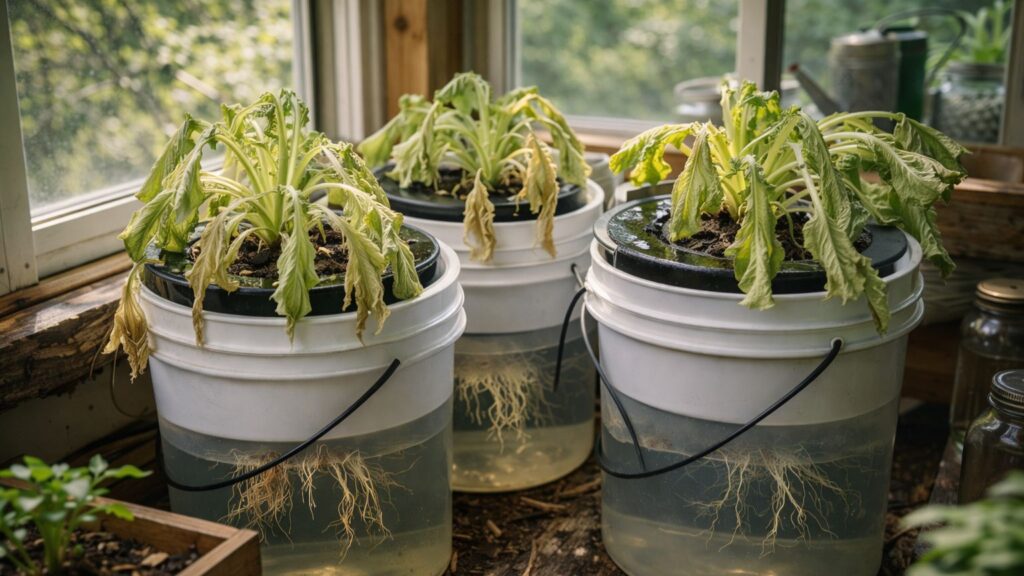
Every off-grid food system will fail at some point.
The difference between a hobby setup and a resilient system is how well it recovers.
The Most Common Failure Points
In real-world setups, breakdowns usually come from:
- water interruptions
- nutrient imbalance
- temperature swings
- pump or power failure
Hydroponic systems are especially sensitive to interruptions, while soil systems fail more slowly.
Building Redundancy Into Your System
Reliable micro farms are designed with backup in mind.
This doesn’t mean complexity. It means overlap.
Examples:
- running a passive Kratky system alongside a powered hydro system
- keeping soil beds active in case hydroponics goes down
- storing extra water and nutrients on hand
If one system fails, another continues producing.
The 24-Hour Rule
Ask yourself:
If power or water stops for 24 hours, what survives?
- Kratky systems → usually unaffected
- soil beds → retain moisture and recover easily
- NFT systems → high risk without flow
Design around survival, not perfection.
Keep a Recovery Buffer
Always maintain:
- a small reserve of ready-to-harvest crops
- backup seeds for fast-growing plants
- stored water for emergency irrigation
This buffer turns system failures into minor setbacks instead of food shortages.
The Reality of Off-Grid Growing
Things will go wrong.
Pumps fail. Weather shifts. Crops struggle.
But if your system is simple, redundant, and well planned:
It doesn’t collapse. It adapts.
That’s what separates a garden from a true off-grid food system.
Off Grid Proven Growing Gear and Kits
| Item | Use |
|---|---|
| LettuceGrow Kratky Kit | Passive hydroponics |
| Viagrow 4 Bucket DWC System | Recirculating hydro |
| Rain Bird Drip Irrigation Kit | Passive irrigation |
| Vego Garden Raised Bed | Soil growing system |
| Barrina LED Grow Lights | Low draw lighting |
| Jora JK270 Composter | Fast composting |
| Uncle Jim’s Worm Farm Kit | Vermiculture system |
Final Thoughts Grow Like It Matters
Off grid growing is not about perfection. It is about resilience.
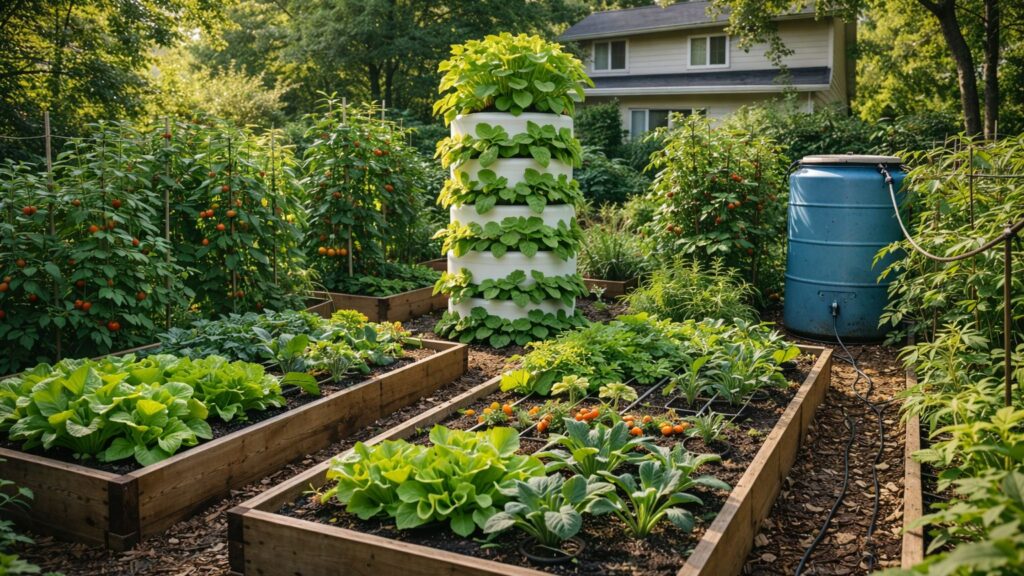
Every leaf of kale, every radish, and every handful of compost is a step toward independence.
Start small.
Grow what you eat.
Reuse water whenever possible.
Recycle nutrients back into your soil.
Off grid power is freedom.
But off grid food is sovereignty.