Apartment Off-Grid Setup: What’s Actually Possible
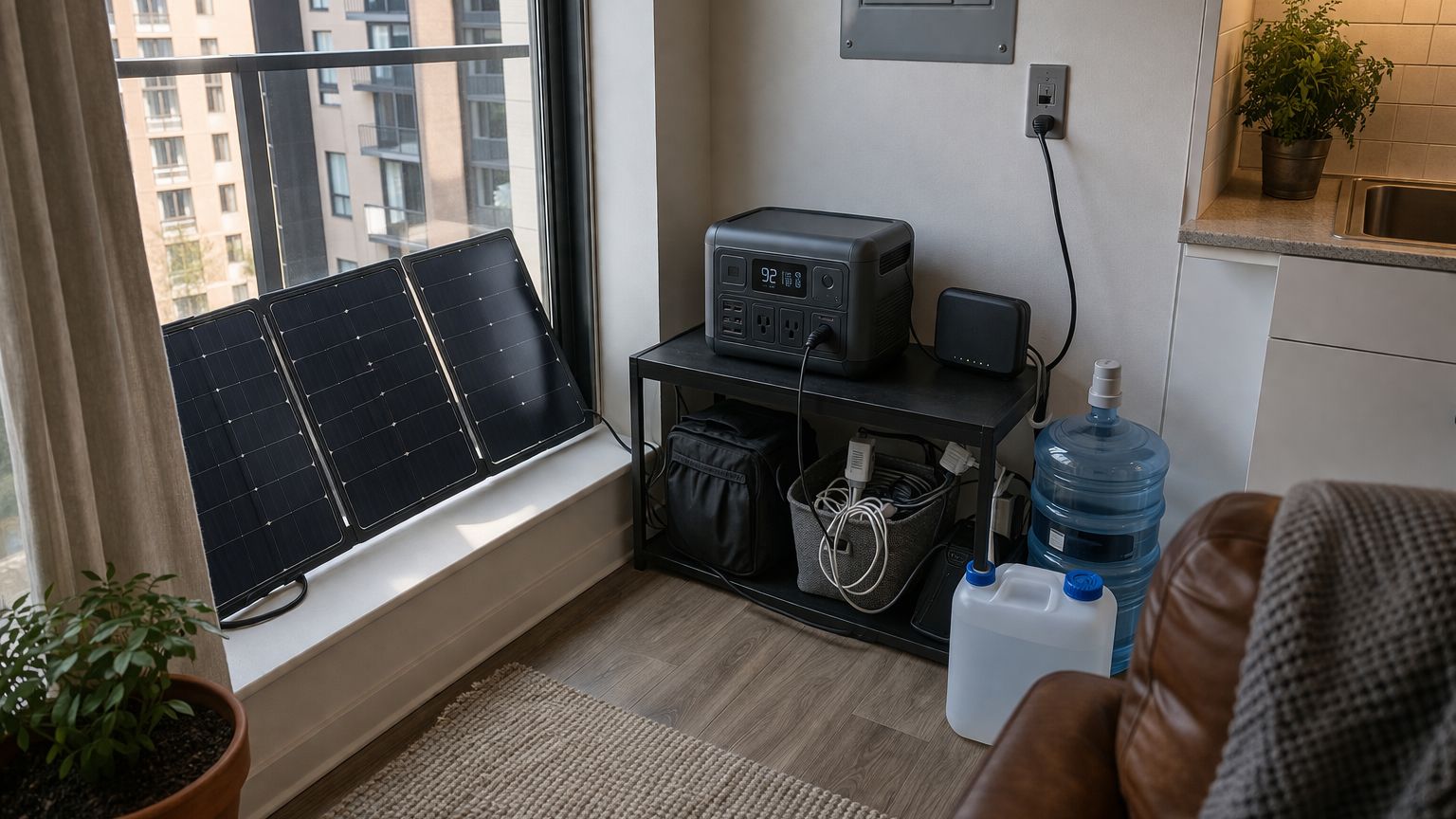
Living off-grid in an apartment sounds limiting at first.
No roof access. Limited space. Building rules. Close neighbors.
But in practice, apartment-based off-grid systems are not only possible, they are one of the fastest-growing approaches to resilience.
The key is understanding what works within constraints and building a system that fits your space instead of fighting it.
What You’re Working With in an Apartment
Apartments introduce a different set of conditions compared to houses or rural setups.
You are typically dealing with:
- Limited square footage
- Shared infrastructure
- Restricted modifications
- Variable access to sunlight
At the same time, apartments also offer advantages.
- Smaller energy needs
- Shorter wiring runs
- Easier system control
- Lower overall costs
These factors make it possible to build highly efficient, compact systems that cover essential needs.
The Core Goal: Cover the Essentials
In an apartment, practical off-grid systems focus on the parts of daily life that matter most during disruptions.
A practical setup focuses on:
- Power for essential devices
- Basic lighting
- Communication and internet
- Simple cooking options
Once these are covered, you already have a level of resilience that most people do not.

How to Size a Portable Power Setup for an Apartment
Most people guess when it comes to battery sizing.
That’s where problems start.
They either undersize and run out of power too fast, or overspend on capacity they never use.
A better approach is to map your actual usage.
Start with your core devices:
- Phone
- Laptop
- Router
- Lighting
Now assign rough wattage:
- Phone: 5–15W
- Laptop: 40–100W
- Router: 10–20W
- LED light: 5–15W
Add them up.
A simple working load might land between 60W and 150W.
Now think in hours.
If you want to run that setup for 8 hours, you’re looking at roughly:
60W × 8 = 480Wh
150W × 8 = 1200Wh
That’s your real range.
A 500Wh unit covers light usage. A 1000Wh+ unit gives breathing room.
Then factor in inefficiency.
You never get 100% of rated capacity. Plan for 80–85%.
That’s how you avoid surprises.
Bigger isn’t always better.
Right-sized is better.
What a Real 24-72 Hour Outage Feels Like
Short outages are usually little more than an inconvenience. Most devices still have battery power, food remains cold, and daily routines can continue with only minor adjustments.
As outages extend beyond a few hours, priorities begin to change. Phones, laptops, lighting, and internet access become more important, and power reserves start to matter. This is often the point where the difference between a planned system and an improvised one becomes obvious.
During longer disruptions, small inefficiencies become more noticeable. Devices consume more power than expected, charging opportunities become limited, and every watt-hour starts to have value. Organization and planning become just as important as battery capacity.
Many people assume larger systems automatically perform better during extended outages. In practice, a well-managed system often outperforms a larger system that lacks clear priorities or efficient usage habits. Knowing what needs power, when it needs power, and how long it can realistically run is a major part of resilience.
Longer outages also change behavior. People naturally become more selective about lighting, charging, cooking, and other energy demands. Systems designed for sustained operation tend to focus on essential functions rather than maximum output.
This is why outage planning should focus on duration as much as capacity. A system that can operate efficiently for several days is often more useful than one designed around short-term peak performance.
Power: The Foundation of Your Setup
Power is where most apartment systems begin.
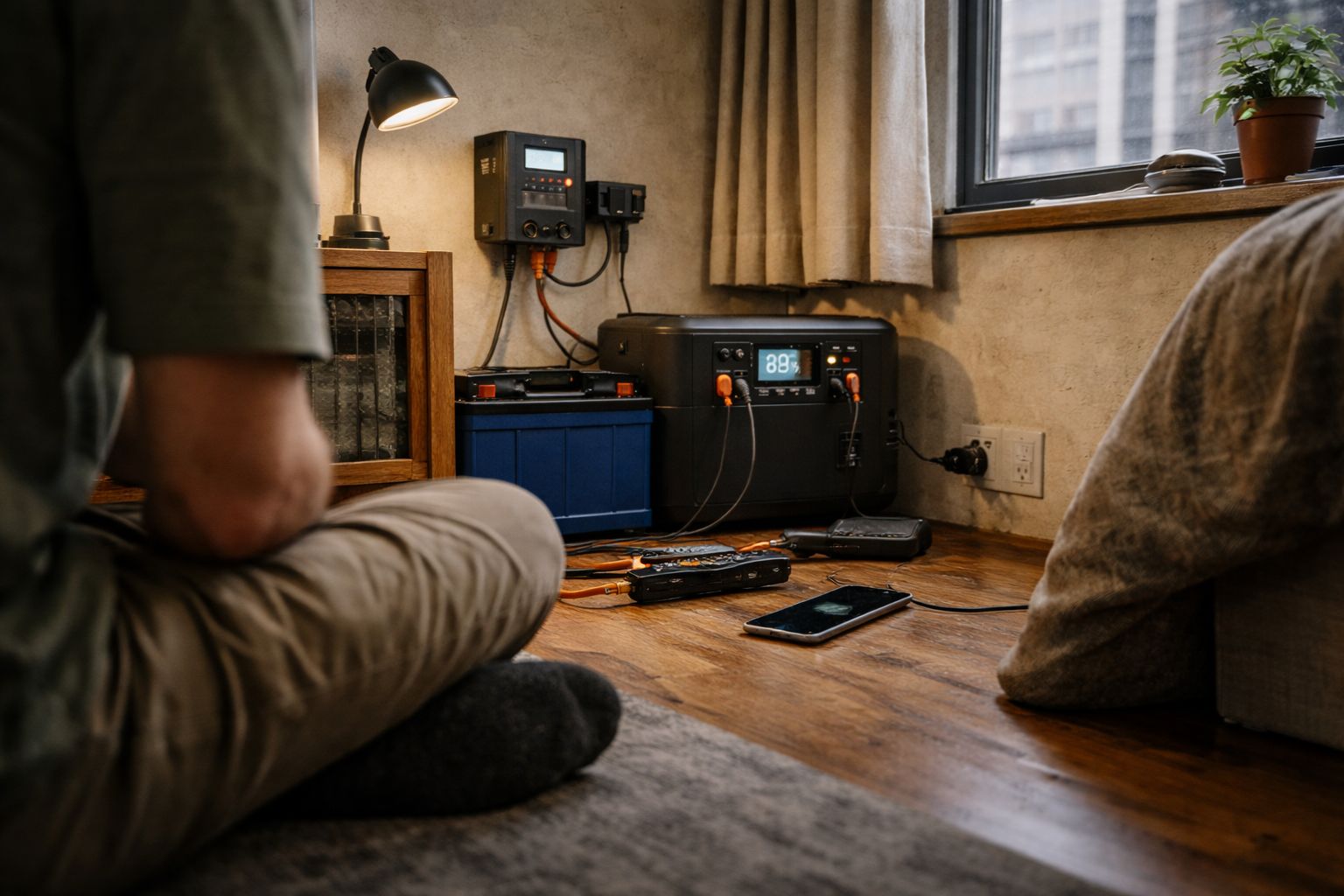
A portable power station or small battery system can support:
- Phones and laptops
- LED lighting
- Routers and modems
- Small appliances
This alone solves the biggest problem during outages.
From there, you can expand.
Charging Options
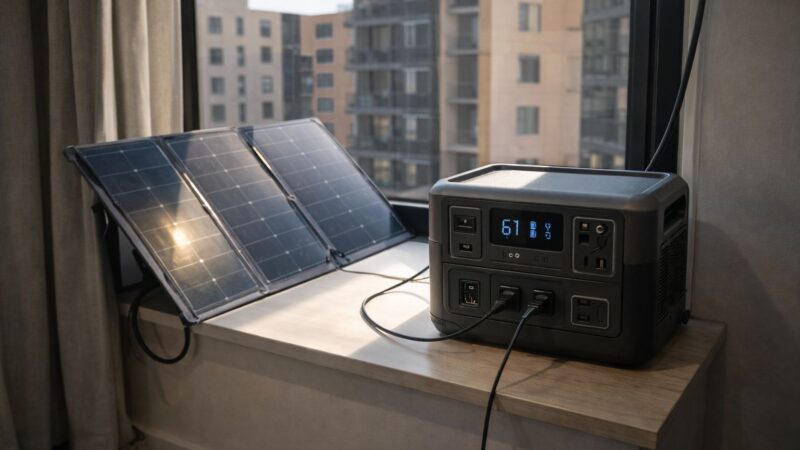
Without rooftop access, charging becomes more creative.
Common options include:
- Wall charging when grid power is available
- Balcony solar panels if you have exposure
- Portable panels used near windows or outdoors
- Charging at alternate locations if needed
You do not need perfect solar conditions to benefit from a battery system. Even partial charging can extend runtime significantly.
Real Apartment Solar Expectations (No Marketing Claims)
Solar in apartments gets misunderstood fast.
People expect rooftop performance.
That’s not what you’re working with.
Balcony and window solar is inconsistent.
You deal with:
- partial sun
- shifting angles
- shadows from nearby buildings
That changes output drastically.
A 100W panel might only produce:
- 60–80W in ideal conditions
- 20–50W in mixed conditions
- less than 20W in poor exposure
That’s the reality.
But here’s the part people miss:
Even low output still matters.
If you generate 200–400Wh per day, that can:
- recharge phones multiple times
- extend battery runtime
- reduce how often you rely on wall charging
Solar becomes a supplement, not a primary source.
That shift in expectation makes it useful again.
Solar in an Apartment: What Actually Works
Solar is possible in apartments, but it requires realistic expectations.
Balconies are the most common solution.
If your unit has:
- South-facing exposure
- Minimal shading
- Enough space for panels
You can generate meaningful power.
If not, solar still has a role as a supplemental charging method.
Foldable panels are especially useful because they can be:
- Set up when needed
- Stored when not in use
- Positioned for best available light
This flexibility is important in urban environments.
Why Simplicity Matters
A system is only useful if it can be deployed quickly and confidently when needed.
Many apartment setups contain capable equipment but suffer from poor organization. Batteries, cables, lights, and accessories are stored in different locations, making the system harder to use during an outage.
Simple systems tend to perform better. Equipment is easy to access, cables are organized, and critical devices are ready to connect without searching through storage bins or closets. This reduces confusion and helps ensure the system is used effectively when conditions change.
Regular use is equally important. Charging a phone, running a router, or powering lights occasionally helps build familiarity with the equipment and exposes small problems before they matter. The more familiar you are with your system, the more reliable it becomes.
Layout also plays a role. Keeping power equipment, charging cables, and commonly used accessories organized in a dedicated location makes deployment faster and reduces unnecessary complexity.
In most apartment setups, usability is just as important as capacity. A smaller system that is organized and regularly tested is often more valuable than a larger system that remains untouched until an emergency occurs.
Space Management: Keeping It Practical
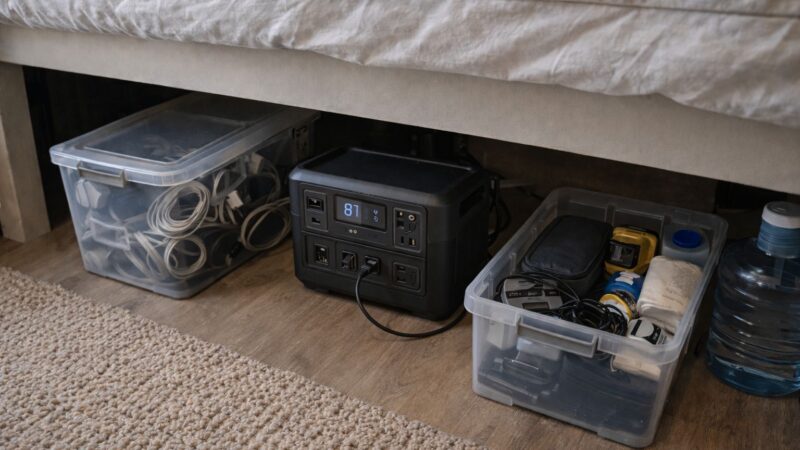
Space is one of the biggest constraints in an apartment setup.
Good systems stay organized and compact.
Typical storage approaches include:
- A dedicated shelf or cabinet
- Under-bed storage for larger components
- Stackable containers for cables and accessories
Everything should have a place.
When systems are easy to access and maintain, they are far more likely to be used effectively.
Cooking Without a Traditional Kitchen
Cooking becomes a priority as soon as power goes out.
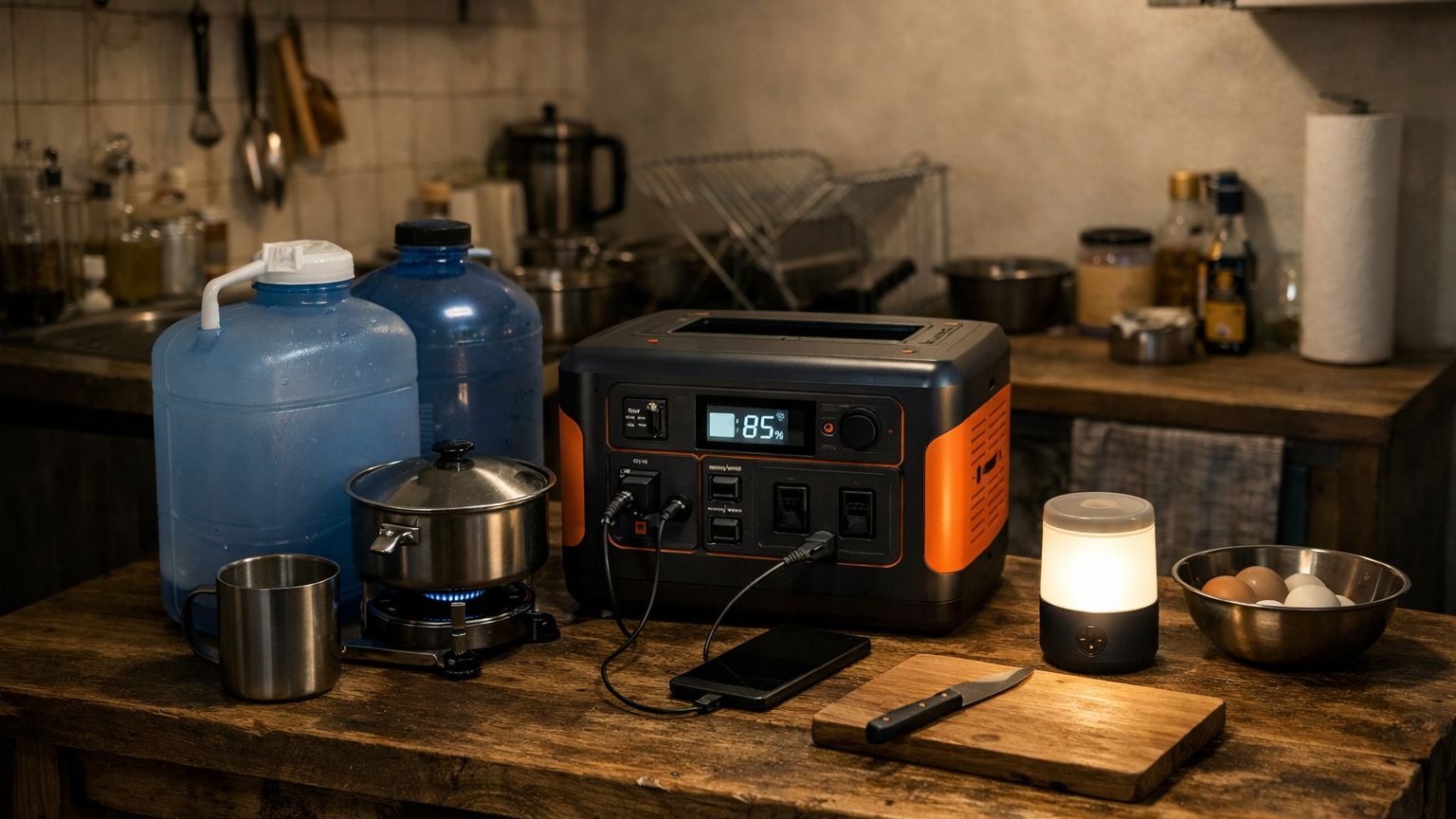
Apartment-safe options include:
- Butane stoves used with proper ventilation
- Small propane setups where allowed
- Electric cooking through battery systems
- No-cook meal options for short-term situations
Ventilation is critical.
Even small cooking systems can produce heat and fumes that need to be managed carefully.
Planning this ahead of time prevents problems when you actually need the system.
Water: Small Systems, Big Impact

Water systems in apartments are usually simple.
You are not collecting large amounts. You are creating a buffer.
A basic setup includes:
- Stored drinking water
- A compact filtration method
- Backup containers for additional storage
Even a few days of water can make a significant difference during disruptions.
Heat, Ventilation, and Why They Matter More Than You Think
Heat buildup is easy to ignore.
Until it isn’t.
Batteries, inverters, and charging devices all generate heat.
In a small apartment, that heat has nowhere to go.
Poor ventilation can lead to:
- reduced battery efficiency
- shorter equipment lifespan
- uncomfortable living conditions
Cooking adds another layer.
Even a small butane stove can raise temperature quickly in a closed space.
The solution is awareness.
Keep systems:
- away from enclosed corners
- off soft surfaces
- in areas with airflow
And always think about ventilation when cooking.
Open windows when possible.
Use fans if needed.
It’s not complicated, but it matters.
Noise, Heat, and Visibility
Apartment systems need to stay low-profile.
This means paying attention to:
- Noise levels from equipment
- Heat buildup from batteries and devices
- Visibility from windows and shared spaces
Quiet systems with minimal heat output are easier to manage.
Keeping your setup discreet also avoids unnecessary attention or conflict with neighbors.
Safety Comes First
Safety is more important in apartments because you are sharing space with others.
Key considerations include:
- Using certified equipment
- Avoiding overloaded circuits
- Storing batteries in stable, ventilated areas
- Keeping flammable materials away from heat sources
A well-built system should feel stable and predictable.
If something feels improvised or risky, it needs to be adjusted.
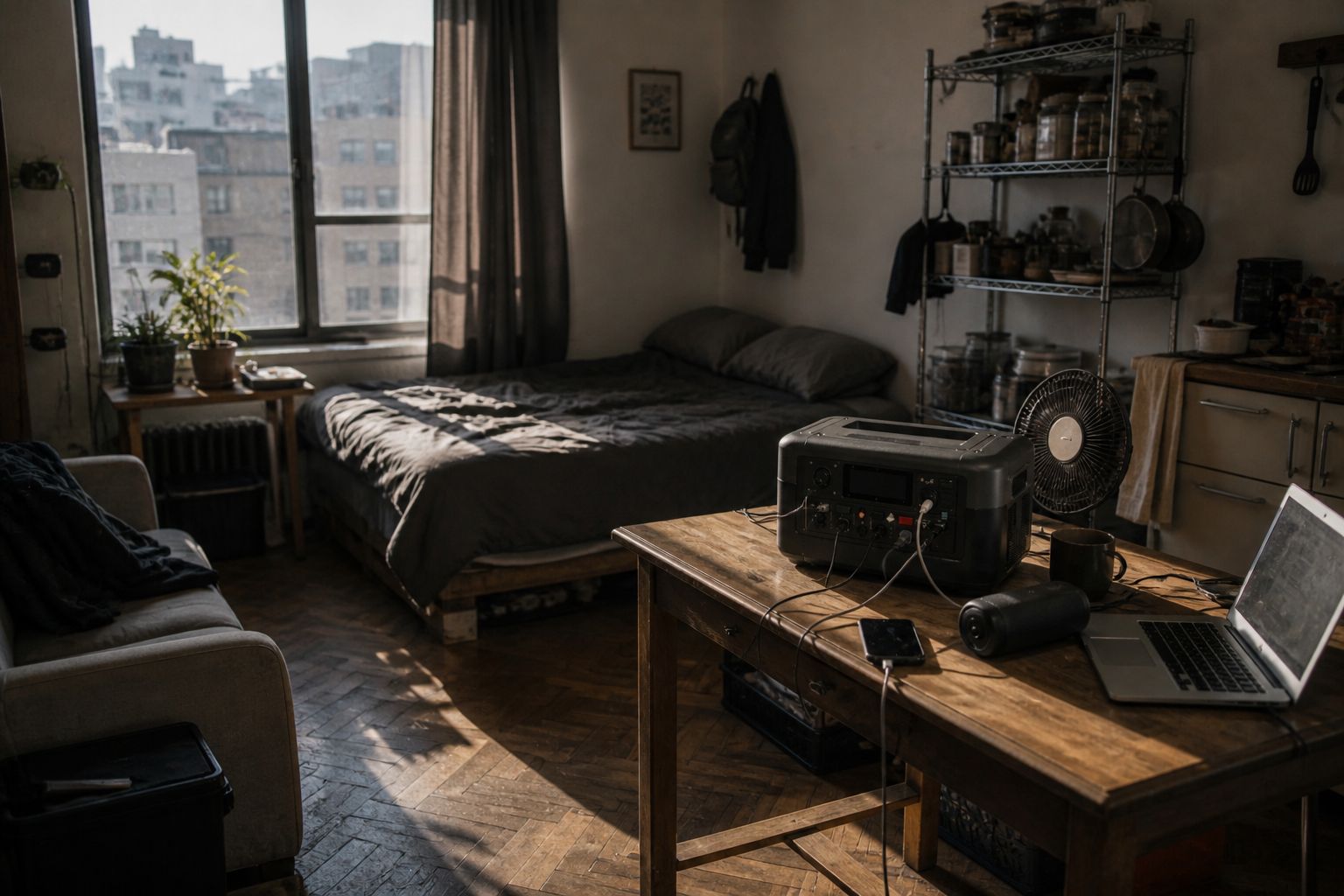
What a Real Apartment Setup Looks Like
A typical setup might include:
- A portable power station stored in a closet or cabinet
- Foldable solar panels for occasional charging
- Backup lighting and charging cables
- A compact cooking solution
- A small water reserve
Everything is modular.
Nothing is permanent.
The system can be expanded over time without requiring major changes to your living space.
Scaling Over Time
Apartment systems are rarely built all at once.
They grow in stages.
You might start with:
- A single battery system
Then expand to:
- Additional storage capacity
- Solar charging options
- More efficient appliances
Each upgrade improves reliability and extends how long you can operate independently.
What You Cannot Realistically Do
Understanding limits is just as important as understanding possibilities.
In most apartments, you will not be able to:
- Install large fixed solar arrays
- Store large amounts of fuel
- Run high-demand appliances continuously
- Fully disconnect from the grid
Working within these limits keeps your system practical and sustainable.
Keeping Your System Ready

Building an apartment off-grid setup is only the first step. Like any piece of equipment, it requires occasional maintenance to remain reliable.
Batteries should be charged periodically, stored according to manufacturer recommendations, and tested from time to time to confirm they are performing as expected. Backup lights, charging cables, and other accessories should be checked regularly so problems are discovered before an outage occurs.
Water supplies should be rotated on a schedule, and fuel-based equipment should be inspected to ensure it remains safe and ready for use. Even simple systems benefit from an occasional review.
A few minutes of maintenance every few months can prevent many of the problems people encounter during emergencies. It also provides an opportunity to identify equipment that no longer fits your needs or areas where additional capability may be useful.
The most reliable systems are rarely the most complicated. They are the systems that have been tested, maintained, and kept ready for use when conditions change.
Final Thoughts: Building Within Your Environment
Apartment off-grid systems are built around practical limitations. Space is limited, modifications are often restricted, and access to resources such as sunlight can vary significantly from one building to another.
Despite those constraints, even a modest setup can provide meaningful benefits during outages and disruptions. Backup power, stored water, alternative cooking methods, and reliable communication systems can all be implemented without major changes to your living space.
Most apartment systems are built gradually. Starting with essential capabilities and expanding over time allows you to learn what works, identify gaps, and invest where additional capacity is genuinely useful.
The most effective setup is one that matches your environment, remains easy to use, and continues to perform reliably when you need it.