The Minimum Viable Off-Grid Setup: What You Actually Need to Get Started
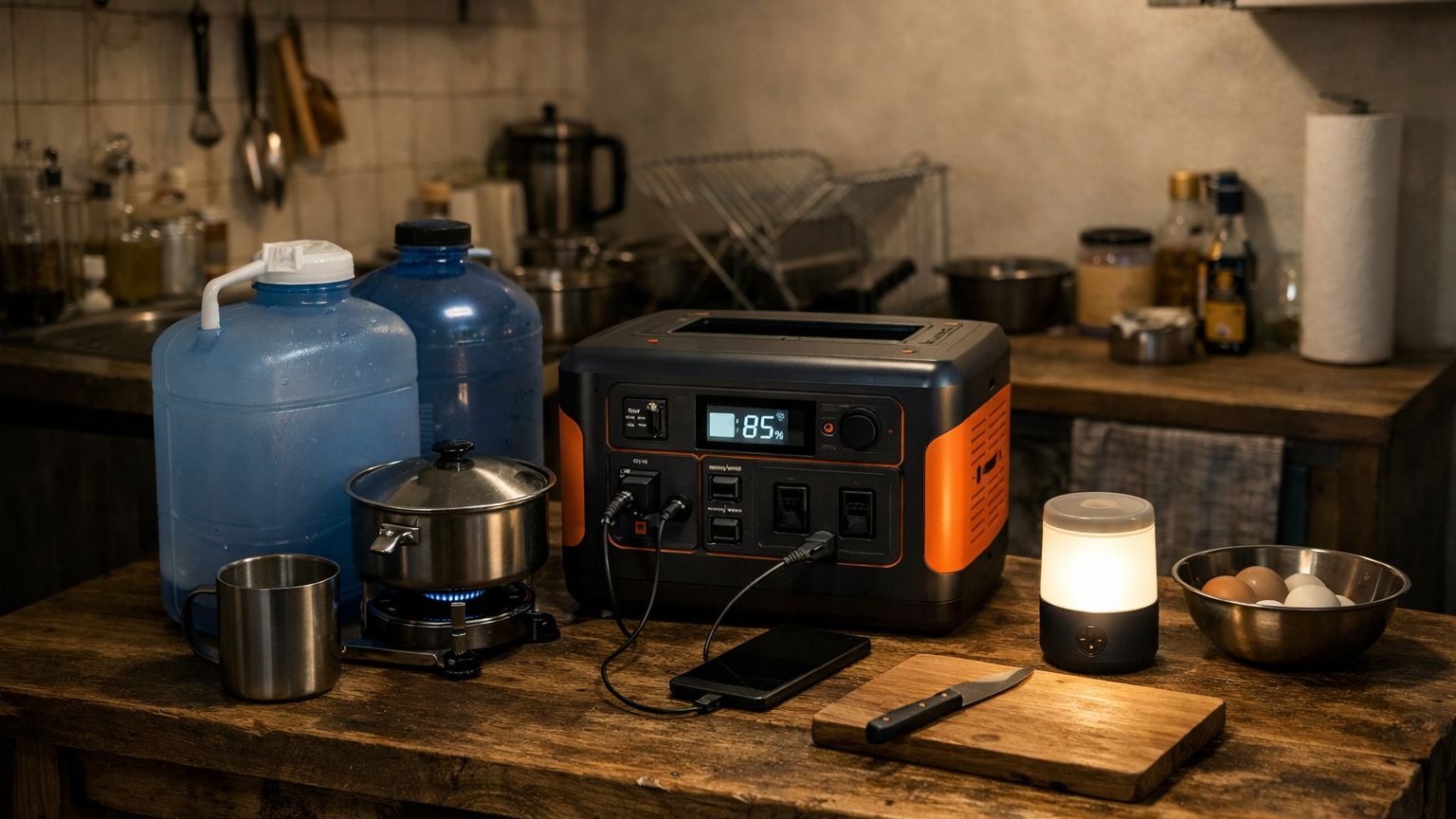
Getting started with off-grid living in a city can feel overwhelming.
There are endless gear lists, complex system diagrams, and setups that seem designed for remote land rather than apartments or small homes.
In practice, most of that complexity is unnecessary at the beginning.
A functional urban off-grid system does not need to be large or expensive. It needs to cover the essentials reliably and leave room to grow.
The idea of a minimum viable setup is simple. You build the smallest system that can handle your core needs during a disruption. Everything beyond that is an upgrade, not a requirement.
What “Minimum Viable” Really Means
A minimum viable off-grid setup focuses on the essential systems you need during an outage and leaves everything else for future expansion.
Instead of trying to power everything, you identify what actually matters when the grid goes down.
For most people, that includes:
- Communication
- Basic lighting
- Access to information
- Simple food preparation
- Short-term water security

This approach changes how you build.
The focus shifts toward keeping essential services available during disruptions.
What needs to keep working so that your day does not fall apart?
The Core Principle: Protect the Essentials First
When infrastructure fails, most daily activities become optional.
A few remain critical.
You need to be able to:
- Stay connected
- See and move safely
- Eat without relying on your main kitchen
- Access clean water
Everything else can wait.
Designing your system around these priorities keeps it efficient and manageable.
Power: Your First and Most Important Layer
Power is the foundation of a minimum viable setup.
Without it, communication, lighting, and many basic tools stop working.
What You Actually Need to Power
At a minimum, your system should support:
- A phone
- A laptop or tablet
- A light source
- A router or hotspot
These devices maintain your ability to communicate, access information, and continue basic work.
Choosing the Right Starting Point
For most urban setups, the simplest entry point is a portable power station.
This gives you:
- Battery storage
- Built-in outlets
- Charging flexibility
You can recharge it from the wall, from solar, or from other sources depending on your setup.
At this stage, capacity matters more than features.
You are building a buffer that keeps your essential devices running for hours or days, depending on usage.
Understanding Your Power Needs
Before expanding, it helps to understand how much energy you actually use.
A simple estimate is enough to start.
- Phone charging is relatively low demand
- Laptops vary depending on usage
- Routers draw small but constant power
- Lighting depends on efficiency
Even rough awareness of these loads helps prevent overbuilding or underestimating your needs.
Water: Small Reserve, Big Impact
Water systems in urban environments do not need to be complex.
The goal is short-term independence.
What a Basic Water Setup Looks Like
At minimum, you want:
- Stored drinking water
- A way to filter additional water if needed
Stored water covers immediate needs.
Filtration gives you flexibility if your supply runs low.

How Much Water Is Enough?
For short-term disruptions, even a few days of water can make a significant difference.
Even a modest water reserve provides valuable time during short-term service interruptions.
Cooking: A Reliable Backup Method
Cooking is one of the first systems people notice when the power goes out.
Your main kitchen may rely entirely on electricity.
A minimum viable setup includes at least one alternative.
Practical Urban Options
- Butane stoves used with proper ventilation
- Small propane systems where allowed
- Electric cooking through a battery system
- No-cook food options for short outages
The key is reliability.
You need a method that works without depending on your primary appliances.
Safety Considerations
Cooking systems must be used carefully in apartments.
Ventilation, heat management, and safe fuel handling are essential.
A simple setup that is used correctly is far more effective than a complex one used improperly.
Lighting: Simple but Essential
Lighting is often overlooked until it disappears.
A minimum viable setup includes:
- Rechargeable LED lights
- Headlamps or portable lanterns
- Backup charging cables
Efficient lighting uses very little power and dramatically improves usability during outages.
Communication: Staying Connected
Communication systems are part of your power strategy.
If your phone is charged but your internet is down, your options are limited.
A basic setup should consider:
- Keeping a router powered if possible
- Using a mobile hotspot as backup
- Maintaining charging capability for all devices
This layer keeps you informed and connected during disruptions.
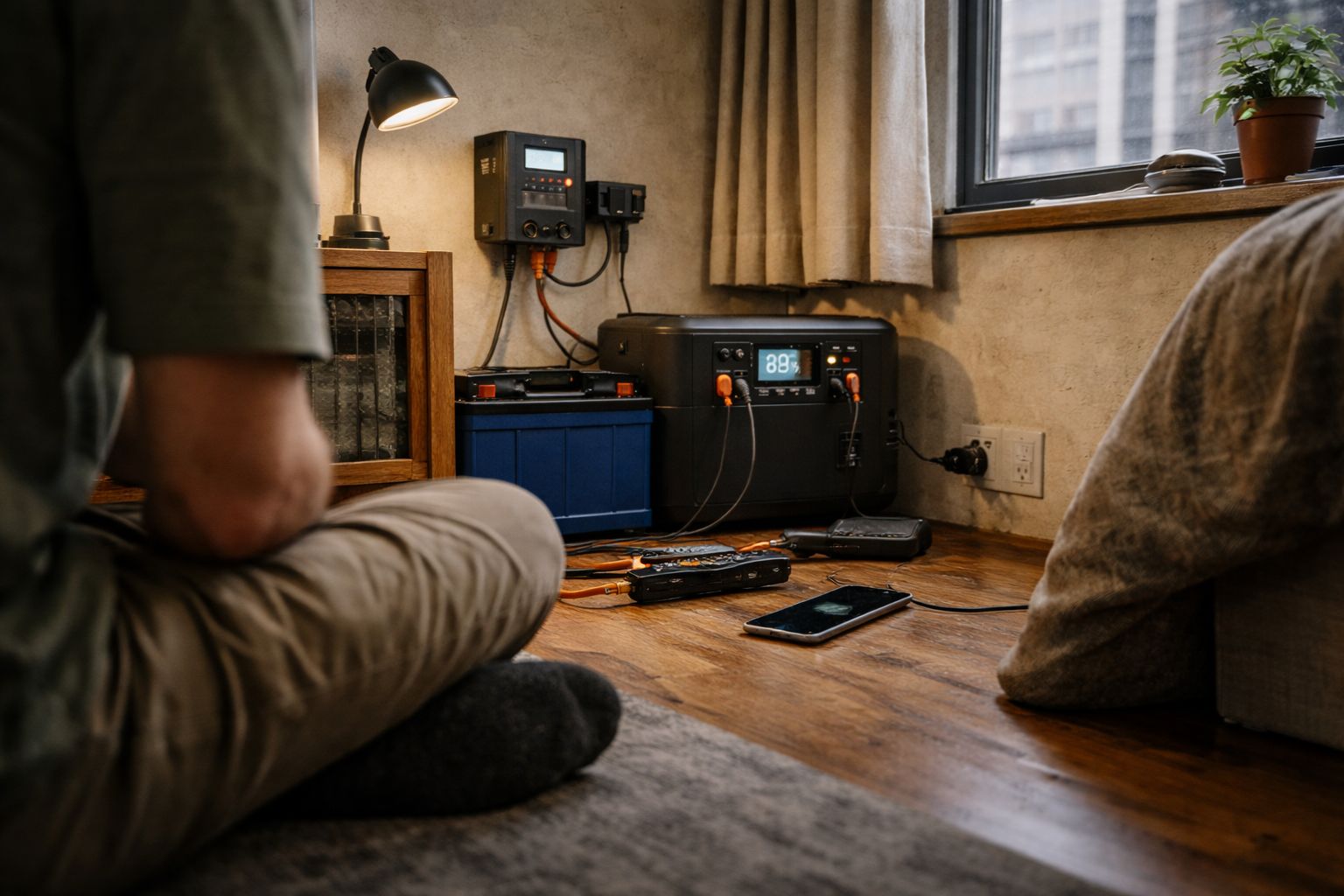
What “Minimum” Actually Feels Like During a Real Outage
A minimum viable setup is designed to keep essential parts of daily life running during an outage. It does not eliminate limitations, but it gives you the ability to communicate, stay informed, prepare basic meals, and maintain lighting while others are waiting for power to return.
As an outage continues, you become more aware of how your system performs. Battery capacity, charging opportunities, and energy consumption all become part of everyday decisions. A well-planned setup makes these decisions predictable rather than stressful because you already know what your equipment can support.
This is also where preparation begins to matter more than equipment. A tested system with organized cables, charged batteries, and a clear plan is often more effective than a larger system that has never been used outside the box.
Many people discover the strengths and weaknesses of their setup during their first real outage. A better approach is to learn those lessons beforehand. Running your system occasionally under normal conditions helps you understand its limits and identify improvements before they become urgent.
A minimum viable system should feel reliable and familiar. When every component has a clear purpose and you understand how it performs, even a modest setup can provide meaningful resilience during short and medium-length disruptions.
A Simple 24-Hour Test to Validate Your Setup
Most people build a system and assume it will work.
Testing proves it.
Run a 24-hour simulation.
Turn off your main power source and rely only on your setup.
Track what happens.
- How long does your battery last?
- What devices matter most?
- What do you miss immediately?
You will notice patterns quickly.
Some devices are more important than you expected.
Others barely matter.
This test gives you real data.
The results are based on real use rather than assumptions.
Adjust your setup based on what actually happens.
That is how small systems become reliable systems.
What This Looks Like in Real Life
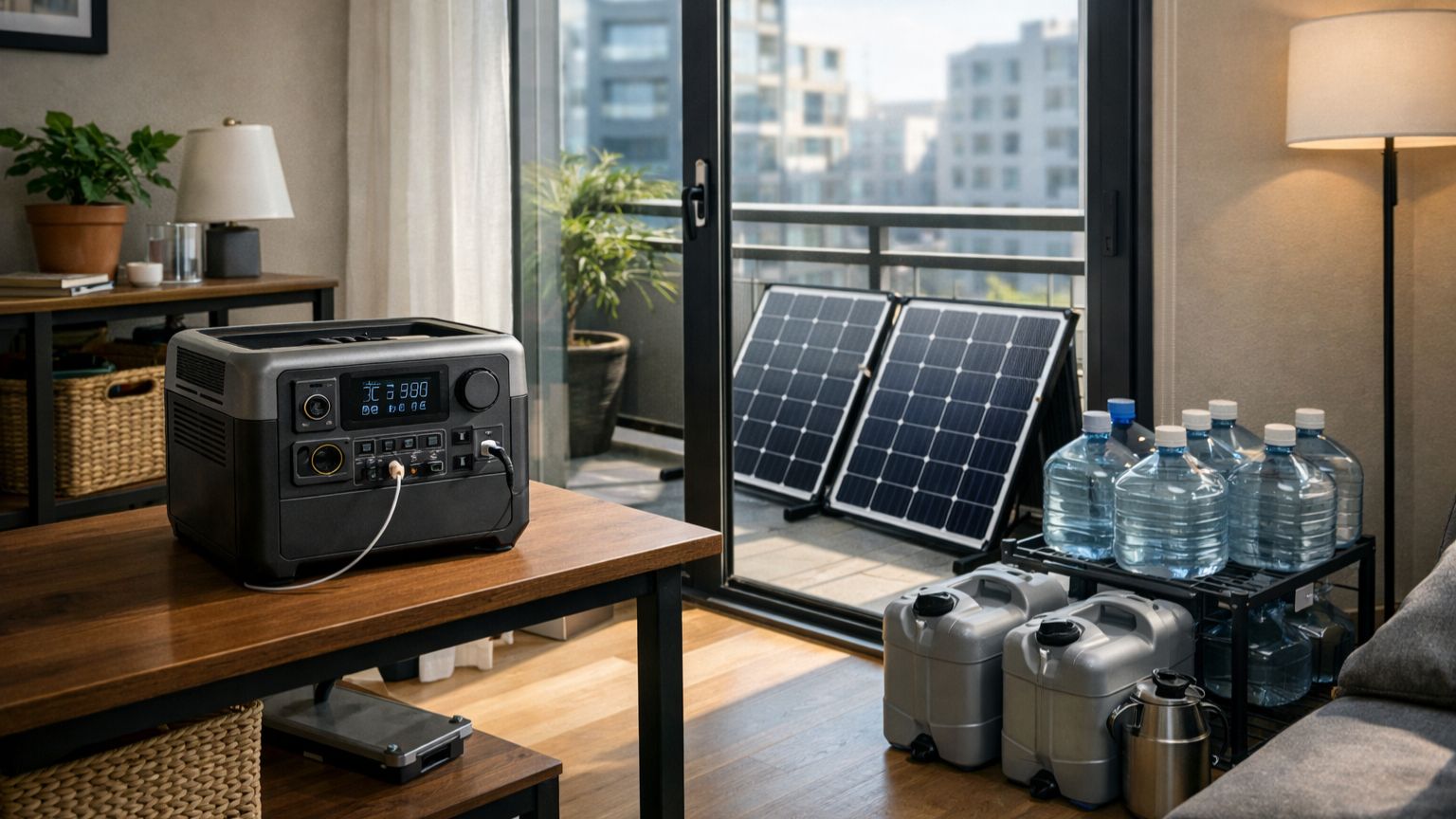
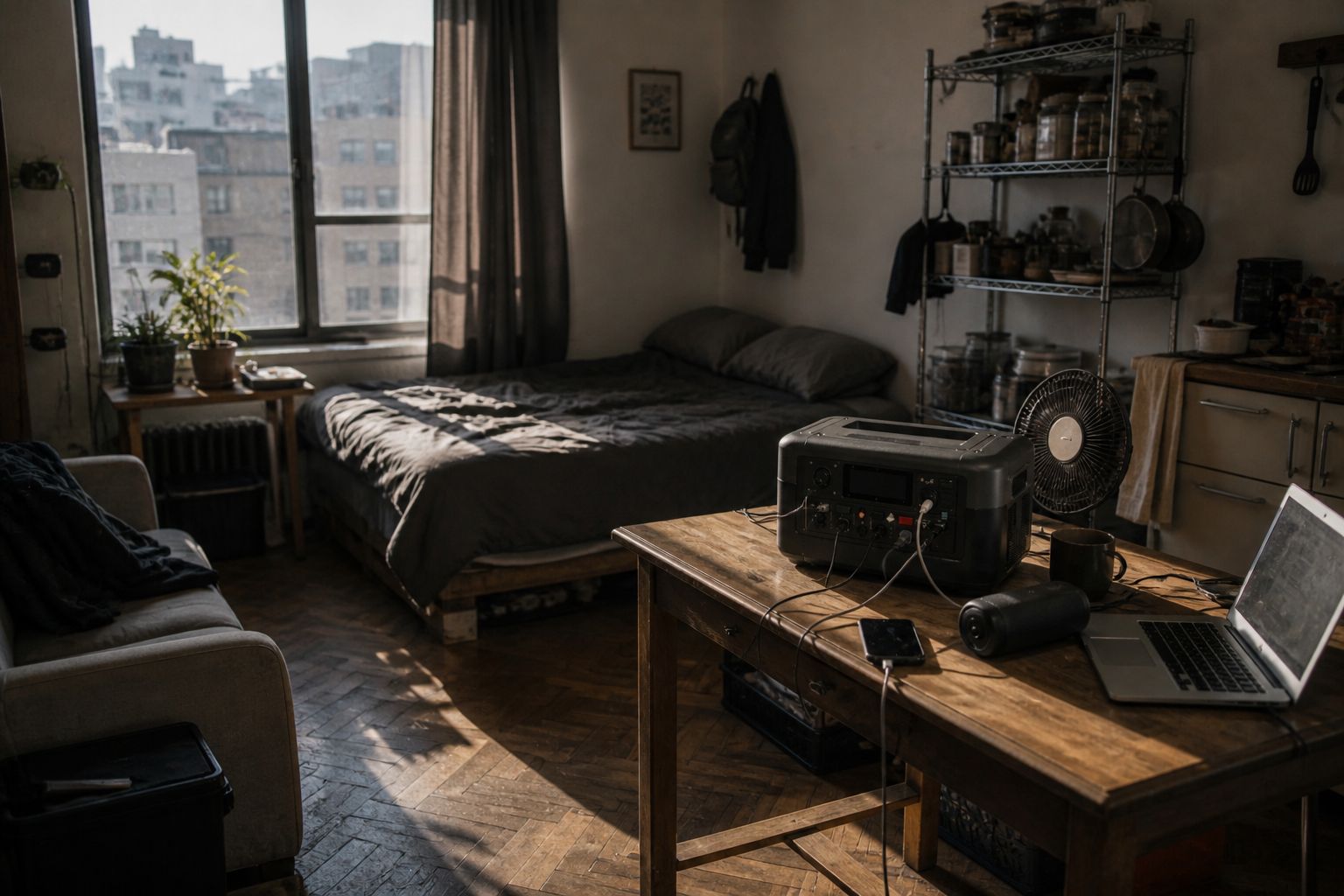
A realistic minimum setup in an apartment might include:
- A portable power station stored in a closet or cabinet
- Charging cables organized in one place
- A small set of foldable solar panels
- Stored drinking water in compact containers
- A butane stove and simple cookware
- Backup lighting stored with your power system
Everything is compact.
Everything is accessible.
Nothing requires permanent installation.
How to Avoid Overbuying in the First 30 Days

The first mistake most people make is buying too much too early.
It feels productive.
It usually isn’t.
Instead:
Start with one power solution.
Use it.
See what breaks.
Then decide what to add.
Common early overbuys:
- oversized battery systems
- unnecessary solar panels
- duplicate gear
These often sit unused.
Your first 30 days should be about learning.
Not collecting.
That alone can cut your total cost significantly.
Cost vs Capability
One of the advantages of a minimum viable setup is cost control.
You are not investing in a full system.
You are building capability in stages.
A small initial setup can cover:
- Basic communication
- Lighting
- Short-term functionality
From there, you can expand gradually.
This keeps the process manageable and avoids unnecessary spending early on.
The 3-Tier Upgrade Path (Without Wasting Money)
A minimum setup should lead somewhere.
But upgrades should be intentional.
Tier 1: Stability
You cover basics. Phone, light, communication.
Tier 2: Comfort
You extend runtime. Add more battery. Improve lighting. Add better cooking options.
Tier 3: Flexibility
You introduce solar. Improve charging options. Reduce reliance on wall power.
Each tier builds on the last.
No wasted purchases. No unnecessary replacements.
Each upgrade builds on the previous one, allowing the system to expand without replacing equipment unnecessarily.
The Real Upgrade Trigger Most People Miss
The best upgrades come from experience rather than assumptions. Spending time with your system quickly reveals where additional capacity or new equipment will have the greatest impact.
If your batteries regularly reach low charge levels, additional storage may be worthwhile. If recharging takes too long, improving your charging options may provide greater benefits than buying another battery. If your system feels difficult to deploy or inconvenient to use, better organization may solve the problem without adding any new equipment.
Your needs may also change over time. Working from home, adding new devices, or preparing for longer outages can all justify expanding the system. Building gradually allows those decisions to be based on real-world experience instead of guesswork.
A minimum viable setup should become the foundation for future upgrades. Expanding a system one step at a time usually costs less, avoids unnecessary purchases, and produces equipment that remains useful as your requirements evolve.
Scaling Beyond the Minimum
Once your core system is in place, expansion becomes straightforward.
You can add:
- More battery capacity
- Additional charging options
- More efficient appliances
- Extended water storage
Each upgrade builds on the foundation you have already created.
There is no need to replace your system. You improve it over time.
The “Grab and Go” Rule for Every Setup
If your system is hard to use, you won’t use it.
Every setup should follow one rule:
Grab. Plug. Done.
Your core components should be:
- easy to access
- pre-connected where possible
- clearly organized
No digging through boxes.
No figuring things out in the dark.
Run a simple test.
Turn off the lights.
Set up your system.
If it takes more than a minute or two, simplify it.
Ease of use is what turns a setup into a system.
Common Mistakes to Avoid
Minimum viable systems are simple, but there are a few patterns that create problems.
- Trying to power everything instead of prioritizing
- Ignoring safety considerations
- Choosing equipment based on marketing rather than actual needs
- Skipping the planning stage
Keeping your system focused prevents these issues.
Understanding the Limits
A minimum viable setup has limits.
It is not designed for:

- Long-term full independence
- High-power appliances
- Continuous off-grid living
It is designed for stability during short to medium disruptions.
Recognizing this helps you set realistic expectations.
Reducing Single Points of Failure
A minimum viable system should continue working even if one component becomes unavailable.
This does not require duplicate equipment for everything. It simply means avoiding situations where a single failure leaves you without any practical alternative.
For example, if your only way to recharge devices is through wall power, an extended outage removes that option completely. Adding a portable solar panel or vehicle charging cable creates another path without dramatically increasing cost or complexity.
The same principle applies to lighting, communication, and water. Having more than one way to meet an essential need improves reliability while keeping the overall system compact.
As your setup grows, look for opportunities to reduce these single points of failure. Small improvements in redundancy often provide greater practical benefits than simply increasing battery capacity or adding more equipment.
Why Simple Systems Often Perform Better
There is a natural tendency to keep adding equipment. Larger batteries, more solar panels, and additional accessories all promise greater capability, but in an apartment every new component also consumes valuable space and increases complexity.
Simple systems are easier to organize, maintain, and use. Equipment stays accessible, setup takes less time, and there are fewer cables and connections to manage during an outage. This makes regular testing easier and helps keep the system familiar.
Smaller systems also expose their limitations more quickly. You learn how long your batteries last, which devices consume the most power, and where upgrades will provide the greatest benefit. Those lessons make future expansion more deliberate and reduce the likelihood of buying equipment that does not solve the problem you actually have.
As experience grows, the system can grow with it. Each upgrade builds on an established foundation instead of replacing it, resulting in a setup that remains practical, reliable, and well suited to the available space.
The Advantage of Starting Small
Starting with a minimum system gives you something more valuable than capacity.
It gives you experience.
You learn:
- How your devices actually use power
- How long your system lasts under real conditions
- What upgrades will make the biggest difference
This knowledge makes every future decision more effective.
Building Confidence Through Capability
There is a shift that happens once you have a working system.
You stop thinking about what would happen during an outage.
You already know.
You have tested your setup. You understand its limits. You know how to use it.
This confidence is one of the most important outcomes of building an off-grid system.
Final Thoughts: Start Where You Are

A minimum viable off-grid setup is not about building the largest system you can afford. It is about covering the essential functions that matter most during a disruption and creating a foundation that can grow over time.
Starting with a practical, well-tested system gives you experience that no amount of research can replace. As your needs become clearer, every future upgrade can be planned with confidence and based on real-world use.
Building in stages keeps costs manageable, avoids unnecessary equipment, and produces a system that continues to fit both your environment and your daily life.