Grid-Tied vs Off-Grid vs Hybrid Systems Explained
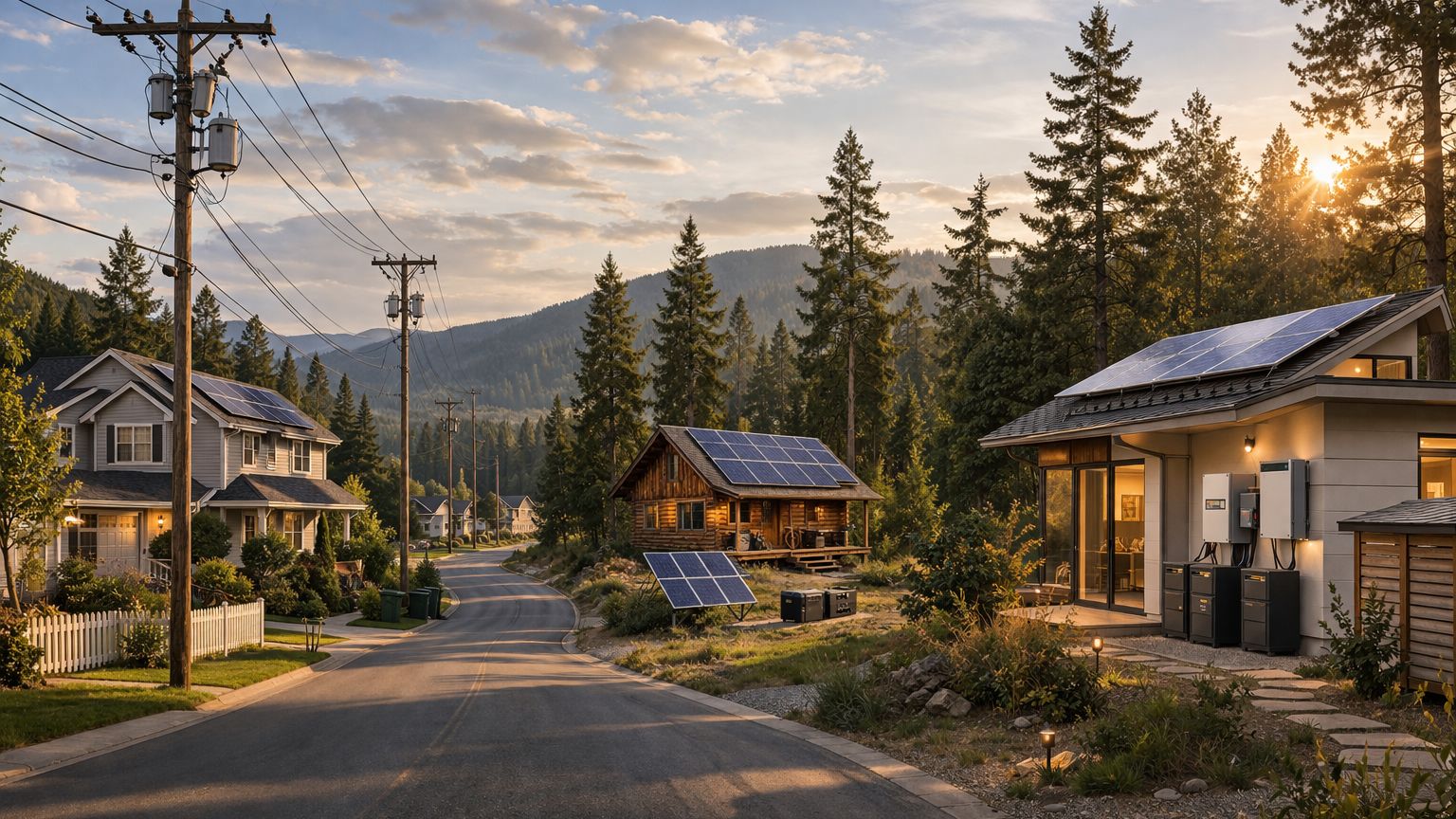
Choosing an energy system is one of the first major decisions anyone makes when exploring off-grid living.
The three most common approaches, grid-tied, off-grid, and hybrid, all generate and deliver electricity in different ways. More importantly, they are designed to solve different problems.
The right choice depends on your environment, your priorities, and how much responsibility you want your system to take on.
Understanding how each approach works makes it much easier to choose a system that fits your home instead of trying to adapt your home to a system that was designed for someone else’s situation.
What a Grid-Tied System Is
A grid-tied system remains connected to the utility grid at all times.
This is the most common arrangement in cities and suburban neighbourhoods because it provides continuous access to utility power while allowing homeowners to generate electricity with solar panels if they choose.
The utility grid continues supplying electricity whenever household demand exceeds local generation, making the transition between solar production and grid power largely invisible during normal daily use.
How It Works
- Utility power supplies the home whenever it is needed.
- Solar panels reduce grid consumption when generating electricity.
- Excess solar production may be exported to the grid where local policies allow.
Because the grid remains available, there is no need for battery storage simply to maintain everyday operation.
Advantages of Grid-Tied Systems
Grid-tied systems are popular because they are straightforward to install and require very little day-to-day attention.
Benefits include:
- Lower upfront costs than battery-based systems.
- Minimal maintenance.
- Continuous access to utility power.
- Reduced electricity consumption when paired with solar panels.
For households whose primary goal is lowering electricity costs, a grid-tied system is often the simplest solution.
Limitations of Grid-Tied Systems
The biggest limitation becomes apparent during a power outage.
Most grid-tied systems automatically shut down when utility power is lost.
This safety feature prevents electricity from being sent back into damaged power lines while utility crews are working to restore service.
As a result, solar panels alone usually cannot continue powering the home during a blackout.
Backup capability requires battery storage or a hybrid system designed to operate independently when utility power becomes unavailable.
What an Off-Grid System Is
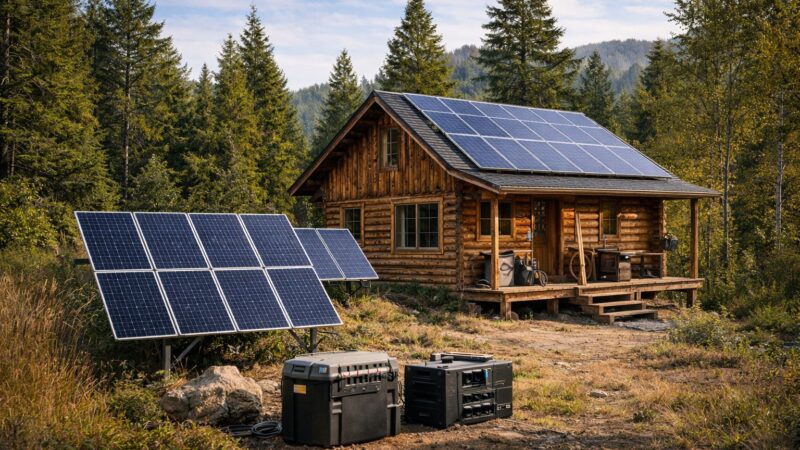
An off-grid system operates entirely without the utility grid.
Every watt of electricity must be generated, stored, and managed by the system itself.
This approach is common in remote cabins, rural properties, and locations where connecting to the electrical grid is impractical or prohibitively expensive.
How It Works
- Solar panels or other energy sources generate electricity.
- Batteries store energy for later use.
- Inverters convert stored energy into household AC power.
- The system supplies the home’s electrical needs without utility support.
Every aspect of daily operation depends on the capacity and design of the system.
Advantages of Off-Grid Systems
A well-designed off-grid system provides complete energy independence.
Benefits include:
- No reliance on utility infrastructure.
- Full control over energy production and storage.
- Practical operation in remote locations.
- Freedom from utility outages.
For many rural properties, these advantages make off-grid systems the most practical long-term solution.
Limitations of Off-Grid Systems
Independence also brings additional responsibility.
The system owner becomes responsible for balancing energy production, battery storage, equipment maintenance, and household consumption.
Planning mistakes become much more noticeable because there is no utility grid available to make up the difference.
For that reason, successful off-grid systems are usually built around careful system design, realistic energy expectations, and gradual refinement through experience.
What a Hybrid System Is
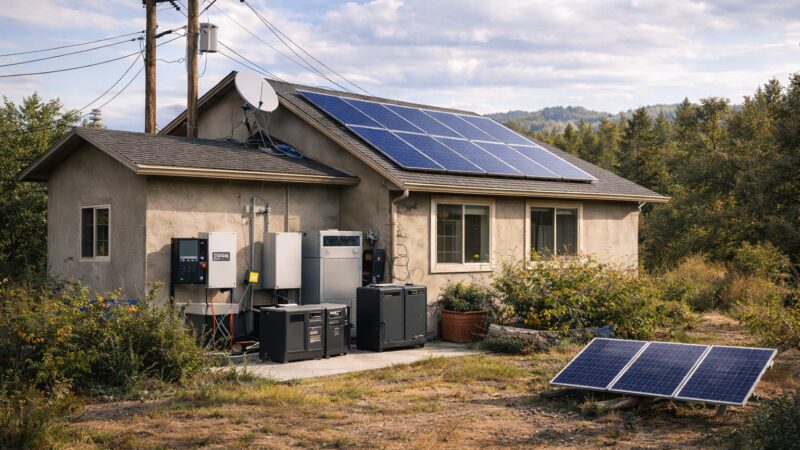
A hybrid system combines utility power, battery storage, and local energy generation into a single integrated system.
During normal operation, the utility grid continues supplying electricity whenever it is needed. Solar panels can reduce grid consumption while charging the batteries, and stored energy becomes available whenever conditions require it.
This flexibility allows the system to adapt throughout the day without requiring constant attention from the homeowner.
How It Works
- Solar panels generate electricity when conditions allow.
- Batteries store energy for later use.
- Utility power supplies the home whenever additional energy is required.
- During an outage, supported circuits can continue operating from battery storage.
Instead of relying on a single source of electricity, the system continuously balances multiple sources depending on availability and demand.
Advantages of Hybrid Systems
Hybrid systems combine many of the strengths of both grid-tied and off-grid designs.
Benefits include:
- Backup power during outages.
- Reduced dependence on the utility grid.
- Better use of locally generated solar energy.
- The ability to expand gradually as requirements change.
This flexibility allows homeowners to improve resilience without giving up the convenience of a grid connection.
Limitations of Hybrid Systems
Hybrid systems also introduce additional planning.
Battery storage, inverter sizing, supported circuits, charging priorities, and overall system configuration all influence how the system performs during normal operation and power outages.
None of these considerations make hybrid systems difficult to own.
They simply reward a basic understanding of how the major components work together.
For many households, that additional planning is a worthwhile tradeoff for the increased flexibility and backup capability.
How Urban Constraints Shape Your Final System
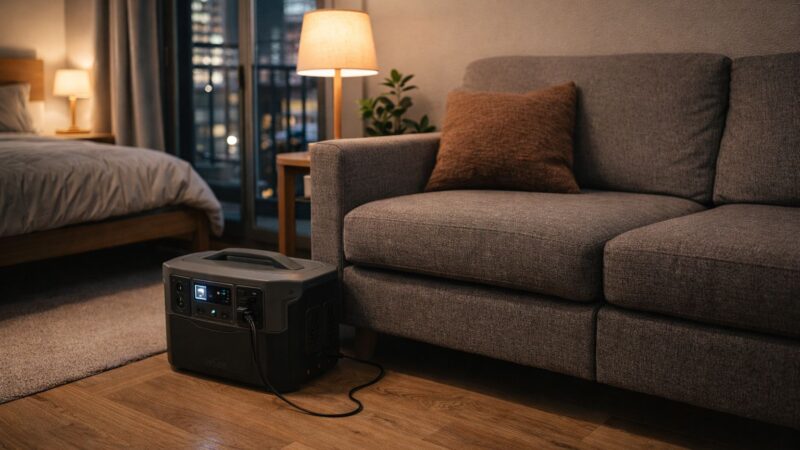
The environment has a major influence on every energy system.
Available space, local regulations, roof access, surrounding buildings, and existing infrastructure all affect what can realistically be installed and maintained.
Designing around those conditions usually produces better long-term results than attempting to copy a system built for a completely different environment.
Space Influences Every Decision
Most urban homes have practical limits on battery storage, solar panel placement, and equipment size.
These limitations naturally encourage systems that are:
- Compact
- Modular
- Efficient
Each component needs to provide meaningful value while fitting comfortably within the available space.
Regulations Influence System Design
Building regulations also shape what can be installed.
Apartment buildings, condominiums, and many urban neighbourhoods often restrict permanent modifications, fuel-powered equipment, or structural changes.
Understanding those requirements early helps prevent expensive redesigns later and encourages solutions that remain practical within the available space.
Existing Infrastructure Creates Opportunities
Urban homes already have access to one of the most reliable electrical networks ever built.
Rather than replacing that infrastructure completely, many households choose to build on top of it.
Battery storage, portable solar panels, and backup systems add resilience while allowing the utility grid to continue providing dependable everyday service.
This layered approach often produces a system that is easier to maintain, easier to expand, and better suited to the realities of urban living.
Why Hybrid Systems Are Often Misunderstood
Hybrid systems have become increasingly popular because they combine multiple sources of power within a single system.
That flexibility also creates misunderstandings.
One of the most common assumptions is that every hybrid installation automatically powers an entire home during an outage.
In reality, backup capability depends entirely on how the system has been designed.
Some installations support only a small number of essential circuits, while others provide backup for much larger portions of the home.
Battery readiness is another important consideration.
Backup power is only available when sufficient energy has been stored before the outage begins. A battery that has already been heavily discharged may provide much less runtime than expected, even though the system itself is functioning correctly.
Hybrid systems also operate differently throughout the day.
Electricity may come from solar production, battery storage, the utility grid, or several sources working together depending on household demand and available generation.
Understanding these interactions makes the system much easier to manage and helps explain why its behaviour changes as conditions change.
For many households, spending a little time learning those operating patterns provides years of dependable backup capability and greater confidence during outages.
How Each System Behaves During an Outage
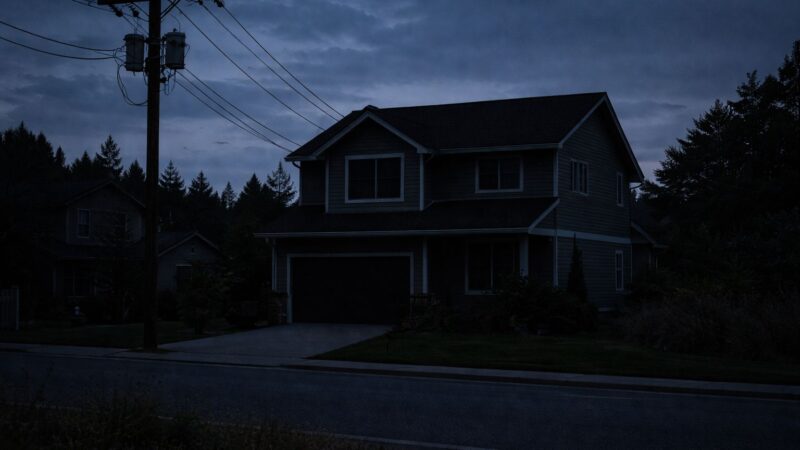
Every energy system performs well under normal conditions.
The real differences become clear when something interrupts the normal flow of electricity.
Understanding how each system responds during an outage helps set realistic expectations long before backup power is actually needed.
Grid-Tied Systems
A grid-tied system is designed around continuous access to utility power.
When the grid goes down, the system shuts down automatically as a safety measure to prevent electricity from feeding back into damaged power lines.
This behaviour is completely normal and required in most installations.
Without battery storage or a dedicated backup capability, the home loses power even if solar panels are producing electricity.
For many homeowners, this is the first time they realize that solar generation and backup power are not the same thing.
Off-Grid Systems
An off-grid system continues operating because it does not depend on the utility grid.
Instead, its performance depends entirely on the energy available within the system.
Battery capacity, solar production, weather conditions, and household consumption all influence how long the system can continue supplying power.
Extended periods of poor weather or unusually high energy use gradually reduce available reserves, making careful energy management an important part of long-term reliability.
A well-designed off-grid system plans for those situations by balancing generation, storage, and expected demand.
Hybrid Systems
Hybrid systems respond differently because they combine several sources of electricity.
During an outage, battery storage becomes the primary source of power while solar generation may continue charging the batteries if conditions allow.
How much of the home remains operational depends on the system’s configuration.
Some installations support only essential circuits, while others provide backup for much larger portions of the property.
Understanding exactly what your system is designed to power is just as important as understanding battery capacity.
The better those expectations match the system’s actual capabilities, the more predictable the experience becomes during an outage.
Choosing Based on Behaviour Instead of Features
System comparisons often focus on advantages.
Looking at how each system behaves during difficult conditions can be even more useful.
Grid-tied systems provide dependable everyday operation but rely entirely on utility infrastructure during outages.
Off-grid systems continue operating independently, provided sufficient energy has been generated and stored.
Hybrid systems combine elements of both approaches by maintaining utility access while providing battery-backed operation for selected parts of the home.
None of these approaches is universally better than the others.
Each reflects a different balance between simplicity, independence, flexibility, cost, and day-to-day involvement.
Understanding those tradeoffs makes it much easier to choose a system that matches both your environment and your expectations.
What Choosing a System Commits You To
Selecting an energy system is about more than choosing equipment.
Each approach carries a different level of responsibility throughout its lifetime.
Grid-tied systems require very little ongoing involvement because the utility company continues managing power generation and distribution.
Off-grid systems place much more responsibility on the owner. Energy production, battery management, maintenance, and household consumption all become part of regular planning.
Hybrid systems occupy the middle ground.
They continue benefiting from utility infrastructure while introducing battery storage, local generation, and backup capability that require a basic understanding of how the system operates.
Before making a decision, consider how involved you want to be.
Some households value simplicity above everything else.
Others enjoy managing and gradually improving their own systems.
Choosing an approach that matches both your environment and your preferred level of involvement usually leads to greater long-term satisfaction.
Comparing the Three Approaches
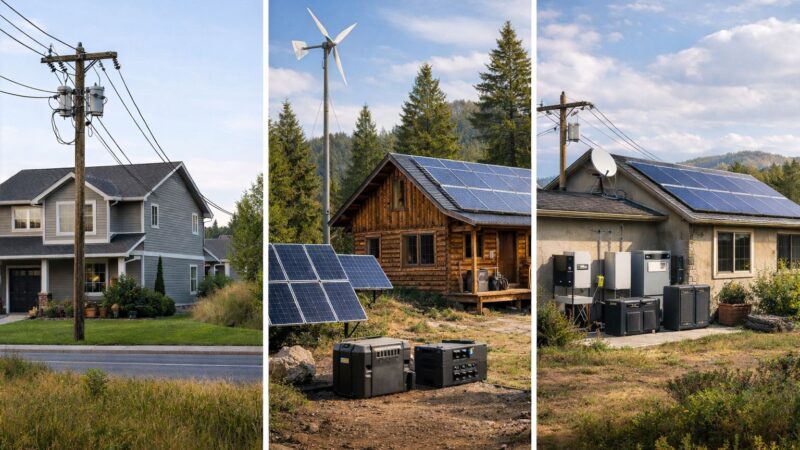
Each energy system serves a different purpose.
The best choice depends less on the equipment itself and more on the environment it will operate in, the level of resilience you want, and how much responsibility you’re comfortable managing over the long term.
Grid-Tied
Grid-tied systems are well suited to households that want reliable everyday power with minimal maintenance.
They work particularly well when the primary objective is reducing electricity costs through solar generation while continuing to rely on utility infrastructure for backup.
Best suited for:
- Everyday residential use
- Solar without battery storage
- Lower installation costs
- Minimal system management
Off-Grid
Off-grid systems are designed for complete energy independence.
They are most practical where utility infrastructure is unavailable, unreliable, or prohibitively expensive to connect.
Best suited for:
- Remote properties
- Rural homes and cabins
- Complete energy independence
- Users comfortable managing their own energy production
Hybrid
Hybrid systems combine the strengths of both approaches.
They maintain access to utility power while providing battery-backed operation during outages and allowing locally generated energy to play a larger role in everyday use.
Best suited for:
- Urban and suburban homes
- Backup power during outages
- Gradual system expansion
- Households seeking greater resilience without leaving the grid
The Transition Most People Actually Make
Very few households move directly from complete reliance on the utility grid to a fully off-grid lifestyle.
Most systems develop gradually as experience grows and priorities become clearer.
The journey often begins with a conventional grid-connected home.
The first step is usually adding backup capability.
A portable power station or small battery system keeps essential devices operating during outages while introducing the basic concepts of energy storage and power management.
As confidence grows, many households expand their systems.
Additional battery capacity, portable solar panels, or more efficient equipment increase flexibility without replacing the original investment.
At this stage, many systems naturally become hybrid.
For a large number of households, this provides the ideal balance between convenience, resilience, and long-term flexibility.
Some users continue expanding toward greater energy independence.
Others decide their hybrid system already provides everything they need.
Neither outcome is inherently better.
The right destination depends entirely on the environment, available space, and the goals the system was designed to achieve.
Building in stages also reduces expensive mistakes.
Every upgrade is informed by practical experience rather than assumptions, allowing the system to evolve naturally as requirements change.
Planning for Future Expansion
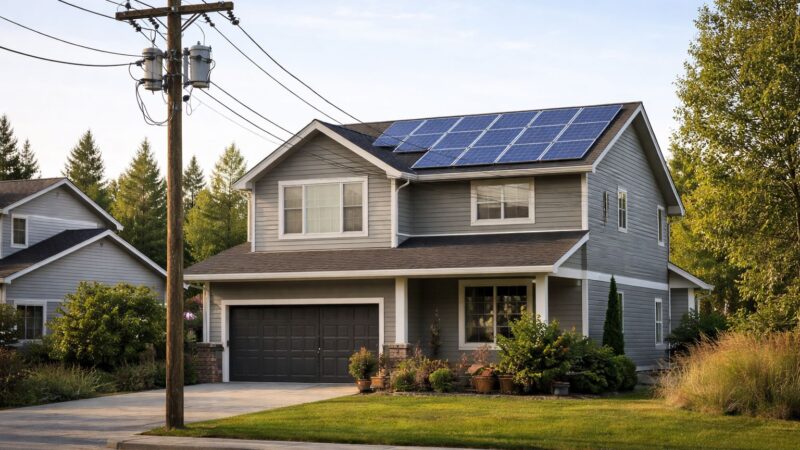
One advantage shared by many modern energy systems is their ability to grow over time.
A modest backup system today can become the foundation for a much larger installation in the future.
Additional battery capacity, portable solar charging, improved inverters, or more efficient appliances can all be introduced as requirements change.
Planning for expansion from the beginning also improves compatibility.
Choosing equipment that works well together allows future upgrades to build on the existing system instead of replacing it.
This gradual approach spreads costs over time while producing a system that reflects real experience instead of estimated requirements.
Safety and System Integration
As energy systems become more capable, proper integration becomes increasingly important.
Every component should be compatible with the rest of the system and installed according to the manufacturer’s recommendations and local electrical requirements.
Particular attention should be given to:
- Battery compatibility
- Inverter sizing
- Circuit protection
- Ventilation requirements
- Safe cable management
A well-integrated system is generally easier to maintain, easier to troubleshoot, and more dependable throughout its service life.
Good planning during the design stage often prevents many of the problems that appear later.
Choosing the Right System for Your Situation
There is no single energy system that is right for every household.
The best choice depends on where you live, how you use electricity, the level of resilience you want to achieve, and how much responsibility you’re comfortable taking on over the long term.
A grid-tied system works well when dependable utility power is already available and reducing electricity costs is the primary objective.
An off-grid system makes sense when complete energy independence is required or when utility infrastructure is unavailable.
A hybrid system provides a practical middle ground by combining everyday convenience with backup capability and room for future expansion.
Understanding your priorities before comparing equipment usually leads to better decisions than choosing a system based on features alone.
Common Misunderstandings
Several misconceptions continue to create confusion for people exploring off-grid systems.
One of the most common is assuming that solar panels automatically provide backup power during an outage.
In most grid-tied installations, this is not the case. Without battery storage or backup capability, the system shuts down whenever utility power is lost.
Another misunderstanding is assuming that complete off-grid independence is always the ideal solution.
For many households, particularly in urban environments, a well-designed hybrid system provides all the resilience they need while remaining easier to build, maintain, and expand.
It is also common to overestimate how much independence is actually required.
Many people discover that maintaining power for communication, lighting, refrigeration, and a handful of essential devices addresses the situations they are most likely to encounter.
Understanding these practical differences helps prevent unrealistic expectations and supports better long-term planning.
Looking Beyond Initial Cost
Purchase price is only one part of the overall investment.
Each system carries different long-term costs and responsibilities.
Grid-tied systems generally have the lowest upfront cost because they do not require battery storage, but they continue relying on utility infrastructure and monthly electricity costs.
Off-grid systems require a much larger initial investment in batteries, power generation, and supporting equipment. Those costs are balanced by greater energy independence, although long-term ownership still includes maintenance and eventual component replacement.
Hybrid systems spread investment across multiple stages.
Many households begin with battery storage, expand into solar generation, and increase system capacity as experience grows.
This gradual approach allows the system to develop alongside changing requirements while avoiding unnecessary upfront expense.
Final Thoughts
Grid-tied, off-grid, and hybrid systems each solve different problems.
Understanding those differences is far more valuable than simply comparing specifications or product features.
The most successful energy systems are designed around the environment they serve, the expectations of the people using them, and the level of involvement their owners are prepared to maintain.
For many urban and suburban households, a hybrid approach offers an effective balance between resilience, flexibility, and everyday convenience.
For rural properties, full off-grid independence may be the better solution.
Other homes may find that a straightforward grid-tied system already provides everything they need.
The right choice is the one that matches your environment, supports your priorities, and continues meeting your needs as those priorities evolve over time.