How to Start Off-Grid Without Moving: A Practical Urban Approach
Many people picture off-grid living as something that begins with a major life change.
Buying rural land. Leaving the city. Building a cabin far from existing infrastructure.
For most people, that isn’t where the journey begins.
The most valuable part of building an off-grid lifestyle is gaining experience. Learning how your equipment performs, understanding your daily needs, and developing practical systems all happen through regular use rather than relocation.
That process can begin wherever you live today.
Starting in your current home allows you to build knowledge gradually while keeping the stability of familiar surroundings. Instead of learning a new environment and a new energy system at the same time, you can focus on one challenge at a time.
For many households, this creates a stronger foundation than trying to change everything at once.
Why Starting Where You Are Works
Your current home already provides something incredibly valuable.
Familiarity.
You understand your daily routine, your available space, your energy use, and the practical limitations of your home far better than you would in a completely new environment.
That makes designing your first system much easier because you’re solving real problems instead of imagined ones.
You also have the opportunity to improve your setup gradually.
A portable power station today.
Additional lighting next month.
Water storage after that.
Each improvement becomes part of a larger system without disrupting everyday life.
Learning this way removes unnecessary pressure.
You can test equipment, reorganize storage, and discover what works while your normal utilities remain available.
By the time your backup system is needed during a real outage, it already feels familiar because you’ve spent time using it under ordinary conditions.
Why Experience Is Your Greatest Advantage
Many people delay getting started because they believe they need more knowledge first.
In reality, some of the most valuable lessons only appear after a system is in use.
A modest battery, reliable lighting, and a small water reserve quickly reveal how your household actually functions when normal services are interrupted.
You begin noticing which devices matter most.
How long your batteries last.
Which equipment you reach for first.
Where your setup feels awkward.
These observations are difficult to gain through research because every home operates differently.
Starting with a simple system also keeps mistakes inexpensive.
Equipment can be rearranged.
Storage can be improved.
Layouts can evolve.
Every adjustment teaches something useful and helps guide future purchases with greater confidence.
Over time, those small improvements produce a system that reflects the way you actually live instead of the way you expected you might.
Your First Week: Building a Practical Foundation
Getting started does not require a large budget or a complicated plan.
The objective during your first week is simply to build a small system that you can begin using immediately.
A practical first week might look like this.
Day 1: Identify the essentials
Make a list of the devices and services you would want available during a power outage.
For most households, this includes:
- Phones
- Internet equipment
- Lighting
- A laptop
- Basic food preparation
Day 2: Add backup power
Choose a portable power station or battery system that comfortably supports those essentials.
Avoid buying for every possible future scenario.
Focus on today’s requirements.
Day 3: Organize charging
Gather charging cables, power adapters, and extension cords into one location.
The easier your system is to deploy, the more useful it becomes during an unexpected outage.
Day 4: Improve lighting
Add reliable LED lighting and use it for an evening.
Small exercises like this quickly build familiarity while revealing anything that could be improved.
Day 5: Prepare for water
Store a small reserve of drinking water and think through how you would access additional water if an outage continued for several days.
Day 6: Plan a backup cooking method
Choose a practical cooking option that does not depend entirely on your kitchen.
The best solution depends on your living situation, available space, and local regulations.
Day 7: Test everything
Turn off your main power source and spend a short period relying on your backup equipment.
Nothing builds confidence faster than seeing your own system operate successfully.
By the end of the week, you won’t have a perfect off-grid system.
You’ll have something much more valuable.
You’ll have practical experience.
Step 1: Identify What Matters Most
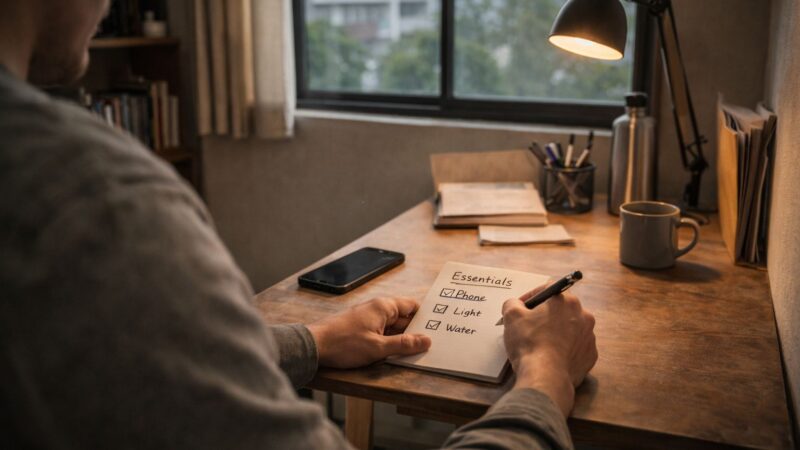
Before comparing products or planning upgrades, decide what your system actually needs to accomplish.
Ask yourself:
- Which devices need to remain operational during an outage?
- How long would you like to operate independently?
- Which parts of your daily routine are genuinely essential?
For many households, the answers are remarkably consistent.
- Communication
- Lighting
- Internet access
- Drinking water
- Basic food preparation
Defining these priorities first makes every later decision much easier.
Instead of buying equipment because it looks impressive or appears in a recommendation list, each purchase supports a clearly defined objective.
Build Your Budget Around Priorities
A capable off-grid system is usually built one layer at a time.
When funds are limited, begin with the equipment that provides the greatest immediate benefit.
For most people, that means backup power and reliable lighting.
Once those essentials are covered, attention can shift toward water storage and a practical cooking solution.
Larger battery systems, portable solar panels, and additional accessories become much easier to evaluate after you’ve gained experience with the equipment you already own.
Building in this order keeps costs under control while ensuring every purchase solves a real problem instead of preparing for situations that may never occur.
Why Your First Setup Should Stay Simple
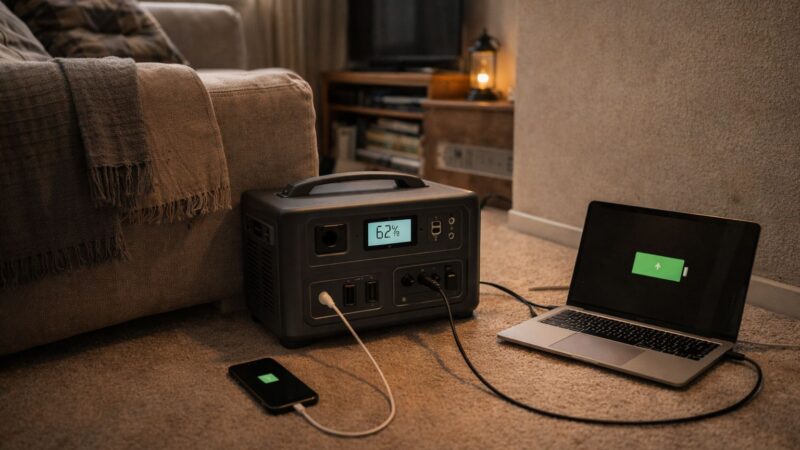
One of the easiest mistakes to make is trying to build a complete off-grid system from the beginning.
A simpler approach usually produces better long-term results.
A modest power station.
Reliable lighting.
A small water reserve.
One dependable cooking method.
This type of setup is easy to assemble, easy to test, and easy to use.
More importantly, it provides immediate feedback.
You learn how long your battery lasts.
You discover which devices consume the most energy.
You identify improvements based on everyday experience instead of assumptions.
Simple systems are also easier to keep organized.
Equipment stays together.
Cables remain accessible.
Nothing needs to be rebuilt every time you want to use it.
That consistency makes regular testing much more likely, and regular testing is what gradually turns unfamiliar equipment into dependable tools.
As your understanding grows, expansion becomes much easier because every upgrade responds to a need you’ve already observed instead of one you’ve imagined.
Step 2: Build Your First Layer (Power)
Power is usually the best place to begin because it supports so many other parts of an off-grid system.
A portable power station or compact battery system can keep essential devices operating during an outage while introducing you to the fundamentals of energy storage and battery management.
For many households, that first layer supports:
- Phones
- Laptops
- Internet equipment
- LED lighting
- Small electronic devices
Even a modest system changes the experience of a power outage.
Communication continues.
Important devices remain available.
Instead of reacting immediately to the loss of utility power, you have time to assess the situation and respond calmly.
That single improvement becomes the foundation every future upgrade builds upon.
Step 3: Add a Second Layer (Water and Cooking)
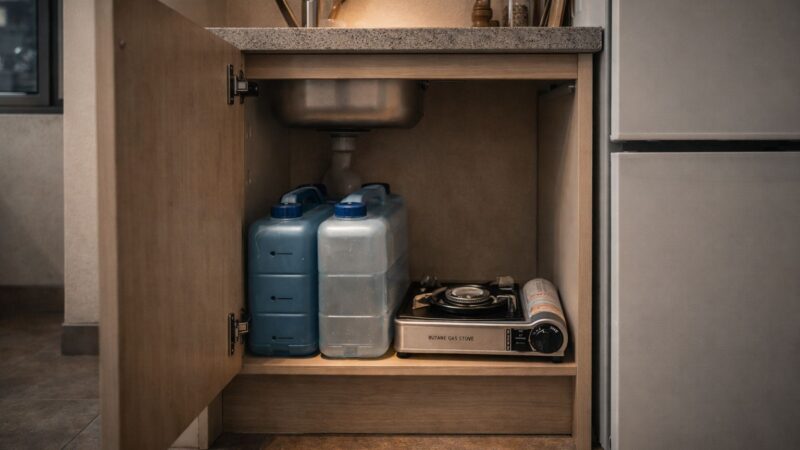
Once backup power is in place, the next priority is maintaining the basic functions of daily life.
Water and food preparation become much more noticeable during extended outages because they affect comfort as well as safety.
Fortunately, neither requires a large or complicated system to begin with.
Water
A practical starting point includes:
- A small reserve of drinking water
- A simple water filtration method
Even a modest supply provides valuable flexibility during short interruptions while allowing you to become familiar with storing, rotating, and managing your water over time.
If your household already has dependable municipal water, this layer may seem less urgent.
However, longer outages, infrastructure failures, or local advisories can quickly change that situation.
Planning ahead removes unnecessary uncertainty.
Cooking
The ability to prepare simple meals is another area where small improvements make a noticeable difference.
Consider a backup cooking option that suits both your home and local regulations.
Examples include:
- A portable butane stove
- A portable propane stove used safely where appropriate
- Battery-powered cooking for short durations
- Shelf-stable foods that require little or no preparation
The goal is not to replace your kitchen.
It is to ensure you can prepare basic meals when your primary cooking appliances are unavailable.
Together, power, water, and cooking form the foundation of a practical urban off-grid system.
Step 4: Test Your System
A backup system should never be used for the first time during an actual emergency.
Regular testing is one of the simplest ways to improve reliability while becoming more familiar with your equipment.
Start by simulating a short power outage.
Disconnect from your normal power source and rely entirely on your backup equipment for several hours.
Pay attention to what happens.
How long does the battery last?
Which devices consume more power than expected?
Was everything easy to access?
Did anything feel disorganized?
These small observations often lead to the most valuable improvements.
Testing also builds confidence.
Instead of wondering whether your system will perform when needed, you’ll already know how it behaves because you’ve seen it operate under realistic conditions.
What You’ll Learn During the First Month
The first few weeks usually teach more than weeks of additional research.
As you begin using your equipment regularly, patterns become much easier to recognize.
You learn which devices genuinely matter during an outage.
You discover how long your battery supports your daily routine.
You notice where equipment could be stored more efficiently or where additional lighting would make everyday use easier.
Some households discover they need additional battery capacity.
Others realize a better charging setup would provide greater benefit.
Many simply improve organization.
Each adjustment reflects something you’ve observed through experience rather than something you’ve assumed while planning.
That process gradually replaces uncertainty with familiarity.
Every improvement makes the system easier to use, easier to maintain, and better suited to the way your household actually operates.
The Advantage of Learning While the Grid Is Still Available
Building your first off-grid system while utility power remains available creates an opportunity that many people overlook.
You can experiment without pressure.
Equipment can be tested.
Storage can be reorganized.
New ideas can be evaluated without disrupting your daily routine.
If something doesn’t work as expected, making adjustments is straightforward because your normal utilities are still available.
That freedom encourages experimentation and helps build confidence one step at a time.
It also spreads costs over a longer period.
Every new component provides immediate value while becoming part of a larger system that continues growing as your needs evolve.
By the time your equipment is needed during a real outage, it is already familiar.
You know how it operates.
You know how long it lasts.
You understand its strengths, its limitations, and how it fits into the rest of your system.
Step 5: Expand Gradually
Expansion becomes much easier once you’ve spent time using your first setup.
Every upgrade should solve a limitation you’ve already experienced.
You might decide to add:
- Additional battery capacity
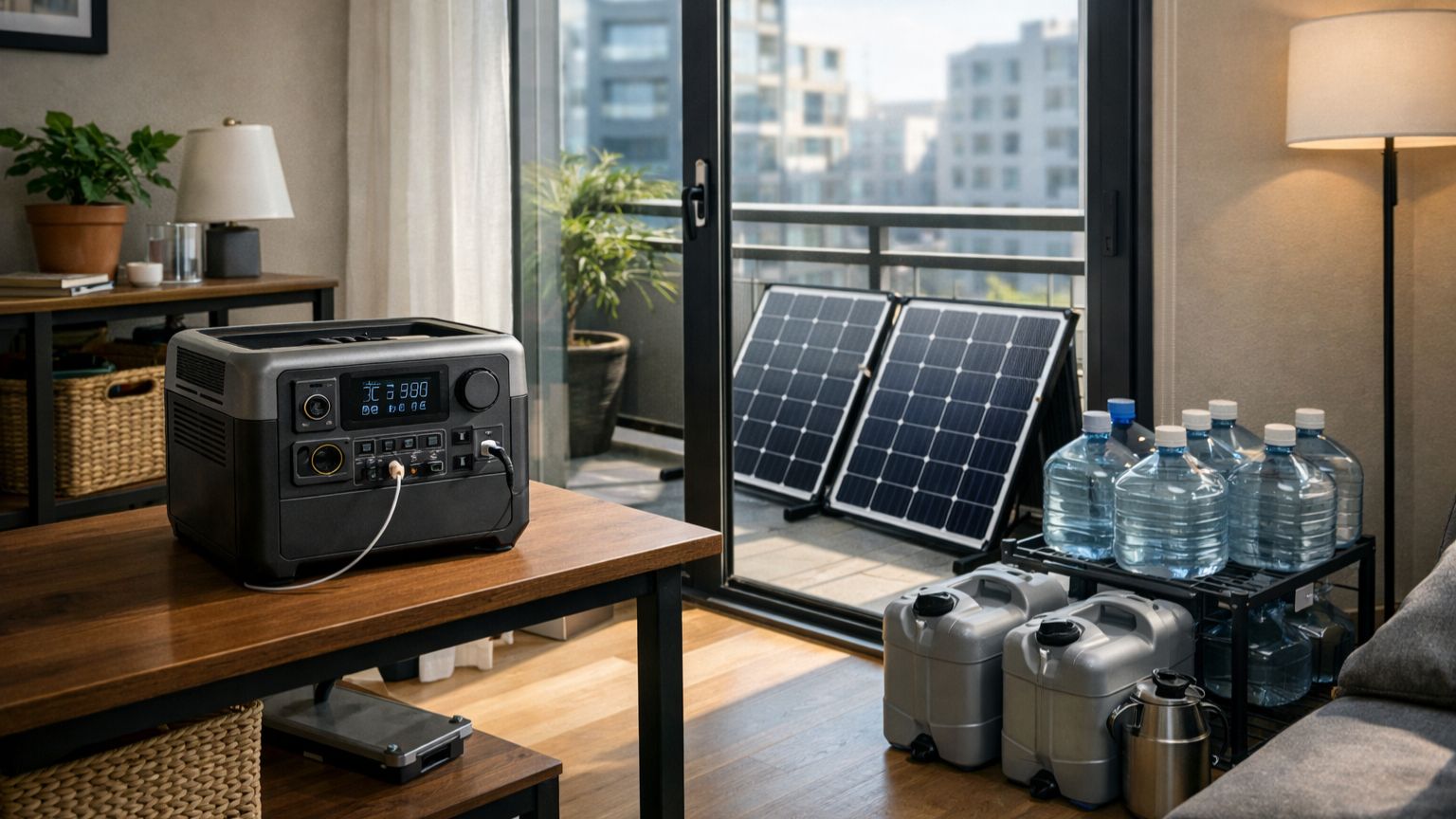
- Portable solar charging
- More efficient appliances
- Larger water reserves
- Improved organization and storage
Each addition should improve the system you already have rather than replace it.
Building this way keeps the entire setup practical while ensuring every purchase is supported by real-world experience.
Knowing When It’s Time to Expand
A simple starter system is designed to provide experience, not solve every possible situation.
Eventually, your own observations will show where additional capability would be valuable.
Frequent battery depletion.
Longer outages.
Additional devices.
Changes in how you work or live.
Each of these can indicate that your current setup has reached the point where expansion makes sense.
The most useful upgrades are usually the ones that solve a problem you’ve already encountered.
If battery capacity regularly becomes the limiting factor, additional storage may be worthwhile.
If recharging takes too long, portable solar or another charging method may provide greater value.
If water becomes the greatest concern, expanding storage or improving filtration may deserve priority instead.
This approach keeps every improvement focused, practical, and directly connected to the way you actually use your system.
What a Starter System Looks Like
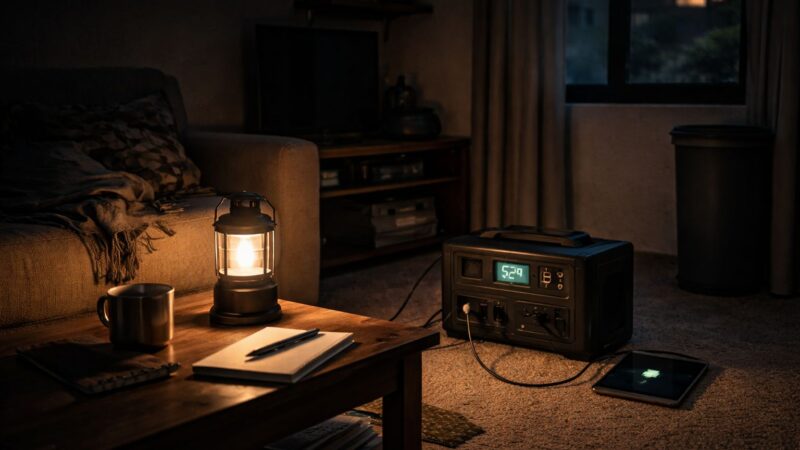
A practical urban off-grid system is usually much smaller than people expect.
It doesn’t need to fill a room or require permanent installation.
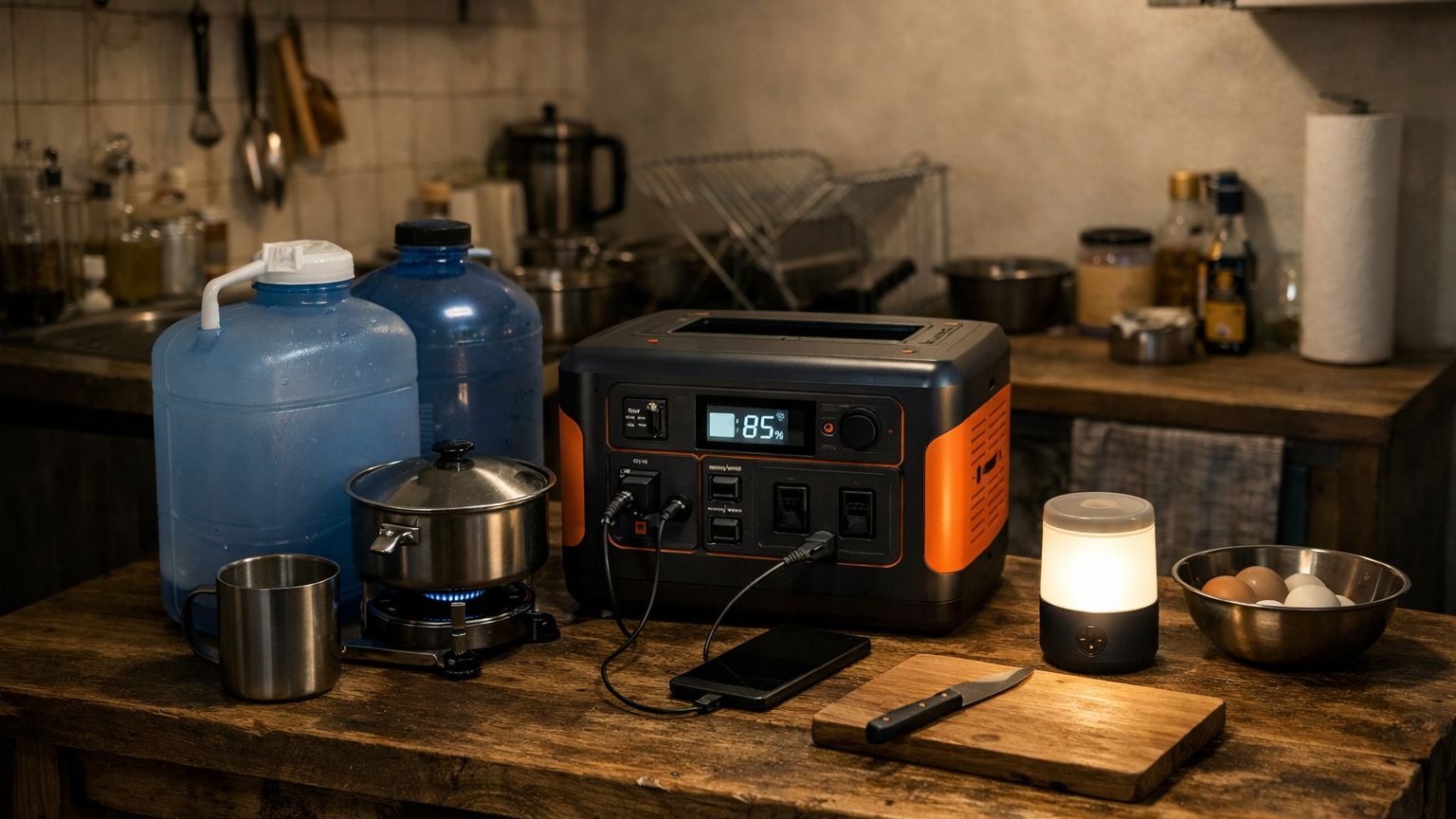
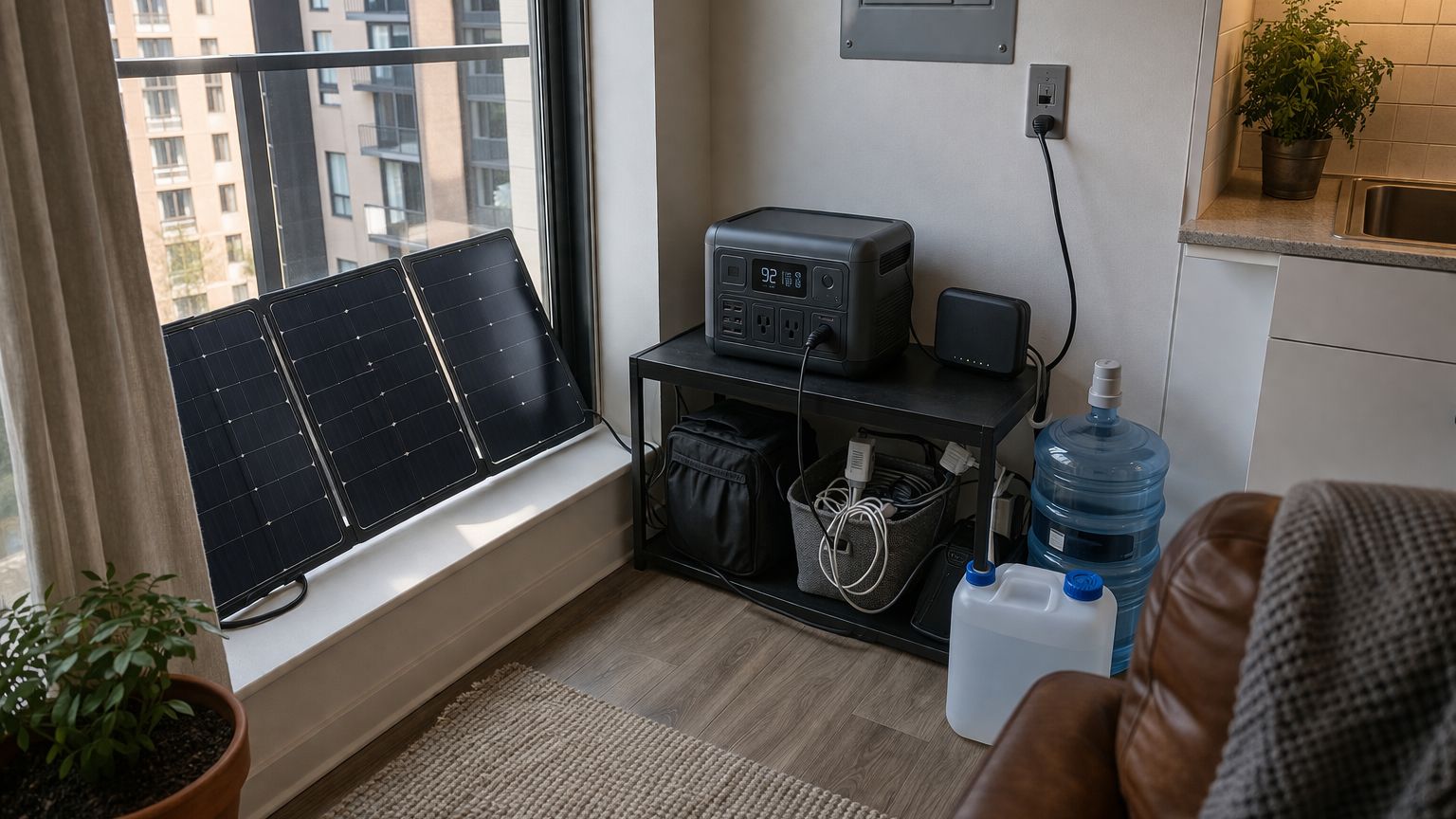
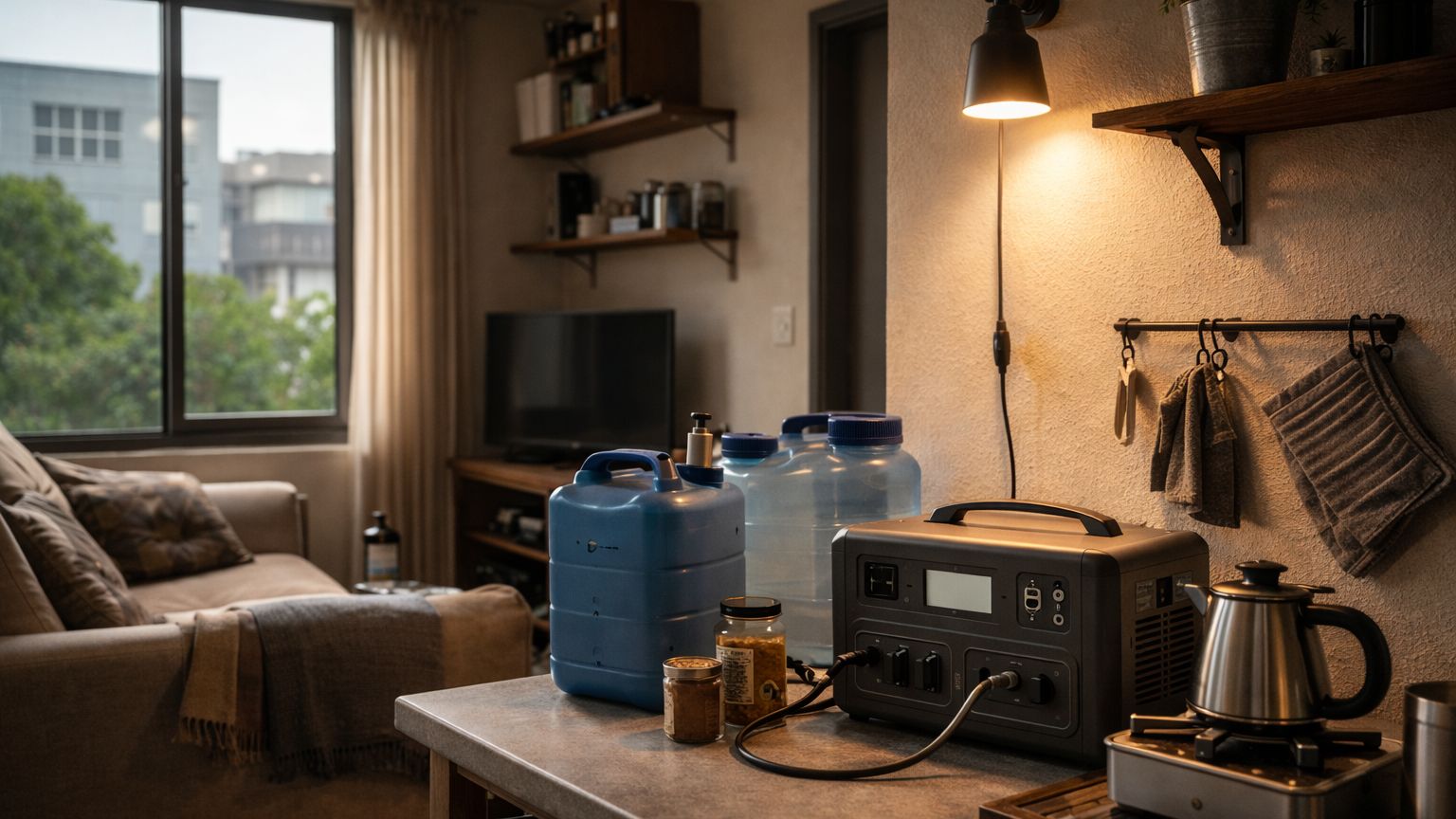
For many apartments and small homes, a solid starting setup includes:
- A portable power station
- Charging cables stored together
- Backup LED lighting
- A modest drinking water reserve
- A simple backup cooking method
Everything fits within a relatively small area and remains easy to access.
The objective is not to build a dedicated off-grid room.
It is to create a dependable system that integrates naturally into your existing living space.
Keeping Your System Organized
Organization has a much greater impact than many people expect.
Equipment that is difficult to find or requires extensive setup often goes unused until an emergency occurs.
Keeping related items together makes the entire system easier to deploy.
Power equipment, charging cables, lighting, and accessories should all be stored in a single location whenever practical.
The easier the system is to access, the more likely it is to become part of your normal routine.
Good organization also makes regular testing much simpler.
Instead of assembling equipment every time you want to check something, everything is already prepared and ready to use.
Why Small Spaces Often Produce Better Systems
Urban homes naturally encourage efficient design.
Limited storage, shared buildings, and practical space constraints make every component earn its place.
This often leads to systems that are:
- Compact
- Organized
- Easy to maintain
- Straightforward to expand
Rather than becoming a disadvantage, these limitations encourage careful planning and thoughtful purchasing decisions.
Each addition serves a clear purpose because unnecessary equipment quickly becomes obvious in a smaller living space.
Many experienced off-grid builders continue following these same principles even after expanding into much larger systems.
Why People Delay Getting Started
Waiting to begin is one of the most common obstacles to building an off-grid system.
It rarely happens because people lack interest.
More often, they believe they need more knowledge, more equipment, or the perfect plan before taking the first step.
That feeling is understandable.
There is an enormous amount of information available, and every recommendation can make the process seem more complicated than it really is.
The easiest way to move forward is to reduce the size of the first decision.
Choose one practical improvement.
Use it.
Learn from it.
Then build on that experience.
Progress comes from using equipment, not simply researching it.
Common Mistakes When Starting
Most beginner mistakes follow a predictable pattern.
People either wait too long or try to accomplish too much at once.
Some common examples include:
- Waiting for a perfect setup before buying anything.
- Trying to copy large rural systems without considering available space.
- Purchasing equipment before understanding actual energy requirements.
- Ignoring safety, storage, or organization.
Starting with a modest, practical system avoids many of these problems.
It provides useful experience while creating a foundation that can continue growing over time.
Safety and Responsibility
Even relatively small systems deserve careful attention.
Follow manufacturer recommendations for batteries, charging equipment, and portable cooking appliances.
Keep batteries in suitable environments, avoid overloading electrical equipment, and remain aware of local building requirements that may affect installation or fuel storage.
Routine inspections are also worthwhile.
Checking battery charge levels, replacing worn cables, and testing lighting periodically helps ensure the system remains dependable whenever it is needed.
A safe system is also a reliable system.
The Financial Advantage of Starting Gradually
Building an off-grid system does not require a large upfront investment.
One of the advantages of starting where you are is that costs can be spread across multiple stages.
Each new component provides immediate value while also becoming part of a larger system.
A portable power station improves resilience during outages.
Water storage increases preparedness.
Backup lighting makes everyday disruptions easier to manage.
As experience grows, those individual pieces gradually become a well-integrated system.
This staged approach also reduces the risk of expensive purchasing mistakes because each upgrade is based on practical experience rather than estimated future requirements.
Choosing Equipment That Can Grow With You
Early purchasing decisions influence how easily a system can expand later.
Whenever practical, choose equipment that supports future growth instead of limiting it.
Expandable battery systems, common charging standards, and solar-compatible power stations all make future upgrades much easier.
Planning for compatibility does not mean buying the largest or most expensive equipment available.
It means selecting components that continue providing value as additional batteries, solar panels, or supporting equipment are added over time.
Building this way allows your system to evolve naturally without replacing major components each time your needs change.
Building Good Habits From the Beginning
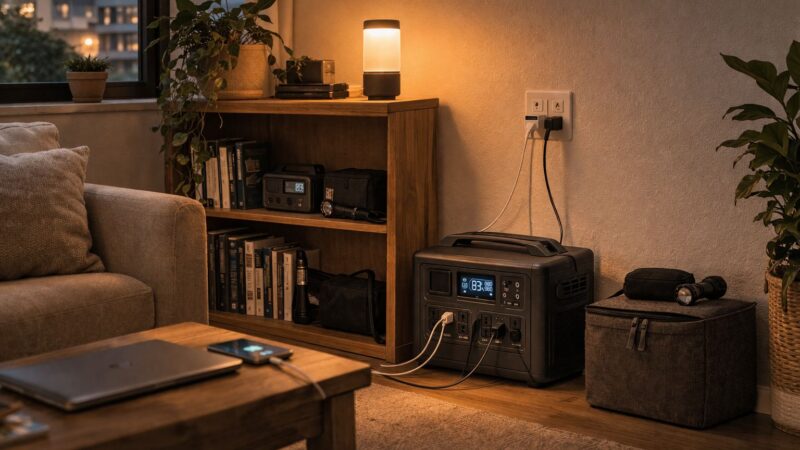
Reliable off-grid systems are supported by good habits as much as good equipment.
Keeping batteries charged, rotating stored water, testing backup lighting, and organizing charging cables all help ensure the system remains ready whenever it is needed.
These routines require very little effort, yet they steadily improve both reliability and familiarity.
Regular use also reveals small problems before they become larger ones.
A cable that no longer charges properly.
A flashlight with weak batteries.
Equipment that would be easier to access if it were stored somewhere else.
Small adjustments like these accumulate over time, creating a system that becomes increasingly dependable through regular use.
Final Thoughts
Starting an off-grid journey does not require leaving the city or waiting for the perfect property.
It begins by understanding your own needs and building practical systems that improve resilience one step at a time.
For many people, the most valuable resource they develop is experience.
Every time you test your equipment, reorganize your setup, or expand your system, you gain a better understanding of how your household functions when normal infrastructure is unavailable.
Those lessons guide future decisions far more effectively than research alone.
Whether your long-term goal is emergency preparedness, greater self-reliance, or eventually living fully off-grid, starting where you are creates a foundation that can continue growing for years.
The first system does not need to be perfect.
It only needs to give you a place to begin.