Is Urban Off-Grid Worth It in 2026?

Interest in urban off-grid living has continued to grow as more people look for practical ways to improve resilience, reduce dependence on public infrastructure, and prepare for occasional disruptions.
Rising utility costs, an increasing reliance on connected technology, and greater awareness of emergency preparedness have all contributed to that interest. For many people, however, the same question comes up before any equipment is purchased.
Is building an urban off-grid system actually worth it?
The answer depends on what you expect the system to provide.
Some people are looking for lower electricity costs. Others want dependable backup power, greater self-reliance, or the ability to continue working through unexpected outages. Those goals all create value, but they measure success in different ways.
Understanding what you want your system to accomplish is the first step toward deciding whether the investment makes sense.
What “Worth It” Really Means
Value means different things to different people.
A homeowner focused on reducing electricity costs will judge success differently than someone who works remotely and depends on uninterrupted power throughout the day. Another person may place the greatest value on emergency preparedness or the confidence that comes from knowing essential systems will continue operating during an outage.
These priorities often overlap, but they rarely carry the same importance for every household.
Defining those priorities before comparing equipment or prices makes it much easier to determine whether an off-grid system is likely to deliver meaningful value.
Looking Beyond Financial Payback
Many people approach off-grid systems as they would any other household investment.
The first question is often simple:
“When will this pay for itself?”
It’s a reasonable place to start, but financial payback is only one way to measure value.
Small urban systems rarely produce dramatic utility savings on their own. Their greatest benefit often comes from maintaining capability when normal infrastructure becomes unavailable.
A short power outage may interrupt work, delay important tasks, disconnect communication, or prevent access to essential devices. For households that rely heavily on electricity, avoiding even a few of those disruptions can provide value that is difficult to capture on a utility bill.
Considering both financial savings and practical resilience creates a much more complete picture of what an off-grid system contributes over time.
The Costs That Are Easy to Overlook
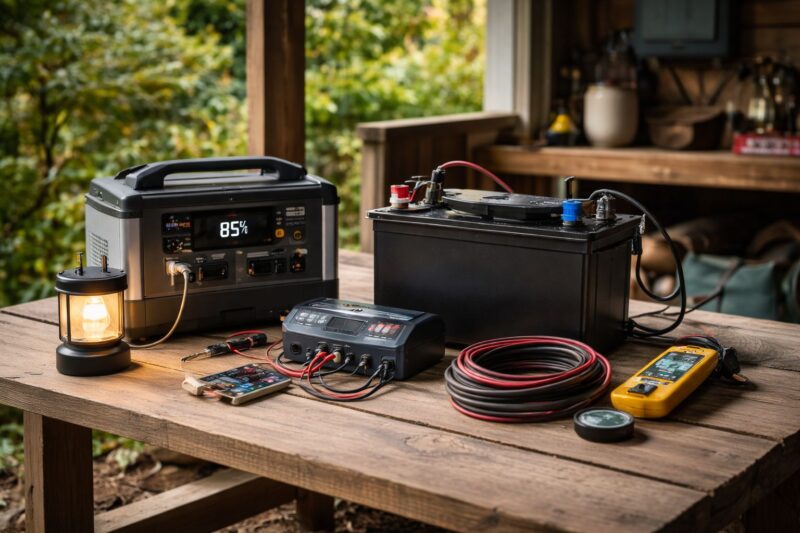
The purchase price of batteries, solar panels, and supporting equipment is easy to measure.
The cost of interruptions is much harder to quantify.
A few hours without power may delay work, interrupt communication, prevent internet access, or leave essential devices unavailable when they are needed most. Individually, those events may seem minor. Repeated over months or years, they begin carrying a measurable cost in lost productivity, inconvenience, and disrupted routines.
There is also the value of flexibility.
Households that rely entirely on a single source of power have very few options when that source becomes unavailable. Even a modest backup system creates additional choices during an outage by allowing essential equipment to continue operating while normal service is restored.
For many people, that added flexibility becomes one of the strongest reasons for investing in an off-grid system.
Evaluating an off-grid system through that broader perspective often produces a very different answer than comparing equipment costs against monthly electricity savings alone.
The Cost Factor
Every off-grid system begins with an upfront investment.
Battery storage, backup lighting, emergency cooking equipment, water storage, and optional solar charging all require time and money to assemble.
The appropriate budget depends on the role the system is expected to perform.
The appropriate investment depends on the role the system is expected to perform. A compact emergency backup setup has very different requirements than a larger hybrid system designed to support more of the household.
Looking at the purchase as a long-term investment often provides a more realistic perspective than focusing only on the initial expense. Equipment purchased today may continue providing value for many years while forming the foundation for future upgrades.
Reliability in an Uncertain Environment

Modern cities are built around highly reliable infrastructure, but no system is immune to interruptions.
Severe weather, equipment failures, maintenance work, and increasing demand can all lead to temporary outages that disrupt daily routines.
For households with an off-grid system, those same events are experienced differently.
Essential devices remain powered, communication continues, and everyday activities can often continue with only minor adjustments.
That ability to maintain normal routines during unexpected disruptions is one of the strongest long-term benefits of an urban off-grid system.
Why Smaller Systems Often Deliver the Greatest Value
Many people assume meaningful resilience requires a large and expensive installation.
Urban experience often points in a different direction.
A relatively small system capable of supporting lighting, communication equipment, internet access, and a handful of essential devices can remove many of the most significant inconveniences associated with a power outage.
The practical benefit gained from that first level of capability is often much greater than people expect.
Additional battery capacity, larger solar arrays, and expanded coverage certainly provide advantages, but those improvements tend to build on an already capable foundation rather than creating the initial value.
Beginning with a smaller system allows you to understand how the equipment performs under everyday conditions. Future investments become easier to prioritize because they are guided by practical experience. Future upgrades become easier to plan because they respond to real experience instead of estimated requirements.
Flexibility Makes Urban Systems Easier to Build
One advantage of urban off-grid living is that systems can develop gradually.
Many people begin with emergency backup power and expand only after identifying additional needs through everyday use.
Extra battery capacity, portable solar panels, improved lighting, or more capable charging systems can all be added over time without replacing the original setup.
This gradual approach spreads costs across multiple stages while allowing each addition to improve an already functional system.
Working Within Urban Constraints

Every urban environment introduces practical limitations that influence system design.
Available space, apartment layouts, building regulations, balcony access, and surrounding structures all affect what can realistically be installed and maintained.
Successful systems acknowledge those limitations from the beginning.
Compact equipment, modular designs, and portable components often provide greater long-term value because they fit comfortably within the realities of urban living while leaving room for future expansion.
Who Benefits the Most
Urban off-grid systems provide value for a wide range of households, but some people benefit more quickly than others.
Remote workers, home-based business owners, people who rely heavily on communication equipment, and anyone whose daily routine depends on consistent access to electricity often experience the greatest practical improvements.
Families with medical equipment, individuals living in areas that experience regular outages, and people who simply want greater preparedness may also find that even a modest system provides meaningful peace of mind.
The more important uninterrupted power becomes in your daily routine, the easier it is to recognize the value an independent backup system can provide.
The Learning Curve
Building an off-grid system also involves learning how that system behaves under everyday conditions.
Understanding battery capacity, energy consumption, charging opportunities, and equipment limitations develops gradually through regular use.
Those experiences shape future decisions far more effectively than specifications alone.
Over time, the system becomes easier to manage because its capabilities, limitations, and normal operating patterns become familiar through practical experience.
That growing familiarity often proves just as valuable as the equipment itself.
What Happens During a Real Outage
The value of an off-grid system becomes much easier to appreciate when utility power is unavailable.
During normal conditions, backup equipment often sits quietly in the background. An outage is the moment when careful planning becomes visible.
Without a backup system, everyday activities stop almost immediately. Lights go out, internet equipment shuts down, devices begin running on their internal batteries, and communication options become increasingly limited as those batteries are depleted.
A modest off-grid setup changes that experience.
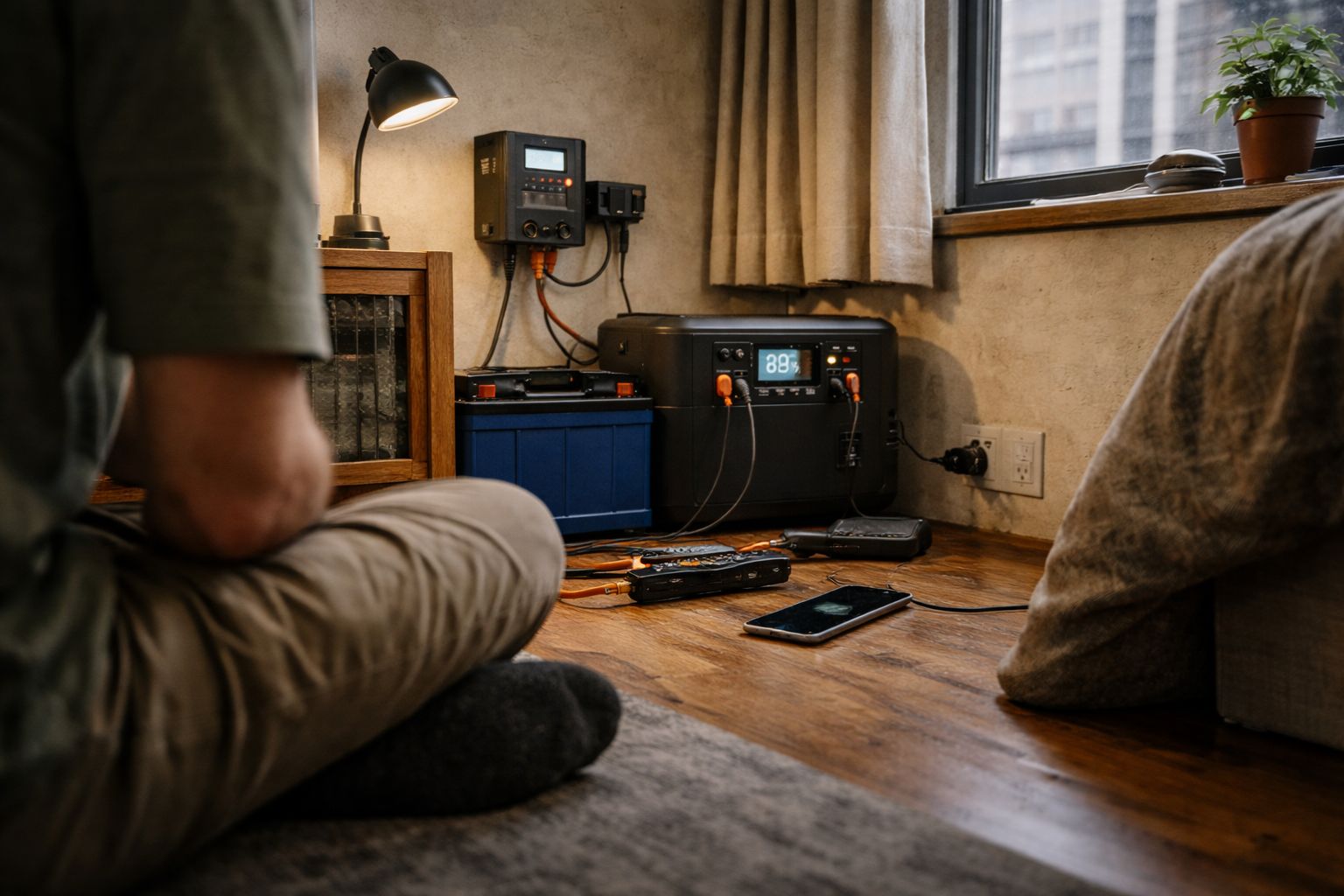
Essential lighting remains available. Phones, laptops, and communication equipment continue operating. Internet service may remain available if local infrastructure is still functioning and networking equipment has backup power.
The difference is rarely dramatic.
Instead, it appears in the continuity of ordinary routines. Work can continue. Important information remains accessible. Communication with family, friends, or emergency services becomes much easier to maintain.
The longer an outage continues, the more valuable those capabilities become.
Comparing the Alternatives
Choosing not to build a backup system is still a decision.
For many households, it is a perfectly reasonable one.
Areas with highly reliable infrastructure and infrequent outages may provide little practical reason to invest in independent power.
Other households experience a different balance.
Frequent interruptions, remote work, medical equipment, or a strong preference for preparedness can all increase the value of maintaining essential services during unexpected disruptions.
Comparing those situations helps place the investment in context.
The question is rarely whether every household needs an off-grid system.
The more useful question is how much benefit a particular household would gain from having one.
Long-Term Value Develops Gradually
The usefulness of an off-grid system often grows over time.
As experience increases, equipment becomes better organized, upgrades become more targeted, and the overall system becomes more capable without becoming unnecessarily complicated.
Each improvement builds on an existing foundation.
Additional storage extends runtime. Better charging options improve flexibility. More efficient equipment increases overall performance without requiring major changes elsewhere in the system.
This gradual progression allows the system to evolve alongside changing needs. Each upgrade builds on practical experience, making future decisions easier and more deliberate.
When Urban Off-Grid May Not Be the Right Choice
An off-grid system is not the right investment for every household.
Someone living in an area with exceptionally reliable electrical service, minimal outage risk, and little need for backup capability may decide that the cost and maintenance are difficult to justify.
Others may simply prefer relying on existing infrastructure without adding additional equipment or responsibilities.
These are practical considerations.
The value of an off-grid system always depends on how closely it matches the needs, priorities, and circumstances of the people using it.
What a Practical Urban Setup Looks Like

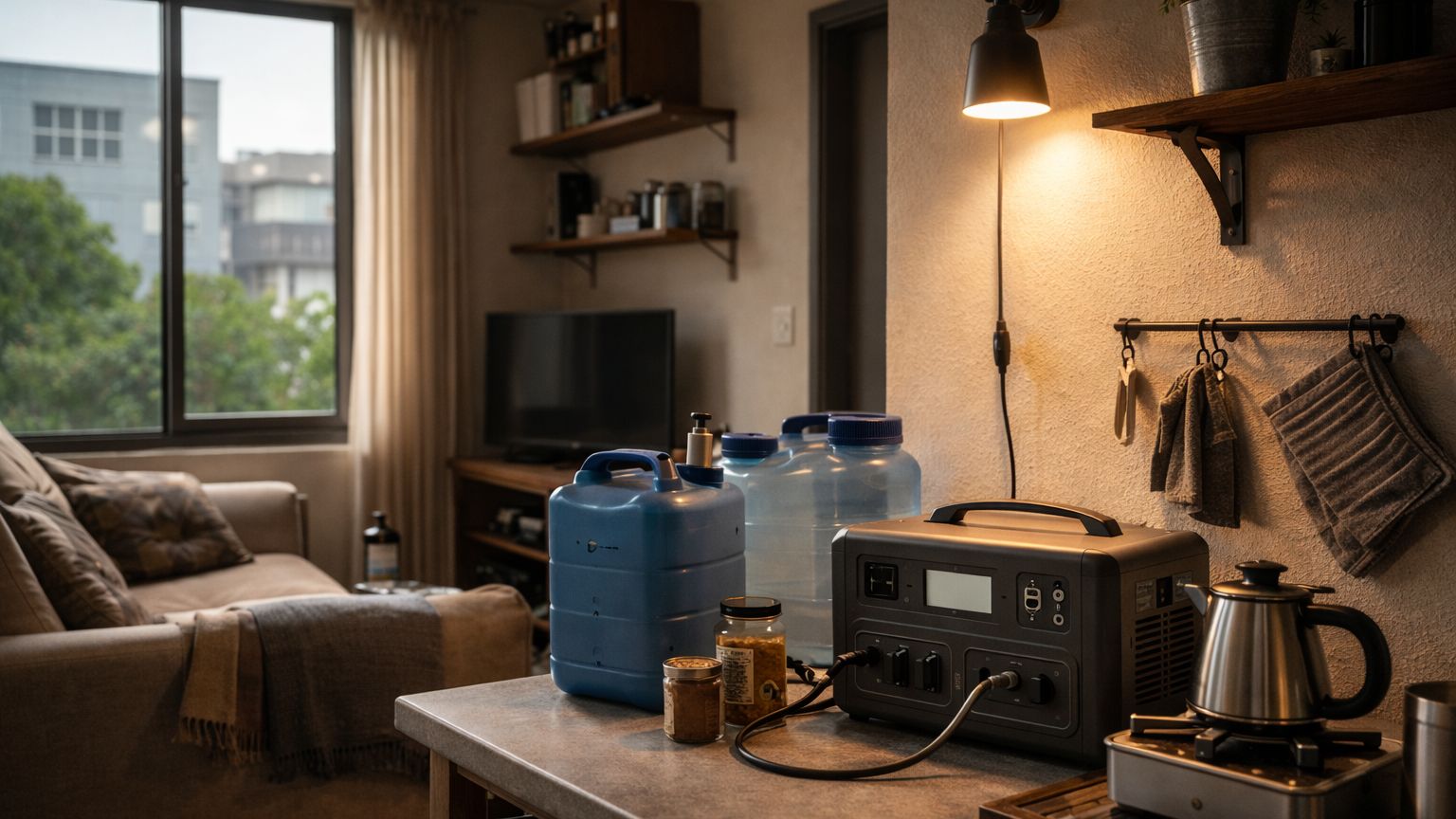
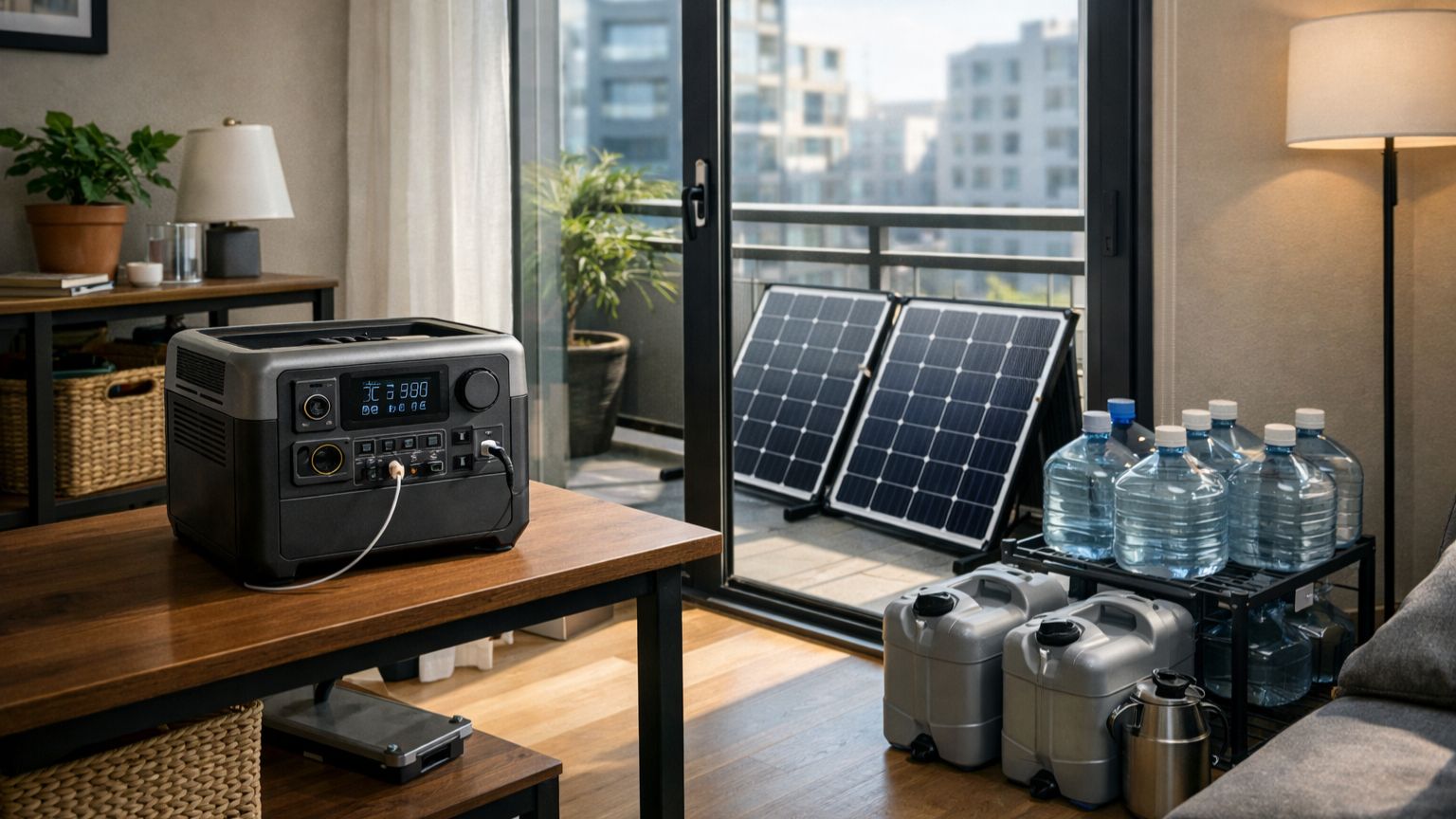
For many households, a practical urban off-grid system remains surprisingly simple.
It may include:
- A portable battery power station
- Backup lighting
- Device charging capability
- Optional portable solar charging
- Basic emergency cooking equipment
- Modest water storage
This type of system supports the functions people rely on most while remaining compact, easy to maintain, and straightforward to expand if requirements change in the future.
Practical systems are easier to maintain, easier to expand, and more likely to remain useful as needs change over time.
Why 2026 Is a Good Time to Start
Several trends have made urban off-grid systems more practical than they were only a few years ago.
Portable battery systems have become more capable, solar charging equipment is easier to transport and deploy, and a wider range of products allows people to build systems that match their available space and budget.
At the same time, electricity has become more central to everyday life.
Remote work, online services, connected devices, and digital communication all increase the impact of even short interruptions to power.
For many households, maintaining access to those essential systems has become a more important consideration than reducing electricity bills alone.
Together, these changes make urban off-grid systems more accessible and more relevant than they have been in the past.
The Direction Urban Off-Grid Is Heading
Urban off-grid living continues to evolve as equipment becomes more compact, efficient, and adaptable.
Battery technology is improving, portable solar options continue to expand, and hybrid systems are becoming easier to integrate into existing homes without major renovations.
Future improvements are likely to make equipment easier to install, simpler to manage, and better integrated into everyday life while continuing to improve efficiency and capability.
For urban households, that gradual evolution is making independent backup systems practical for a much wider range of people than ever before.
Balancing Independence and Convenience
One of the greatest advantages of urban off-grid living is that it does not require abandoning existing infrastructure.
The utility grid continues providing reliable everyday service, while independent systems supply additional resilience whenever they are needed.
That combination allows households to benefit from both approaches.
Everyday convenience remains intact, and independent backup capability is available whenever normal infrastructure becomes unavailable.
For many urban environments, this balance provides a practical level of independence without introducing unnecessary complexity.
How the Value Changes Over Time
The benefits of an off-grid system often become clearer after it has been used through several real-world situations.
The first successful outage, a productive workday during a power interruption, or simply knowing essential equipment is always available changes the way many people think about preparedness.
Confidence develops gradually through experience.
Each successful use reinforces trust in the system, while every small improvement makes future upgrades easier to plan and more closely aligned with actual needs.
Over time, the equipment becomes part of the normal household routine. Regular use builds familiarity and keeps the system ready whenever it is needed.
That gradual integration is one of the reasons long-term users often describe their systems as more valuable than they originally expected.
Final Thoughts: Is Urban Off-Grid Worth It?
Whether an urban off-grid system is worthwhile depends entirely on what you expect it to accomplish.
For some households, reducing utility costs will be the primary goal.
Others place greater value on maintaining communication, supporting remote work, improving emergency preparedness, or reducing reliance on a single source of power.
The most successful systems are designed around those priorities from the beginning.
They begin with clearly defined objectives, grow through practical experience, and expand only when additional capability provides meaningful value.
Urban off-grid living focuses on building practical resilience that fits your home, your routine, and the way you already live.
It is about building practical resilience that fits your home, your routine, and the way you already live.
For many people, that balance makes the investment worthwhile long before the system reaches its full potential.