Can You Live Off-Grid in a City? The Reality Explained
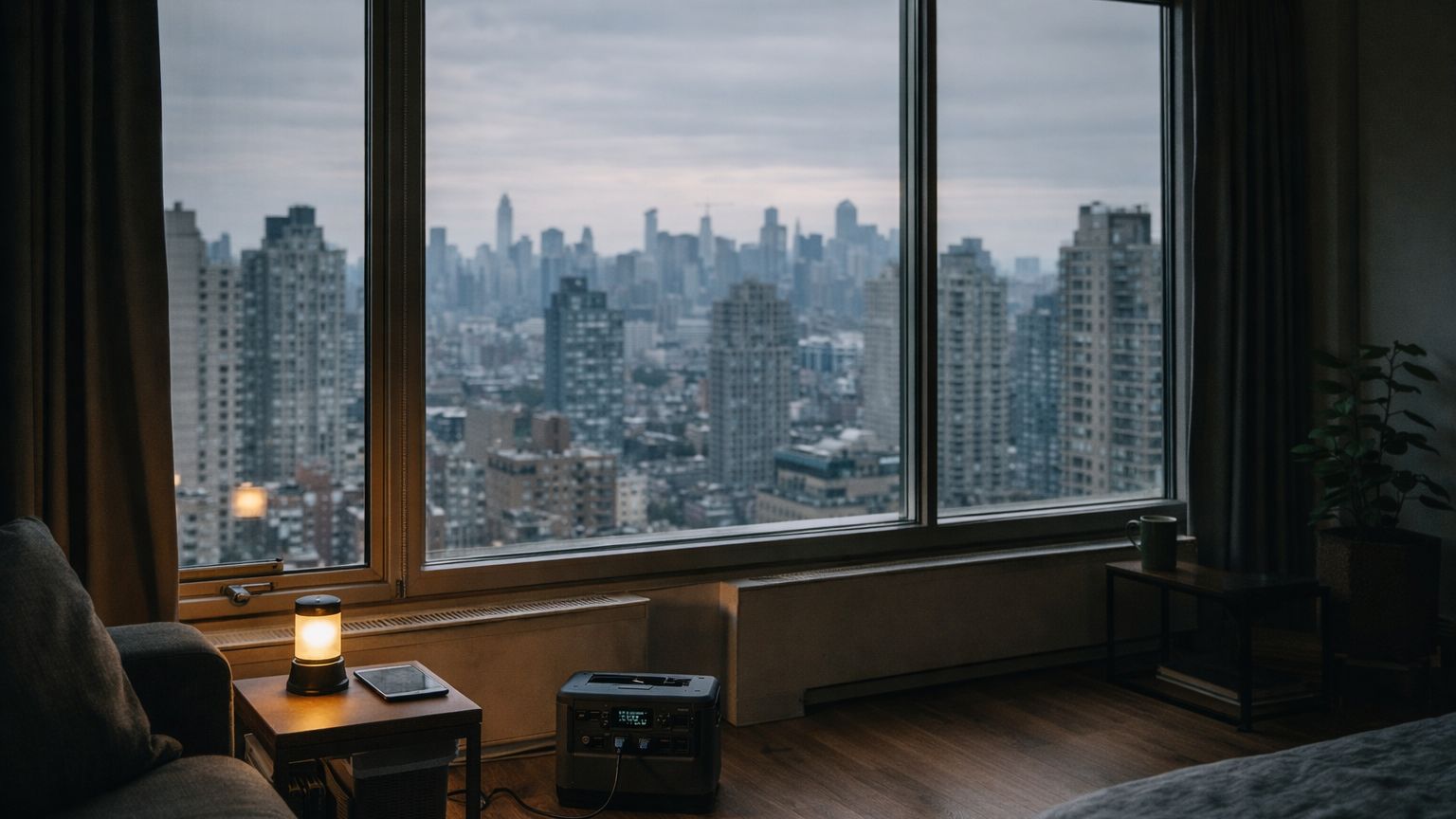
The idea of living off-grid in a city sounds appealing at first.
No utility bills. No reliance on unstable infrastructure. Full control over your environment.
But once you move past the concept, the reality becomes more complex.
In most urban environments, complete off-grid living is not practical. In many cases, it is not even allowed. The better question is not whether you can fully disconnect, but how far you can realistically reduce your dependence on the grid.
What “Off-Grid” Means in an Urban Context
In a rural setting, going off-grid usually means total independence. You generate your own power, source your own water, and operate entirely outside public infrastructure.
Cities are different.
Urban off-grid living is usually partial. You stay connected to utilities, but you build systems that allow you to operate independently when needed.

This often includes:
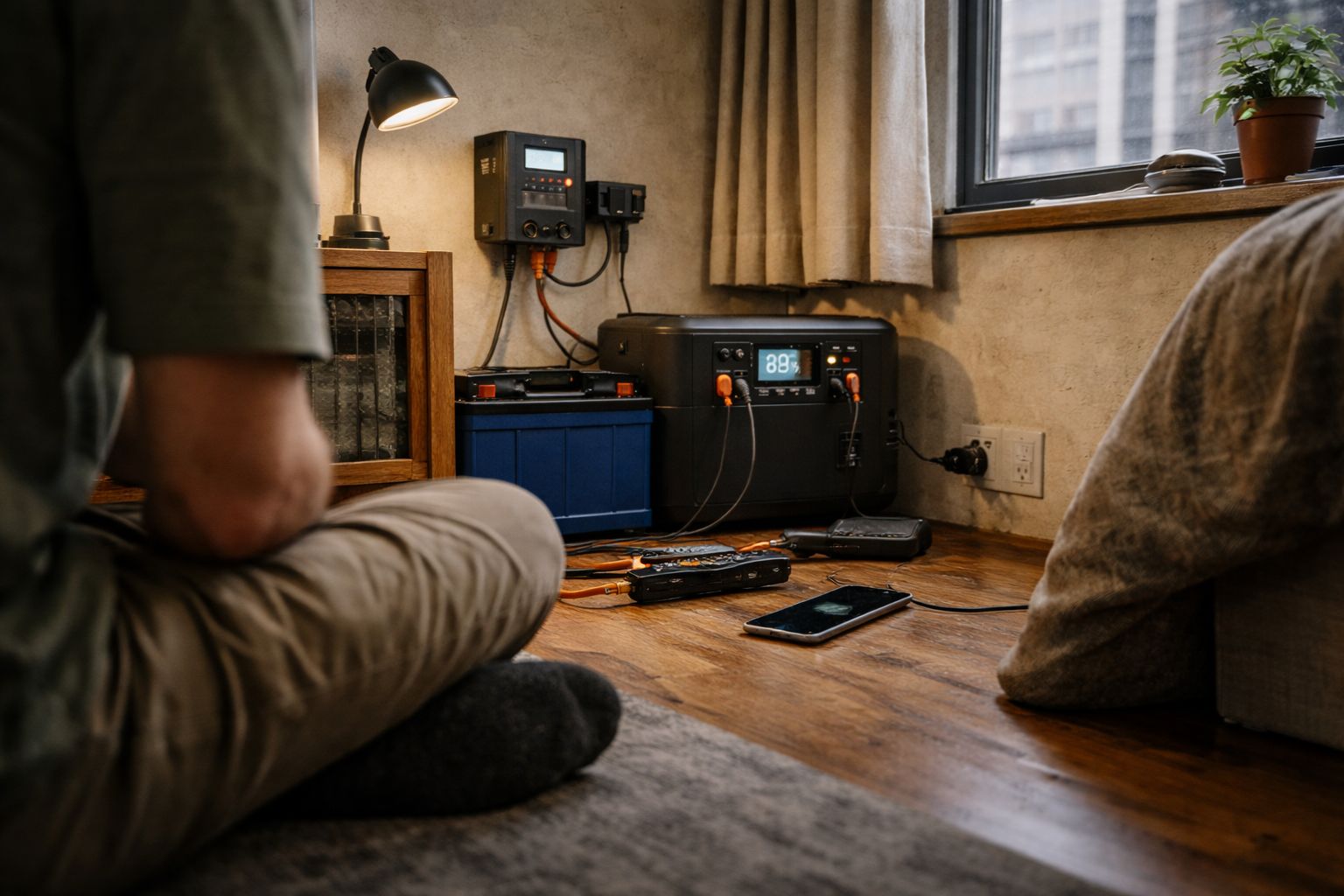
- Backup power systems
- Stored and filtered water
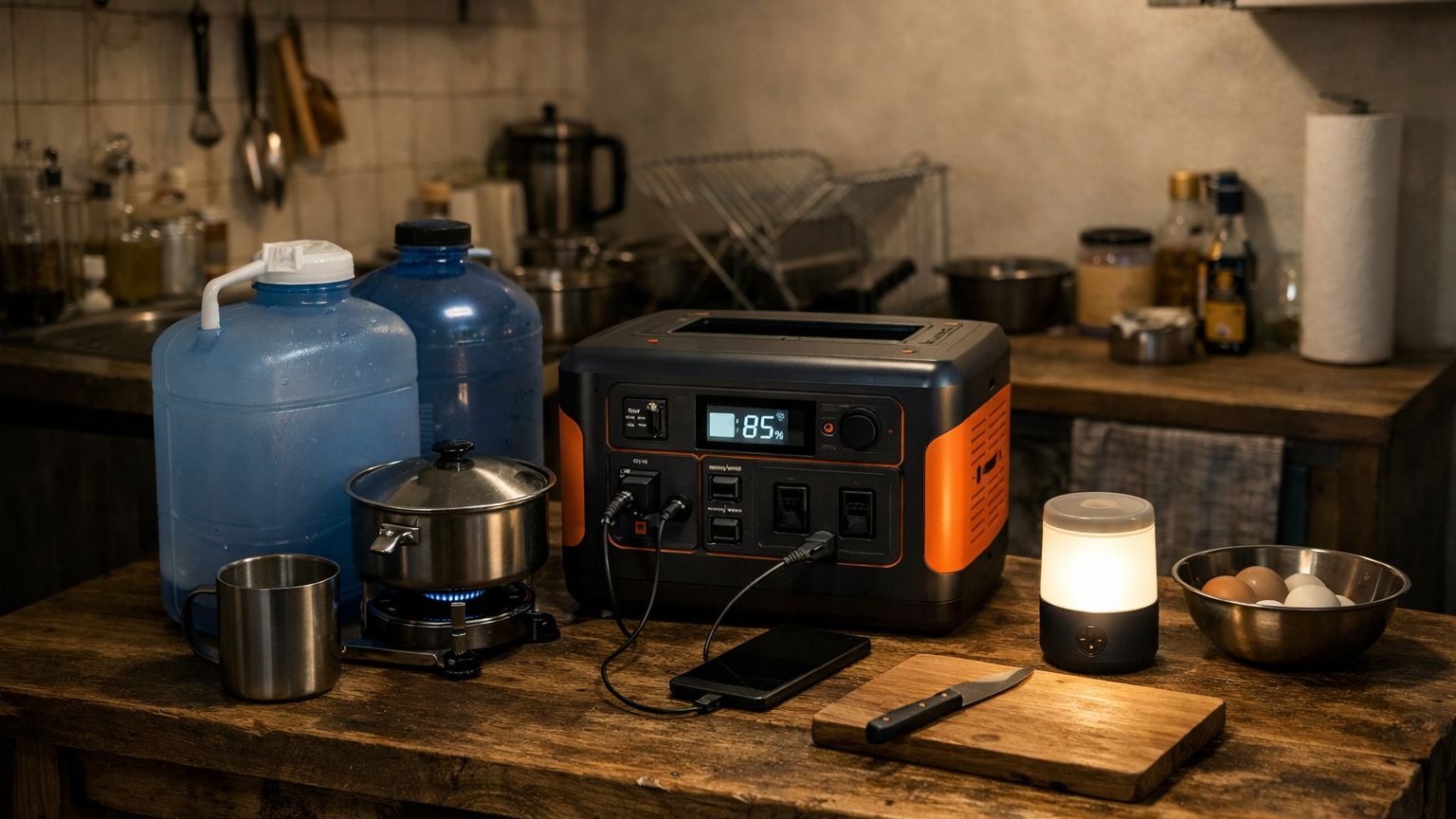
- Alternative cooking methods
- Redundant communication systems
The goal is flexibility. Backup systems give you more options when utilities become unavailable or unreliable.
Why Full Disconnection Is Difficult in Cities
There are three main barriers that make full off-grid living in a city challenging.
Space Limitations
Urban spaces are compact. Apartments, condos, and even small homes have limited room for large systems.
Solar panels, battery banks, and water storage all require space. In a city, every square foot matters.
This forces systems to be smaller, modular, and more efficient.

Access to Resources
Solar is the most common off-grid energy source, but it depends on access to sunlight.
In dense urban areas:
- Buildings block direct sun
- Roof access may be restricted
- Balconies may not receive consistent exposure
This limits how much energy you can generate on your own.
Regulations and Restrictions
Cities have rules that do not exist in remote areas.
Depending on where you live, you may face:
- Lease restrictions
- Condo or HOA rules
- Fire safety regulations
- Limitations on fuel storage or equipment use
Some setups are allowed but require careful planning. Others may not be permitted at all.
Understanding these boundaries is part of building a functional system.
What You Can Realistically Achieve
Even with these constraints, urban off-grid systems can go further than most people expect.
A well-designed setup can:
- Keep essential devices powered during outages
- Maintain lighting and communication
- Support basic cooking
- Provide short-term water independence
For many people, this level of capability is more than enough.
You are not trying to replicate a rural homestead. You are building a system that covers the most important parts of daily life.
Designing for Flexibility Instead of Perfection
One of the most useful shifts in urban off-grid thinking is moving away from the idea of a perfect system.
Urban environments change.
Your living situation may change. Building rules may change. Your needs may evolve.
A rigid system struggles to adapt.
Flexible systems perform better over time.
This starts with modular design.
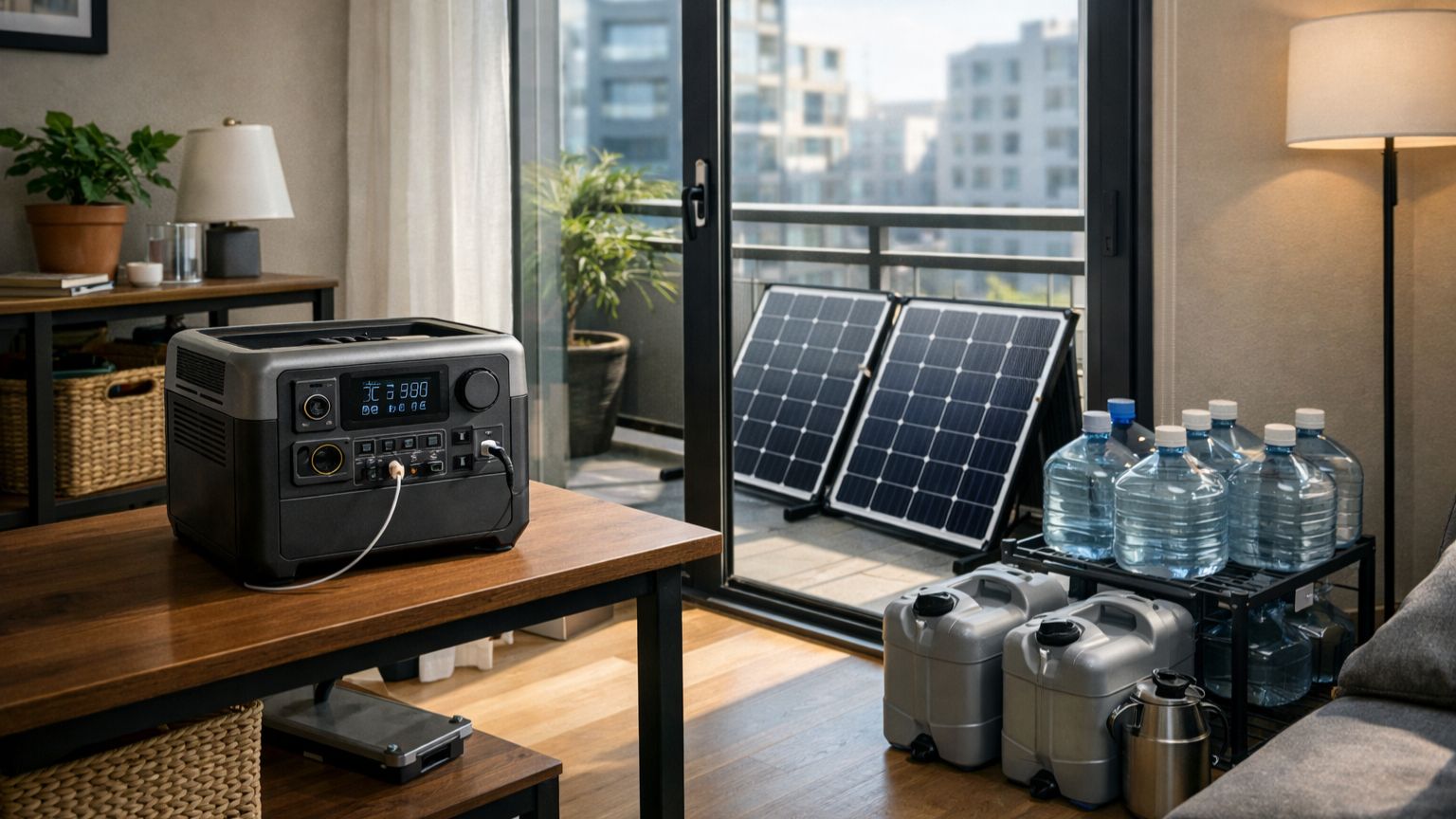
Instead of one large system, you build smaller components that work together. A portable power station instead of a fixed battery bank. Foldable solar panels instead of mounted arrays. Stackable water storage instead of a single large tank.
Each component can be adjusted or replaced without affecting the entire setup.
Flexibility also applies to usage.
You are not locked into one way of operating. You can scale usage up or down depending on conditions.
During normal days, your system stays in the background. During outages, it becomes active. During extended disruptions, you adapt your behavior to extend capacity.
This dynamic approach is more realistic in urban settings.
It also reduces pressure.
You do not need to solve everything at once. You build, test, and improve.
Over time, your system becomes more capable without becoming more complicated.
The Hybrid Approach That Actually Works
The most effective urban setups follow a hybrid model.
You stay connected to the grid for convenience, but you build independent systems that can take over when needed.
This approach gives you:
- Reliability during outages
- Reduced dependence on utilities
- Flexibility to expand over time
It also avoids many of the legal and logistical issues that come with full disconnection.

Realistic Independence Levels in a City (From Minimal to Advanced)
Urban off-grid living exists on a spectrum. Most people do not move from complete grid dependence to full self-sufficiency overnight. Instead, systems are usually built in stages as experience, budget, and needs evolve.
The first stage is basic backup capability. This typically includes a small power station, stored water, and emergency lighting. The objective is simple: maintain essential functions during short outages and disruptions. For many people, this level provides the greatest return for the least cost and complexity.
The second stage introduces partial independence. Battery systems become part of regular use, solar charging may supplement grid power, and water storage becomes more intentional. Alternative cooking methods are often added as well. At this point, you begin paying closer attention to energy consumption and the practical limits of your equipment.
The third stage focuses on extending runtime and reducing reliance on outside services. Power capacity increases, solar generation plays a larger role, and redundancy is built into critical systems. Water storage and filtration become more flexible, allowing the setup to remain functional for longer periods. This is also where urban constraints such as available space, sunlight exposure, and building regulations begin to have a greater influence on system design.
The final stage approaches long-duration independence for essential services. Backup power, communication equipment, basic cooking capabilities, and water systems can continue operating for extended periods with limited outside support. Reaching this level requires careful planning, ongoing maintenance, and realistic expectations about what can be achieved within an urban environment.
For most people, the greatest benefits come from the earlier stages rather than the later ones. A modest backup system can dramatically improve resilience during outages without requiring large investments, major lifestyle changes, or significant space. Expanding beyond that point becomes a matter of personal goals, available resources, and the limitations of the environment itself.
How Far Can You Push It?

The level of independence you can achieve depends on your environment and how much you are willing to adapt.
Some people aim for:
- Backup power only
- Partial daily usage from batteries and solar
- Near full independence for essential systems
Each level requires more planning, more equipment, and more awareness of limitations.
There is no single endpoint. The system grows with your needs.
What Fails First in an Apartment During a Grid Outage
Understanding how outages typically affect apartment buildings can help you prepare more effectively.
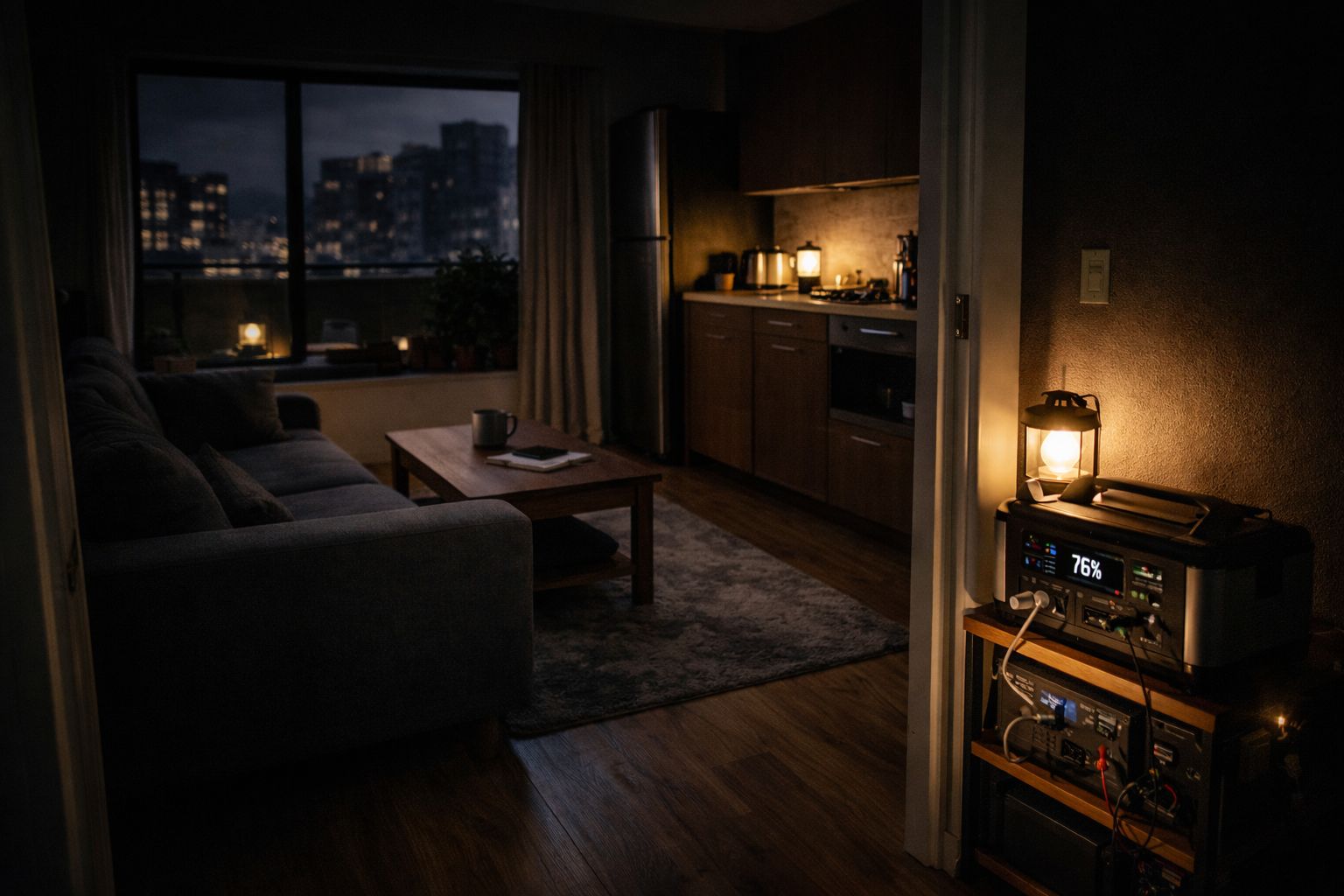
The first and most obvious loss is lighting. Without backup power, rooms go dark immediately and everyday tasks become more difficult.
Communication systems are often affected next. Routers and networking equipment shut down unless they are connected to backup power, and cellular networks can become congested as more people rely on mobile data during the outage.
Battery-powered devices continue working for a time, but their usefulness depends on having a charging plan. Phones, tablets, and laptops gradually lose power, reducing your ability to communicate, access information, or continue working during an extended disruption.
Food storage becomes a concern as outages lengthen. Refrigerators and freezers can maintain safe temperatures for a limited period, but prolonged outages eventually affect food quality and safety. Having alternative meal options available reduces pressure on refrigerated supplies.
Water availability varies by building. Some properties continue providing water during power outages, while others rely on electric pumps that may be affected by the disruption. In larger apartment buildings and high-rises, reduced water pressure or complete service interruptions are possible depending on the design of the system.
Other building services may also be affected. Elevators can become unavailable, access systems may operate differently, and certain security or convenience features may be limited until power is restored.
A well-prepared urban off-grid setup addresses these vulnerabilities in advance. Backup lighting, battery storage, communication equipment, stored water, and alternative cooking options help maintain essential functions while reducing the impact of an outage.
Understanding what is likely to fail, and in what order, makes it easier to prioritize resources and build a system that remains useful when normal infrastructure becomes unavailable.
Tradeoffs You Need to Accept
Urban off-grid living comes with tradeoffs that are easy to overlook at the beginning.
- Limited generation capacity compared to rural setups
- Space constraints that affect storage and expansion
- Dependence on weather conditions for solar
- Ongoing need to manage and maintain systems
These are not dealbreakers, but they shape how your system evolves.
Understanding them early helps you build something that works long term.
Legal and Building Constraints Most People Overlook
Urban off-grid systems exist within a framework of rules.
Many people focus on equipment without considering what is allowed in their specific building or city.
Lease agreements are the first layer.
Some restrict modifications, visible installations, or storage of certain materials. Even portable systems can fall into gray areas if they are used in ways that resemble permanent setups.
Condo and HOA rules add another layer.
These may limit balcony usage, external mounting, or visible equipment. Solar panels, even small ones, can fall under these rules depending on placement.
Fire safety regulations are critical.
Fuel storage, cooking equipment, and battery systems must be used and stored safely. Some buildings have strict policies around open flames or gas canisters.
Electrical considerations matter too.
Improper use of extension cords, overloaded circuits, or unsafe charging setups can create risks.
The goal is not to avoid building a system.
It is to build one that fits within your environment.
Portable, modular systems usually provide the most flexibility. They avoid permanent changes and can be adjusted as needed.
Understanding these constraints early prevents problems later.
Safety and Responsibility
Operating off-grid systems in a city requires attention to safety.
Batteries, fuel sources, and cooking equipment all need to be handled properly.
This includes:
- Storing equipment safely
- Using proper ventilation
- Following building guidelines
- Avoiding setups that create risk for others
A good system is not just functional. It is safe and predictable.

A More Practical Definition of Off-Grid
In a city, off-grid living is better understood as a spectrum.
At one end, you rely completely on utilities.
At the other, you operate independently across most systems.
Most urban setups fall somewhere in the middle.
That middle ground is where the benefits are strongest. You gain resilience without taking on unnecessary complexity.
Who This Works Best For
Urban off-grid systems are especially useful for people who:
- Work from home and need reliable power
- Want protection from outages
- Prefer lower long-term dependence on utilities
- Value control over their environment
You do not need to change your entire lifestyle. You only need to improve the parts that matter most.
How to Test Your Setup Without Waiting for a Real Outage
Testing is where most urban systems either prove themselves or fall apart.
Waiting for a real outage is not a strategy.
You can simulate conditions safely.
Start with a controlled test.
Turn off your main breaker for a short period. This creates a realistic environment without external risk. Use your backup systems as if the outage were real.
Pay attention to:
- how quickly you can deploy your setup
- which devices you prioritize
- how long your power lasts
- what feels inconvenient or unclear
Small issues become obvious.
Maybe cables are not where you expect. Maybe your lighting is not sufficient. Maybe your power drains faster than planned.
These are valuable insights.
Next, extend the test.
Run your system for several hours. Adjust your behavior. See how it feels to operate within your setup.
This builds familiarity.
You stop guessing and start knowing.
Finally, review and adjust.
Testing is not a one-time event. It is part of maintaining your system. Each test improves reliability.
When a real outage happens, there are no surprises.
Final Thoughts
Living fully off-grid in a city is uncommon, but building practical backup systems is well within reach for most people.
A small amount of preparation can provide backup power, stored water, alternative cooking options, and reliable communication during disruptions. Over time, these individual components can grow into a system that is better suited to your needs and environment.
The most effective urban off-grid setups are usually built gradually. Start with the essentials, test your equipment, and expand as experience shows where additional capability would be useful.