The Biggest Mistakes New Urban Preppers Make

Urban preparedness often appears straightforward.
Buy emergency supplies, store them somewhere safe, and you’re prepared.
In practice, successful preparedness depends on how well individual pieces work together. A collection of supplies may look complete, but gaps begin to appear if power, water, food, lighting, and communication are planned separately.
Building an effective system depends on how well each component supports the others under real-world conditions.
Understanding the most common mistakes before they become part of your own setup is one of the easiest ways to build a system that remains practical, organized, and reliable over the long term.
Mistake #1: Buying Gear Before Having a Plan
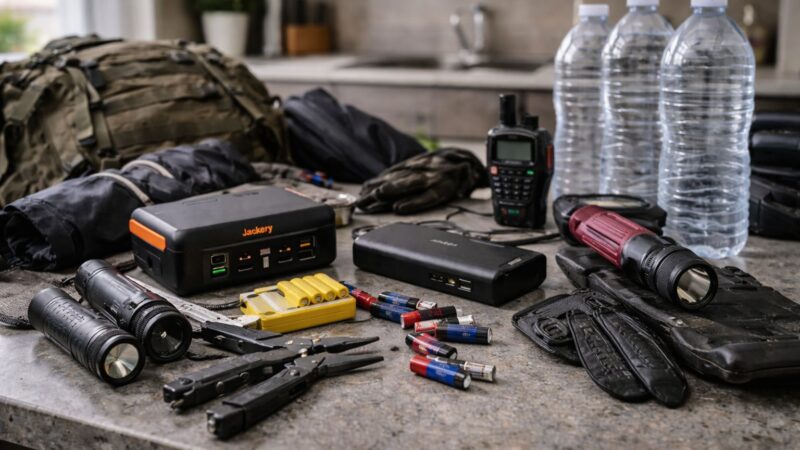
Many people begin by purchasing recommended equipment without first deciding what problems that equipment is expected to solve.
Emergency gear lists can be useful sources of ideas, but every household has different priorities, available space, and daily routines. Buying equipment without an overall plan often produces systems with unnecessary duplication or important gaps.
A portable power station, for example, is far more useful when there is already a clear charging strategy, an understanding of which devices it will support, and realistic expectations for battery runtime. Food storage works best when it matches available cooking methods. Stored water becomes much more valuable when rotation and replenishment have already been considered.
Planning first makes every purchase more purposeful.
One practical approach is to begin with the essential systems every household depends on:
- Power
- Water
- Food
- Lighting
- Communication
Once those systems have been defined, choosing equipment becomes much easier because every purchase has a clearly identified role within the overall setup.
Mistake #2: Ignoring Space Constraints
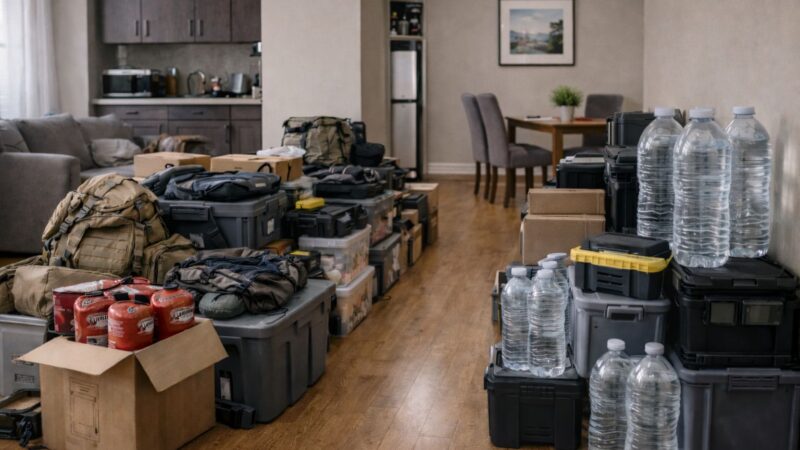
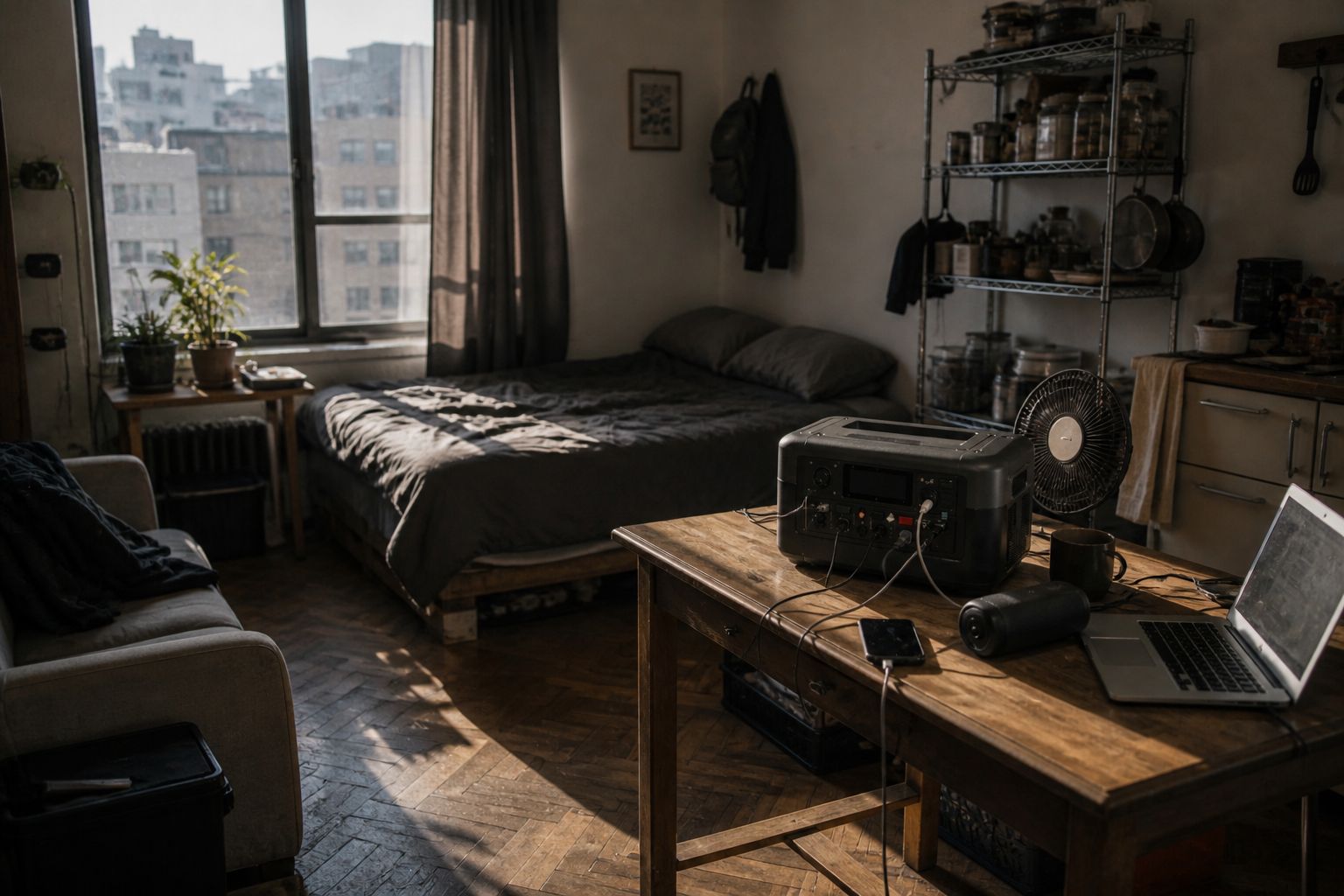
Space is one of the defining characteristics of urban preparedness.
Apartments, condominiums, and smaller homes place practical limits on storage, equipment size, and organization. Those limitations influence every preparedness decision.
Many new preppers focus on how much they can store without considering how those supplies will fit into everyday life. As equipment spreads into closets, hallways, and living areas, maintaining the system becomes more difficult and the temptation to abandon it often increases.
Successful urban systems are designed around the available space from the beginning.
Storage solutions, equipment choices, and future expansion plans should all fit comfortably within the home and remain practical for everyday living.
Preparedness is much easier to maintain when the system feels like part of the home instead of something temporarily stored inside it.
Small Apartment Strategies That Actually Work
Small apartments require careful use of every available square metre.
The goal is not to maximize the amount of equipment you own. The goal is to organize essential systems so they remain accessible, easy to maintain, and ready for use whenever they are needed.
Multi-purpose equipment is often one of the easiest ways to conserve space. A single item capable of performing several useful functions usually provides greater long-term value than multiple specialized tools that are rarely used.
Storage layout also deserves careful attention.
Wall-mounted shelving, stackable containers, under-bed storage, and unused vertical space can significantly increase storage capacity without affecting the usability of the apartment.
Creating dedicated areas for major systems also simplifies maintenance.
For example:
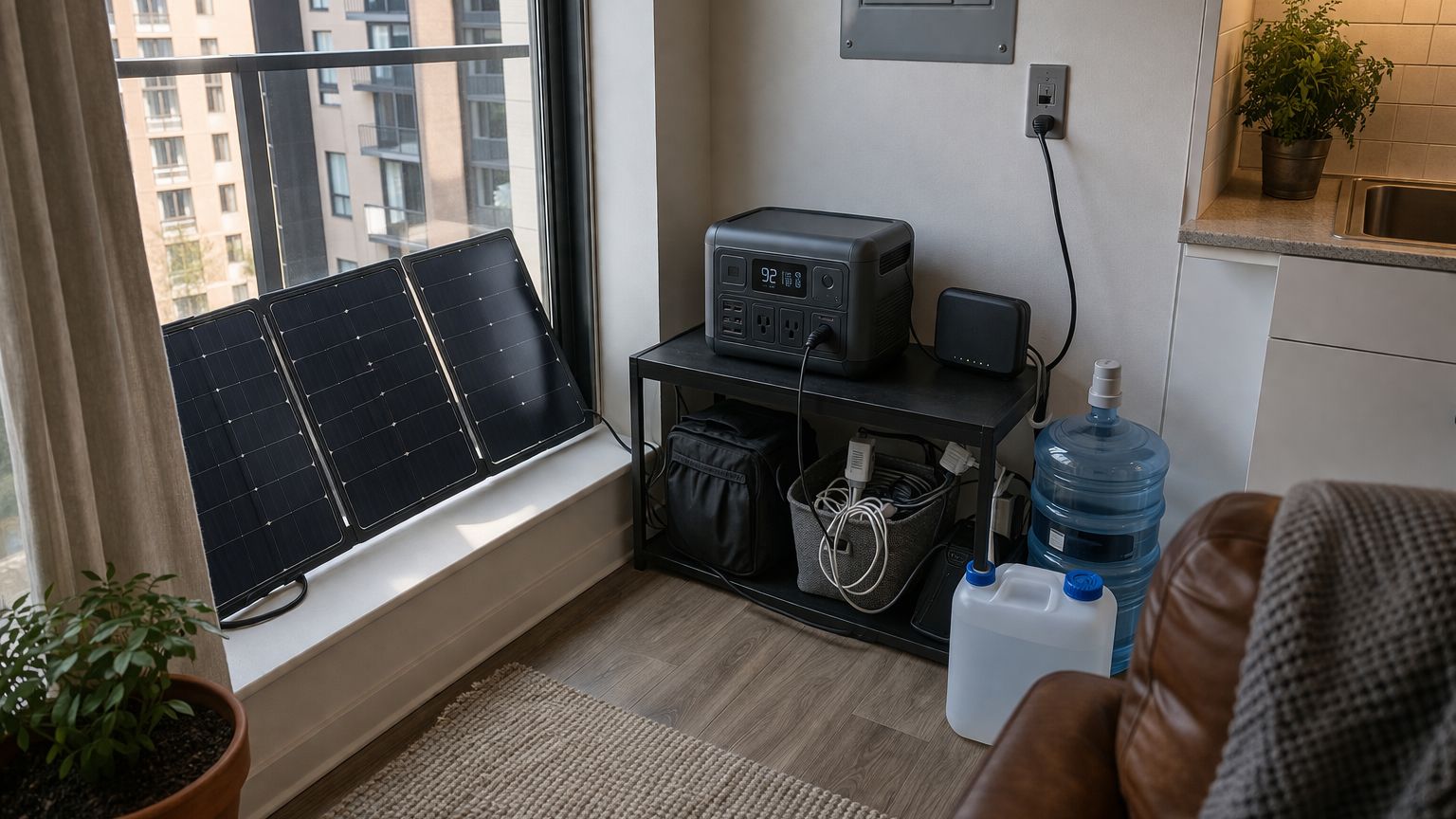
- A power and charging station
- A water storage area
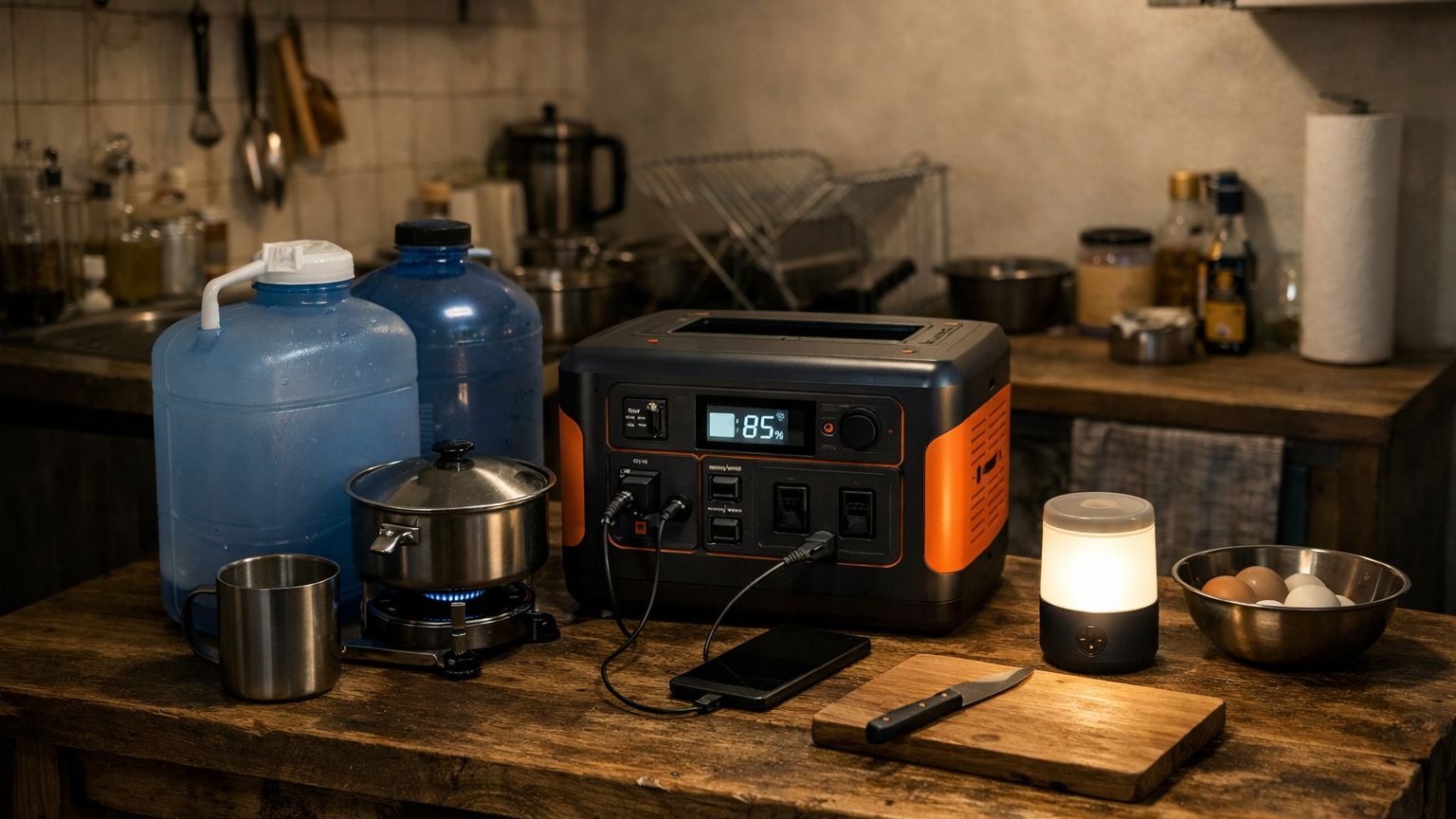
- A food and cooking section
Keeping related equipment together reduces clutter and makes routine inspections much easier.
Portable equipment provides additional flexibility.
During normal conditions, everything remains compact and organized. During an outage or other disruption, those same components can be deployed quickly without requiring permanent installations or major changes to the living space.
Simple, organized systems are generally easier to maintain, easier to expand, and much more likely to remain part of everyday life over the long term.
Mistake #3: Overcomplicating the System
Advanced equipment is easy to find.
Building a system that remains simple to operate takes much more thought.
Large battery banks, multiple charging methods, extensive redundancy, and sophisticated monitoring systems all have their place. The challenge is introducing that complexity before there is enough experience to manage it confidently.
Every additional component increases the number of decisions involved in operating and maintaining the system.
For someone building their first urban preparedness setup, simple systems usually provide the fastest path to dependable results. They are easier to understand, easier to troubleshoot, and much easier to expand as experience grows.
Complexity should solve a clearly identified need. Introducing additional capability gradually allows experience to grow alongside the system, making new equipment easier to understand, maintain, and use effectively.
Mistake #4: Storing Supplies You Never Use
Preparedness works best when it fits naturally into everyday life.
Food that is never eaten, batteries that are never checked, and equipment that remains unopened for years are all easy to forget until they are needed.
Using stored food as part of regular meal planning, rotating supplies before they expire, and becoming familiar with emergency equipment all help keep the system current and dependable.
This approach also makes future purchasing decisions easier.
You quickly learn which supplies are genuinely useful, which items deserve additional storage, and which purchases added very little practical value.
Preparedness becomes much easier to maintain when it is supported by everyday habits instead of occasional large projects.
Mistake #5: Underestimating Water Needs
Water is often one of the last systems people plan, even though it supports almost every aspect of emergency preparedness.
Drinking water is only part of the picture.
Basic hygiene, food preparation, and limited cleaning all rely on the same supply, causing stored water to disappear much faster than many people expect.
A practical urban water plan usually combines several layers.
Stored drinking water provides immediate access during short disruptions. Food-grade storage containers increase available reserves. A compact filtration system adds flexibility if additional water becomes available but cannot be consumed safely without treatment.
Planning for storage, rotation, and replenishment together creates a much more resilient system than relying on bottled water alone.
Mistake #6: Poor Organization
Good equipment becomes much less useful when it cannot be located quickly.
Urban preparedness systems often grow over time, making organization increasingly important as additional supplies are added.
Grouping equipment by function keeps related items together and makes routine maintenance much easier.
For example:
- Power and charging equipment
- Water storage and filtration
- Food and cooking supplies
- Lighting and communication
Clear labels, consistent storage locations, and simple inventory checks reduce the likelihood of forgotten supplies or duplicated purchases.
Well-organized systems are also easier for other members of the household to understand, allowing everyone to find and use essential equipment without unnecessary confusion.
Mistake #7: Ignoring Real-World Scenarios
Preparedness improves significantly when planning is based on situations that could realistically occur.
A short power outage, a water interruption, a severe winter storm, or several days without elevator access all place different demands on an urban household.
Walking through those situations step by step often reveals weaknesses that are difficult to identify by looking at equipment alone.
Questions such as:
- How will devices be charged?
- How will food be prepared?
- How long will stored water last?
- Which equipment will be used first?
help transform a collection of supplies into a practical response plan.
These exercises rarely require additional equipment.
More often, they improve how existing equipment is organized, maintained, and used.
What Actually Happens During a City Outage
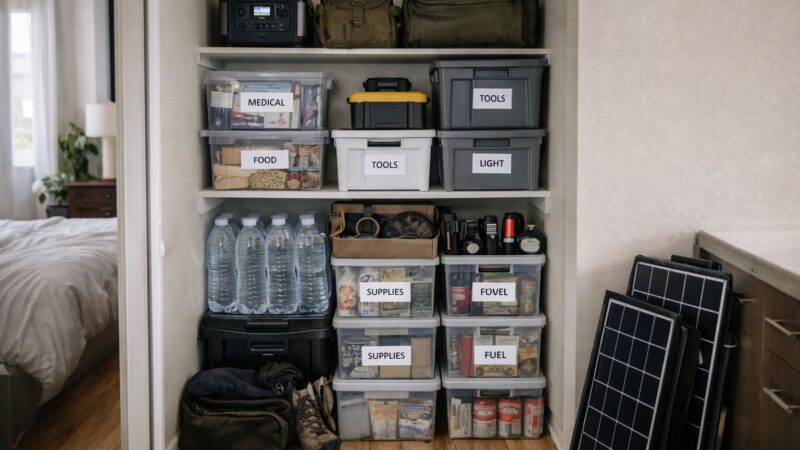
Urban outages often unfold in predictable stages.
The first few minutes are usually spent determining the scope of the problem. Lights go out, elevators stop, and people check their phones or look outside to see whether neighboring buildings have also lost power.
Attention then shifts toward essential services.
Lighting becomes limited, internet equipment shuts down unless it has backup power, and devices begin relying on their internal batteries. If the outage continues, people start paying closer attention to refrigeration, heating or cooling, and remaining battery capacity.
In taller buildings, additional concerns may appear.
Some high-rise apartments rely on electrically powered pumps to maintain water pressure, making stored water more important during extended interruptions. Elevators remain unavailable, access systems may operate differently, and shared spaces can become less functional until power returns.
Prepared households experience these same conditions differently.
Essential lighting is already available. Phones and communication equipment remain charged. A clear understanding of battery capacity helps determine which devices should continue running and which can wait.
Prepared households have already established priorities before an outage begins. Essential equipment is ready, backup procedures are familiar, and decisions can be made quickly because the planning has already been done.
Preparation replaces uncertainty with a clear plan, allowing the household to focus on managing the situation instead of searching for solutions under pressure.
As outages become longer, those preparations become increasingly valuable.
Food storage, battery management, water reserves, and communication all become more important as normal infrastructure remains unavailable.
Planning for these changing conditions creates systems that continue performing well even as the disruption extends beyond the first few hours.
Mistake #8: Focusing Too Much on One Area
Preparedness systems work best when they develop evenly across the essential categories.
It is common to become interested in one particular area, whether that is portable power, food storage, water filtration, or communication equipment. Over time, that focus can leave other parts of the system underdeveloped.
A household with excellent battery storage but very little water preparation still has an important weakness. The same applies to extensive food storage without practical cooking methods, or strong communication equipment without dependable backup power.
Looking at the system as a whole makes it easier to identify those gaps before they become problems.
Building balanced capability across the core systems usually provides greater long-term resilience than concentrating most of the budget in a single category.
Mistake #9: Skipping Maintenance
Preparedness is not something that is completed once and forgotten.
Stored food reaches expiration dates, batteries slowly discharge, flashlights are borrowed, and equipment gradually changes location as it is used throughout the year.
Without routine maintenance, even well-designed systems become less dependable over time.
A simple inspection every few months is often enough.
Check battery charge levels, rotate food and water supplies, confirm that lighting still works, inspect charging cables, and replace any items that have reached the end of their useful life.
These routine checks also help maintain familiarity with the system.
Handling the equipment regularly makes it much easier to remember where everything is stored and how each component operates when it is eventually needed.
Mistake #10: Waiting Too Long to Start
Many people delay preparedness because they believe they need the perfect plan before buying their first piece of equipment.
The amount of information available online often makes that decision even more difficult.
Reviews, comparisons, recommendations, and product specifications all have value, but they can also create the impression that every purchase must be perfect.
Practical experience provides a much clearer understanding of how a preparedness system performs than research alone.
A modest battery, a small water reserve, backup lighting, and a simple emergency plan provide opportunities to learn how the system behaves under everyday conditions.
Each stage builds confidence, highlights worthwhile improvements, and makes future purchasing decisions much easier because they are based on experience instead of assumptions.
The Psychology of Delay and Why People Never Start
Waiting to begin is one of the most common obstacles in urban preparedness.
It rarely happens because people do not care about being prepared.
More often, it happens because the amount of available information makes every decision feel larger than it really is.
One review recommends a certain battery. Another recommends something larger. One article suggests storing weeks of supplies, while another focuses on lightweight portable equipment. After enough research, choosing where to begin can feel more difficult than building the system itself.
The easiest way to move forward is to reduce the size of the first decision.
A modest battery power station, several reliable light sources, a small water reserve, and a basic emergency plan provide a solid foundation for future improvements.
Using that equipment teaches far more than additional weeks of research.
Every real-world experience makes later decisions easier because future upgrades are guided by observation rather than uncertainty.
Preparedness grows through steady progress.
The first step does not need to solve every problem. It only needs to create a foundation that can improve over time.
How to Build a System That Works Together
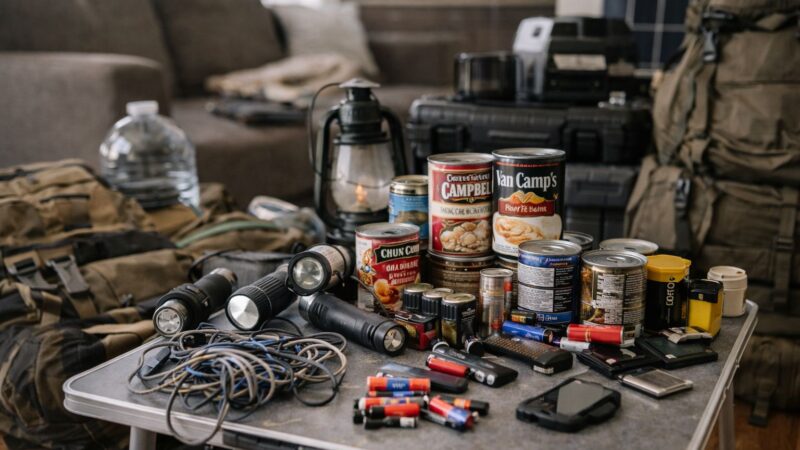
Successful preparedness systems are built by understanding how individual components support one another during everyday use and emergency situations.
Power supports communication.
Communication provides access to information.
Lighting improves safety and mobility.
Water supports drinking, cooking, and hygiene.
Each system strengthens the others.
One practical way to organize a preparedness plan is to begin with a small number of essential systems:
- Power
- Water
- Food
- Lighting
- Communication
Once those foundations exist, every future purchase becomes easier to evaluate.
A battery should support the devices that matter most.
Stored food should match the available cooking method.
Lighting should operate from the same backup power system whenever practical.
This approach naturally creates compatibility because every component is selected with the larger system in mind.
Redundancy also becomes easier to plan.
Redundancy works best when it focuses on essential functions instead of individual products. Backup power, backup lighting, and alternative water treatment methods all strengthen the overall system without creating unnecessary duplication.
The objective is to provide dependable alternatives for the functions that matter most.
For example:
- A primary battery and a smaller backup power bank.
- Stored water supported by a filtration method.
- Primary lighting with compact backup lights stored separately.
Finally, use the system regularly.
Charge devices from backup power occasionally. Rotate stored food. Test emergency lighting. Confirm that water storage remains in good condition.
Small habits maintain familiarity, reveal opportunities for improvement, and help ensure the entire system remains ready whenever it is needed.
What a Strong Preparedness System Looks Like
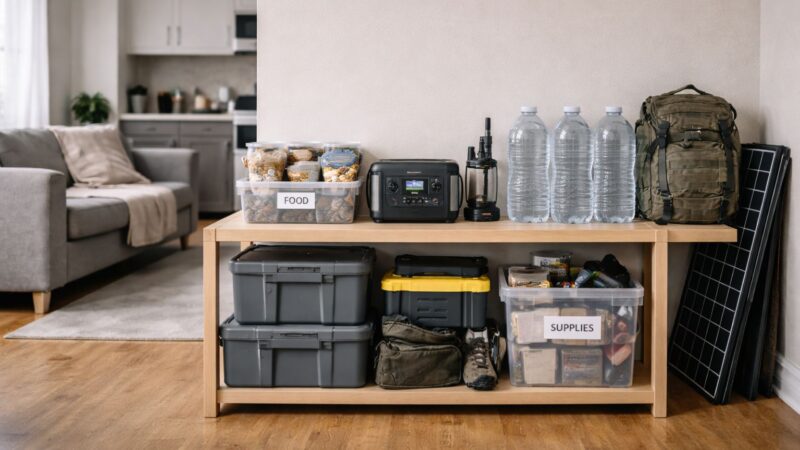
Strong urban preparedness systems share several characteristics.
They are organized, easy to maintain, and designed around situations that people are genuinely likely to encounter.
Equipment has a clearly defined purpose.
Supplies are accessible.
Routine maintenance is straightforward.
Future expansion is already considered.
Perhaps most importantly, the system fits comfortably within the available living space.
Preparedness that integrates naturally into everyday life is much easier to maintain than a collection of equipment that constantly competes for space and attention.
How to Continue Improving Your System
Preparedness continues to develop as your experience, equipment, and requirements evolve over time.
As your experience grows, your system should continue developing alongside it.
Review your equipment periodically.
Replace supplies that have been used.
Reorganize storage if something has become difficult to access.
Expand only after practical experience identifies a genuine need.
These small improvements accumulate over time, creating a preparedness system that becomes more capable without becoming unnecessarily complicated.
Final Thoughts
Urban preparedness is built on planning, organization, and practical experience.
Equipment certainly matters, but it performs best when every component supports a larger system designed around the realities of urban living.
Beginning with a clear plan, expanding gradually, and maintaining the system consistently helps ensure it remains organized, dependable, and useful for years to come.
The most dependable urban preparedness systems are thoughtfully organized, regularly maintained, and refined through practical experience.
They are the ones that continue working because they have been designed, tested, and improved through regular use.